The Lorelei — History & Facts
In a world of constant revolution and change, artists like Albert Pinkham Ryder become the custodians of our fleeting memories, capturing moments that defy the passage of time. Look closely at the swirling waters and the ethereal figure that emerges from the depths. Focus on the delicate balance of light and shadow that illuminates her almost ghostly presence, as if she's both a part of the landscape and entirely separate from it. The muted hues of blue and green evoke a sense of melancholy, while the textured brushstrokes draw your eye to the tumultuous waves, reflecting not just water but the inner turmoil of the soul. The Lorelei is rich with contrasts; the serene beauty of the siren juxtaposed against the chaotic waters suggests a duality between attraction and danger.
The figure's expression, both inviting and mournful, whispers of lost love and the perils of temptation. Each ripple in the water teems with unspoken stories—of sailors lured to their doom, of the relentless pull of nature, and of humanity's struggle against its own desires. Ryder painted this artwork between 1896 and 1917, during a time when American artists were exploring new forms of expression amidst the backdrop of significant social and political upheaval. Living in New York, he was influenced by the Symbolist movement, which sought to convey deeper emotional truths beyond mere representation.
His exploration of themes like the haunting allure of the female figure reflects both personal introspection and a broader cultural commentary on the nature of desire and loss.
More Artworks by Albert Pinkham Ryder
Browse all →
The Toilers of the Sea
Albert Pinkham Ryder
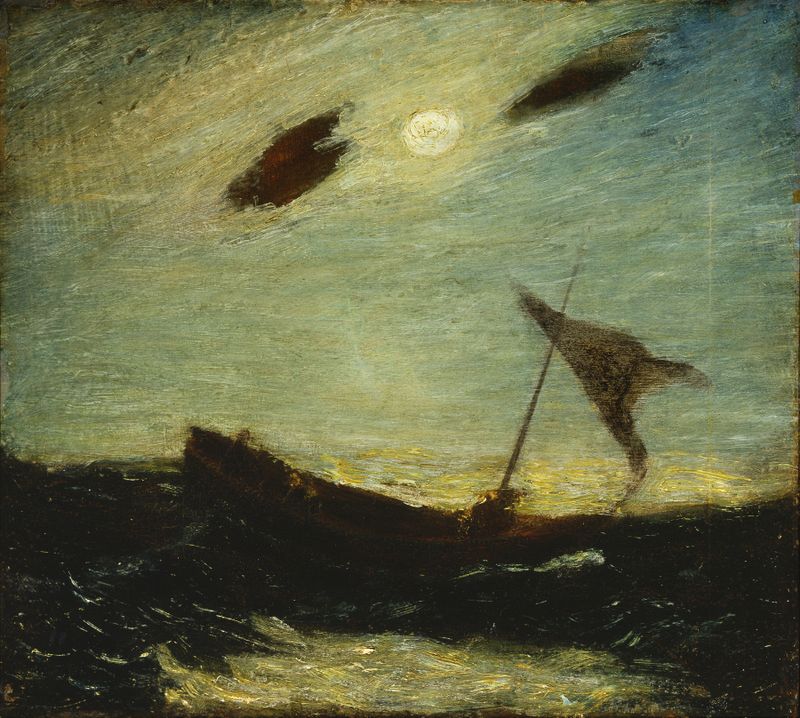
Moonlight
Albert Pinkham Ryder

With Sloping Mast And Dipping Prow
Albert Pinkham Ryder

The Temple of the Mind
Albert Pinkham Ryder

Moonlight Marine
Albert Pinkham Ryder

The Lovers’ Boat
Albert Pinkham Ryder

Harvest
Albert Pinkham Ryder

Under a Cloud
Albert Pinkham Ryder
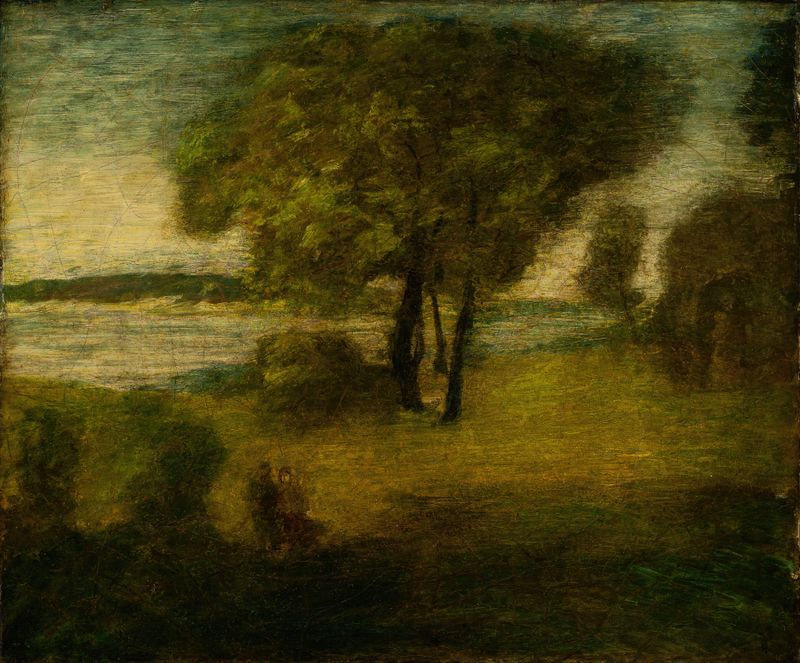
The River
Albert Pinkham Ryder
The Essex Canal
Albert Pinkham Ryder