
Under a Cloud — History & Facts
What if beauty was never meant to be finished? In Under a Cloud, the ethereal quality of the canvas invites viewers to ponder the divine ambiguity that resides in nature and existence itself. Focus on the swirling hues of deep blues and muted greens, which intertwine to create a tempestuous sky that looms over a solitary figure. Look closely at the foreground, where the silhouette of a boat appears fragile against the looming forces of nature, illustrating vulnerability in the face of overwhelming magnificence. Ryder masterfully employs a loose brushstroke technique, providing a sense of movement that mirrors the windswept clouds above, while the subtle glimmers of light break through the darkness, hinting at hope amidst despair. Beneath the surface lies a meditation on the dualities of existence: the tension between man and the sublime, the fleeting nature of beauty, and the eternal presence of the divine.
The cloud, with its ominous yet captivating form, symbolizes the weight of uncertainty that looms over the human spirit. This work embodies an emotional landscape where chaos and serenity coexist, compelling us to confront our own place within the cosmos. In 1900, Ryder was working in New York, a time when the art world was shifting towards modernism. He was known for his poetic landscapes and deep spiritual explorations, reflecting the tumult of both his personal life and the broader cultural transitions occurring around him.
His unique vision and emotional depth in Under a Cloud mark a significant moment in the evolution of American art, showcasing a profound connection between the artist and the natural world.
More Artworks by Albert Pinkham Ryder
Browse all →
The Toilers of the Sea
Albert Pinkham Ryder
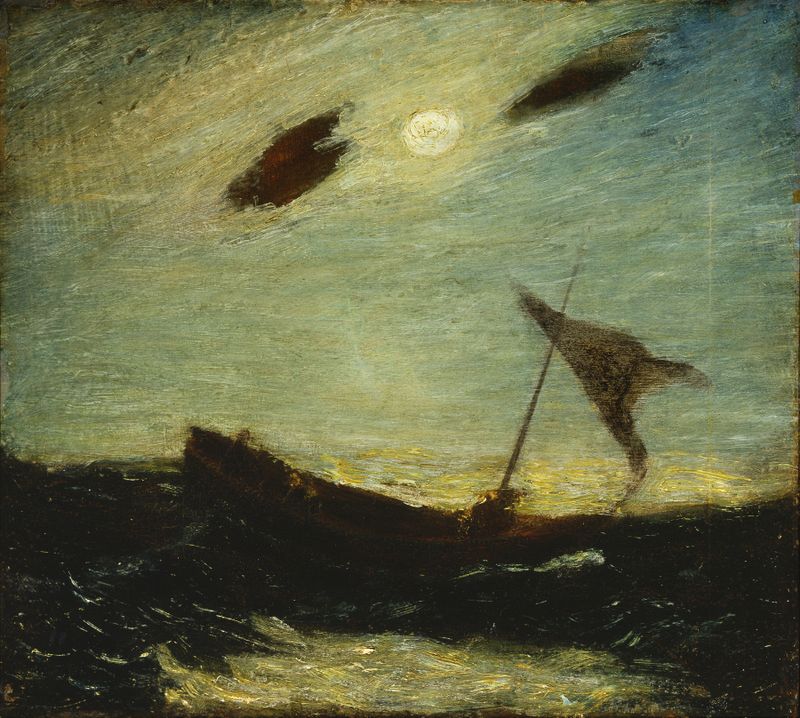
Moonlight
Albert Pinkham Ryder

The Lorelei
Albert Pinkham Ryder

With Sloping Mast And Dipping Prow
Albert Pinkham Ryder

The Temple of the Mind
Albert Pinkham Ryder

Moonlight Marine
Albert Pinkham Ryder

The Lovers’ Boat
Albert Pinkham Ryder

Harvest
Albert Pinkham Ryder
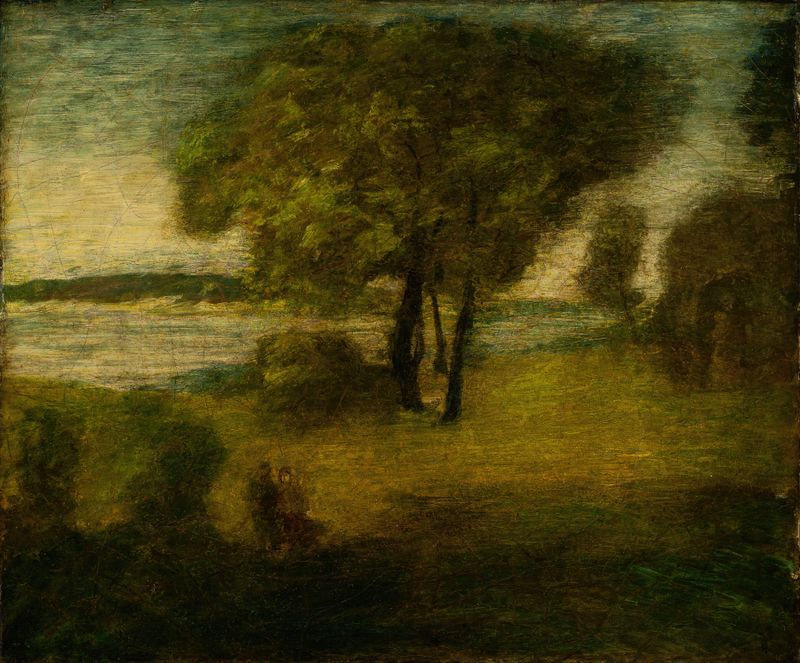
The River
Albert Pinkham Ryder
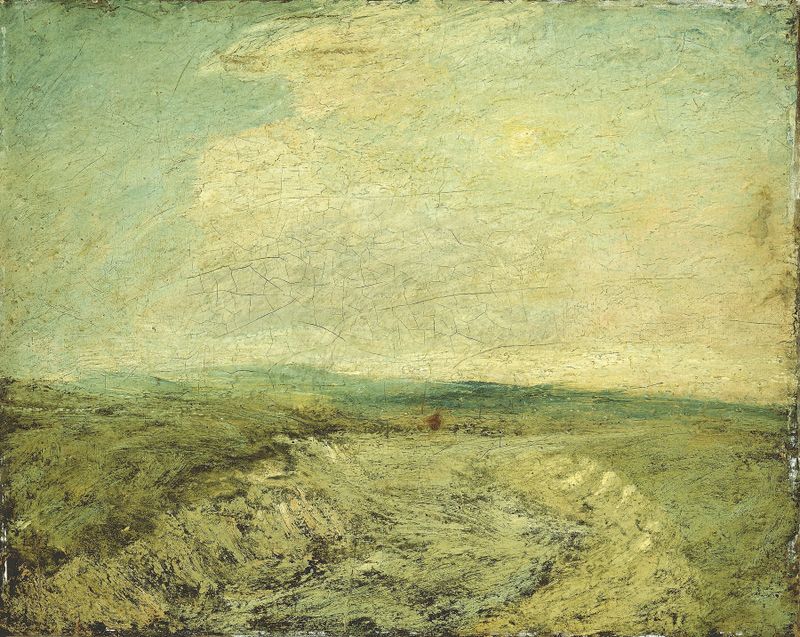
The Essex Canal
Albert Pinkham Ryder





