The Road — History & Facts
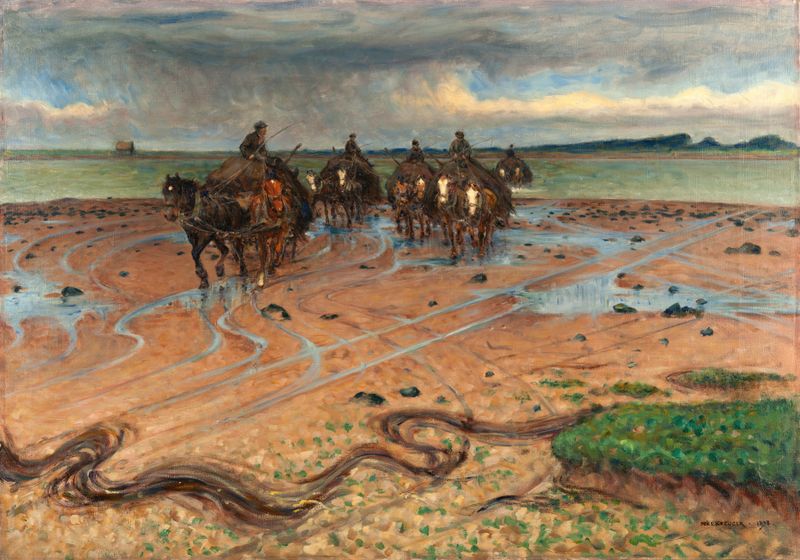
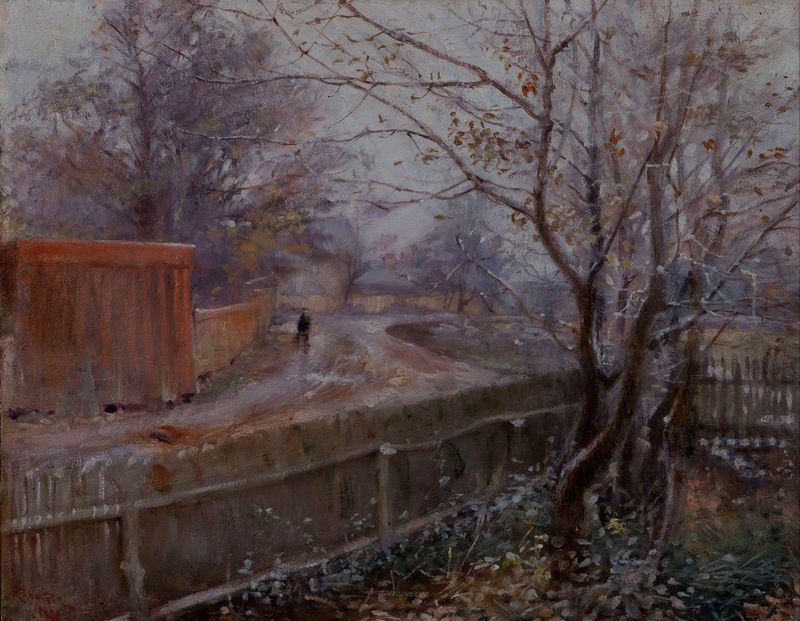
Is this a mirror — or a memory? In the stillness of The Road, one must wonder if the pathway ahead is a journey yet to come, or a reflection of the past waiting to be embraced. Look to the left at the gentle bend of the road, winding its way through a soft, golden field. The ground is dappled with the warm hues of late afternoon light, while the sky above, painted in tranquil blues and whites, lends a sense of serenity. Notice how the brushwork captures the delicate sway of the grass, inviting the viewer to feel the breeze and perhaps take a step forward into this inviting scene.
Each stroke reveals Kreuger's mastery of light, creating depth and drawing the eye along the path, where shadows merge with sunlit patches. The transformation is palpable here — between the promise of what lies ahead and the echoes of what has been. The road symbolizes life’s journey, a liminal space where past and future collide. The light that bathes the scene is not just illumination; it serves as a metaphor for hope and possibility.
Small, subtle details, like the solitary figure in the distance, suggest a contemplative solitude, reinforcing the emotional tension between longing and anticipation. In the years leading up to 1906, Kreuger was deeply engaged in the Swedish landscape and its aesthetic possibilities. He painted The Road during a time of personal exploration and reflection, amidst the broader movements of Impressionism sweeping through Europe. As the world was on the brink of modernity, Kreuger's work encapsulated both the tranquility of nature and the complexities of human experience, marking a significant moment in his artistic evolution.