
The Road at Mogenstrup, Zealand. Autumn — History & Facts
Could beauty survive in a century of chaos? In The Road at Mogenstrup, Zealand. Autumn, a vibrant yet melancholic landscape invites contemplation, capturing the transient nature of beauty against the backdrop of impending change. Look to the horizon where a long, winding road disappears into a copse of trees, their autumn leaves ablaze with gold and russet hues. Notice how the gentle light filters through the canopy, casting delicate shadows on the ground.
The painter’s brushwork creates a soft, inviting texture, drawing the eye into the layering of colors — rich ochres and muted greens blend seamlessly to evoke a sense of harmony. Each element, from the path to the rustling foliage, feels alive, yet tinged with an underlying sense of loss. This artwork resonates with emotional tension, balancing the beauty of nature with a hint of sorrow. The road, a symbol of journey and transition, suggests both movement and stillness; it stretches forth, yet feels like it leads to an uncertain destination.
The stillness of the trees stands in stark contrast to the fleeting season, embodying the inevitable passage of time. Together, these details weave a narrative that explores themes of nostalgia, change, and the fragility of beauty. Created in 1888, this piece reflects the artist's life during a pivotal period of his career in Denmark. Laurits Andersen Ring was immersed in the artistic movements of the late 19th century, experiencing the shift from Romanticism to modernism.
The natural landscapes he depicted offered solace amid the social and political upheavals of the era, allowing him to carve out a space where beauty could linger, even in the face of chaos.
More Artworks by Laurits Andersen Ring
Browse all →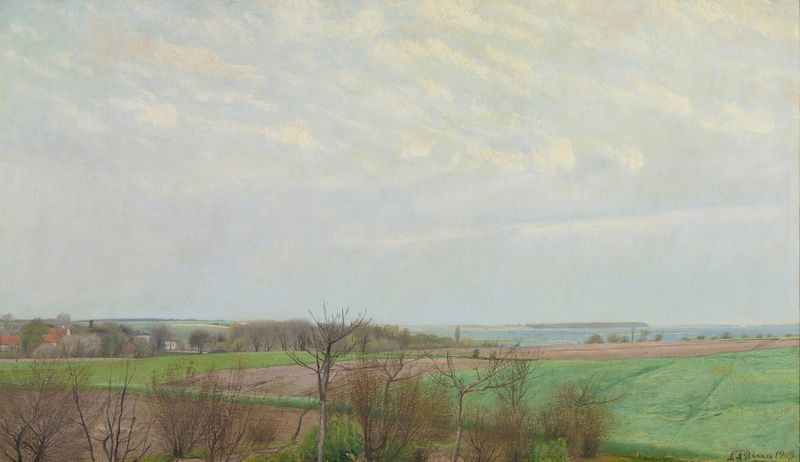
View Of Roskilde Fjord, Early Spring
Laurits Andersen Ring
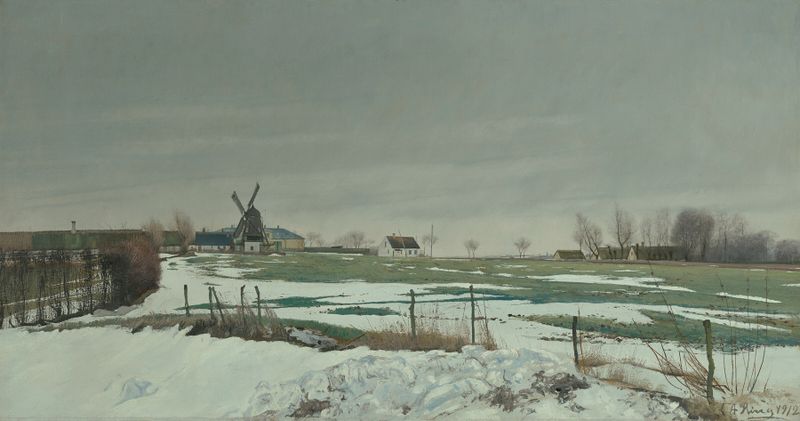
Winter landscape with a windmill
Laurits Andersen Ring
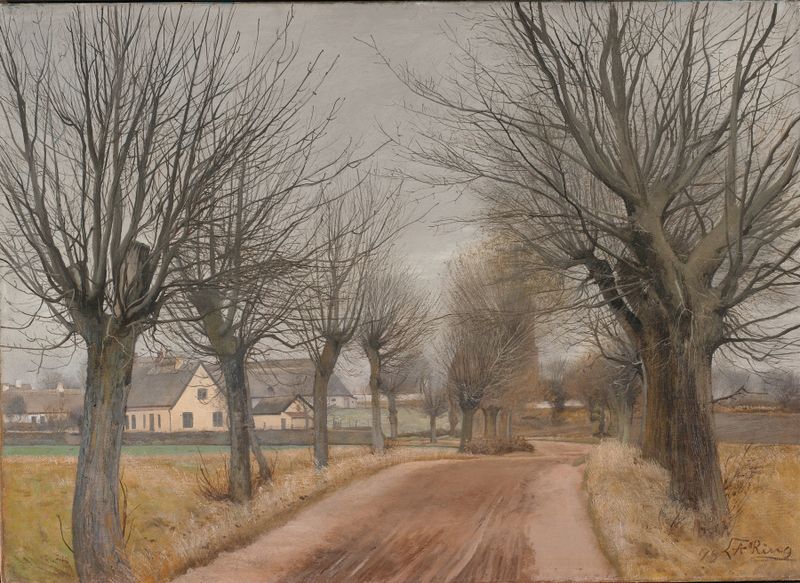
A Road near Vinderød, Zealand
Laurits Andersen Ring
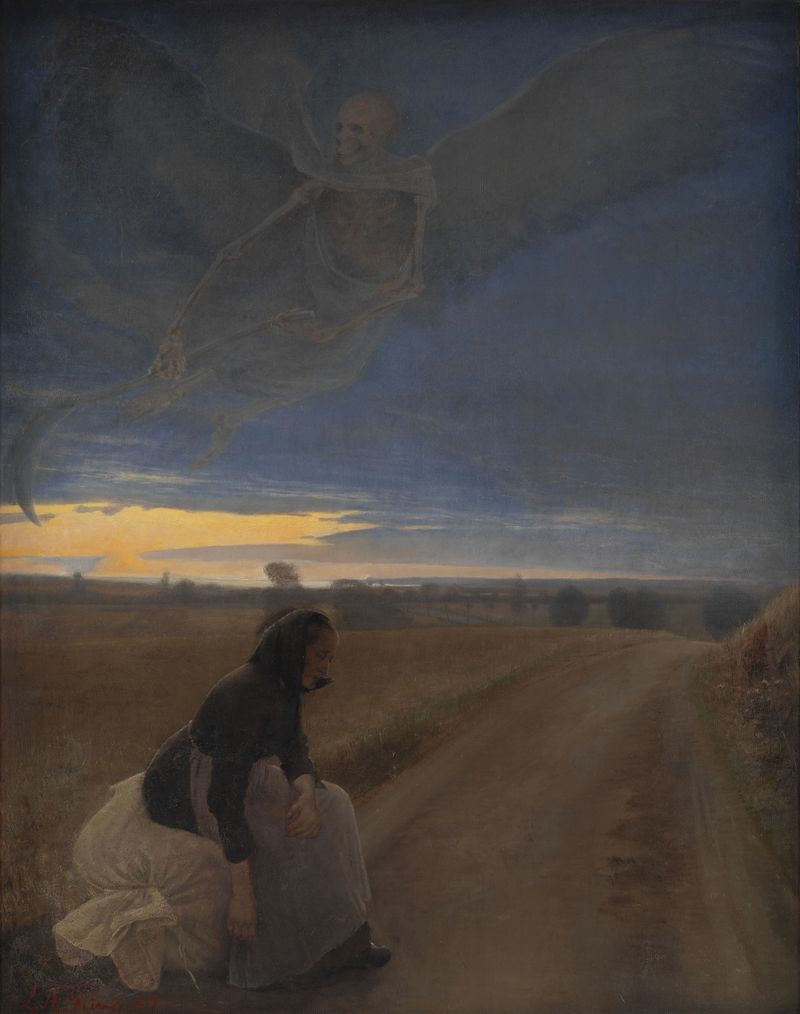
Evening
Laurits Andersen Ring
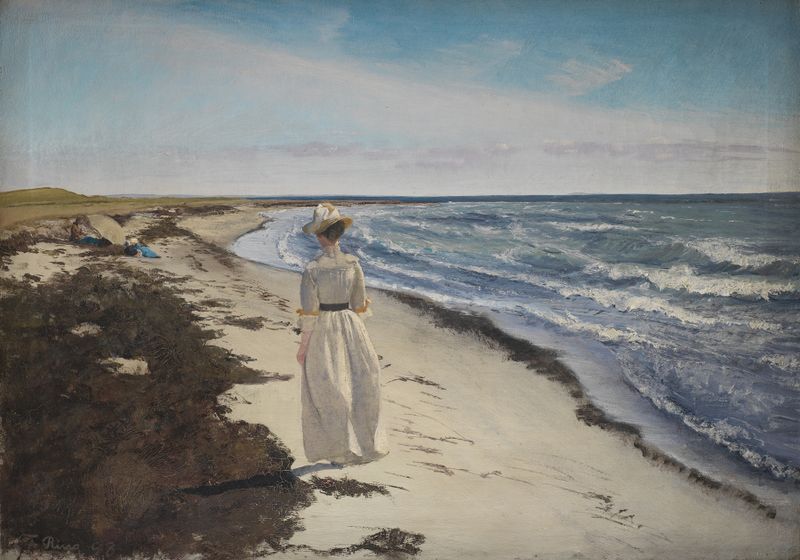
Lady at Karrebæksminde Beach, Zealand
Laurits Andersen Ring
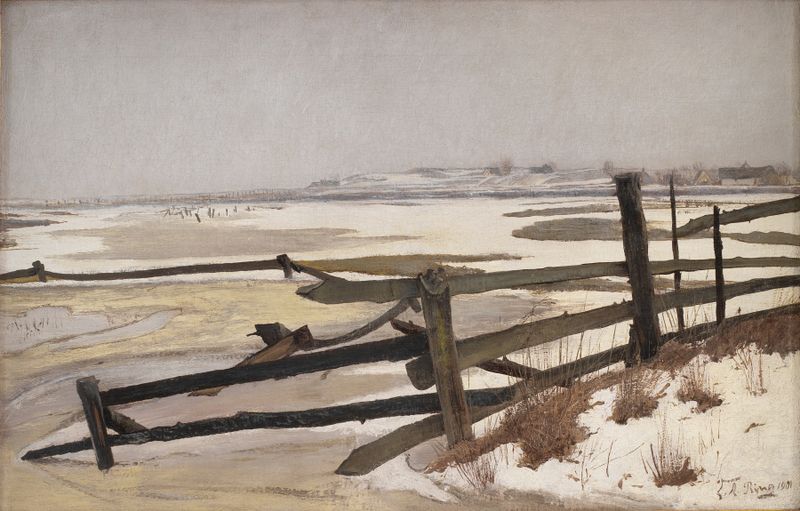
Thaw
Laurits Andersen Ring
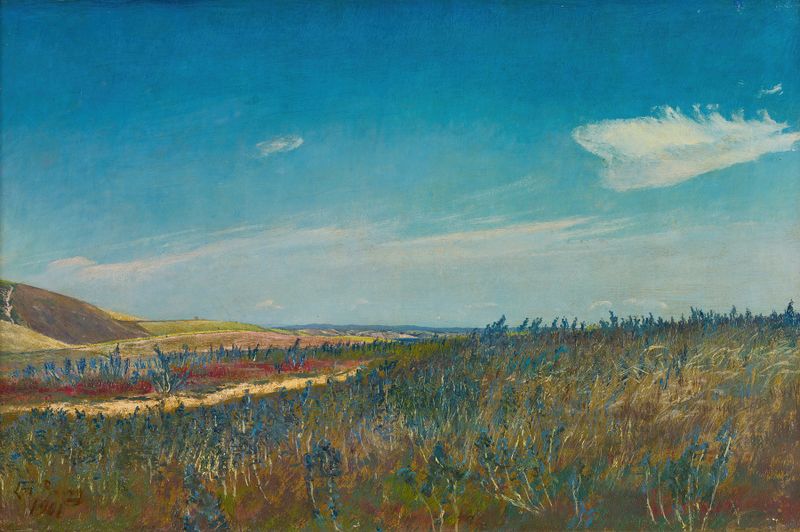
View Near Karrebaeksminde In North Zealand
Laurits Andersen Ring
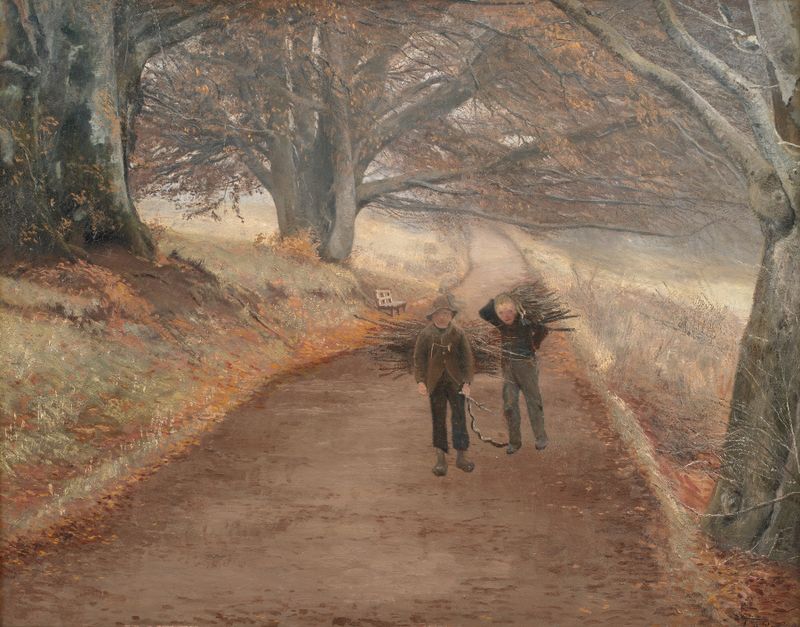
Footpath near Herlufsholm, Zealand
Laurits Andersen Ring
After Sunset
Laurits Andersen Ring
Foggy Winter Day. To the Left a Yellow House. Deep Snow.
Laurits Andersen Ring





