
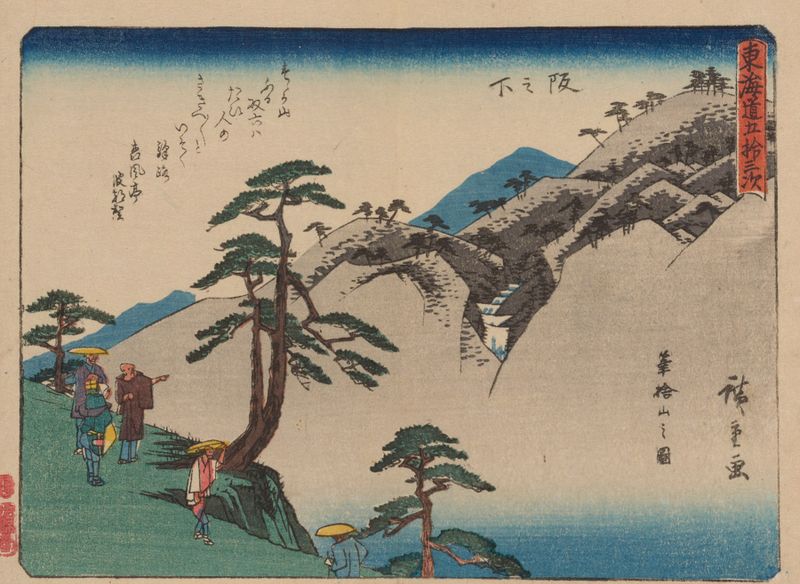
The Satta pass, Province of Sunshu — History & Facts
The fleeting nature of existence, captured in the delicate hues and sweeping landscapes, invites contemplation on creation and transience. Look to the left at the vibrant rolling hills, a tapestry of greens and ochres that beckons the eye. Notice how the gentle curves of the terrain guide the viewer's gaze towards the distant mountains, shrouded in a misty blue. The delicate yet deliberate brushwork captures both the tranquility of nature and the dynamic interplay of light, with soft pastels that evoke a sense of peace mingled with underlying tension.
Hiroshige’s meticulous attention to detail in the foliage, juxtaposed against the sky's gradation, reveals a masterful understanding of color and composition that draws us deeper into this serene yet poignant landscape. Within the scene lies a subtle contrast between the idyllic scenery and the uncertainty of the human experience. The path winding through the foreground suggests a journey, perhaps reflecting the struggles inherent in creation. The muted yet vivid palette embodies both beauty and melancholy, emphasizing the idea that joy often coexists with grief.
Each brushstroke encapsulates the duality of life, revealing that our most beautiful moments are often woven tightly with threads of loss and longing. Utagawa Hiroshige created this piece in 1835, during a pivotal time in Japan, when ukiyo-e was flourishing yet beginning to adapt to Western influences. Living in Edo, a center for artistic innovation, he was deeply influenced by his environment and the transient beauty of nature surrounding him. His work at this time reflects an awareness of the changing landscape of art and culture, conveying a sense of urgency and depth as he embraced the fleeting moments that define existence.
More Artworks by Utagawa Hiroshige
Browse all →
Sudden Shower over Shin Ohashi Bridge and Atake (Ohashi Atake no yudachi), from the series "One Hundred Famous Views of Edo (Meisho Edo hyakkei)"
Utagawa Hiroshige
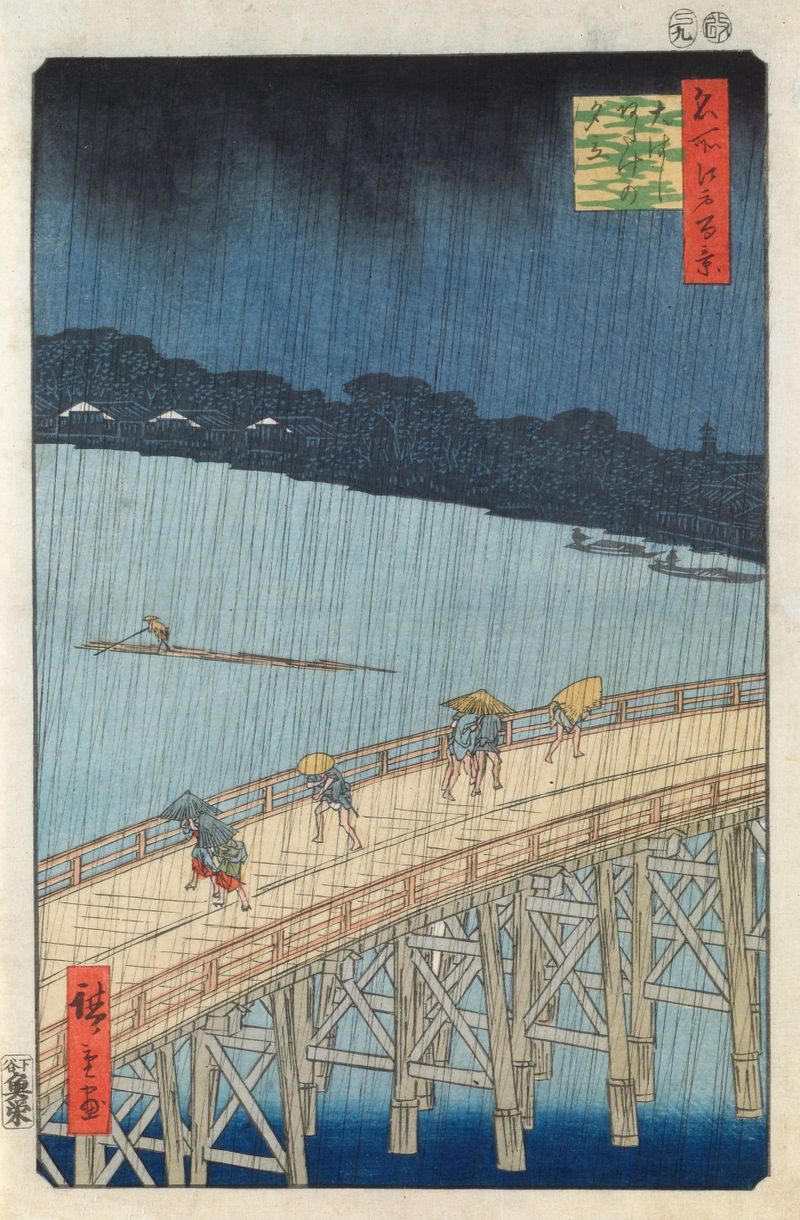
Sudden Shower Over Ohashi Bridge and Atake
Utagawa Hiroshige
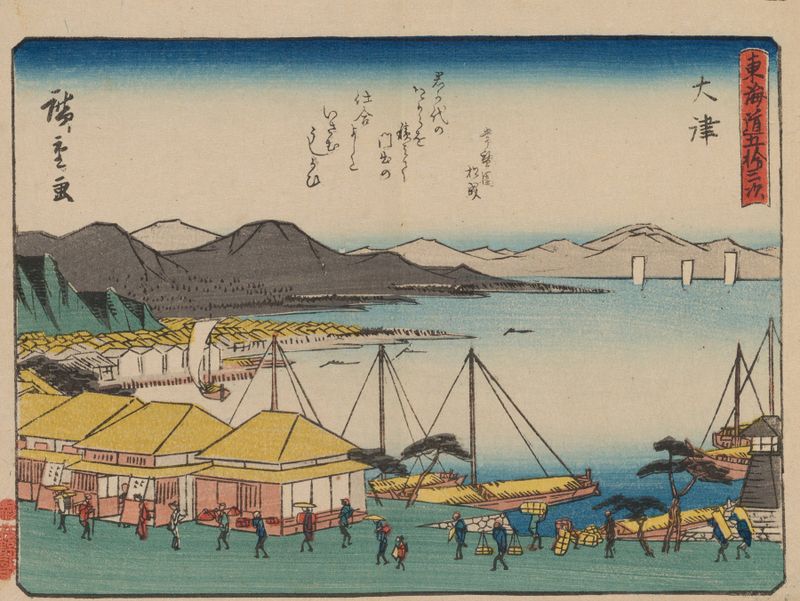
Tokaido gojusantsugi, Pl.54
Utagawa Hiroshige
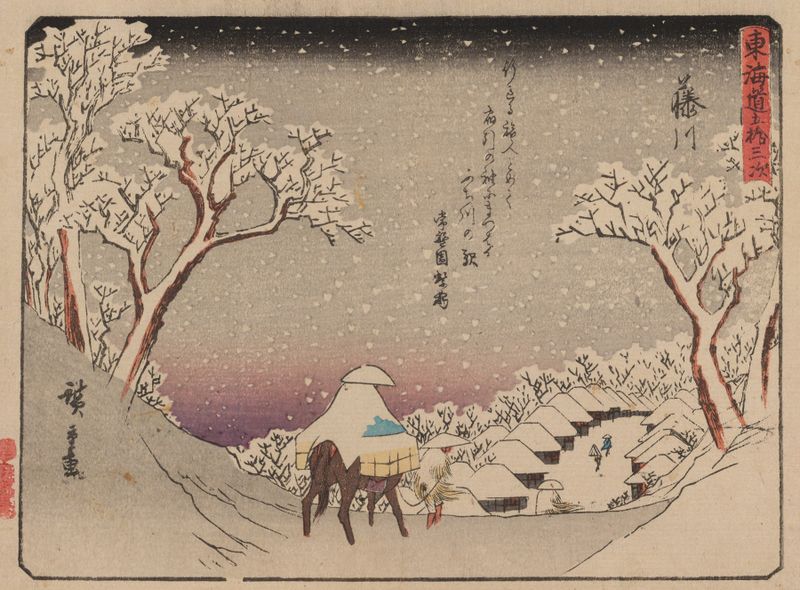
Tokaido gojusantsugi, Pl.38
Utagawa Hiroshige
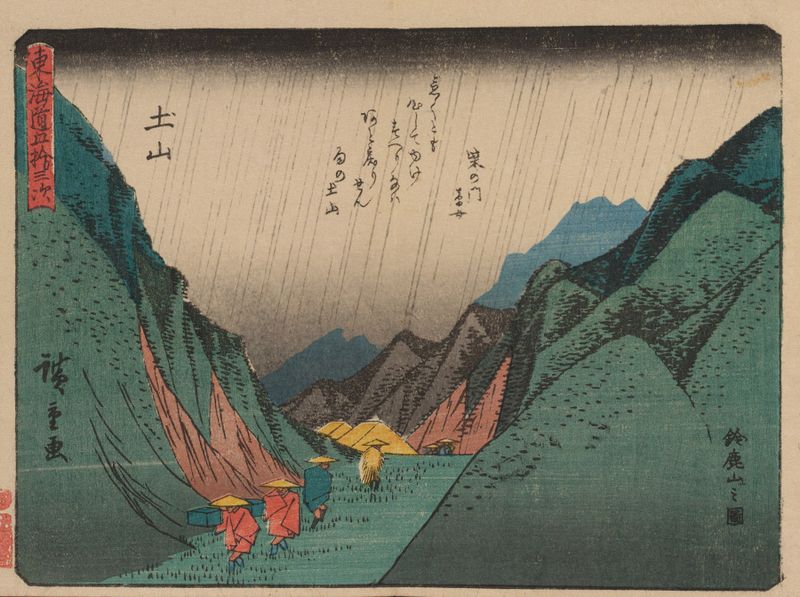
Tokaido gojusantsugi, Pl.50
Utagawa Hiroshige
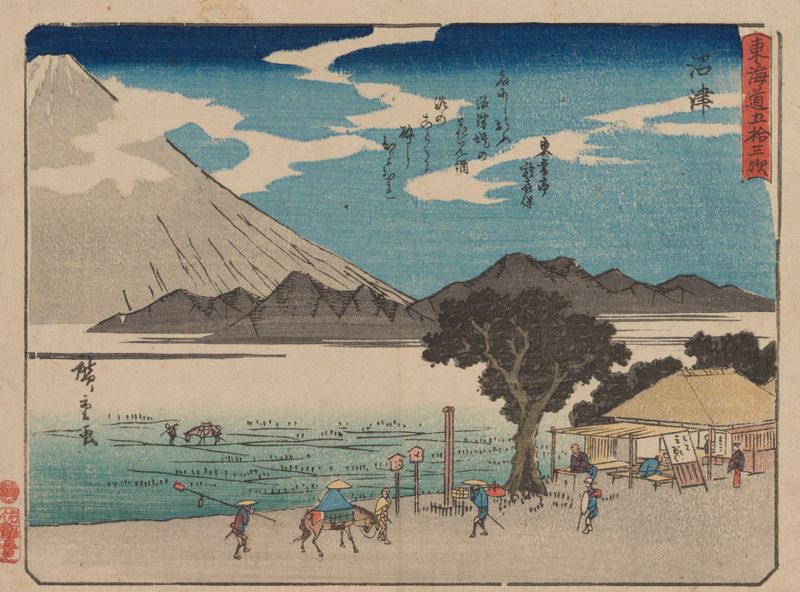
Tokaido gojusantsugi, Pl.13
Utagawa Hiroshige
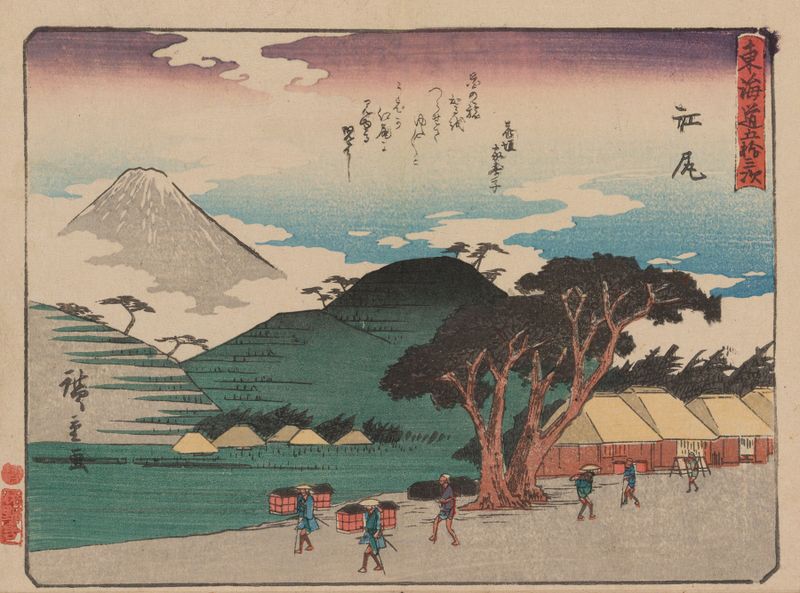
Tokaido gojusantsugi, Pl.19
Utagawa Hiroshige
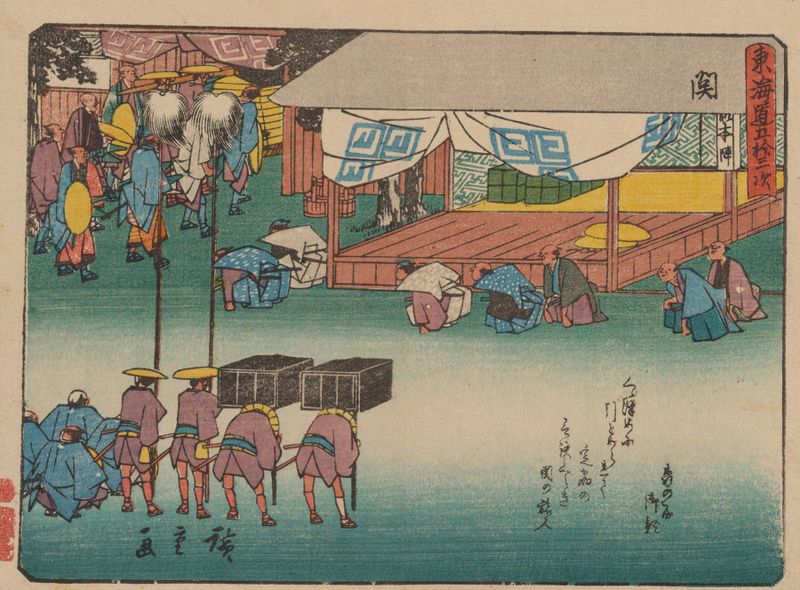
Tokaido gojusantsugi, Pl.48
Utagawa Hiroshige
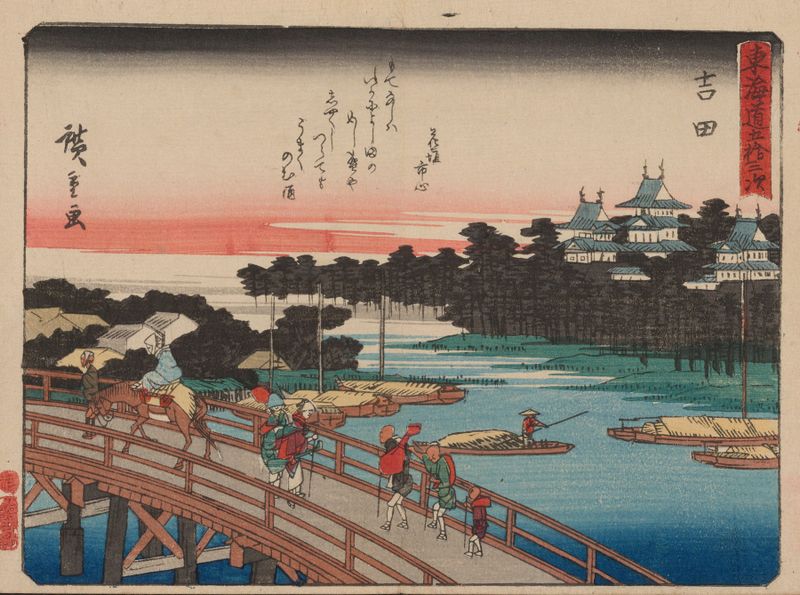
Tokaido gojusantsugi, Pl.35
Utagawa Hiroshige
Tokaido gojusantsugi, Pl.49
Utagawa Hiroshige





