
The Sea King and the Magic Jewels — History & Facts
What first catches the eye in The Sea King and the Magic Jewels is the sense of movement and discovery, as if the viewer has stumbled into an unfolding scene of enchantment. The figures, robed in delicate patterned garments, seem to glide along a path of scattered petals toward a meeting at the heart of the composition. One figure, perched high in a tree, peers down with a sense of urgency or curiosity, while another, framed by the curling forms of giant shells and seaweed, gestures with a hand that might be offering or commanding.
The palette is gentle but filled with hidden energy—soft greens and pinks set off by the intricate detailing of the costumes and the fantastical, almost otherworldly landscape. Every element draws the gaze forward, deeper into the story, as if the viewer is being invited to follow the procession and unravel the mystery at its center. Created in 1910 for Green Willow and Other Japanese Fairy Tales, this illustration by Warwick Goble belongs to a moment when Western artists were captivated by Japanese folklore and design. Books like this, published in London for a curious and expanding audience, brought tales from distant cultures into the parlors and nurseries of Edwardian England.
Goble’s work stands out for its blend of English illustration tradition and Japanese motifs—notice the stylized architecture, the flowing robes, and the dreamlike setting, all filtered through a Western lens. History has kept few traces of the exact journey of this particular page, but its presence in a digitized archive reminds us how stories and images once traveled the world through the pages of a book. Look again, and see how the magic of that cultural exchange still shimmers in the folds of every painted sleeve.
More Artworks by Warwick Goble
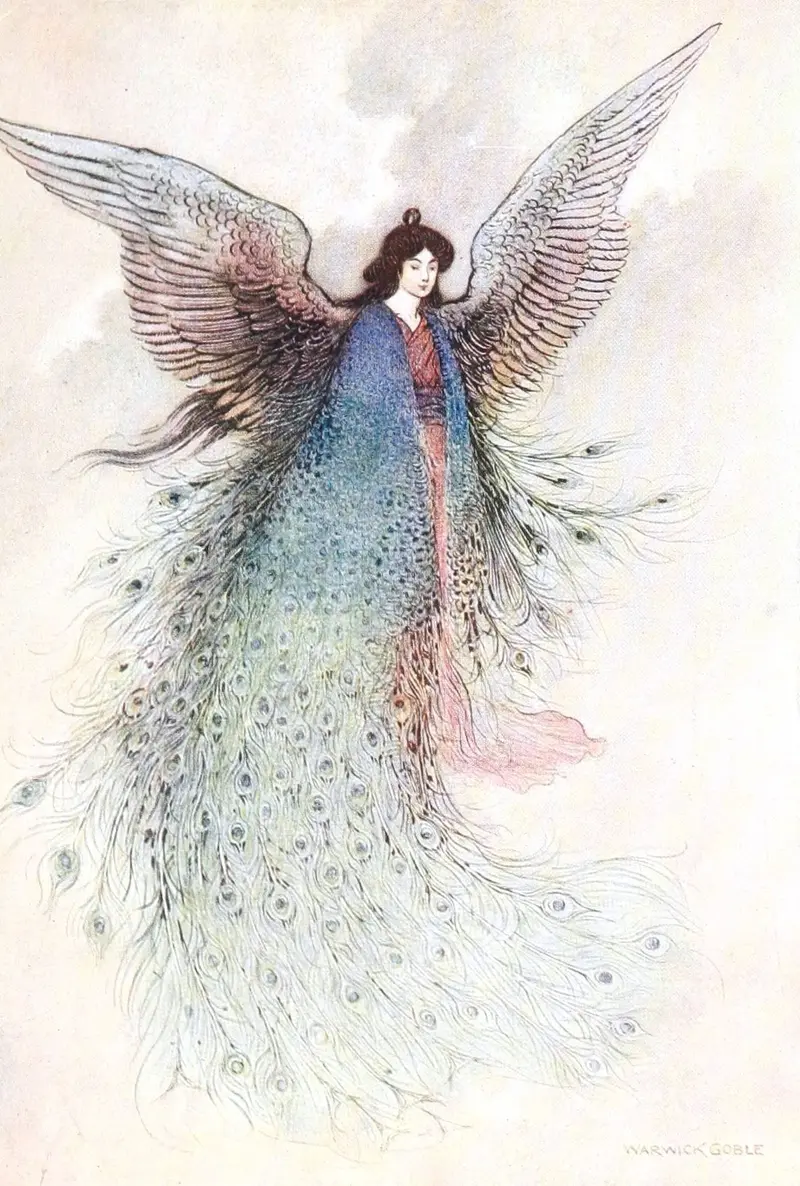
The Moon Maiden (Green Willow)
Warwick Goble
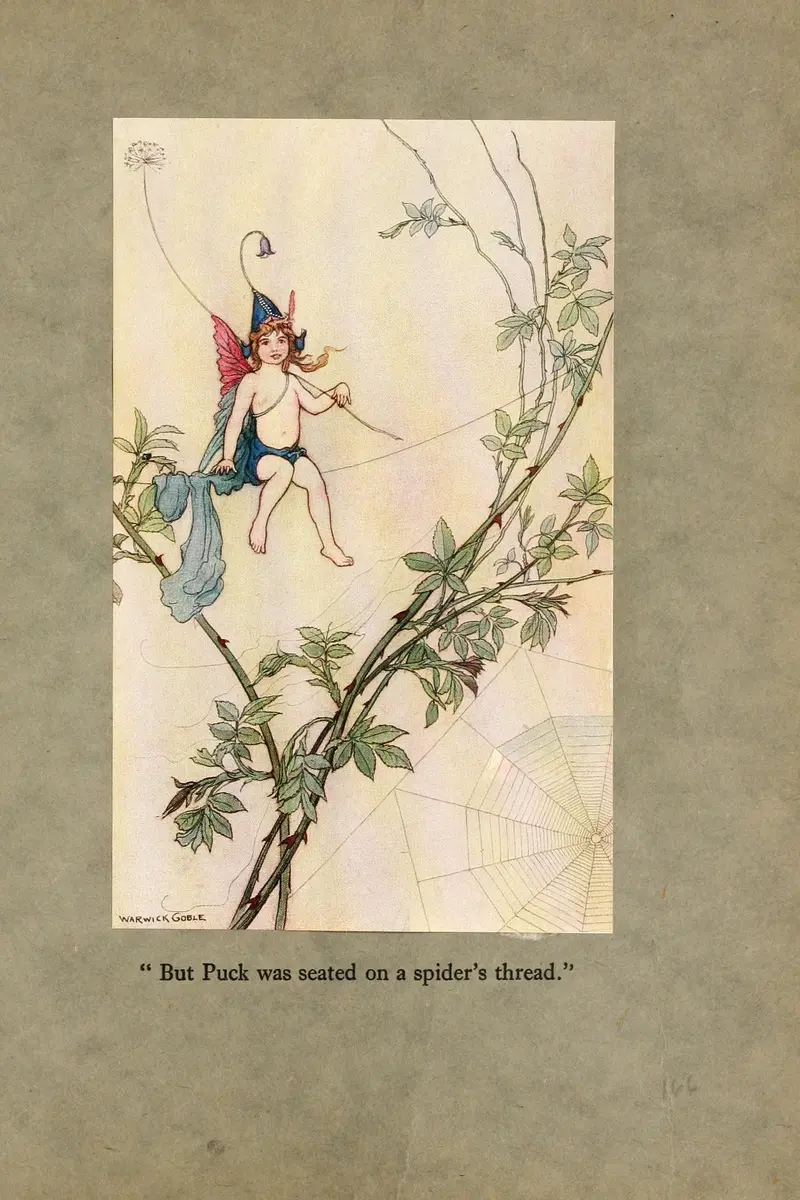
Puck
Warwick Goble

The Ordeal of Queen Draupadi
Warwick Goble

Momotaro
Warwick Goble
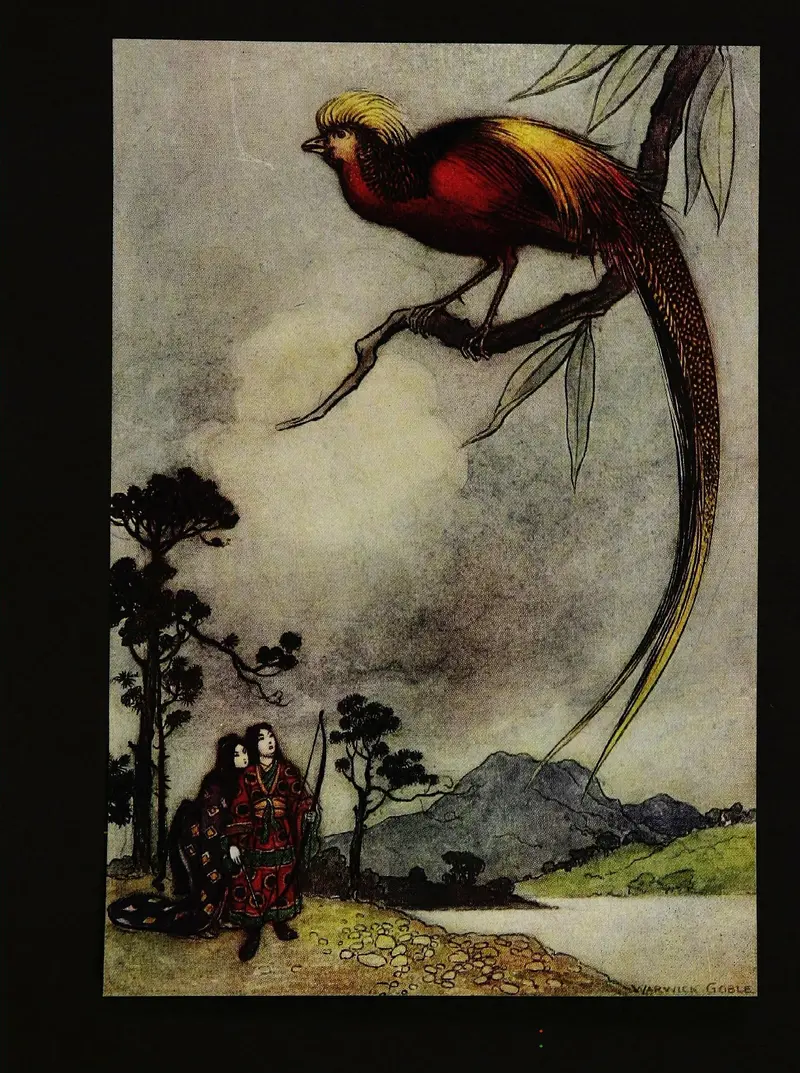
The Singing Bird of Heaven
Warwick Goble
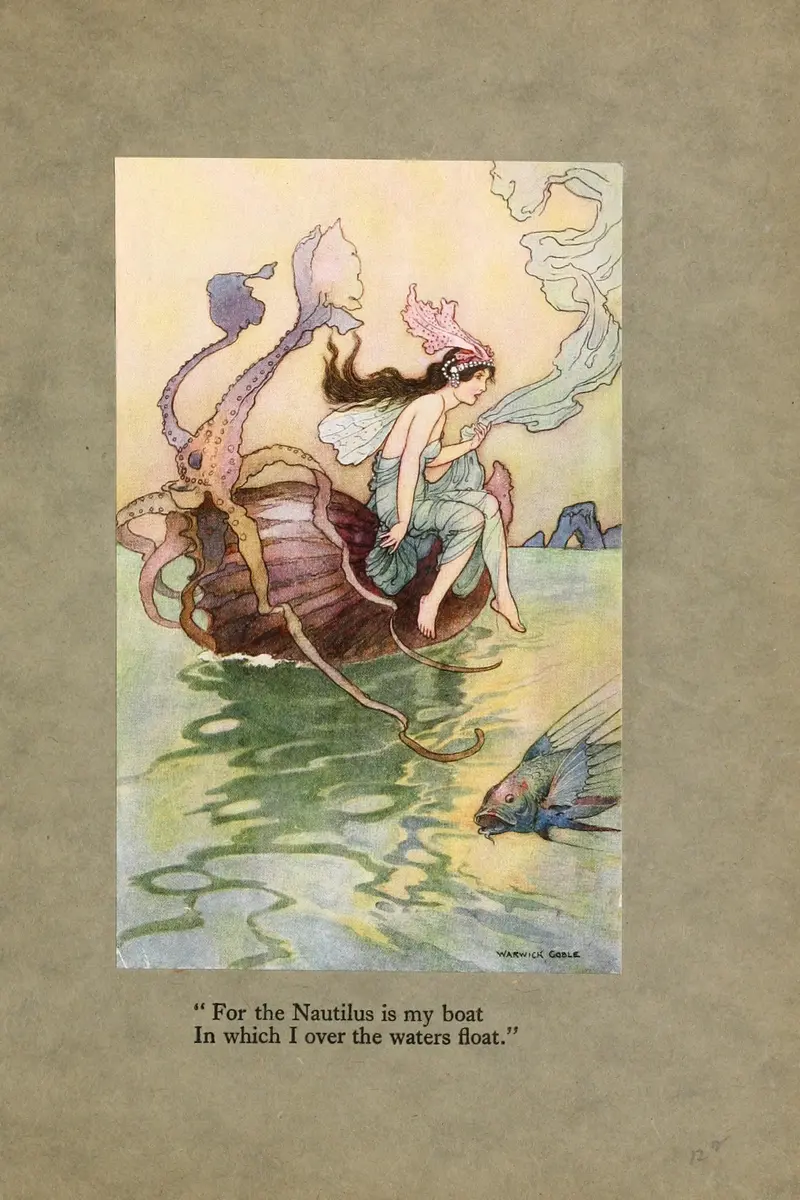
Fairies on the Seashore
Warwick Goble
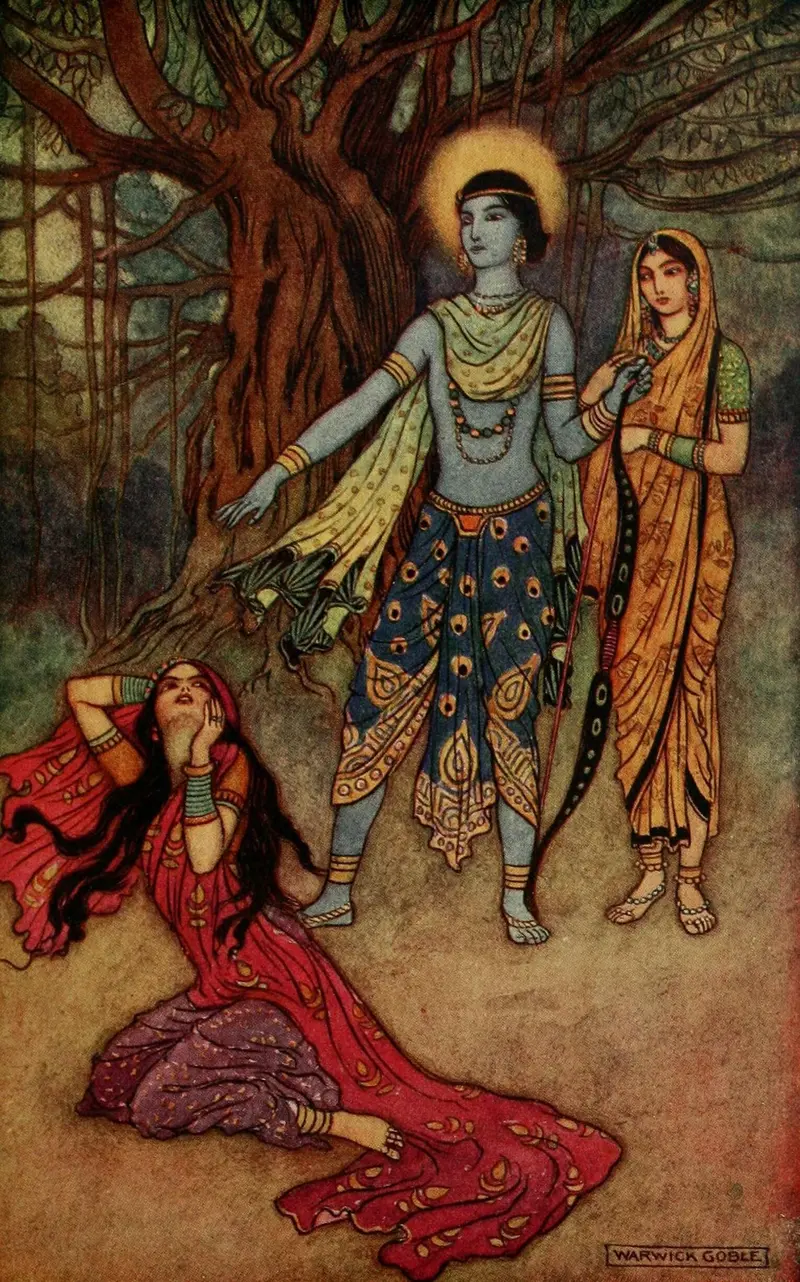
Rama Spurns the Demon Lover
Warwick Goble
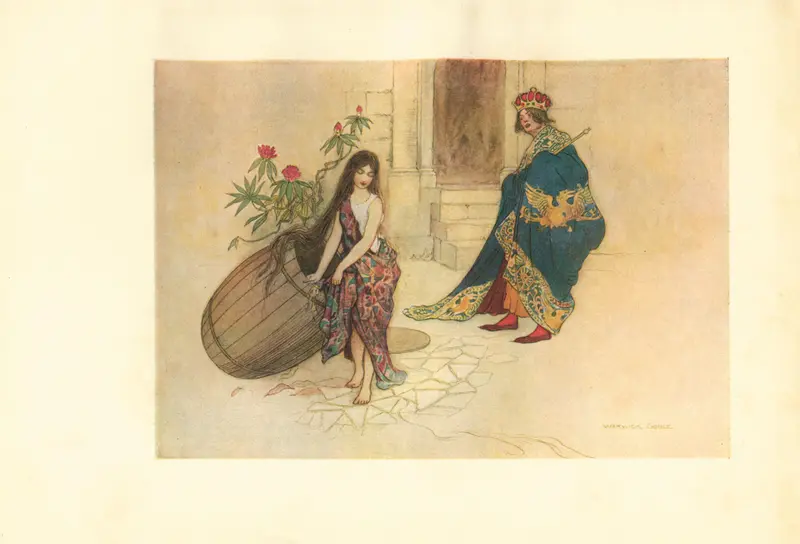
Cannetella Released from the Cask
Warwick Goble
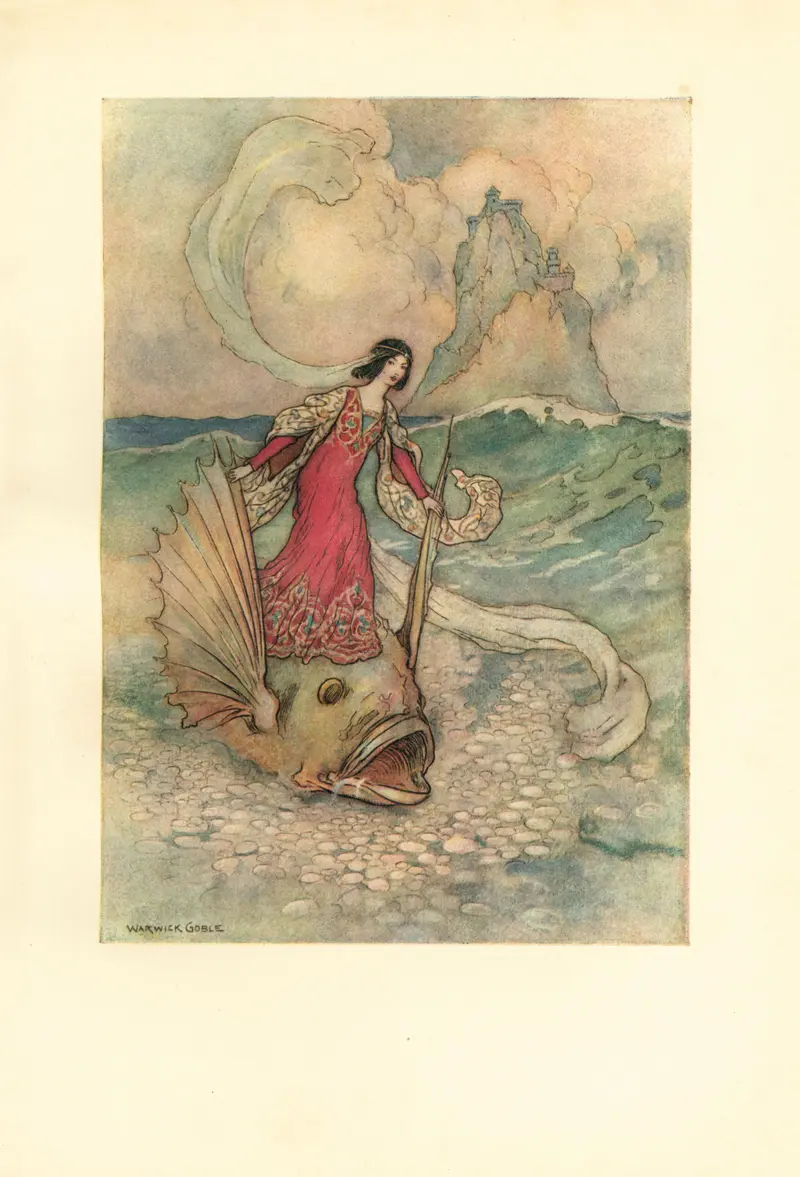
Rita Riding on the Dolphin
Warwick Goble
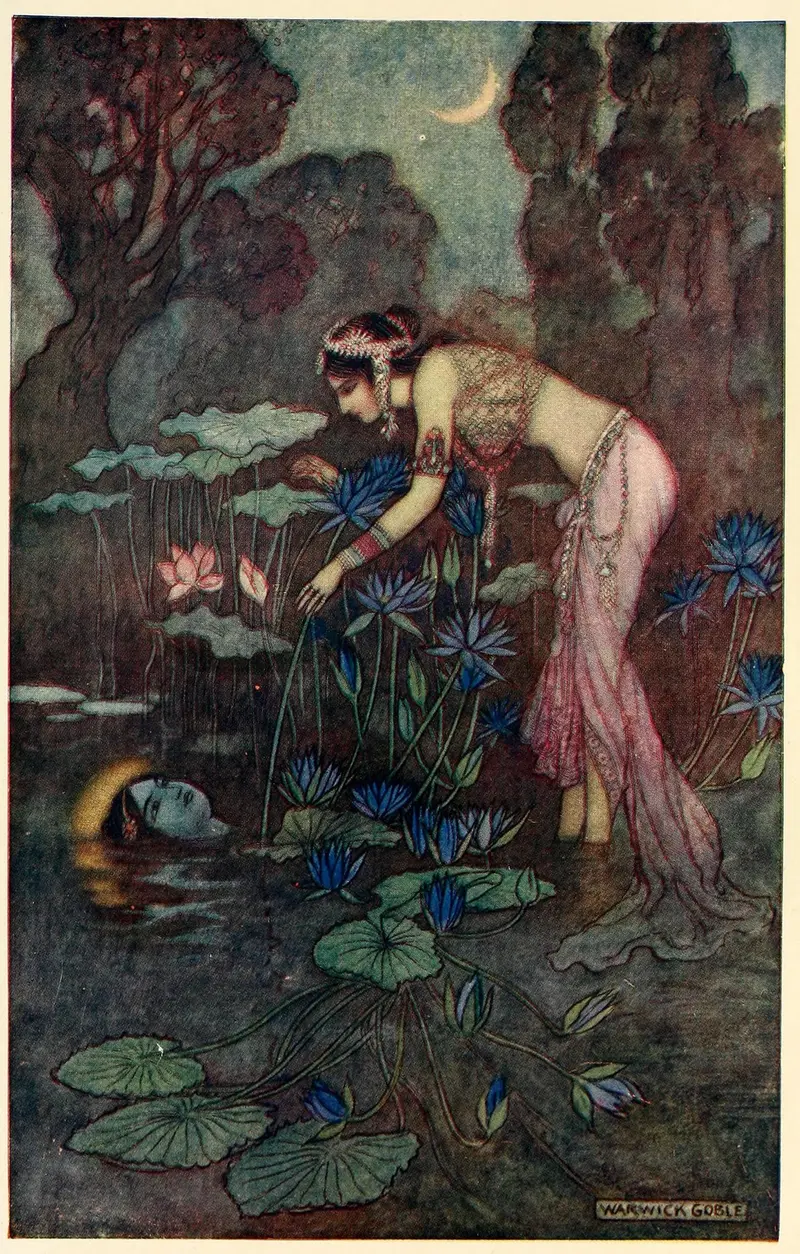
Sita Finds Rama Among Lotus Blooms
Warwick Goble





