
The Servant — History & Facts
A moment of pause and directness draws the viewer into The Servant by Alexandre Falguière. The young woman’s gaze meets ours with a frankness that feels almost modern, her cheeks flushed from work, her hands steady as she polishes the heavy metal vessel in her lap. The light falls softly across her arms and face, picking out the gentle blue of her dress and the crisp white of her apron, while earthy browns and muted greens recede behind her, focusing all attention on her presence.
The towel draped over her skirt is not just a prop, but a sign of her labor—creased, practical, and utterly real. Even the scattered implements at her feet seem to echo the rhythms of daily life, grounding the scene in the humble dignity of work. Painted in the mid-19th century, this image belongs to a tradition that found beauty and meaning in the ordinary moments of working-class existence. In an era when industrialization was transforming society, artists like Falguière—better known as a sculptor—sometimes turned to painting to capture the humanity of those who served in the background of grander narratives.
The painting now resides in Sweden’s Nationalmuseum, a reminder that history has kept few traces of such quiet lives, except in works like this. The servant’s direct gaze invites us to return her look, to recognize a world that was both distant and familiar, and to wonder what stories linger behind her steady composure.
More Artworks by Alexandre Falguière

Alexandre Jean Joseph Falguière La Cène
Alexandre Falguière
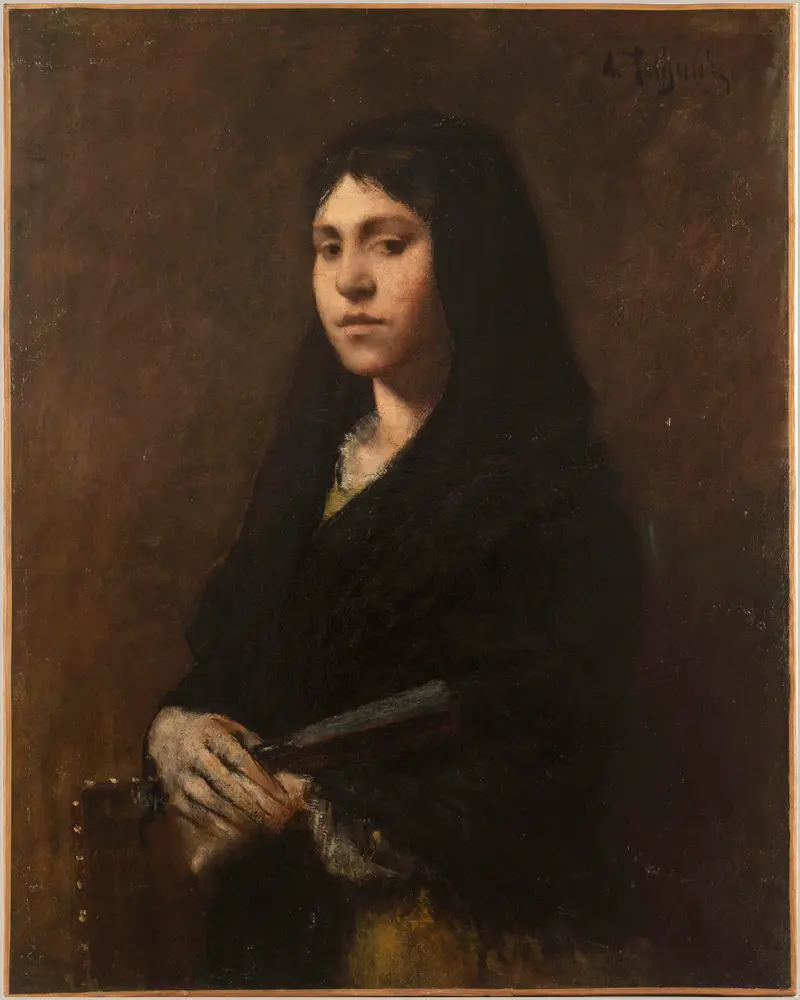
Alexandre Jean Joseph Falguière Femme à l'éventail
Alexandre Falguière
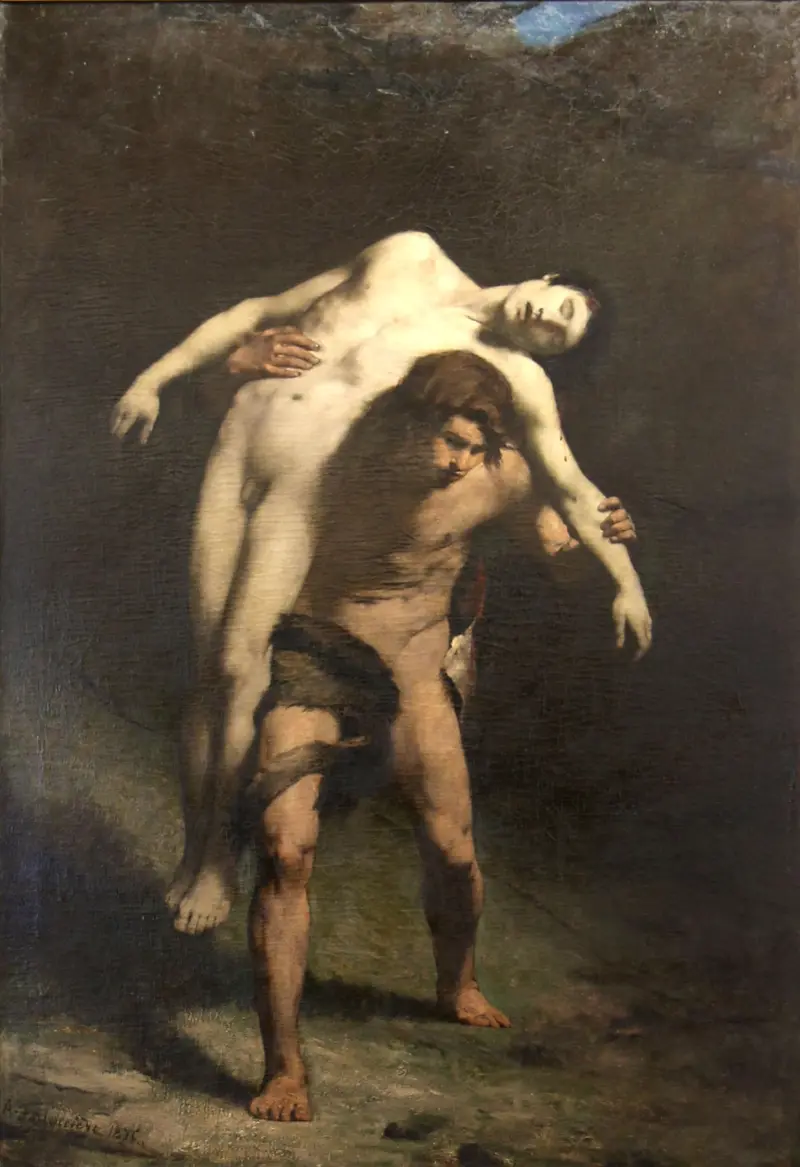
Caïn et Abel
Alexandre Falguière
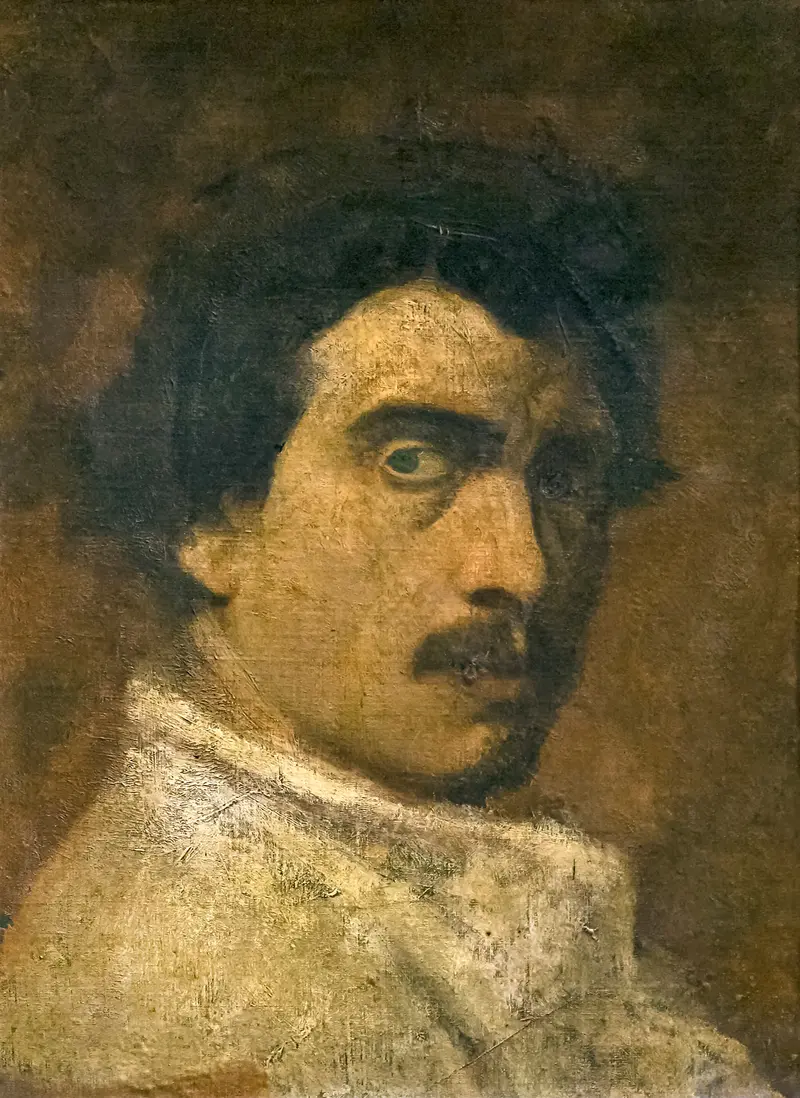
Autoportrait de Jean-Alexandre-Joseph Falguière
Alexandre Falguière
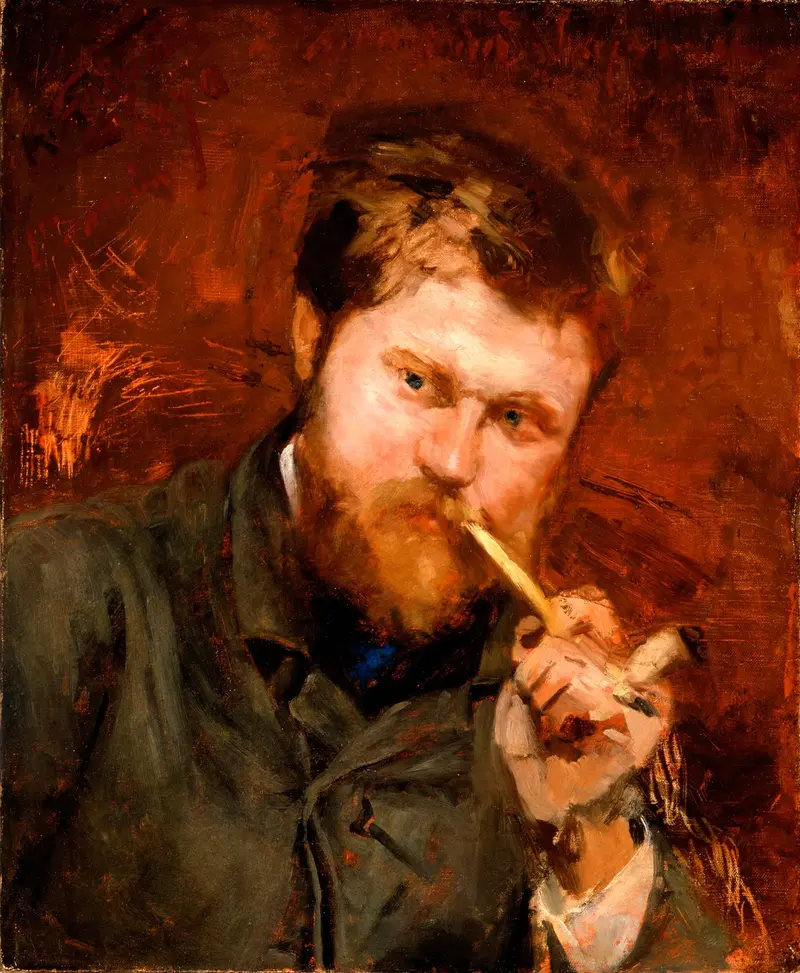
Man Smoking a Pipe
Alexandre Falguière
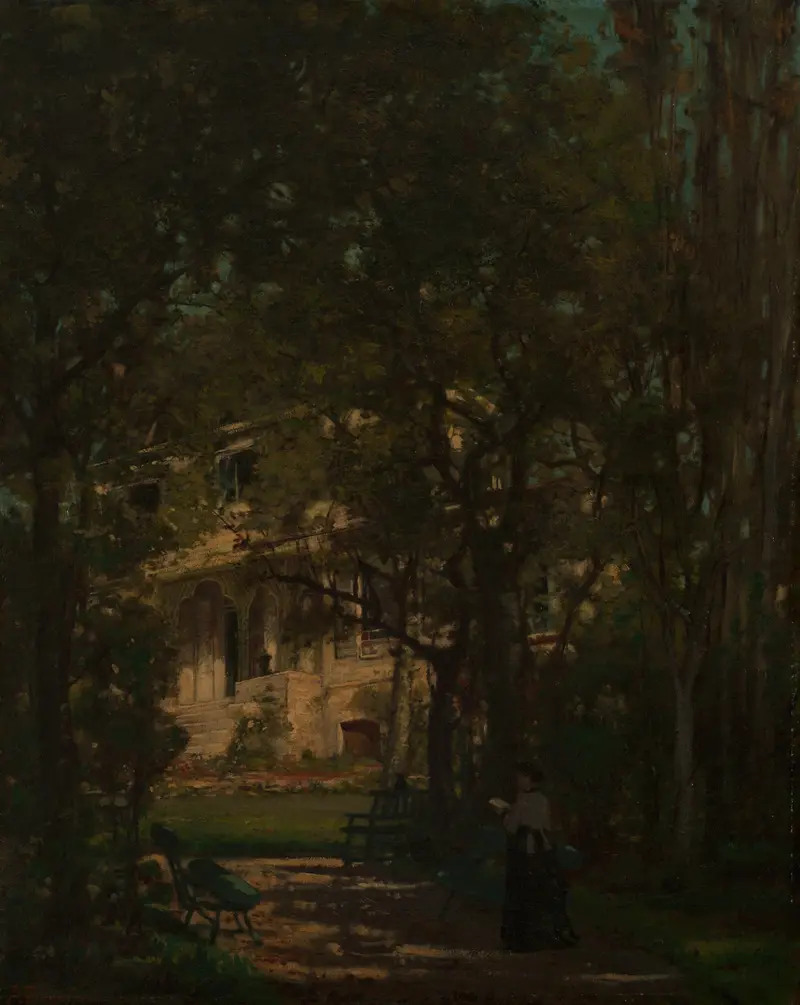
Maison de campagne de l’artiste
Alexandre Falguière
More Genre Scene Art

Banquet of the Officers of the St George Civic Guard
Frans Hals

Rembrandt and Saskia in the Scene of the Prodigal Son
Rembrandt van Rijn

Bal du moulin de la Galette
Pierre-Auguste Renoir

Quadrille at the Moulin Rouge
Henri de Toulouse-Lautrec

A Burial at Ornans
Gustave Courbet

When Will You Marry?
Paul Gauguin