
The Shepherdess — History & Facts
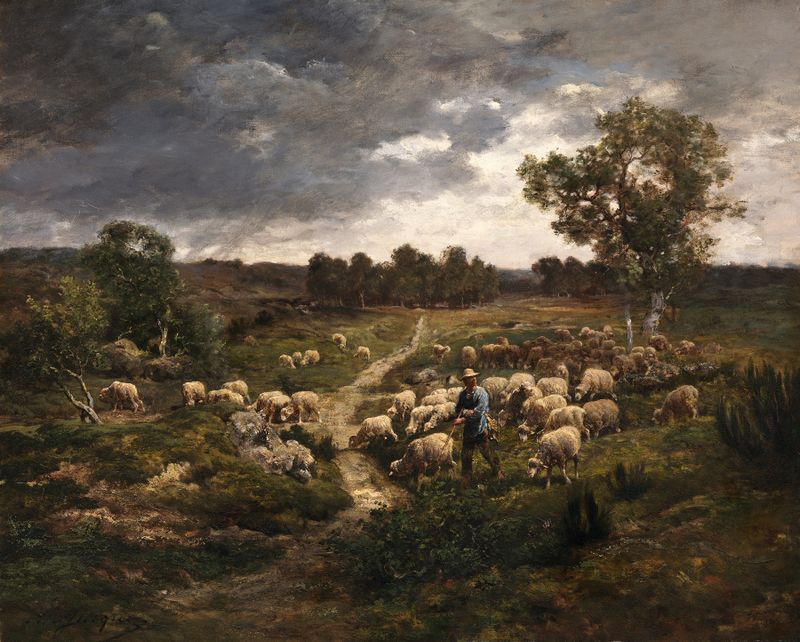
What if beauty was never meant to be finished? A question echoes through the stillness of The Shepherdess, where simplicity and grace converge in a moment suspended in time. Focus on the serene figure in the foreground, her delicate posture and gentle expression drawing you in. Notice how the soft light caresses her form, illuminating the warmth of her skin while casting subtle shadows that intertwine with the straw at her feet. The muted palette—earthy browns and soft greens—fosters an atmosphere of tranquility, inviting the viewer to share in her quiet reverie.
The brushstrokes are tender, almost whispering, as if revealing the intimacy of the scene while maintaining a sacred distance. Yet beneath this pastoral calm lies an emotional tension; the shepherdess is both a guardian of her flock and an embodiment of solitude. Her gaze hints at an unspoken longing, suggesting a connection to a larger world beyond the tranquil landscape. The sheep, scattered in the background, symbolize the duality of dependence and freedom, reflecting a balance between nurturing and the inevitable void that comes with isolation.
Each element in the composition speaks to the transient nature of beauty—the fleeting moment captured on canvas raises questions about permanence and the essence of life. Charles Emile Jacque painted this work around 1869, during a period when he was deeply influenced by the Barbizon School's focus on nature and rural life. He was seeking to capture the essence of pastoral scenes, contrasting the urbanization sweeping through France at the time. This artwork reflects his desire to preserve the beauty of a vanishing agrarian lifestyle, encapsulating both the serenity of the countryside and the poignant realization of its impermanence in a rapidly changing world.
More Artworks by Charles Emile Jacque
Browse all →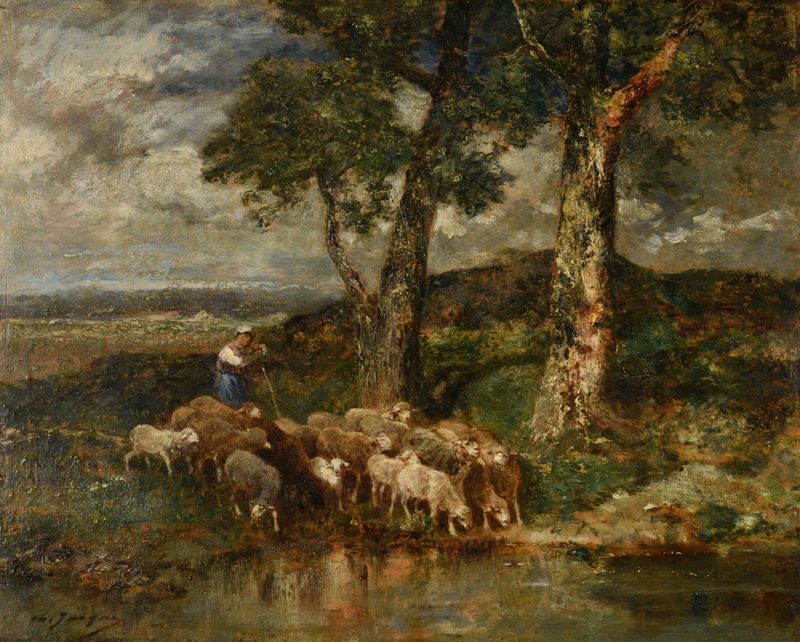
Moutons à l’abreuvoir
Charles Emile Jacque

The Sheepfold
Charles Emile Jacque
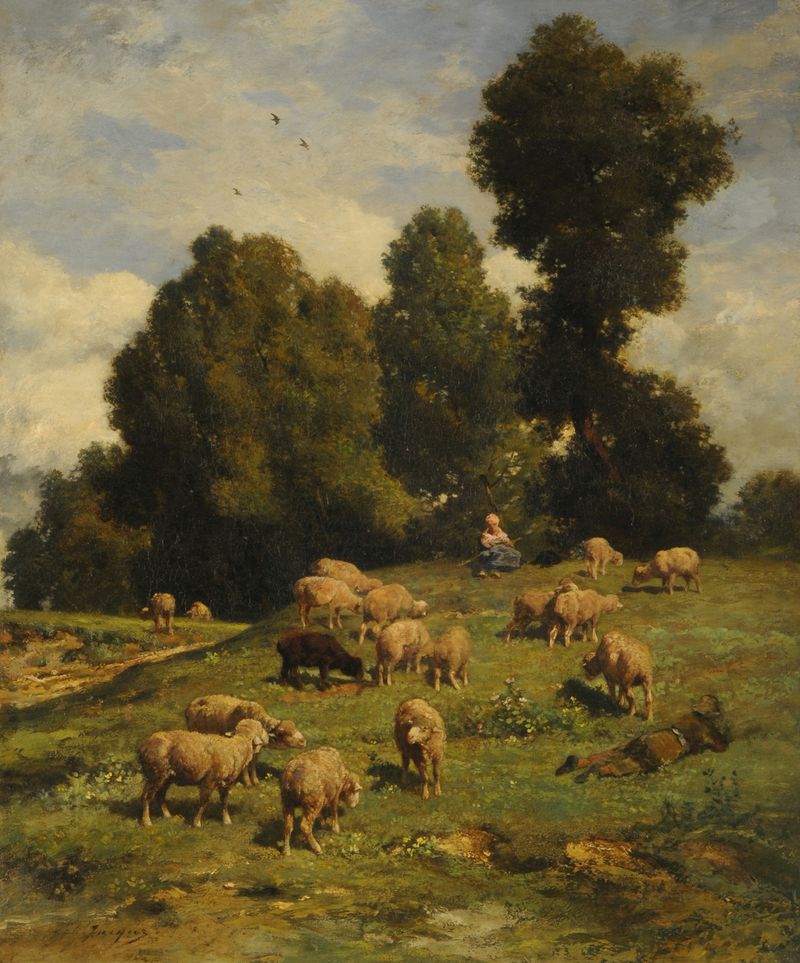
Moutons au pâturage
Charles Emile Jacque
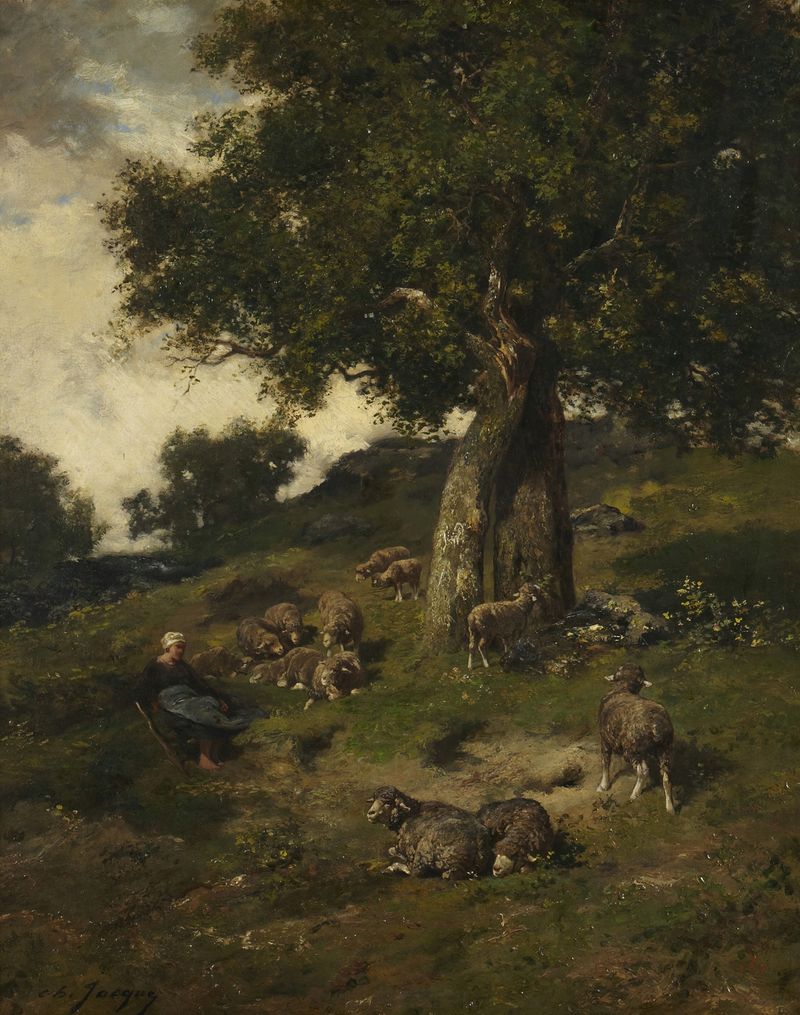
Shepherdess and Sheep
Charles Emile Jacque
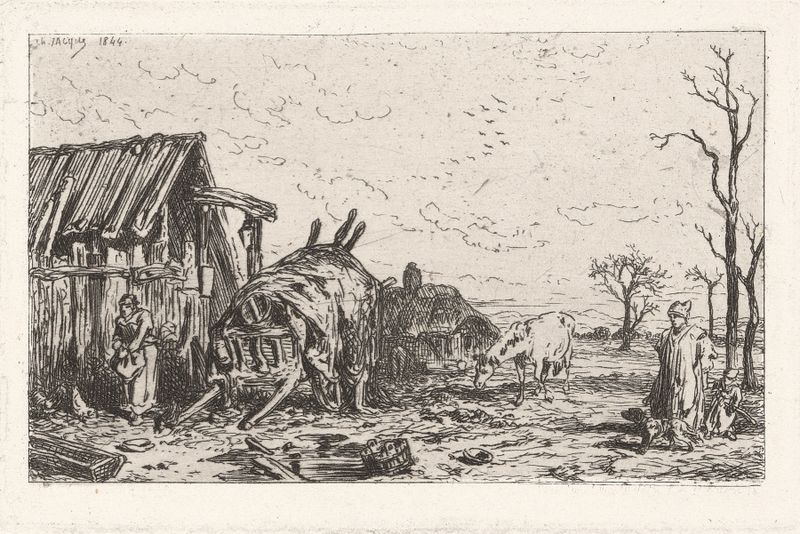
Rural farm scene with barn, cart, two farmers
Charles Emile Jacque

Shepherdess and her flock
Charles Emile Jacque

Ducks in the courtyard
Charles Emile Jacque

Two-horse plow in field
Charles Emile Jacque

Farmers loading ox cart
Charles Emile Jacque
Sheep
Charles Emile Jacque





