
The Slaying of the Serpent — History & Facts
It is the coil of the serpent that first catches the eye, winding with impossible grace around the golden canopy, its head poised above the sleeping children like a living threat from a dream. The tension in The Slaying of the Serpent is almost theatrical: the snake’s open mouth and unblinking gaze draw the viewer’s attention to the peril, while the young figure in green, dagger in hand, stands frozen at the threshold between fear and action. Every detail in the room—ornate bed, patterned screens, jewel-toned lantern—conspires to heighten the sense of a world both magical and menacing.
The palette is rich but subdued, the shadows deep, lending a hush to the scene that makes the moment before the strike feel endless. Created by Warwick Goble in 1912 as an illustration for Folk-tales of Bengal by Lal Behari Dey, this work belongs to a period when European artists were captivated by the stories and visual traditions of South Asia. Book illustration was then enjoying a golden age, with publishers commissioning artists to bring new worlds to life for readers young and old. Goble’s intricate linework and jewel-like colors reflect both the tastes of Edwardian England and the fascination with the “exotic” East so prevalent in his time.
While little is recorded about the specific journey of this image beyond its appearance in the 1912 edition, it stands as a testament to the era’s hunger for wonder—and invites us to linger, searching the shadows for what might come next.
More Artworks by Warwick Goble
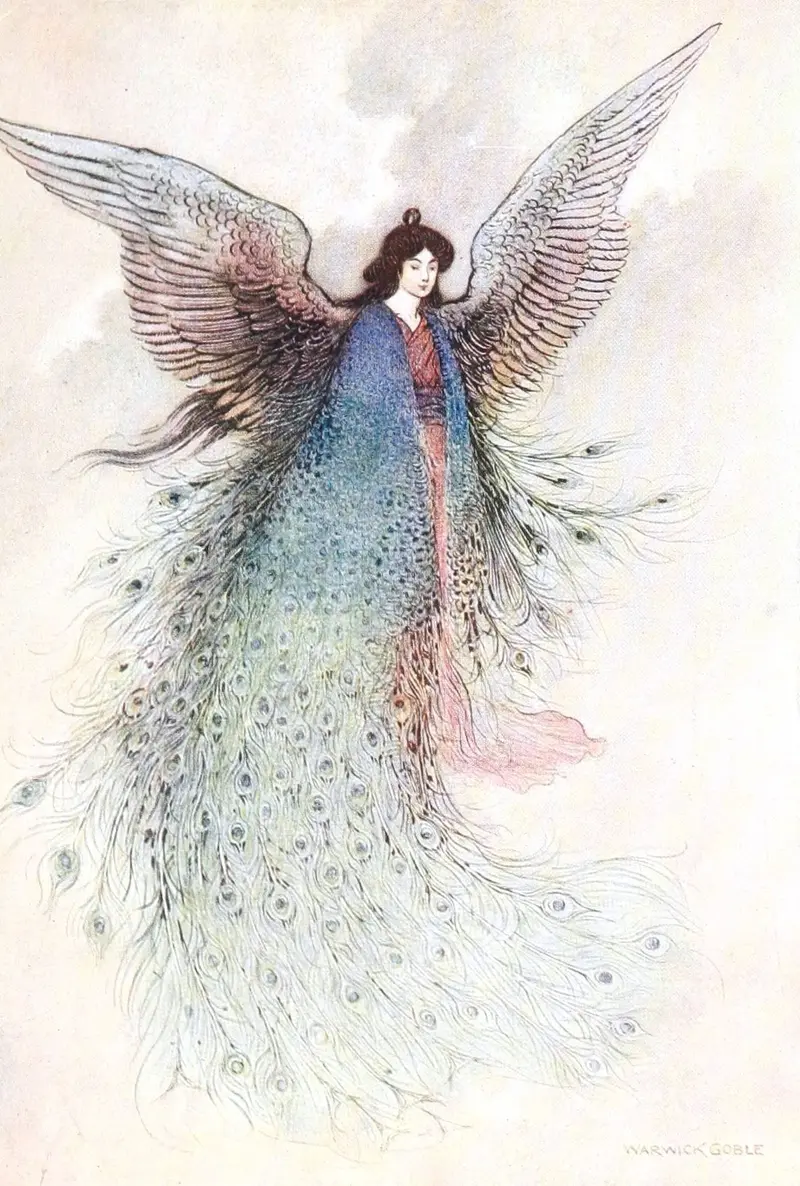
The Moon Maiden (Green Willow)
Warwick Goble
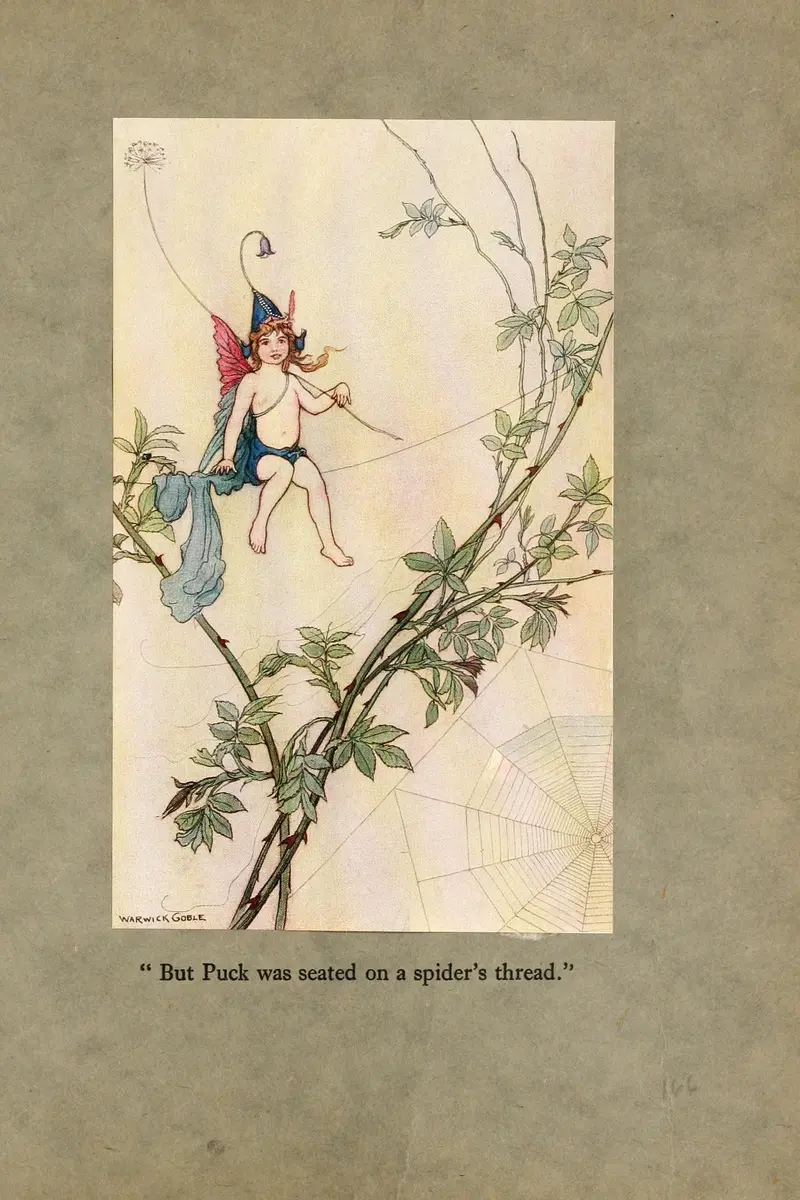
Puck
Warwick Goble

The Ordeal of Queen Draupadi
Warwick Goble

Momotaro
Warwick Goble
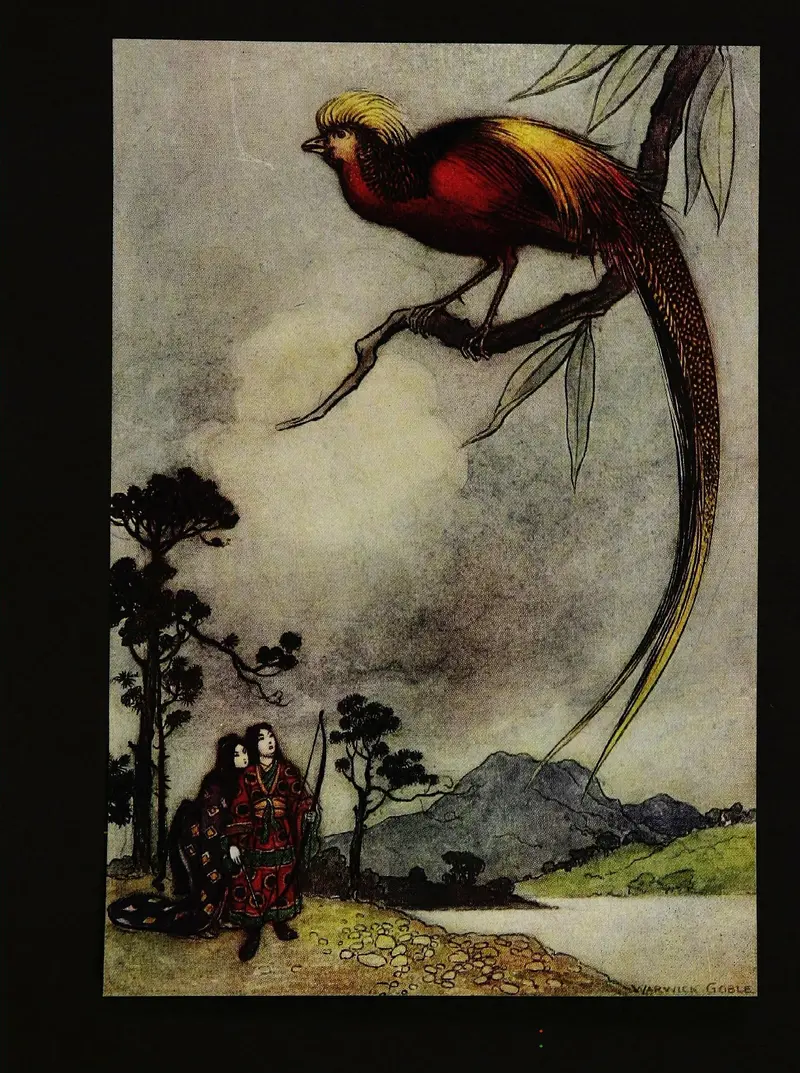
The Singing Bird of Heaven
Warwick Goble
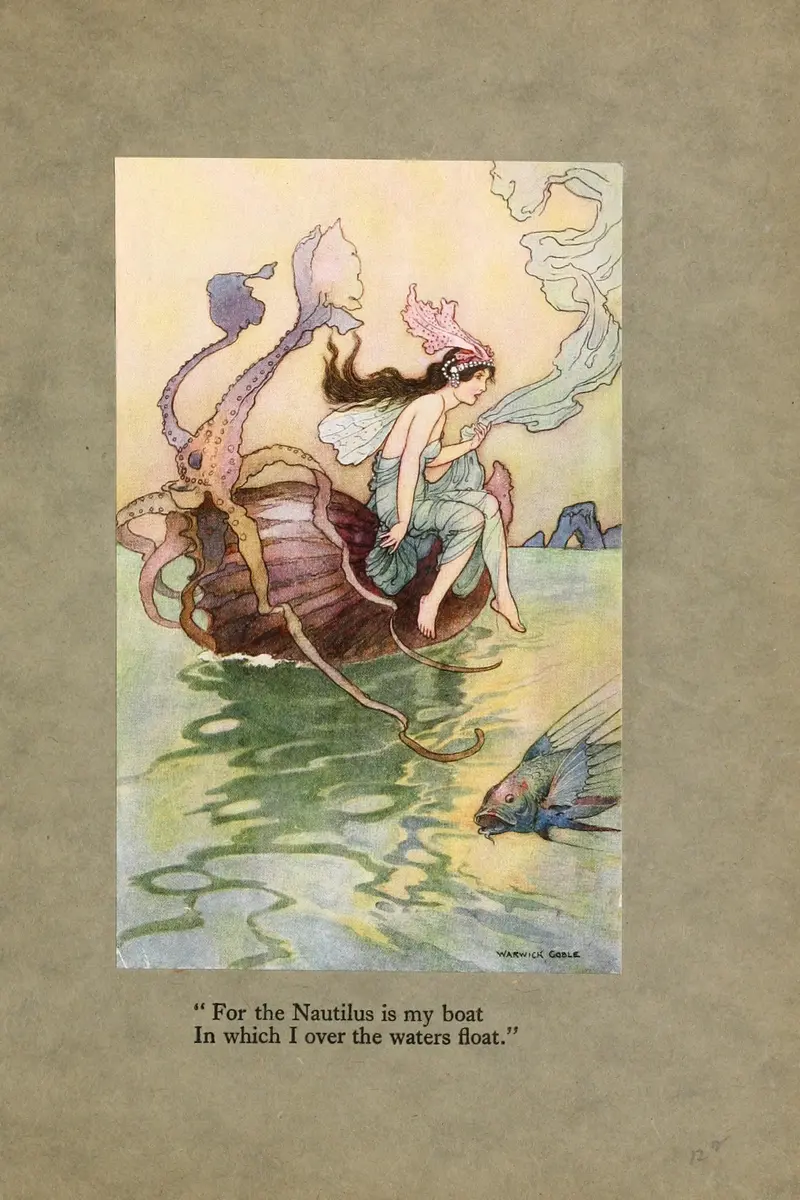
Fairies on the Seashore
Warwick Goble
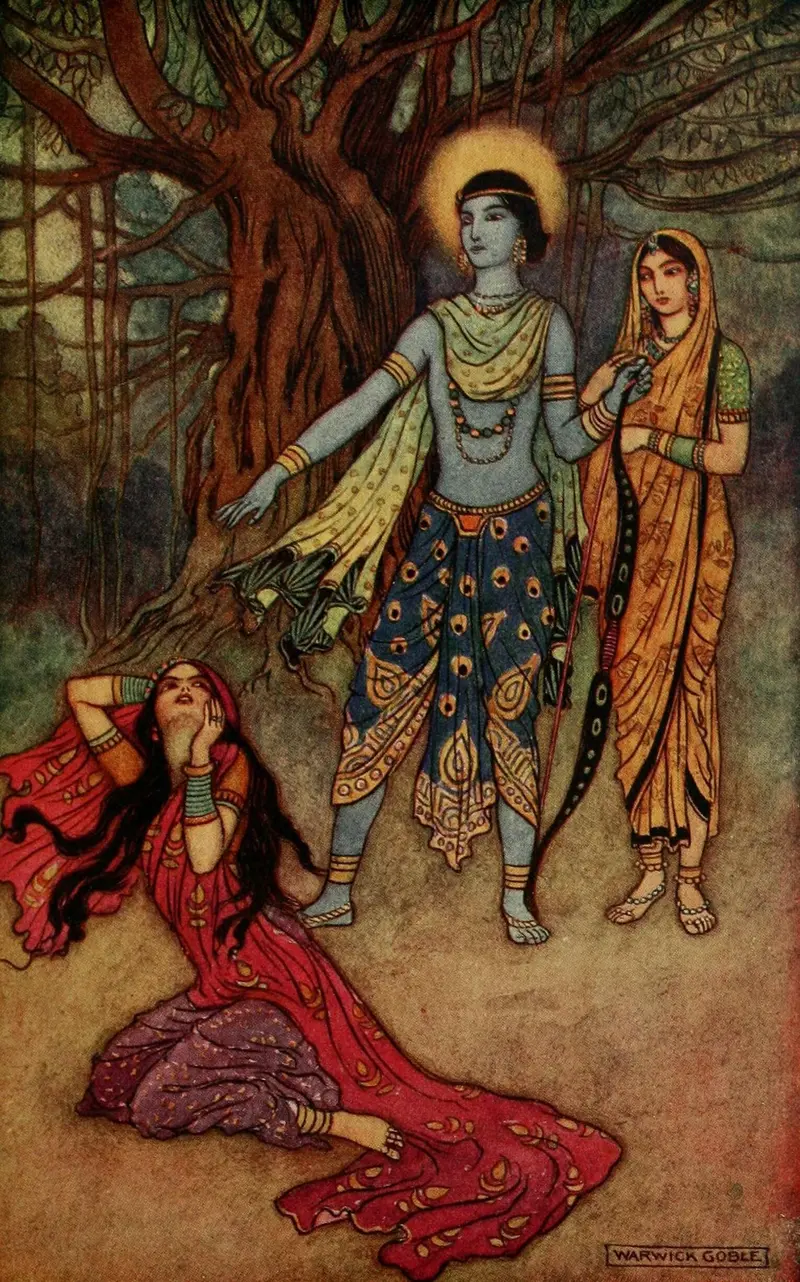
Rama Spurns the Demon Lover
Warwick Goble
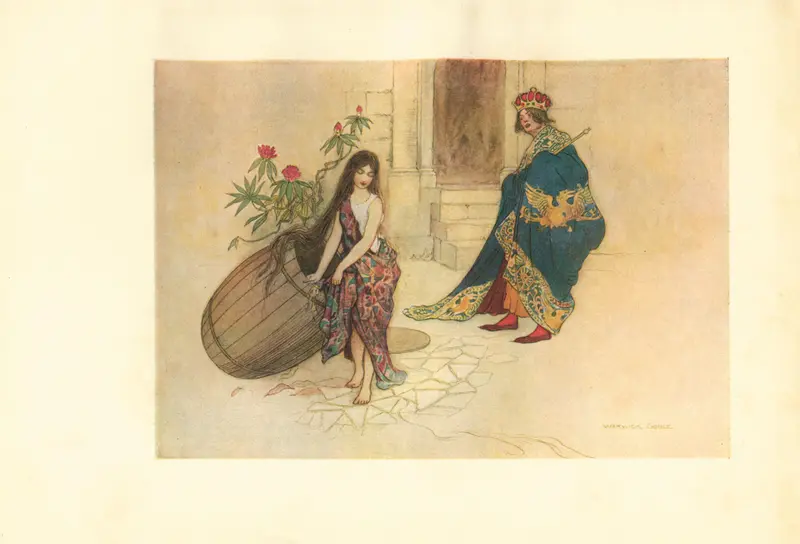
Cannetella Released from the Cask
Warwick Goble
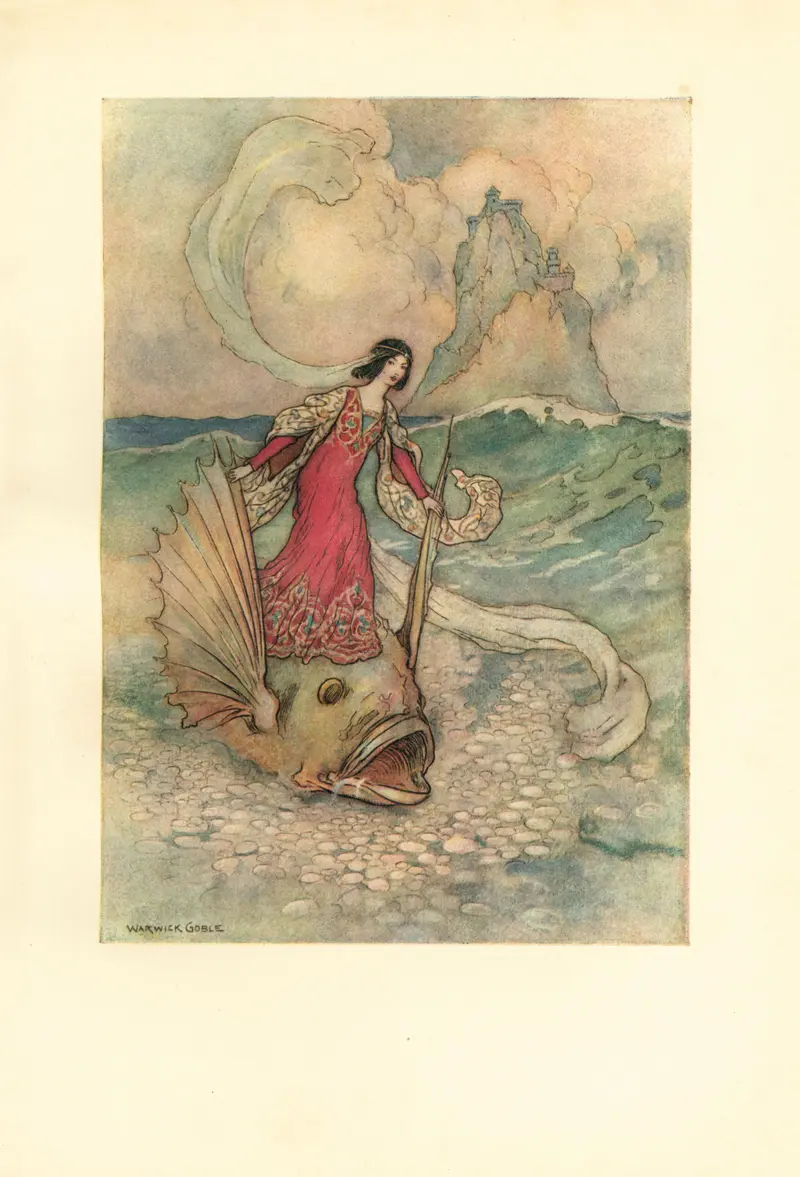
Rita Riding on the Dolphin
Warwick Goble
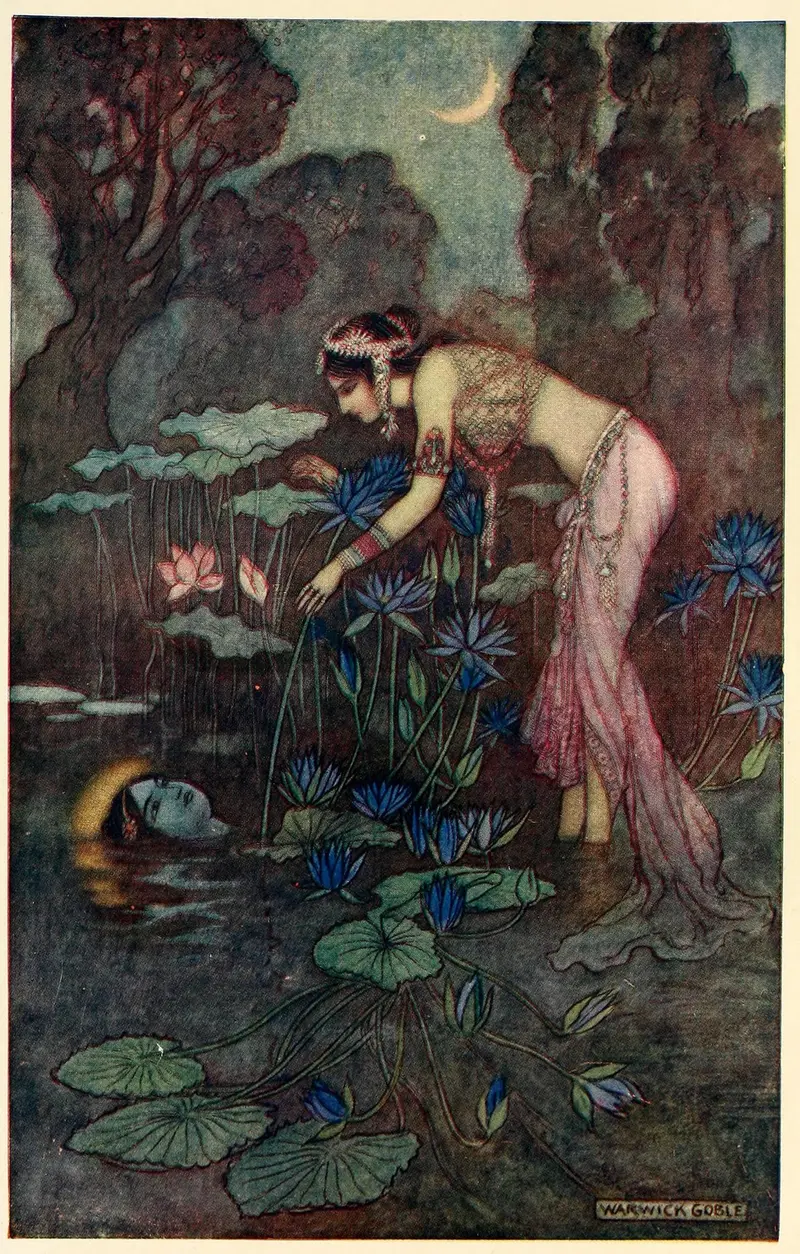
Sita Finds Rama Among Lotus Blooms
Warwick Goble





