
The Soul’s Prison House — History & Facts
In The Soul’s Prison House, Evelyn De Morgan depicts a somber scene filled with dark colors and a sense of confinement. The central figure, a woman, is portrayed with a sorrowful expression, surrounded by chains that symbolize her entrapment. The background features a dark, oppressive atmosphere, enhancing the feeling of isolation.
Bright light emanates from a distant source, suggesting hope and the possibility of liberation. The painting is executed in oil on canvas, showcasing De Morgan's skillful use of color and light. The figures are rendered with a delicate attention to detail, highlighting the emotional weight of the scene. The chains that bind the woman are intricately painted, emphasizing the theme of entrapment.
The overall composition draws the viewer's eye towards the central figure, creating a powerful focal point. Evelyn De Morgan was a prominent figure in the Pre-Raphaelite movement, known for her focus on themes of women's rights and spirituality. The Soul’s Prison House reflects her interest in the struggles of women in society. An interesting fact about this work is that it was inspired by the artist's own experiences and beliefs regarding the constraints placed on women during the Victorian era.
This painting exemplifies her commitment to social issues through allegorical representation.
More Artworks by Evelyn De Morgan

Portrait head of a woman
Evelyn De Morgan
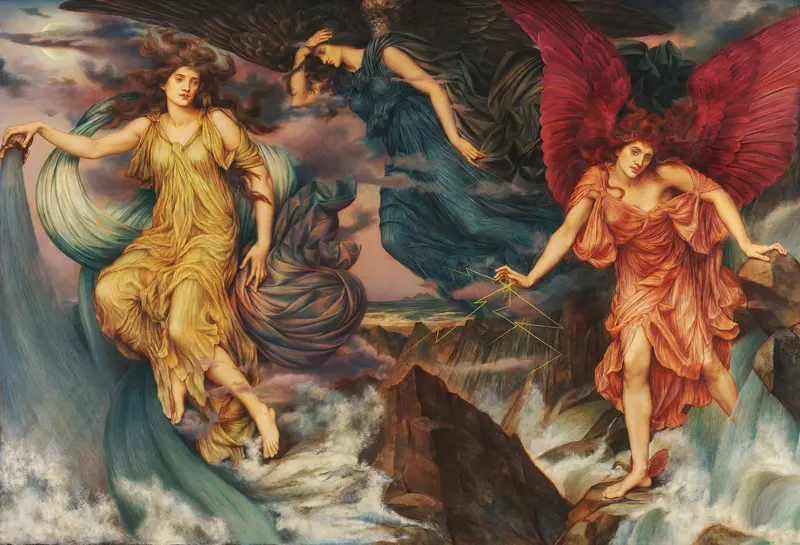
The Storm Spirits
Evelyn De Morgan
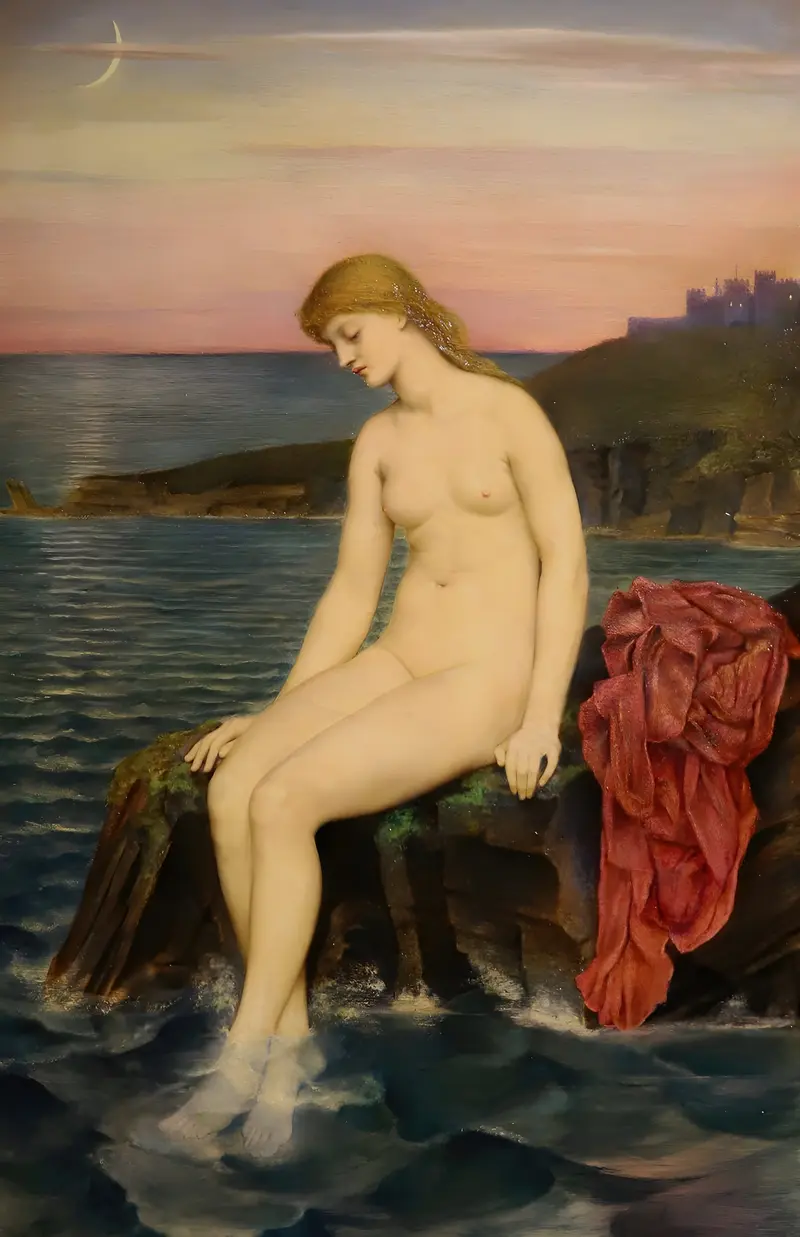
la sirenetta
Evelyn De Morgan
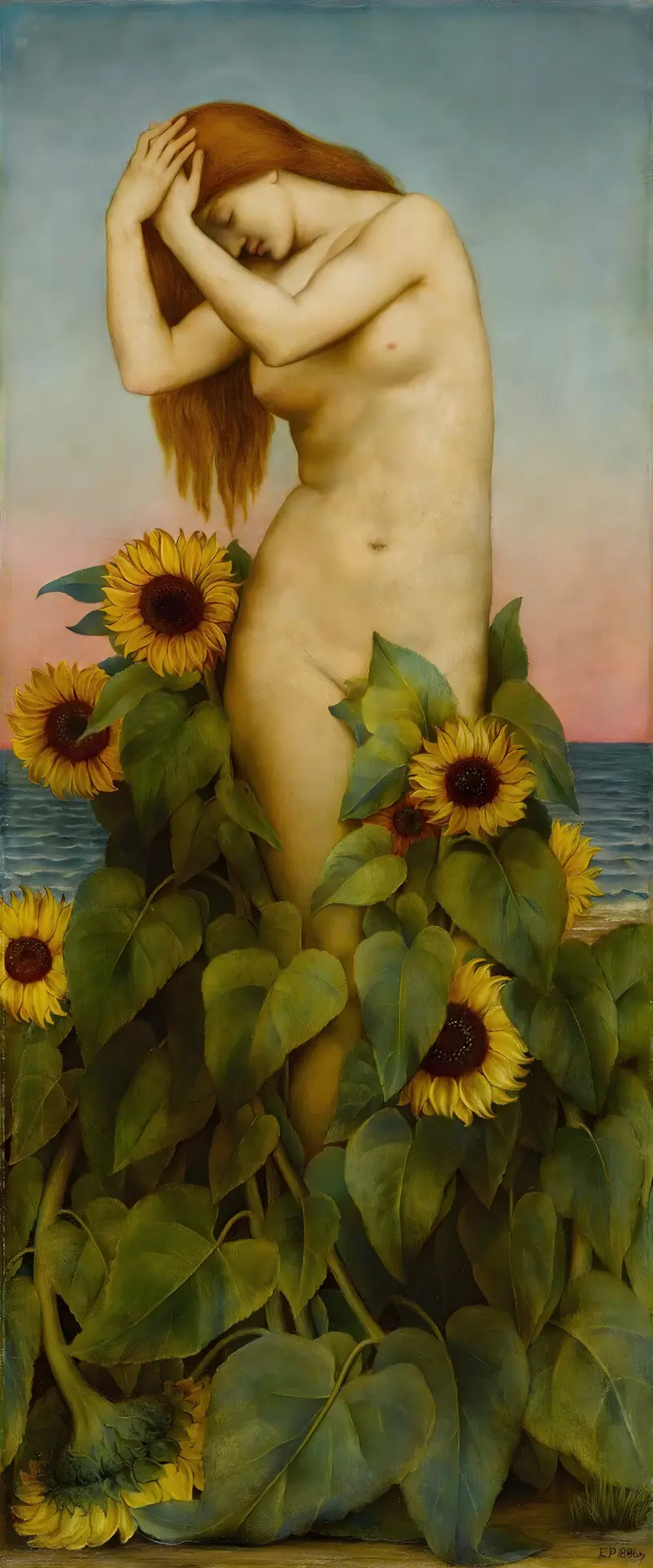
Clytie
Evelyn De Morgan
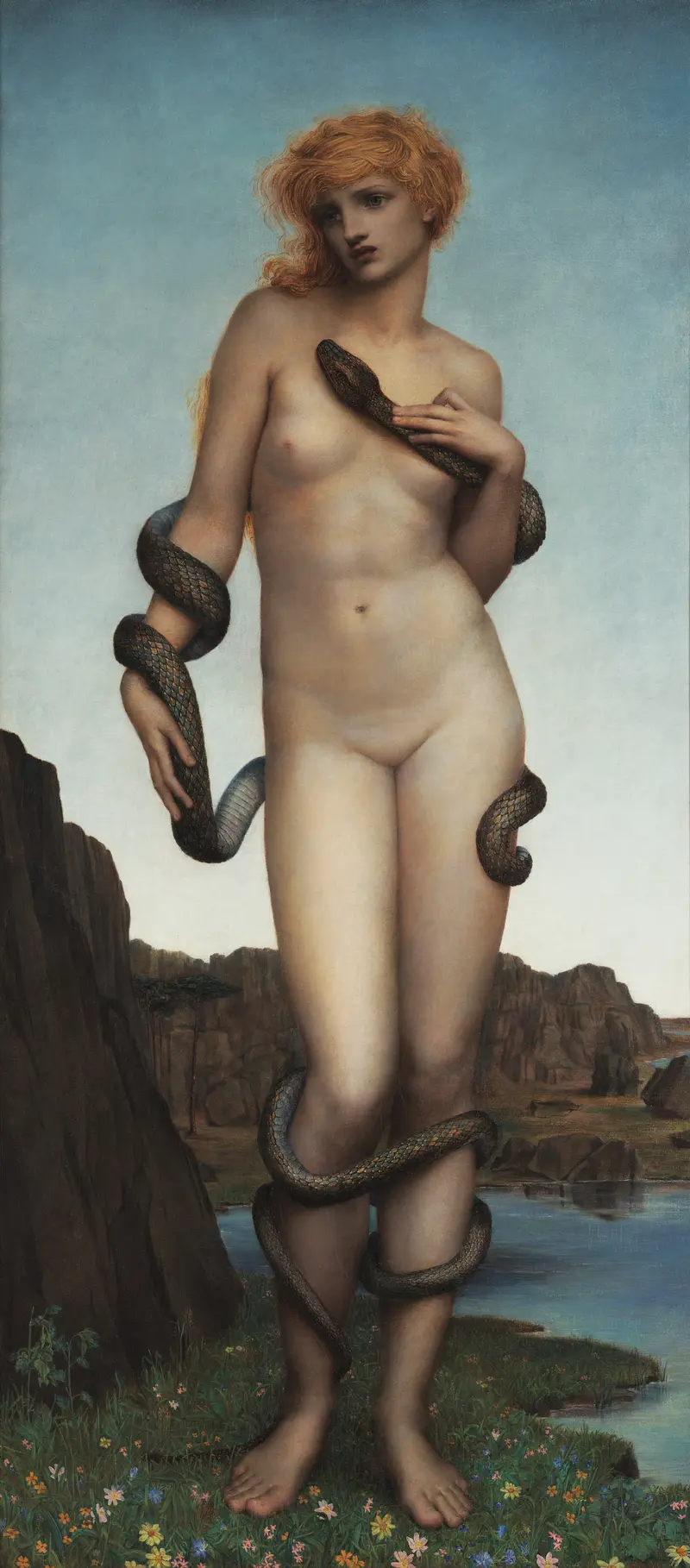
Cadmus and Harmonia
Evelyn De Morgan
Our Lady of Peace
Evelyn De Morgan
Helen of Troy
Evelyn De Morgan
The Wandering Jew; ‘Whom the gods love die young’
Evelyn De Morgan
The Angel With The Serpent
Evelyn De Morgan
The Cadence of Autumn
Evelyn De Morgan





