
Helen of Troy — History & Facts
Helen stands barefoot on a marble terrace, her waist-length red hair crowned with a diadem and flowing over her shoulder as she gazes at her reflection in a hand mirror, her other arm lifted gracefully above her head. She wears a vivid pink chiton, its folds rendered in intricate detail, surrounded by white roses and doves, while behind her the city of Troy rises on a distant hill and a crescent moon glows in the sky. Evelyn De Morgan created this depiction of Helen of Troy in 1898 for William Imrie of Liverpool, choosing to emphasize Helen's beauty and vanity rather than the violence of the Trojan War.
The painting evokes the peaceful, upright posture of classical goddesses, recalling Renaissance interpretations of mythological subjects. By focusing on Helen’s fascinated gaze and omitting scenes of battle, De Morgan highlights the personal allure that, according to myth, led to Troy’s destruction, visible here as a distant city on the horizon. Helen of Troy belongs to the Pre-Raphaelite Brotherhood movement, sharing with it a fascination for mythological themes and elaborate, symbolic detail.
Sources: Wikidata Q5703468 · Wikipedia: Helen of Troy (painting)
More Artworks by Evelyn De Morgan

Portrait head of a woman
Evelyn De Morgan
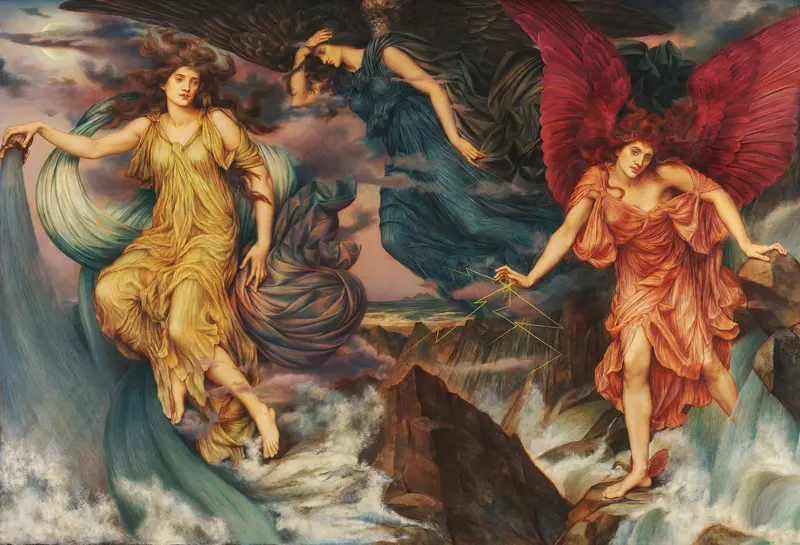
The Storm Spirits
Evelyn De Morgan
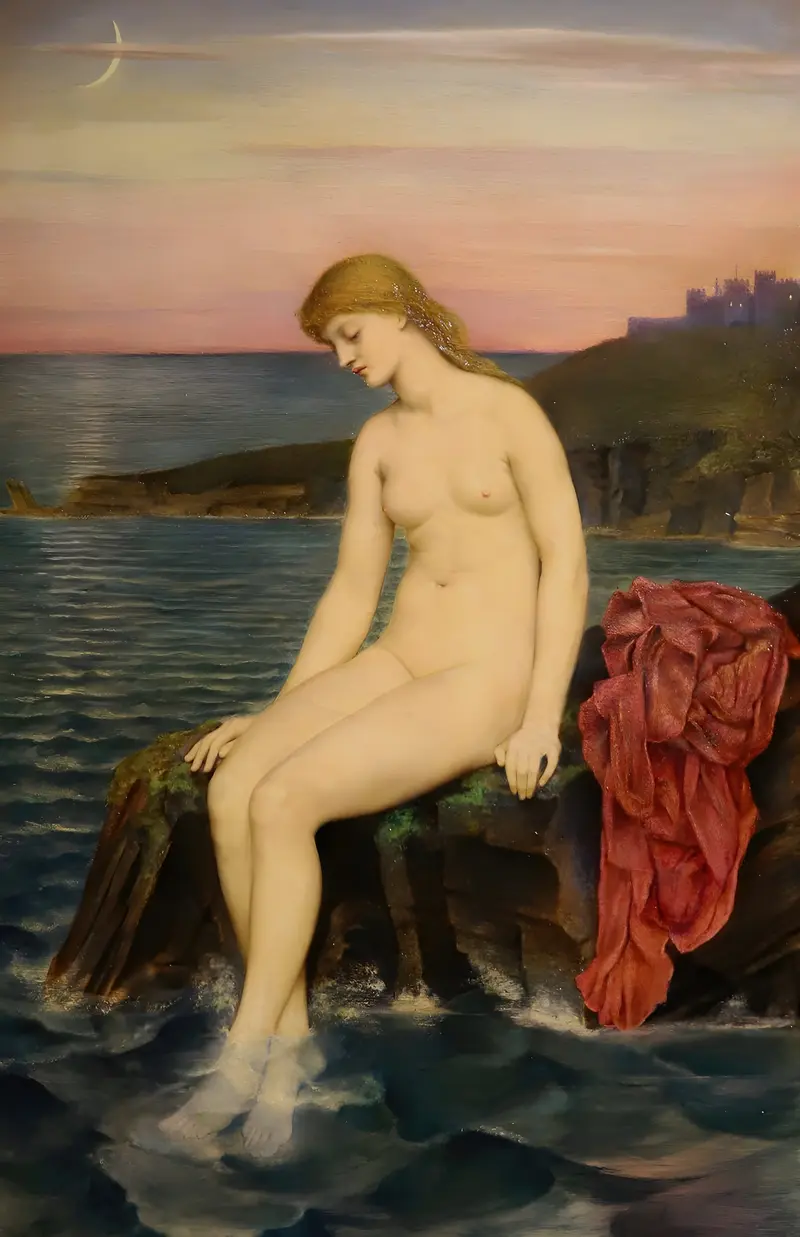
la sirenetta
Evelyn De Morgan
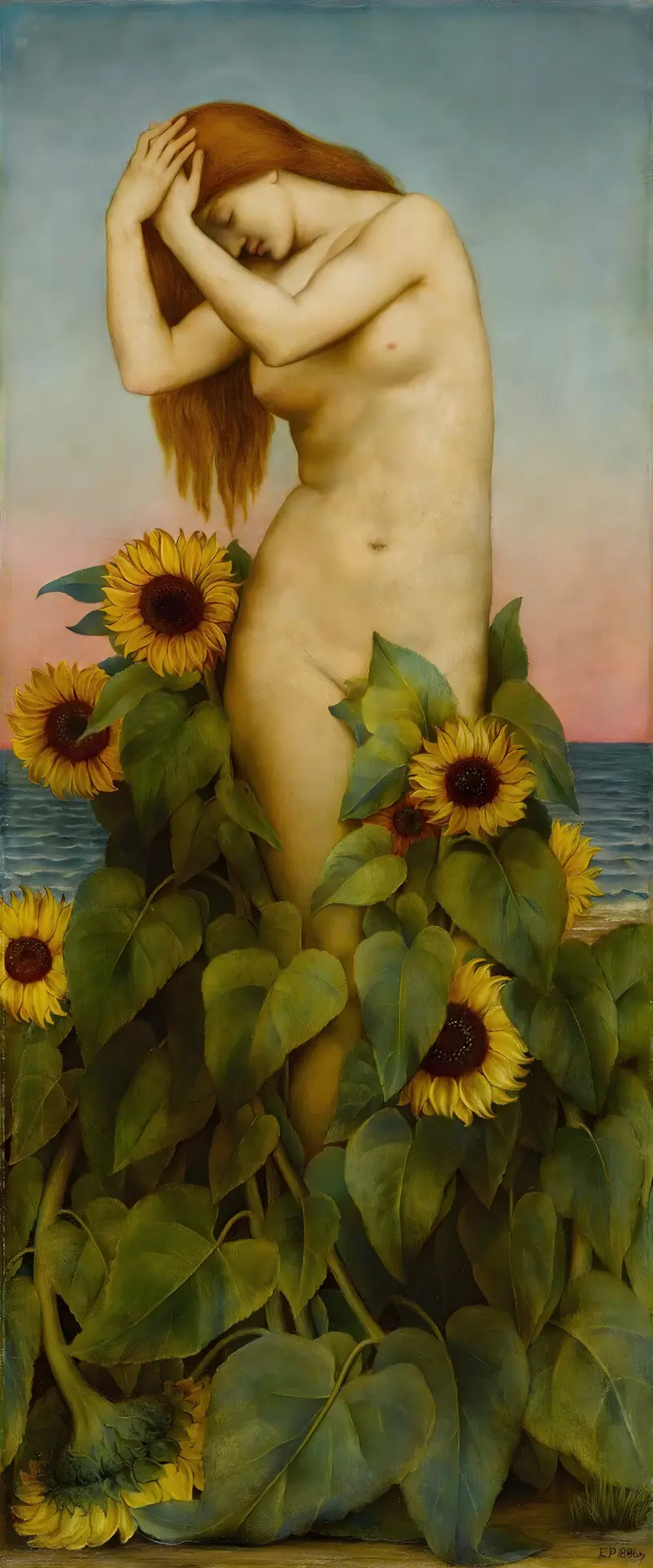
Clytie
Evelyn De Morgan
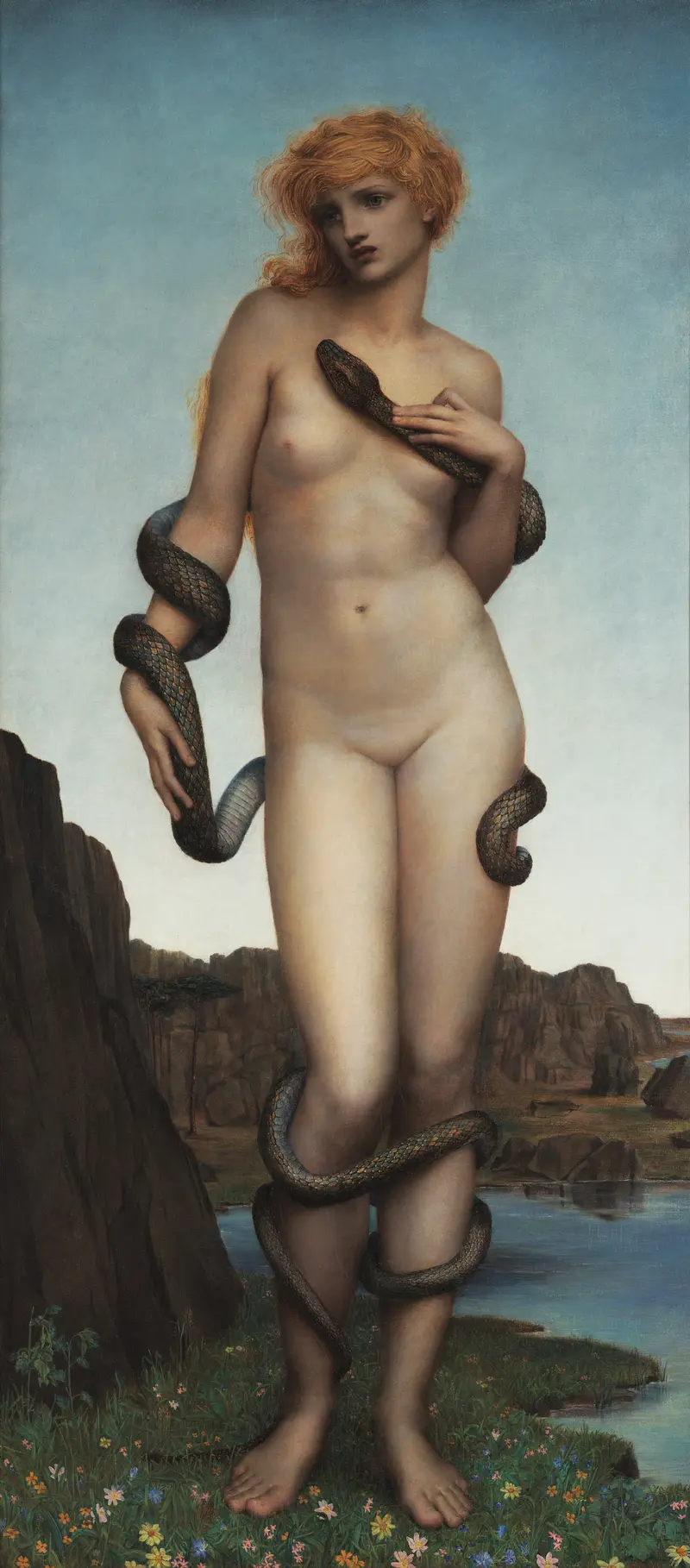
Cadmus and Harmonia
Evelyn De Morgan
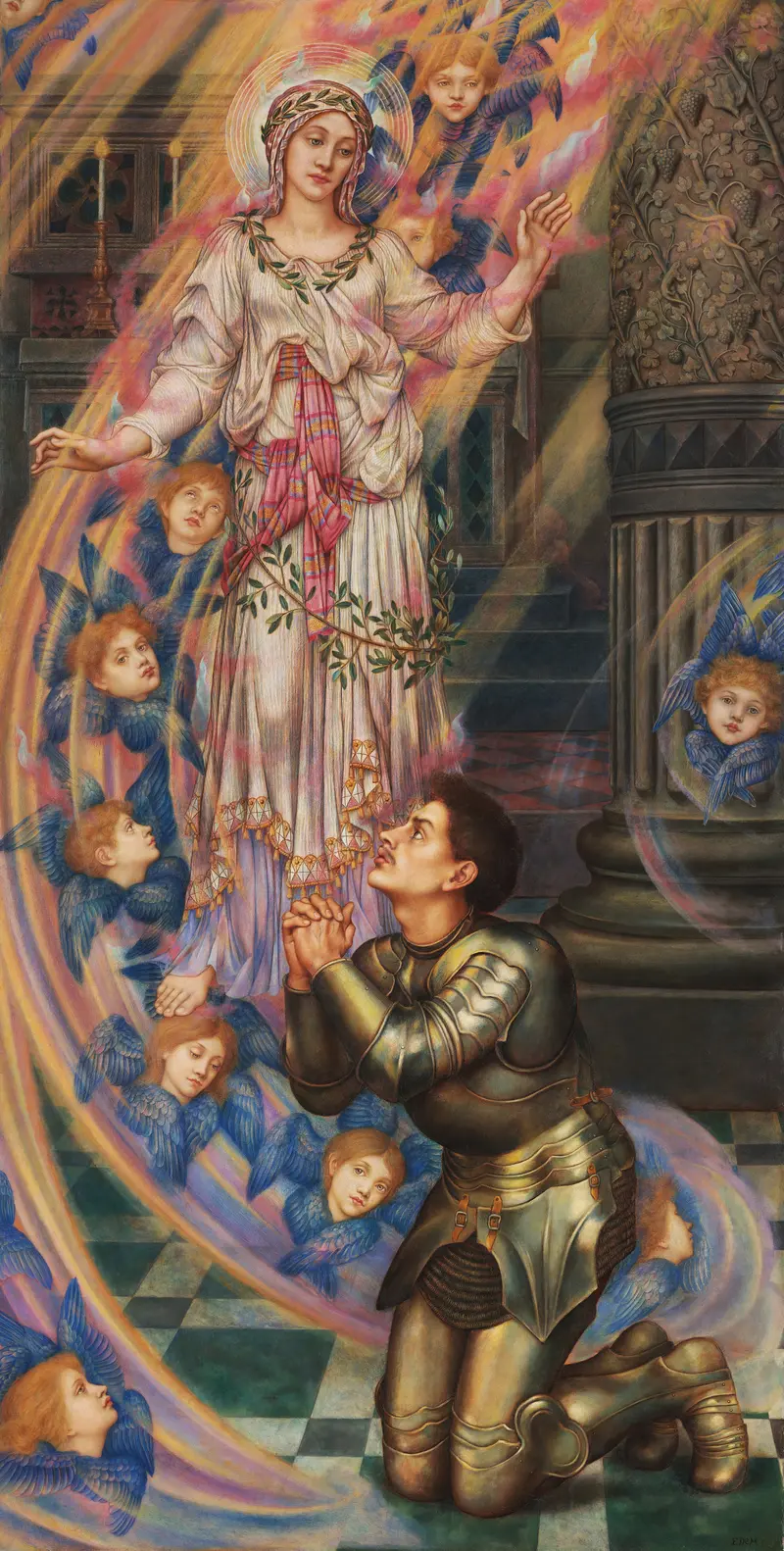
Our Lady of Peace
Evelyn De Morgan
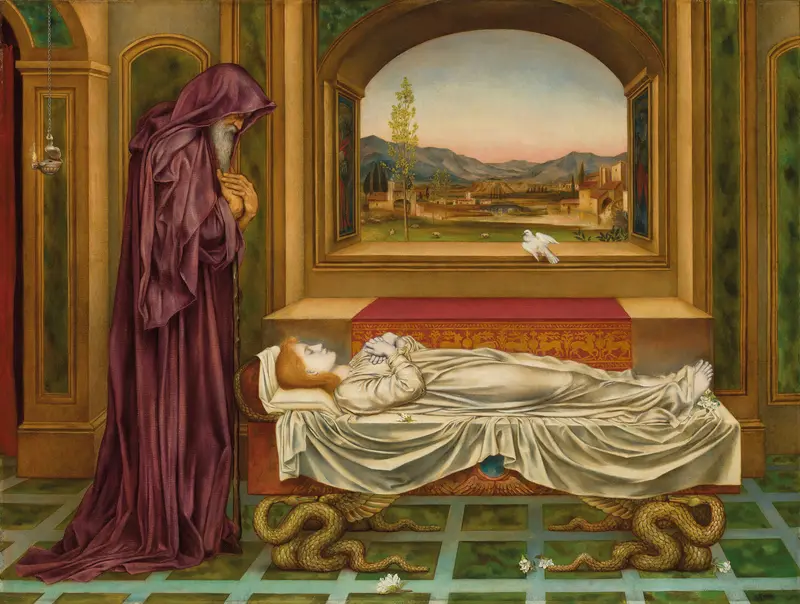
The Wandering Jew; ‘Whom the gods love die young’
Evelyn De Morgan
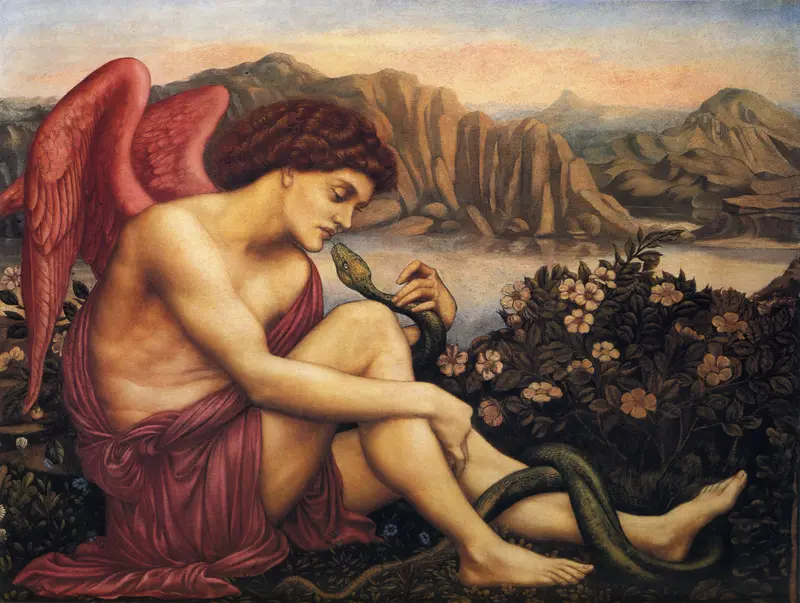
The Angel With The Serpent
Evelyn De Morgan
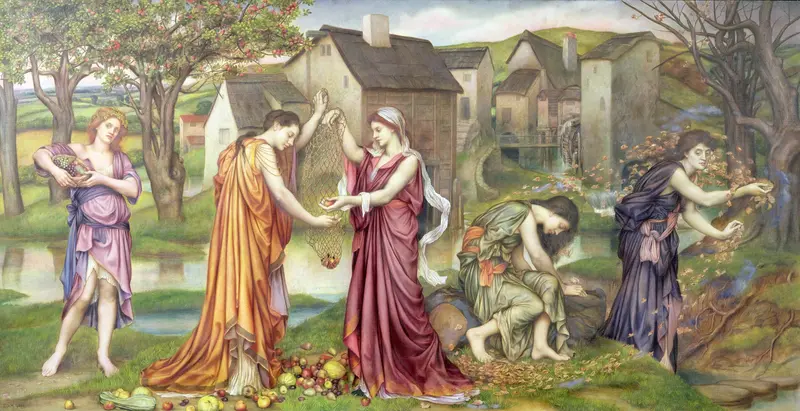
The Cadence of Autumn
Evelyn De Morgan
Daughters of the Mist
Evelyn De Morgan





