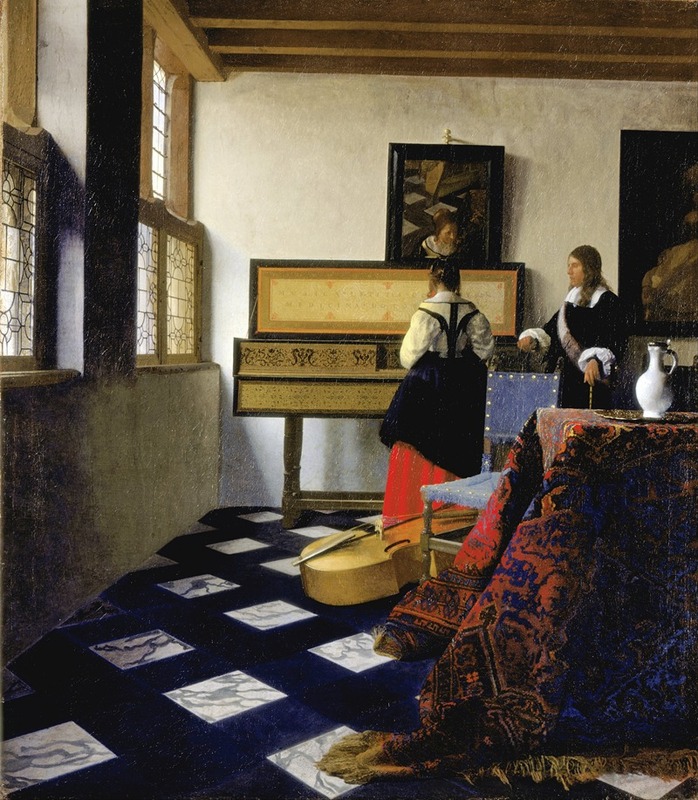
The Staircase with Trophies — History & Facts
Who listens when art speaks of silence? In The Staircase with Trophies, Giovanni Battista Piranesi offers a moment suspended in time, a sanctuary of echoes that reverberate through the viewer’s mind. Look to the left, where the staircase spirals upward, its grandeur commanding attention. Shadows and light engage in a delicate dance, sculpting the intricate details of the trophies that adorn the walls. Each item—a shield, a laurel, a head of a classic hero—tells its story, inviting contemplation amid the stillness.
The meticulous etching technique, with its fine lines and rich contrast, creates a sense of depth and perspective, drawing the eye upward into a seemingly infinite space. Yet, beneath the surface, there lies a tension born of absence. These trophies, symbols of triumph, stand in stark contrast to the silence that envelops the scene. They evoke a bittersweet reminder of victories past, whispering of glory forever lost to time.
The empty staircase signifies a journey untraveled, a path that leads nowhere, hinting at the futility of ambition in a world that is ever-changing. The viewer is caught in an emotional tug-of-war between ecstasy and melancholy, where the allure of success is tempered by the solitude of solitude. Created in 1761, Piranesi’s work emerges during a period of great artistic experimentation, where neoclassicism was evolving, influenced by the rediscovery of antiquity. Living in Rome, he was deeply immersed in the city’s architectural wonders, contributing to the discourse on art and history.
His etchings reflect not only his fascination with the past but also his desire to capture the enduring human experience through a lens of intricate detail and profound introspection.
More Artworks by Giovanni Battista Piranesi
Browse all →
Carcere I. Portada
Giovanni Battista Piranesi
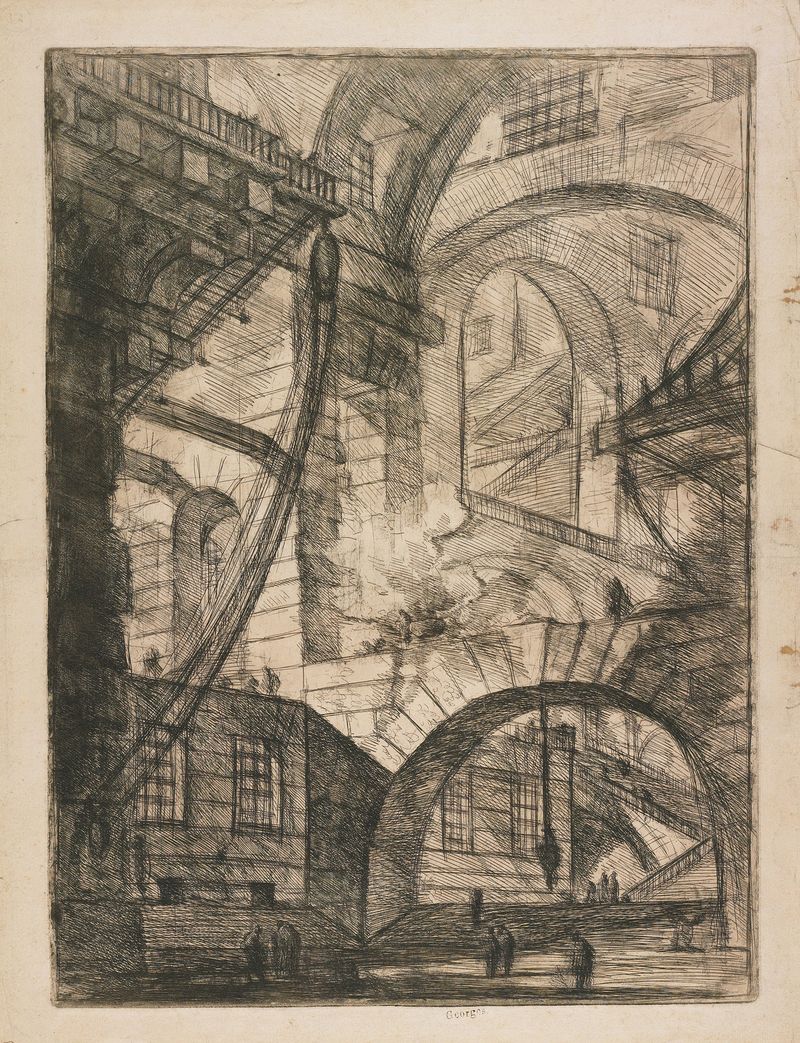
Perspective of Arches, with a Smoking Fire, Plate 6 from Carceri d’Invenzione
Giovanni Battista Piranesi
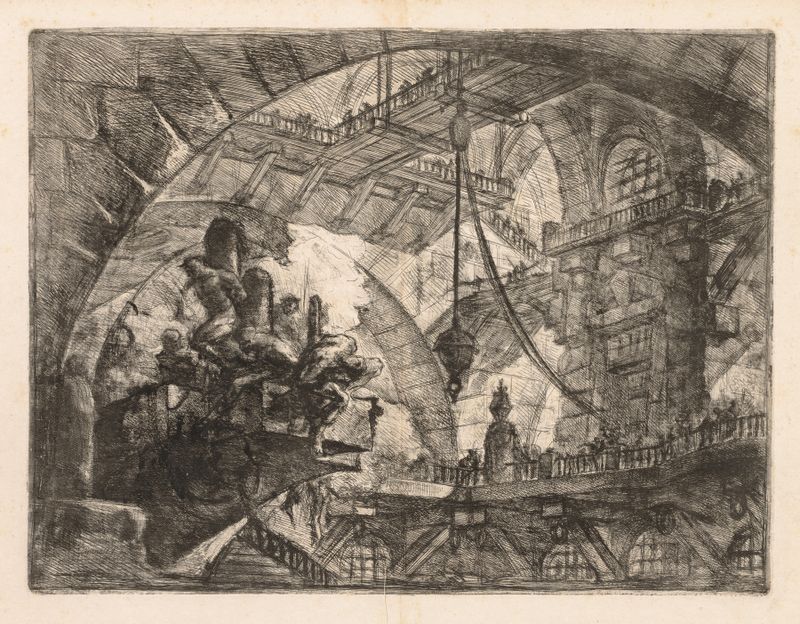
Prisoners on a Projecting Platform
Giovanni Battista Piranesi
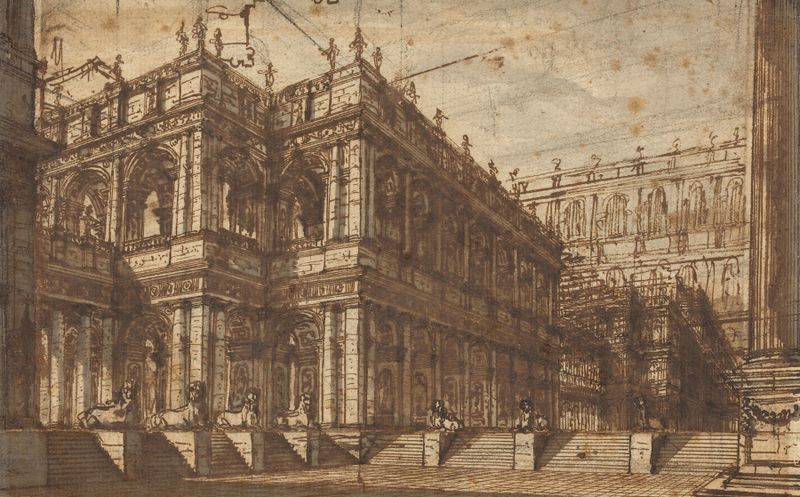
An Ancient Forum with Porticos
Giovanni Battista Piranesi

Imaginary Prisons of G. Battista Piranesi, Venetian Architect; title page
Giovanni Battista Piranesi

Veduta with the Temple of Jove
Giovanni Battista Piranesi
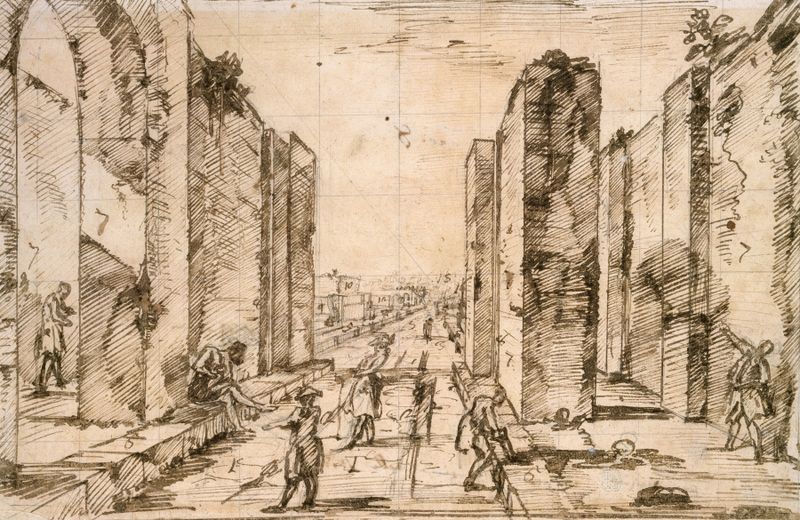
View through the Herculaneum Gate, Pompeii
Giovanni Battista Piranesi
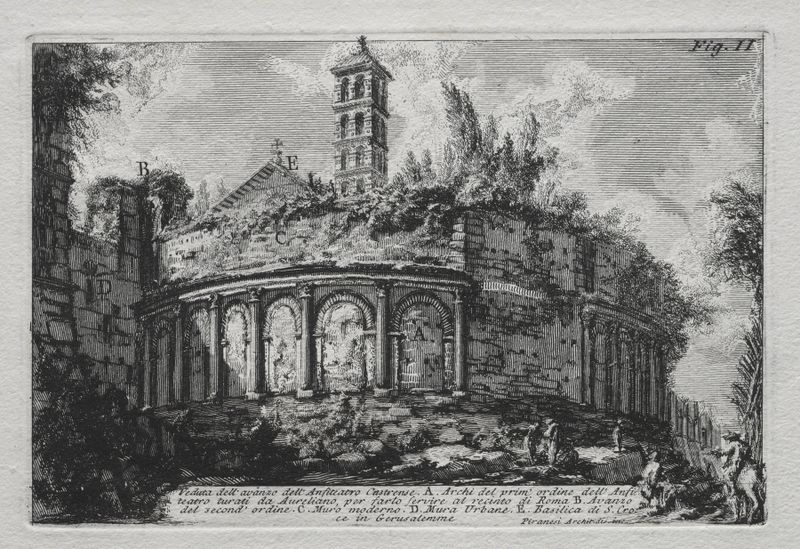
Veduta dell’avanzo dell’Anfiteatro Castranse
Giovanni Battista Piranesi
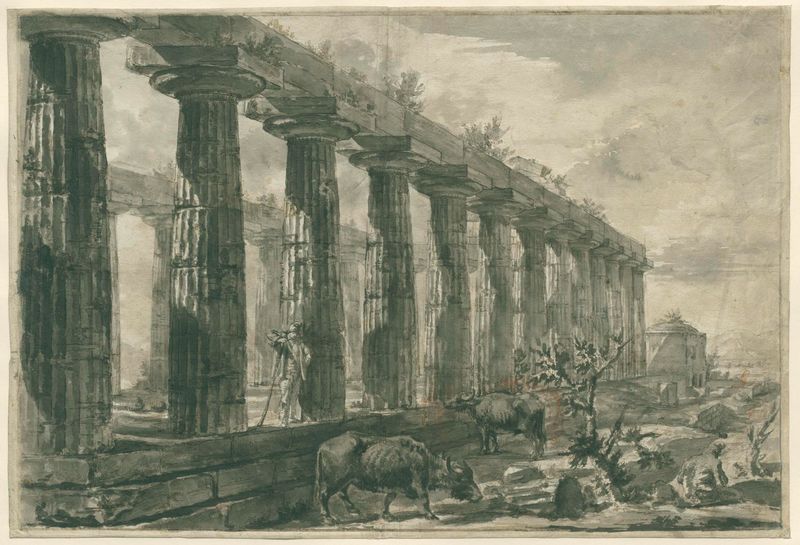
View of the Temple of ‘Juno’ at Paestum
Giovanni Battista Piranesi

The Giant Wheel
Giovanni Battista Piranesi