
The Storm — History & Facts
Did the painter know this moment would outlive them? The raw energy of nature, portrayed with such visceral intensity, evokes a sense of fear that lingers long after the first glance. Look closely at the tumultuous sky that dominates the canvas, where swirling clouds clash in an ominous dance of dark grays and blues. The chaotic brushwork conveys the fierce winds, while flashes of white paint suggest lightning lurking just beyond the frame. Notice how the figures below, mere silhouettes against the overwhelming backdrop, seem dwarfed by the grand spectacle unfolding above.
This stark contrast between human vulnerability and nature's fury underscores an unsettling tension. Delve deeper, and you’ll uncover the emotional gravity of the scene. The storm isn’t just a weather event; it symbolizes the unpredictable forces of life. The figures, caught in limbo, embody a range of responses to impending catastrophe—fear, desperation, and perhaps a flicker of hope.
Each stroke of the brush encapsulates chaos and beauty, a reminder of our fragile existence amid nature’s relentless power. Created during a time when the Romantic movement was reshaping artistic expression, the painter worked in England in the late 18th century. This was a period marked by a fascination with the sublime, where artists like him sought to capture the emotional experience of nature. As industrialization began to alter the landscape, Morland's focus on raw, untamed scenes resonated deeply, bridging the gap between humanity and the elemental forces that surround us.
More Artworks by George Morland
Browse all →
The Bell Inn
George Morland
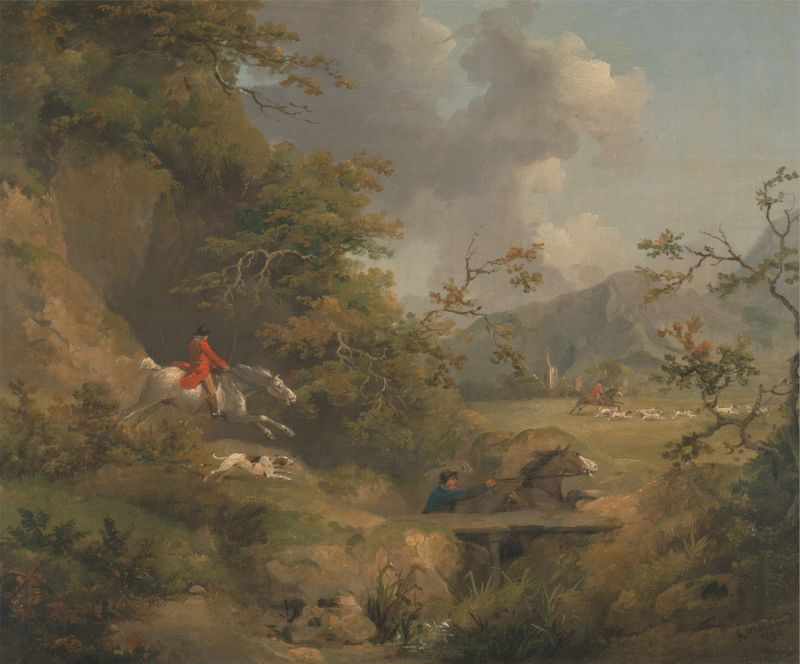
Foxhunting in Hilly Country
George Morland

View at Enderby, Leicestershire
George Morland

Pheasant Shooting
George Morland

The Mail Coach
George Morland

Rocky Landscape with Two Men on a Horse
George Morland
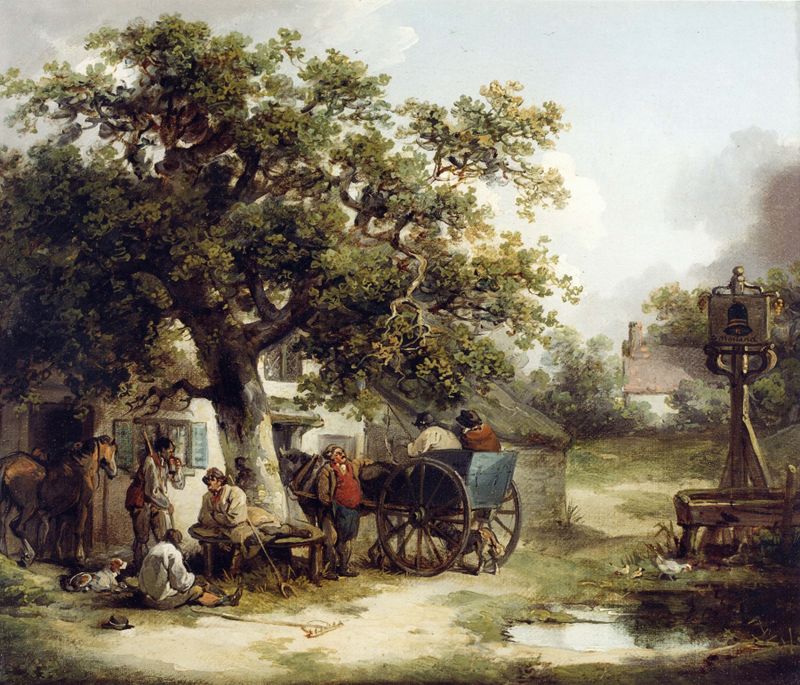
The Bell Inn, Kilburn
George Morland

Landscape
George Morland

Trepanning a Recruit
George Morland

A Country Inn
George Morland





