
The Sultan and his camp by the enchanted ... — History & Facts
The eye is drawn first to a burst of red: a figure beneath a parasol, perched on a rocky outcrop, surveying a scene that feels both theatrical and secretive. Around this focal point, small groups gather, their garments vivid against the dun landscape, while the sun pools in the shallows of a stream that cuts through the foreground. The painting’s composition guides the viewer from the shadowed rocks and green-tinged water up toward the distant, sunlit encampment.
Every detail is purposeful—the parasol signals authority or ceremony, the tent in the background hints at a temporary court, and the figures’ arrangement suggests a moment of anticipation or arrival. The palette is earthy, with flashes of color that animate the otherwise rugged terrain, and the play of light and shadow creates a mood of intrigue and expectation. Painted in 1888, The Sultan and his camp by the enchanted ... by Albert Goodwin belongs to a late nineteenth-century fascination with the exotic and the imagined East, a genre that flourished in British art as travel and empire expanded artists’ horizons. Such works were often commissioned for drawing rooms or exhibitions, designed to transport viewers to distant lands—real or fantastical—through the lens of European imagination.
Goodwin was known for his atmospheric landscapes, and here he weaves together narrative and setting in a way that invites speculation rather than certainty. History has kept few traces of this particular work’s journey, but its presence in a digital collection today allows us to linger over its mysteries, returning again and again to the red parasol and the stories it might shelter.
More Artworks by Albert Goodwin

Kynance Cove, Cornwall
Albert Goodwin
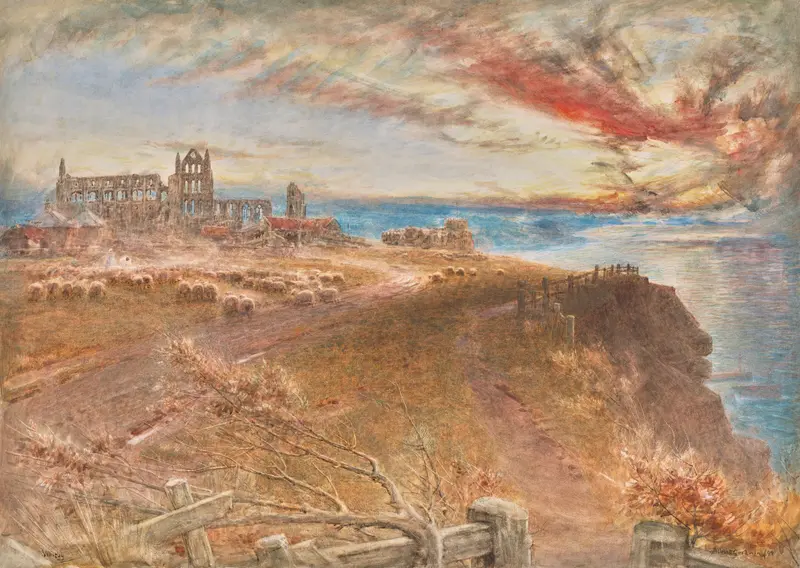
Evening, St Hilda’s Abbey, Whitby, Yorkshire
Albert Goodwin
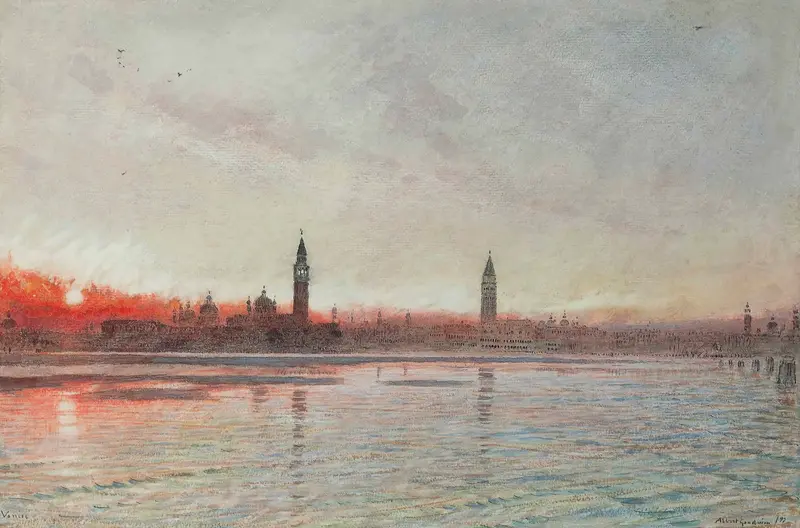
Sunset, Venice
Albert Goodwin
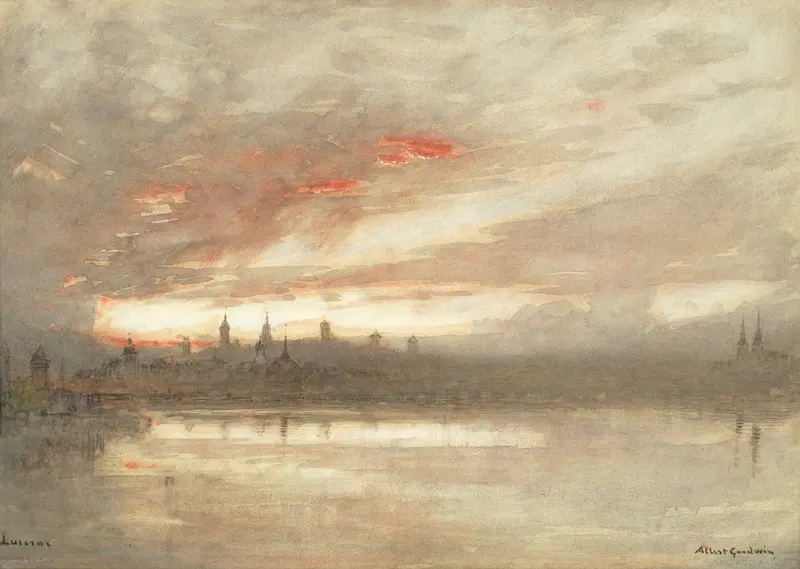
A view over Lake Lucerne
Albert Goodwin
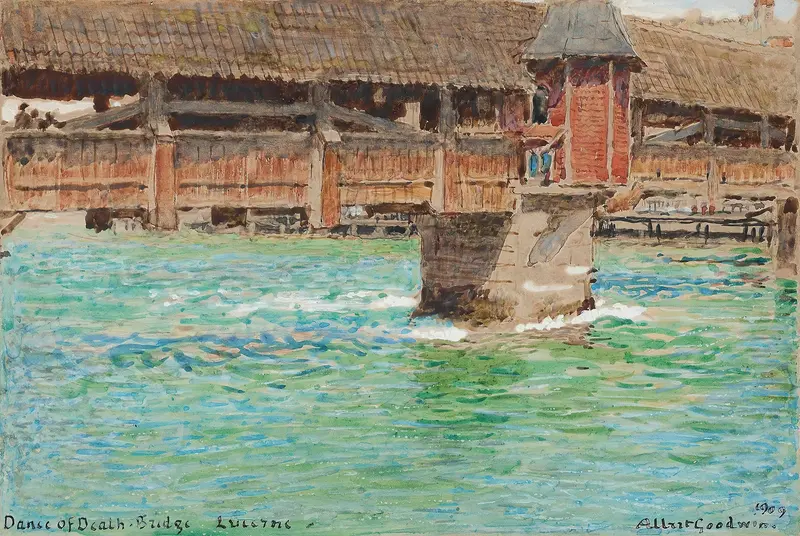
Dance Of Death Bridge, Lucerne
Albert Goodwin
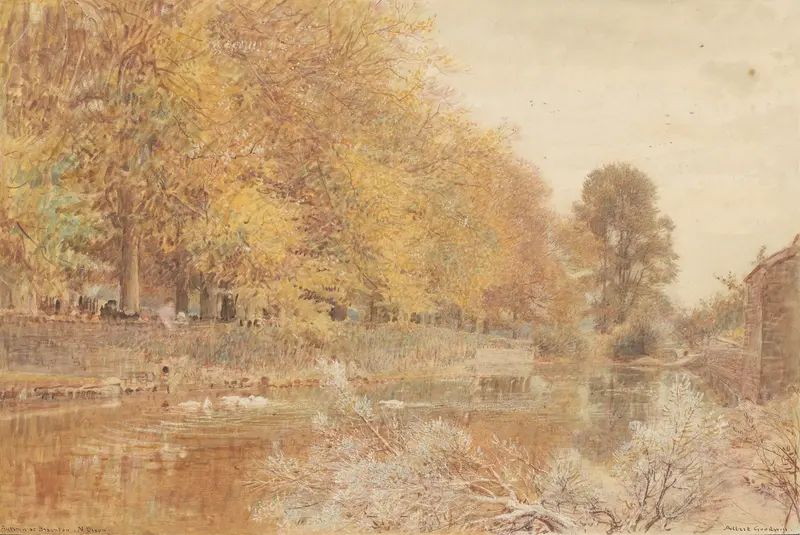
Autumn at Braunston, North Devon
Albert Goodwin
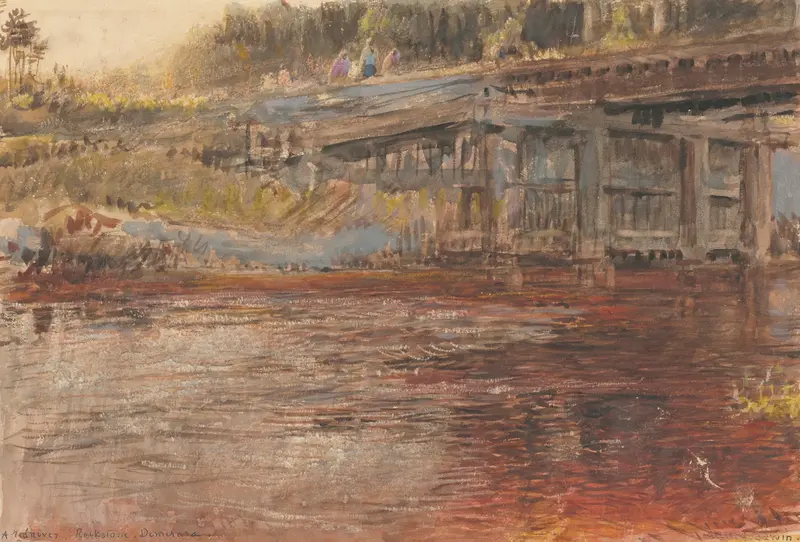
Rockstone, Demerara, Guyana
Albert Goodwin
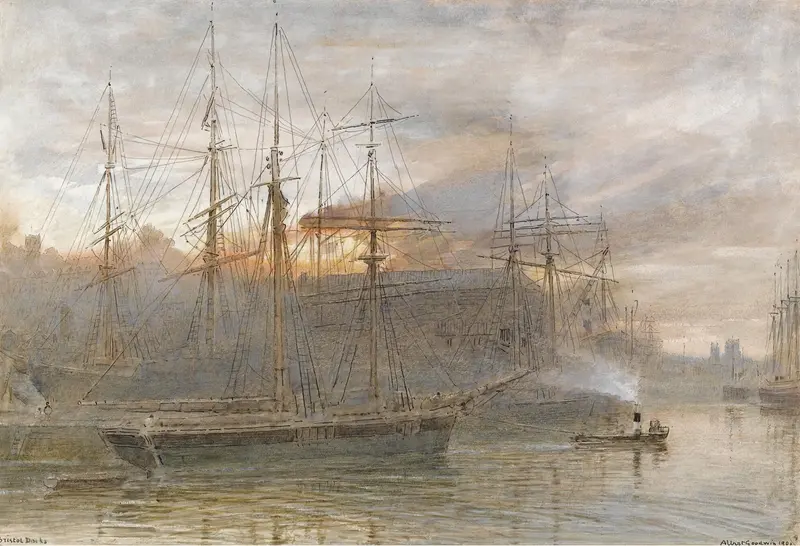
Bristol docks
Albert Goodwin
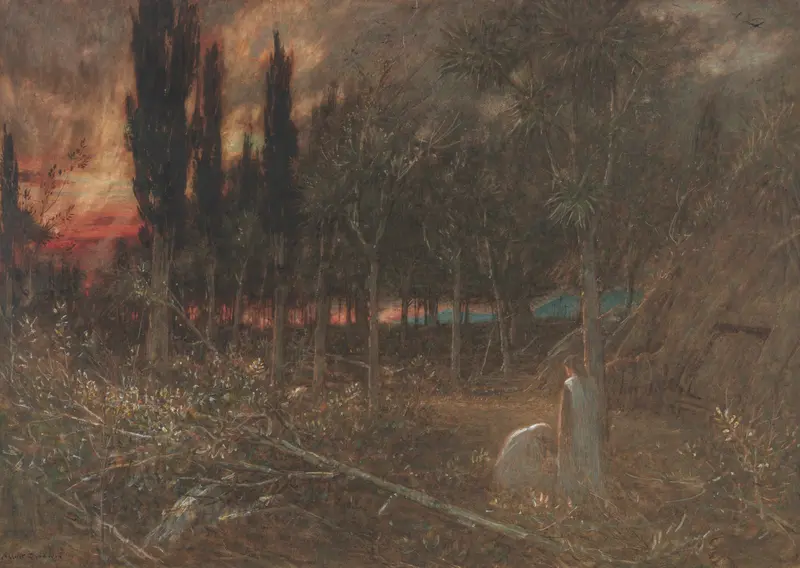
Night – faithful unto death
Albert Goodwin
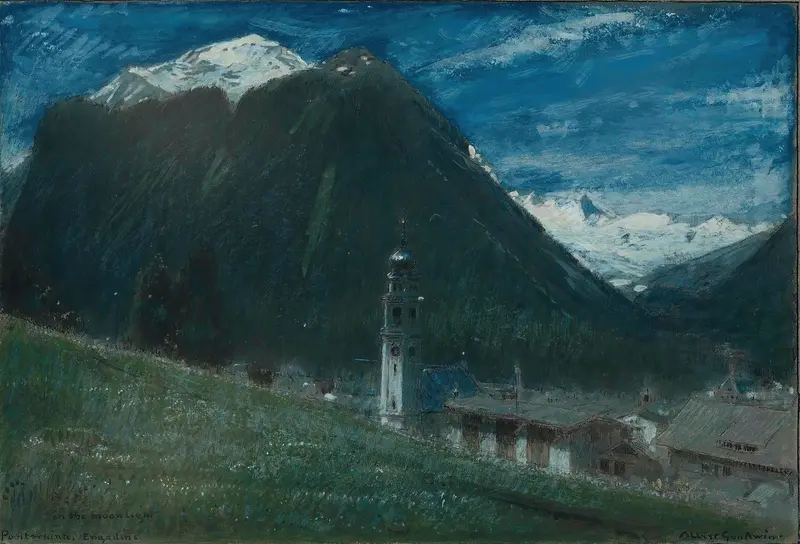
In The Moonlight, Pontresina, Engadine, Switzerland
Albert Goodwin
More Landscape Art

The Starry Night
Vincent van Gogh

View of Delft
Johannes Vermeer

Water Lilies
Claude Monet

The Grand Canal, Venice, looking north-west from the Ca' Corner to the Ca' Contarini degli Scrigni, with the campanile of Santa Maria della Carità
Canaletto

Windsor Castle
Canaletto

The Grand Canal looking North-East from the Palazzo Dolfin-Manin to the Rialto Bridge
Canaletto