
The Swing — History & Facts
Can beauty exist without sorrow? In the serene embrace of The Swing, the answer hangs delicately in the air, echoed in the silence of the lush garden. Look to the left at the gentle arch of the swing, suspended between two grand trees, where sunlight dapples the ground in playful patterns. The figures are poised in a moment of suspended joy; a woman in a flowing white dress, her laughter almost palpable, contrasts sharply with the stillness of nature around her. Notice how the soft greens and earthy browns of the foliage cradle the scene, amplifying the lightness of her delicate form while hinting at the weight of expectation and social constraints surrounding her. Beneath the surface, tension weaves its way through the composition, inviting deeper contemplation.
There is a subtle dichotomy between the carefree movement of the woman and the watchful gaze of the man hidden in the foliage—a voyeuristic presence that tinges the moment with unease. The vibrant colors celebrate beauty, yet the muted shadows suggest a longing, perhaps even a hint of melancholy that shadows the joy. This delicate balance enhances our understanding of the interplay between freedom and social propriety. Created during a period of artistic exploration in 18th-century France, Robert crafted this piece when he was known for his idyllic landscapes and masterful command of light.
The exact date remains uncertain, yet it reflects the Rococo fascination with pleasure and nature. At this time, the artist experienced both personal and societal shifts, underscoring the tension present in his work—an invitation to ponder the relationship between beauty and the unspoken sorrows that often accompany it.
More Artworks by Hubert Robert
Browse all →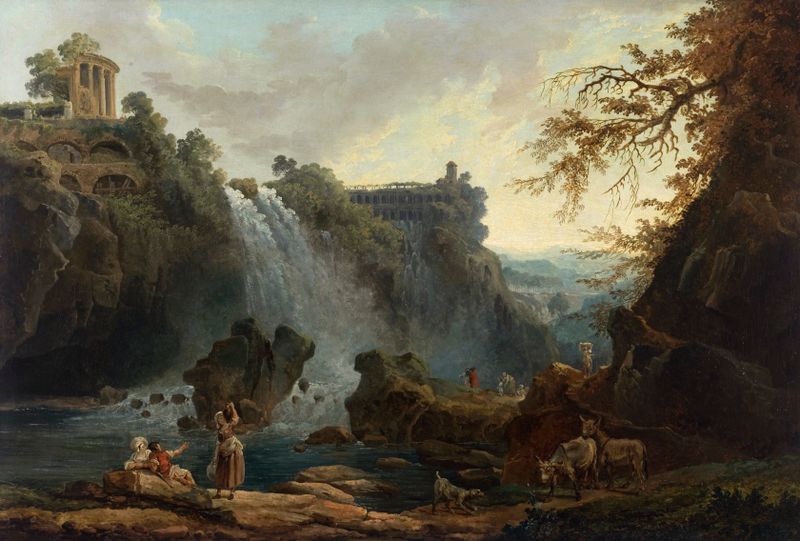
Les Cascatelles de Tivoli
Hubert Robert
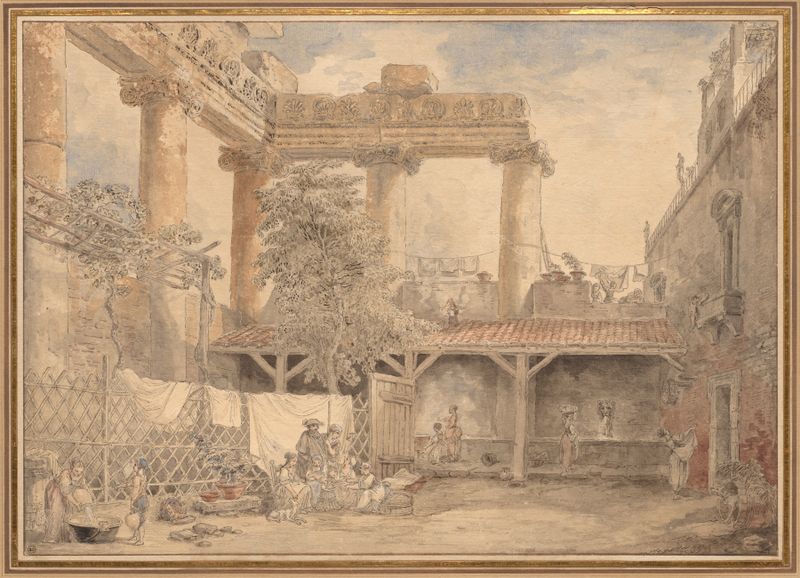
Roman Ruins, Villa Pamfili
Hubert Robert

The Rustic Bridge, Château de Méréville, France
Hubert Robert

The Portico of a Country Mansion
Hubert Robert

Architectural Capriccio
Hubert Robert

The Obelisk
Hubert Robert
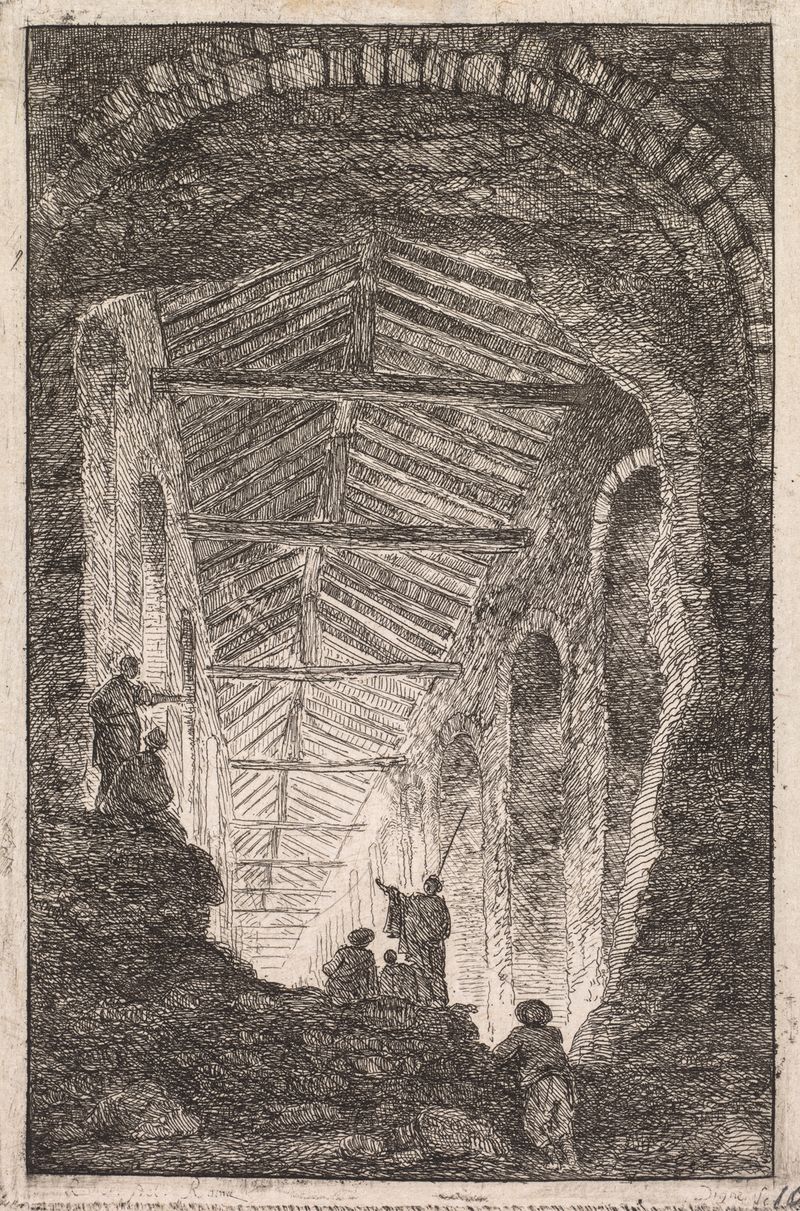
The Antique Gallery
Hubert Robert

L’incendie de l’Opéra, vu des jardins du Palais-Royal, le 8 juin 1781
Hubert Robert
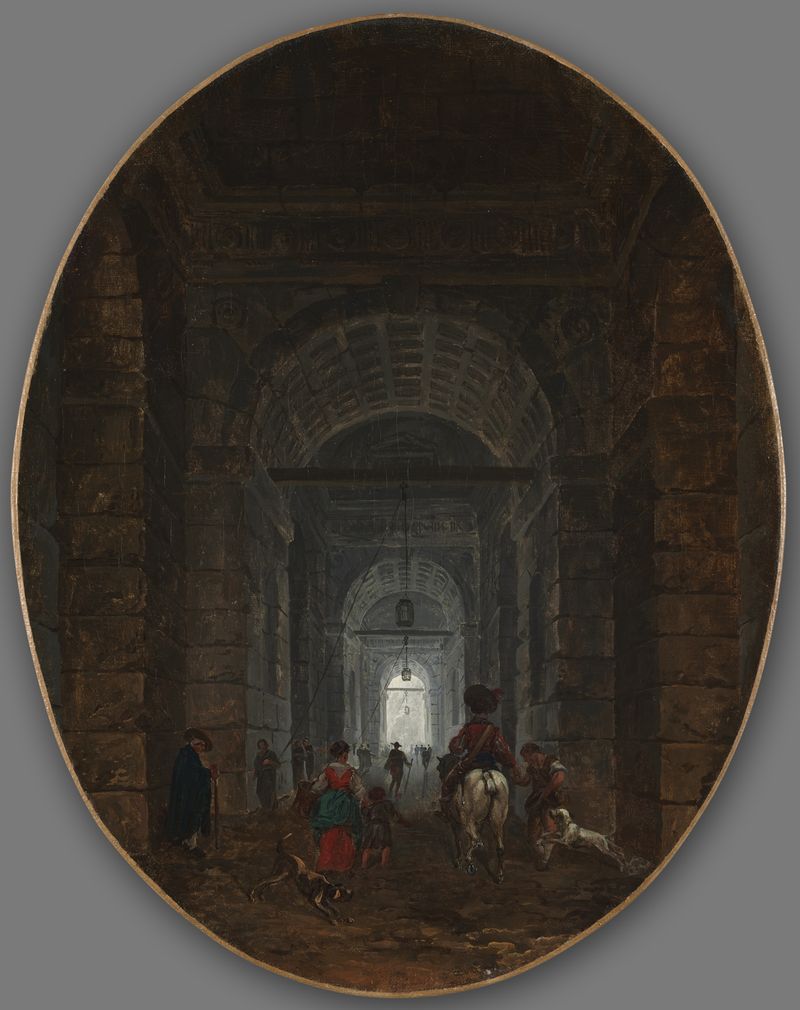
The Grotto of Posillipo
Hubert Robert

Architectural Capriccio with ruins of the Temple of Saturn and the Colosseum in the background
Hubert Robert





