
The Valley of Arconville — History & Facts
Can paint confess what words never could? In The Valley of Arconville, serenity envelops the viewer as lush landscapes merge with gentle hues, whispering the secrets of tranquility and reflection. Look to the foreground, where rolling hills cradle a vibrant tapestry of greens and golds, drawing your eye toward the horizon. Notice how the delicate brushstrokes create a shimmering effect on the water's surface, mirroring the soft clouds above. The artist employs a gentle palette, dominated by pastels, to evoke a sense of calm, while the composition leads your gaze upwards, inviting you to explore the vast sky that cradles the valley. Beneath the surface, the painting reveals contrasts that speak volumes.
The juxtaposition of light and shadow plays against the hills, suggesting the passage of time and the fleeting nature of serenity. The quiet river reflects not just the landscape but also the stillness of the human soul, encouraging introspection. Every color choice seems deliberate, orchestrating an emotional dialogue between nature and viewer, where deeper truths linger just beneath the serene exterior. In the late 1880s, Theodore Robinson painted this work during a time when the Impressionist movement was gaining momentum in America.
Living in Grèz-sur-Loing, France, he was immersed in a community of artists exploring light and color, which significantly influenced his style. This period marked a defining moment in his career, where he sought to capture not just the physical world, but the emotions and experiences tied intimately to it.
More Artworks by Theodore Robinson
Browse all →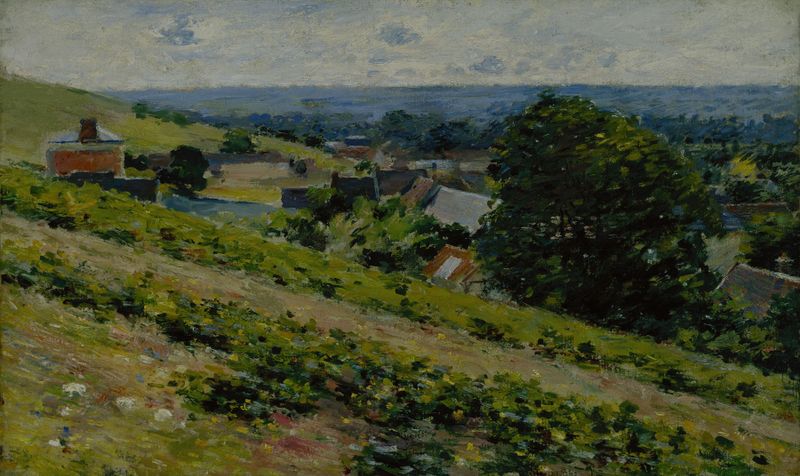
From the Hill, Giverny
Theodore Robinson

Giverny
Theodore Robinson

Old Church At Giverny
Theodore Robinson
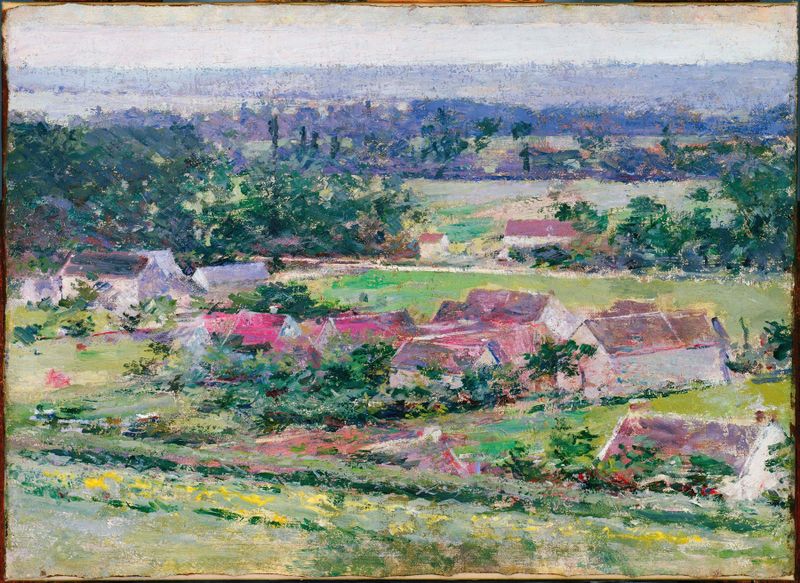
Giverny
Theodore Robinson
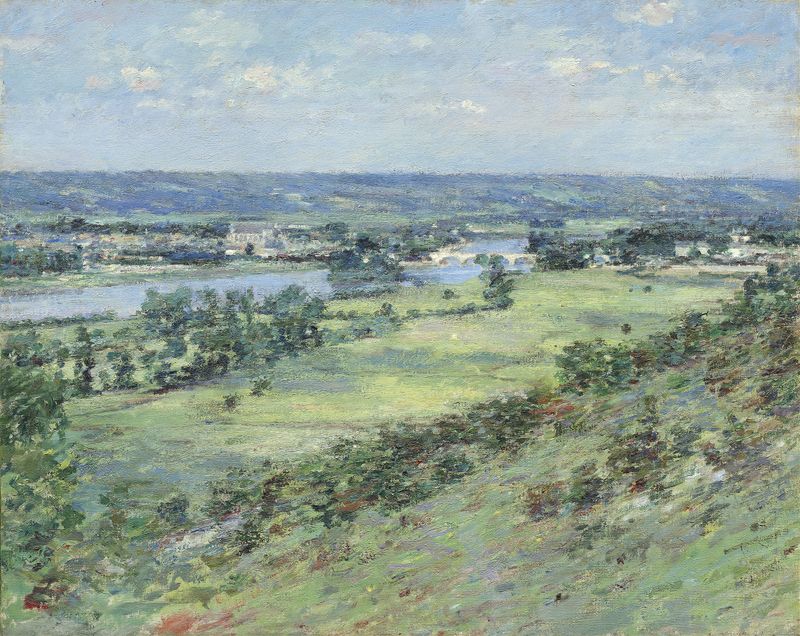
The Valley of the Seine,from the Hills of Giverny
Theodore Robinson
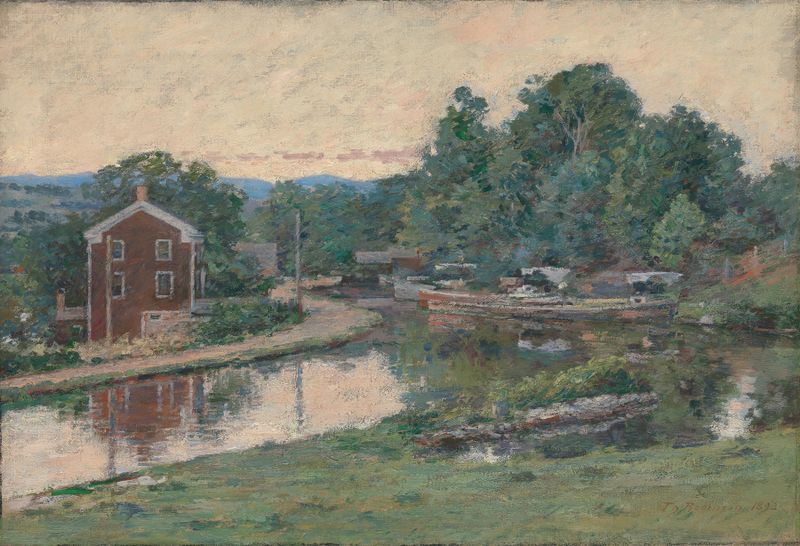
Evening at the Lock, Napanoch, New York
Theodore Robinson
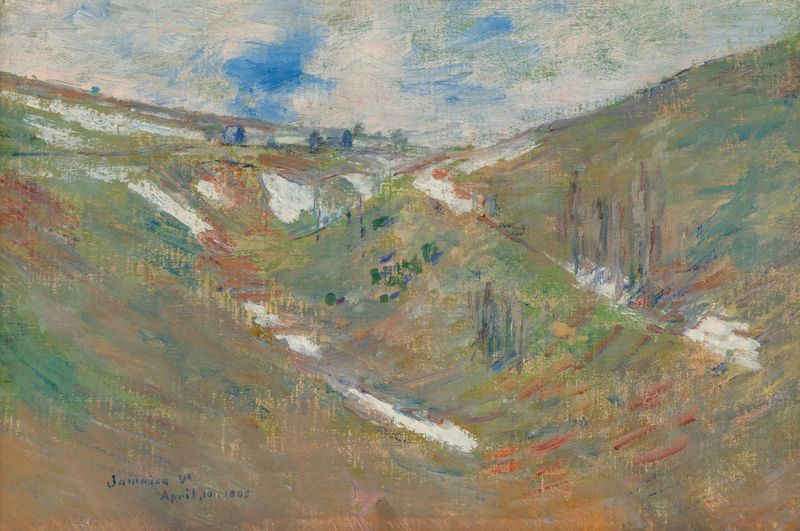
Jamaica, Vermont
Theodore Robinson
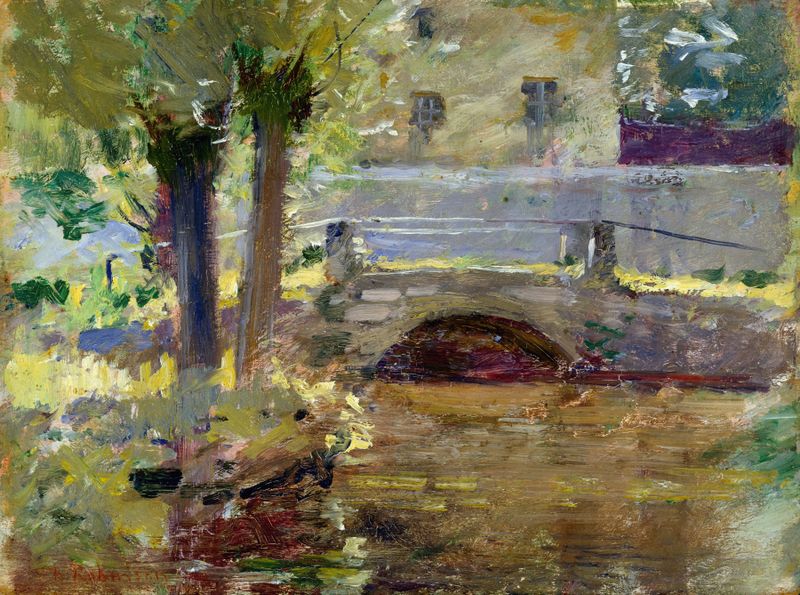
The Bridge at Giverny
Theodore Robinson

House In Virginia
Theodore Robinson
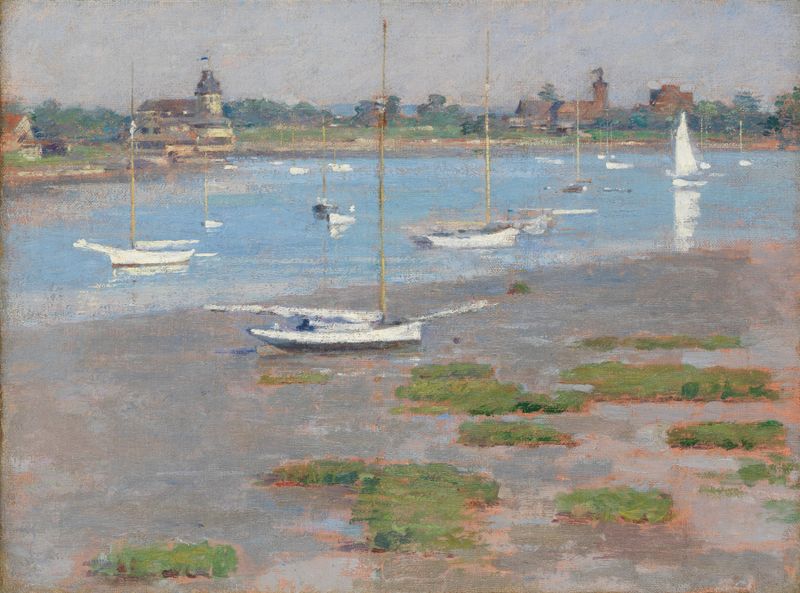
Low Tide, Riverside Yacht Club
Theodore Robinson





