
The village fair — History & Facts
In the quiet spaces of memory, shadows dance with the light of day, weaving tales of joy and nostalgia. They tell us that within the simple act of gathering, the heart finds its rhythm. Look to the center of the canvas, where a vibrant array of colors bursts forth, illustrating the lively atmosphere of a village fair. Notice how the soft, golden light bathes the figures in warmth, their playful gestures frozen in time.
The palette speaks of joy—a blend of earthy hues interspersed with bright splashes of fabric and fruit, each stroke giving life to the scene. Shadows stretch across the ground, anchoring the figures and adding depth to the celebration, creating a delightful contrast that pulls the viewer into the heart of the festivities. Yet beneath the cheerful exterior lies a quiet contemplation. The juxtaposition of light and shadow suggests the fleeting nature of happiness, that moments of joy exist alongside the ephemeral passage of time.
Look closely at the individuals—some are caught in exuberant laughter, while others linger in thought. This duality captures not just a festive gathering, but the subtle undercurrents of human experience, hinting at the complexities that often accompany communal joy. James Holland painted this scene during a time when he was deeply inspired by the vibrancy of English rural life. Though the exact date is unknown, his works reflect a period in the 19th century when artists were increasingly drawn to the pastoral and everyday scenes of their surroundings.
Holland’s commitment to capturing the essence of local culture speaks to a broader movement in the art world, where realism and a focus on the ordinary began to flourish.
More Artworks by James Holland
Browse all →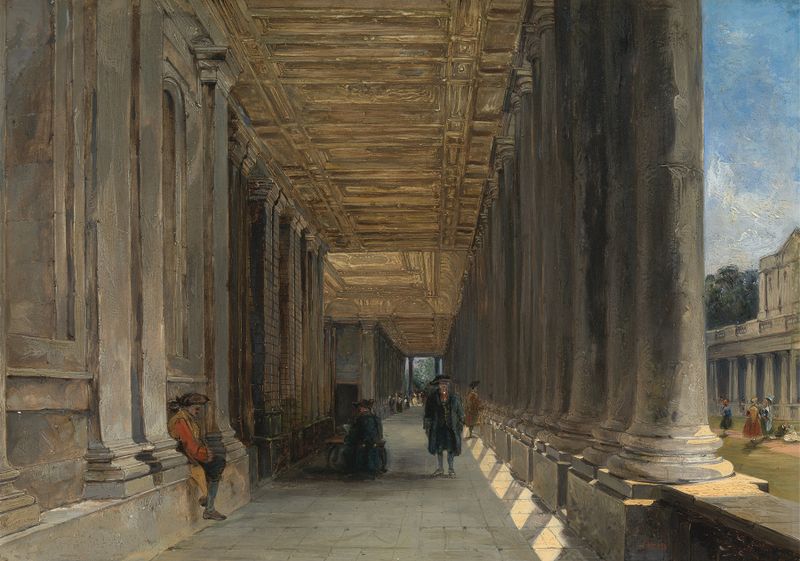
The Colonnade of Queen Mary’s House, Greenwich
James Holland
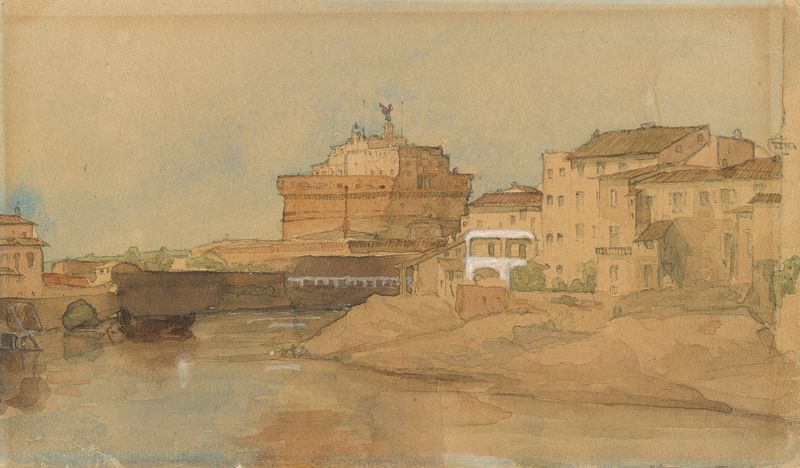
View of Castel Sant’ Angelo from the Tiber
James Holland
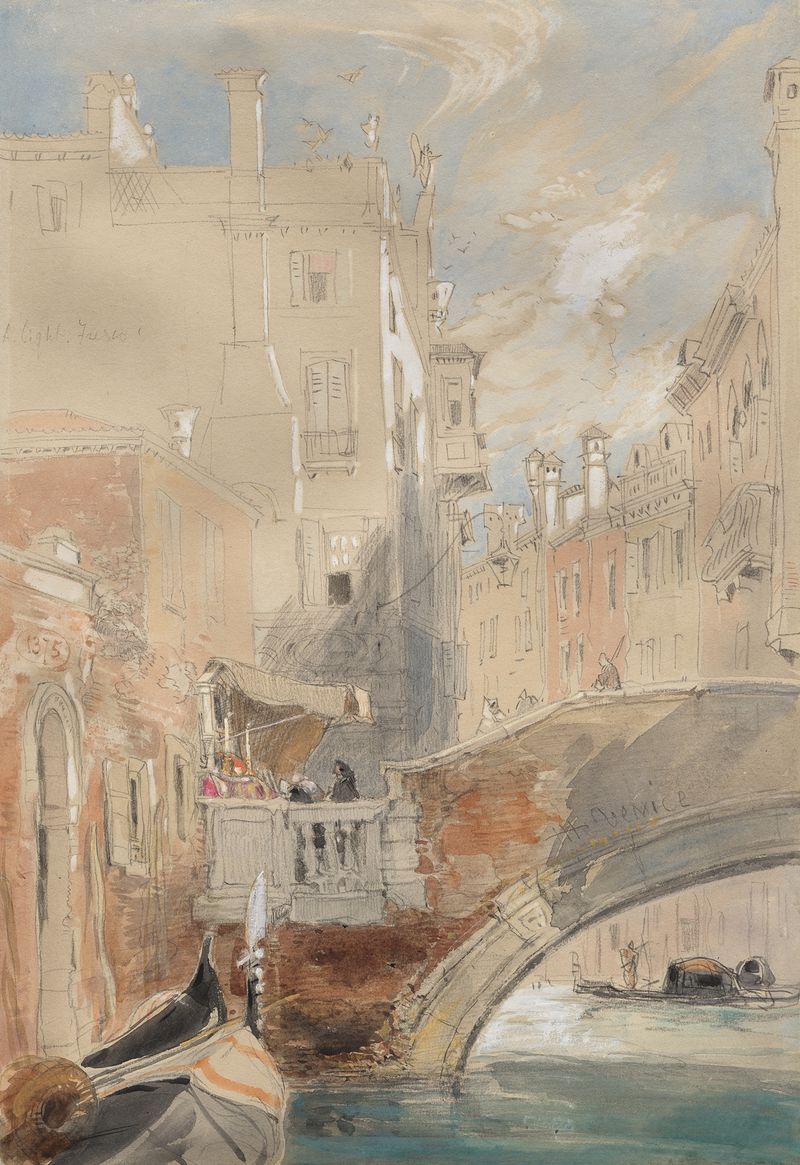
A Canal, Venice
James Holland
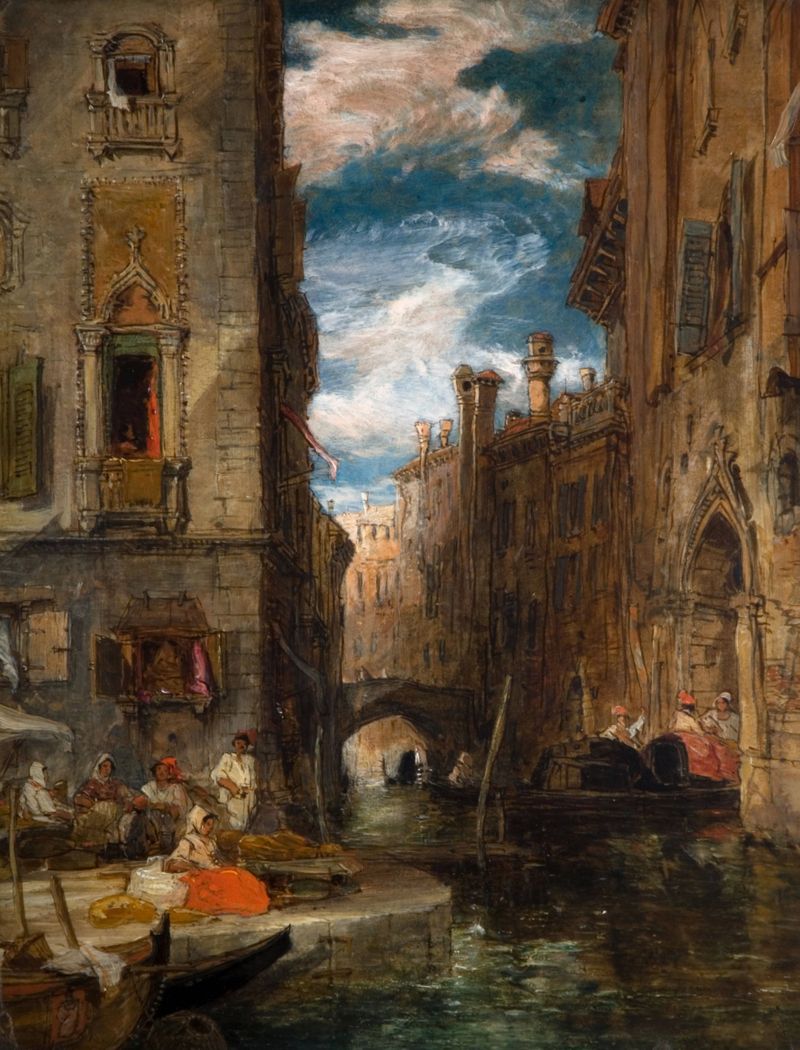
A Recollection Of Venice
James Holland
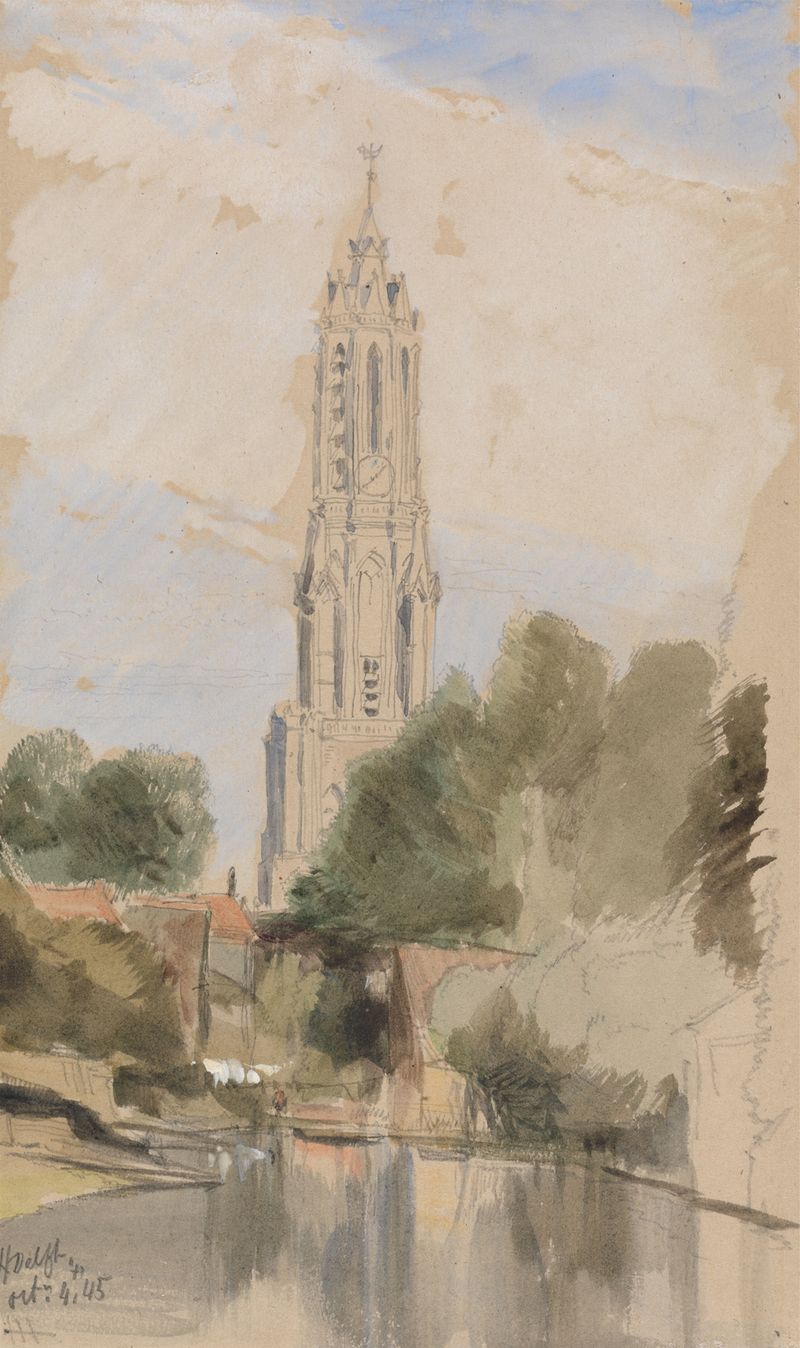
Delft
James Holland
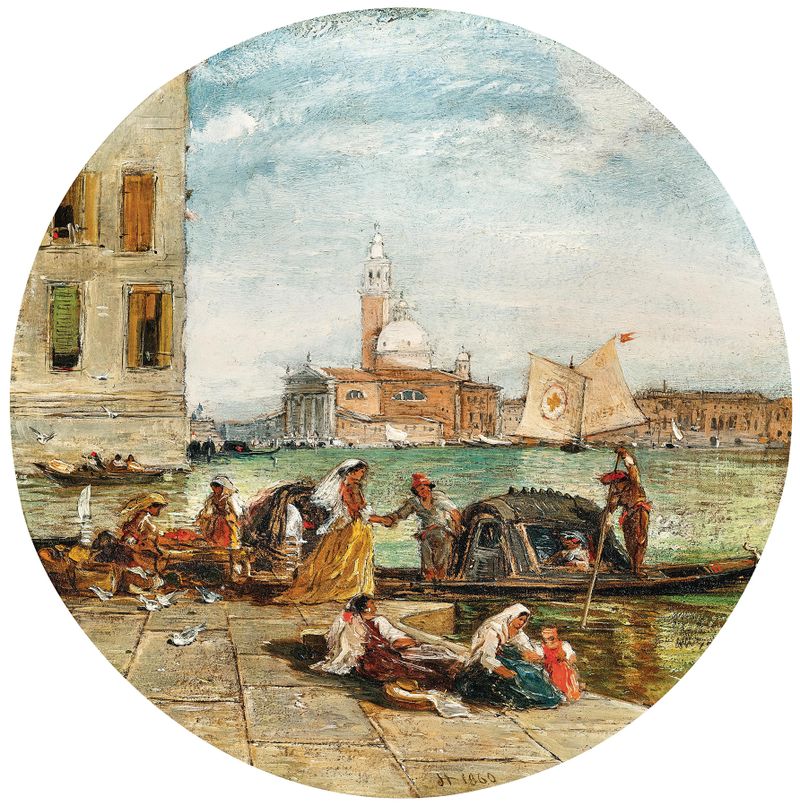
Venice, a view of San Giorgio Maggiore
James Holland
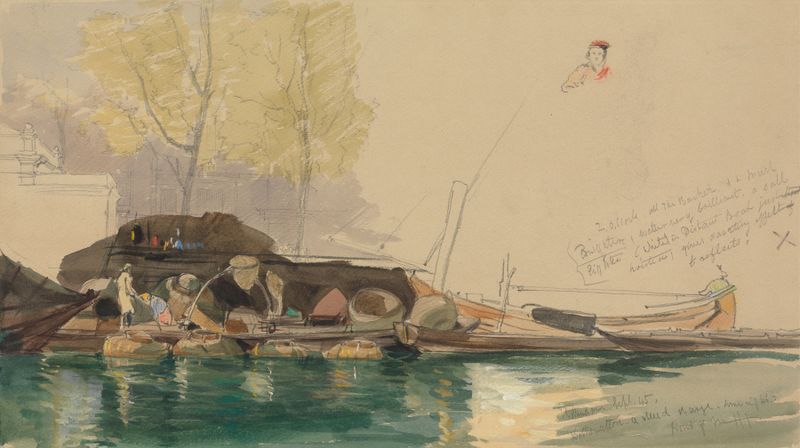
Barges on a Canal in Rotterdam
James Holland

Landschap bij Sintra, Portugal
James Holland
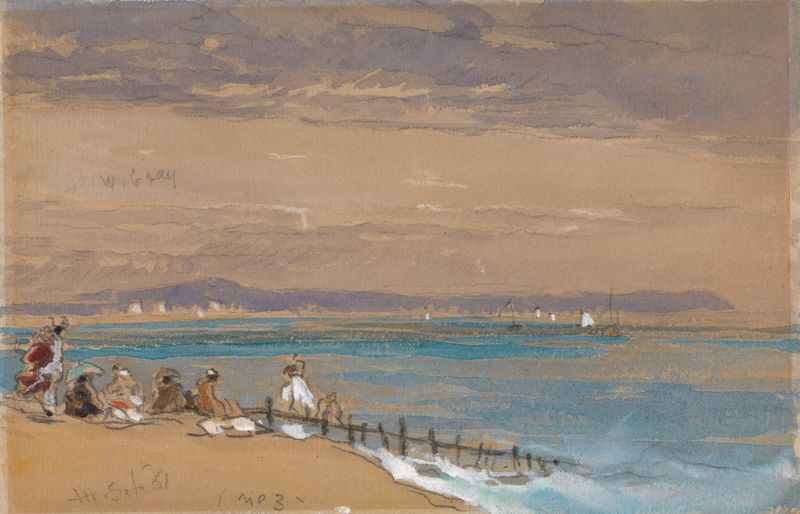
Beach Scene with Figures by a Breakwater
James Holland
Coast Scene with Sailing Boats
James Holland





