
The Virgin and Child and Three Angels — History & Facts
No one knows for certain where The Virgin and Child and Three Angels by Piero della Francesca was originally intended to hang, but its unusual composition and intimate scale have long puzzled art historians. Unlike many of Piero’s grand altarpieces, this work seems designed for private devotion, its figures gathered close together in a gentle, almost whispered conversation. The painting’s date, around 1470, places it at a turning point in Piero’s career, when he was moving between the courts of Urbino and Arezzo and experimenting with new ways to express the sacred. At the center, the Virgin sits serenely, the Christ Child perched on her lap, while three angels flank them, their faces calm and introspective.
The moment Piero selects is one of quiet revelation: the Child’s hand raised in blessing, the angels bearing a delicate crown above Mary’s head, signifying her role as Queen of Heaven. The luminous, geometric folds of the drapery and the softly modeled faces reflect Piero’s fascination with mathematics and light, echoing the rational calm seen in his Madonna del Parto. Unlike the crowded, emotionally charged Madonnas of Fra Angelico, Piero offers a scene of stillness and order, where each figure seems to exist in perfect balance. The painting’s early history remains obscure, as its original patron is unrecorded and its medium is still debated among scholars.
Over the centuries, it has passed quietly through various collections, escaping the wars and upheavals that threatened many Renaissance treasures. Today, The Virgin and Child and Three Angels stands as a testament to Piero della Francesca’s unique vision, blending the spiritual with the mathematical, and offering viewers a rare glimpse of Renaissance devotion shaped by intellect as much as faith. Its place in Piero’s oeuvre is secure, admired for its clarity and restraint, even as questions about its origins linger.
More Artworks by Piero Della Francesca

Portrait of the Duchess of Urbino, Battista Sforza
Piero Della Francesca

Portrait of Federico da Montefeltro
Piero Della Francesca

Federico da Montefeltro, Duke of Urbino
Piero Della Francesca
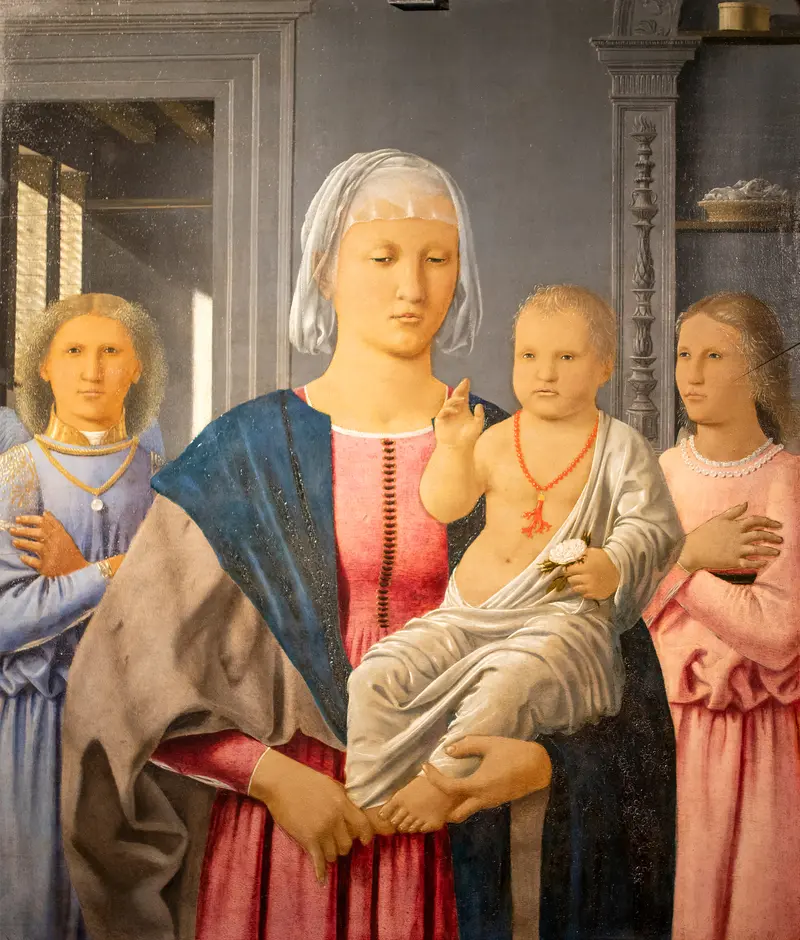
Madonna di Senigallia
Piero Della Francesca
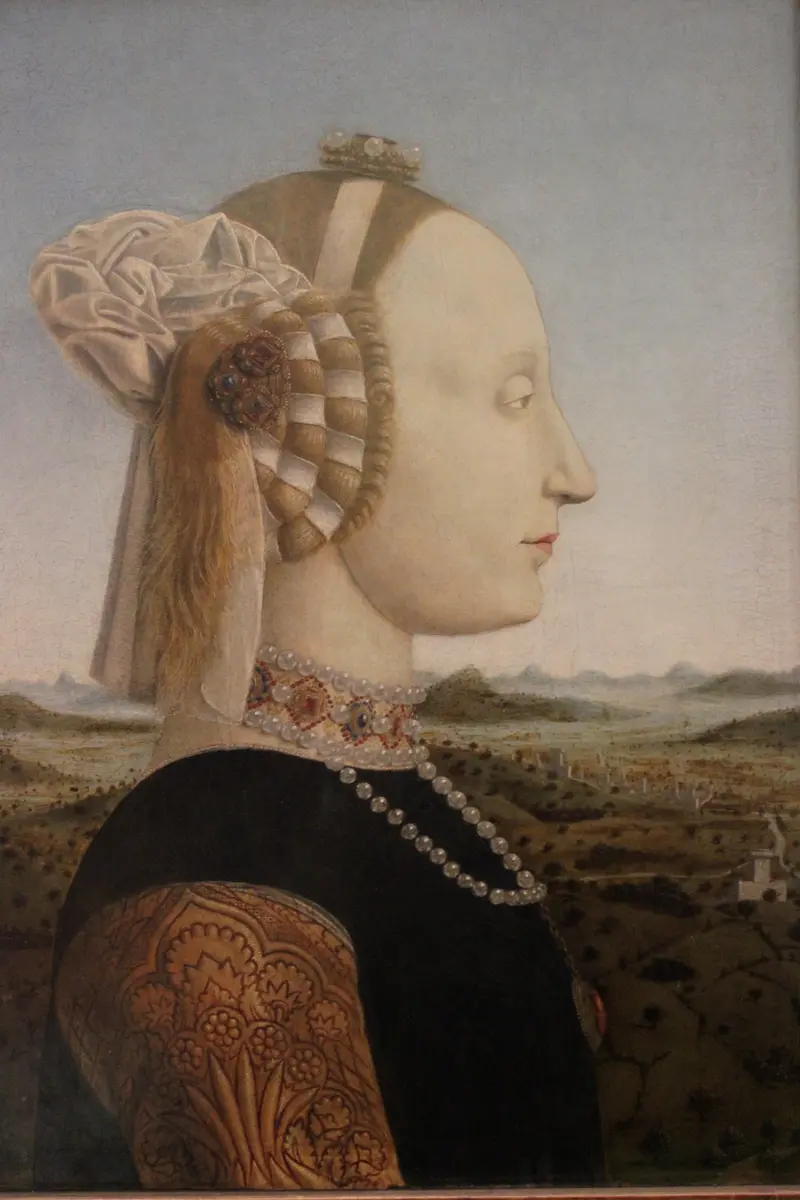
Portrait of Battista Sforza
Piero Della Francesca
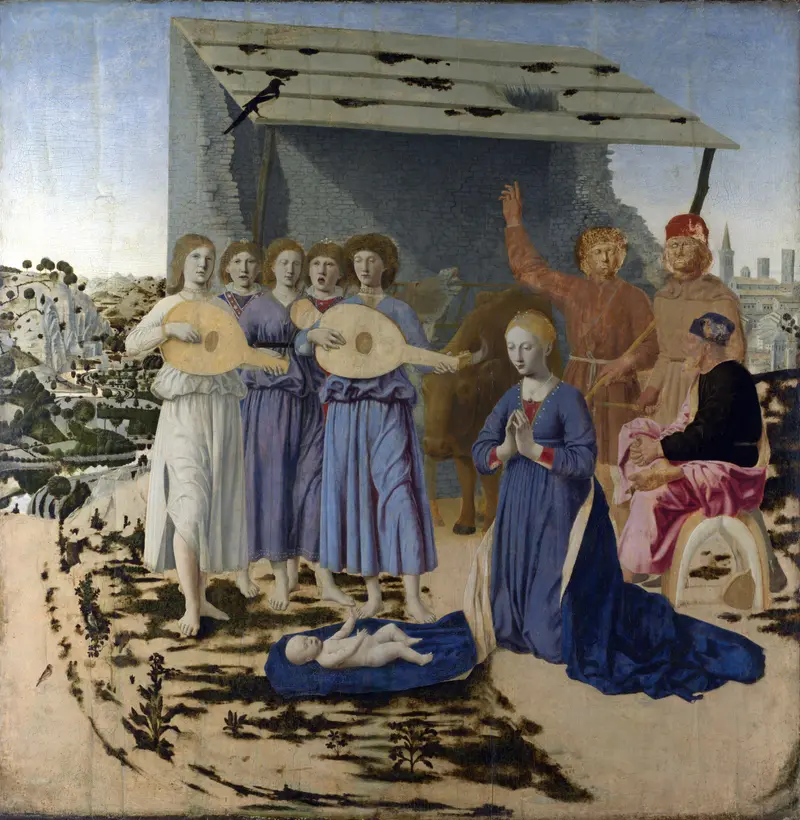
The Nativity
Piero Della Francesca
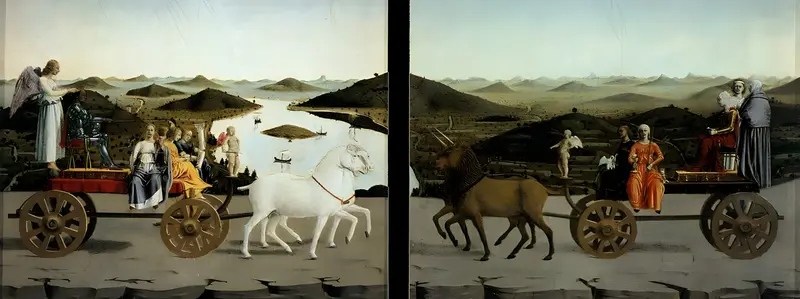
Diptych of Federico da Montefeltro and Battista Sforza
Piero Della Francesca
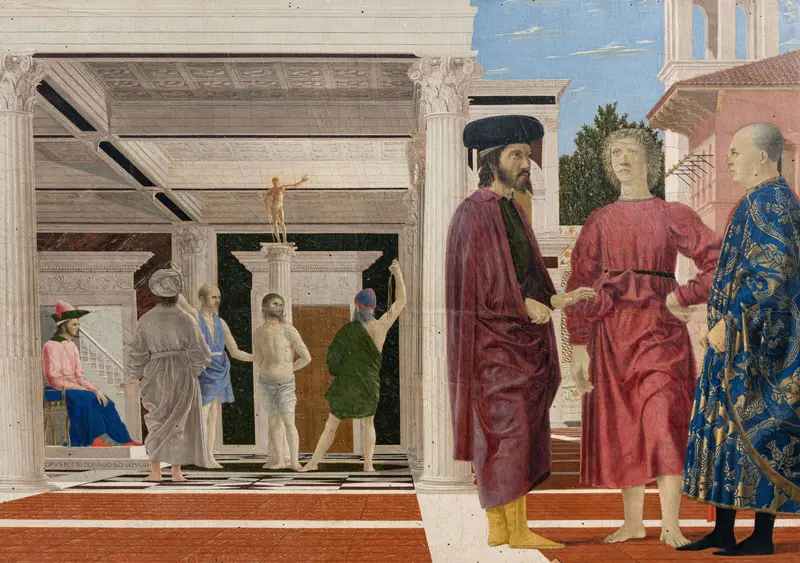
Flagellation of Christ
Piero Della Francesca
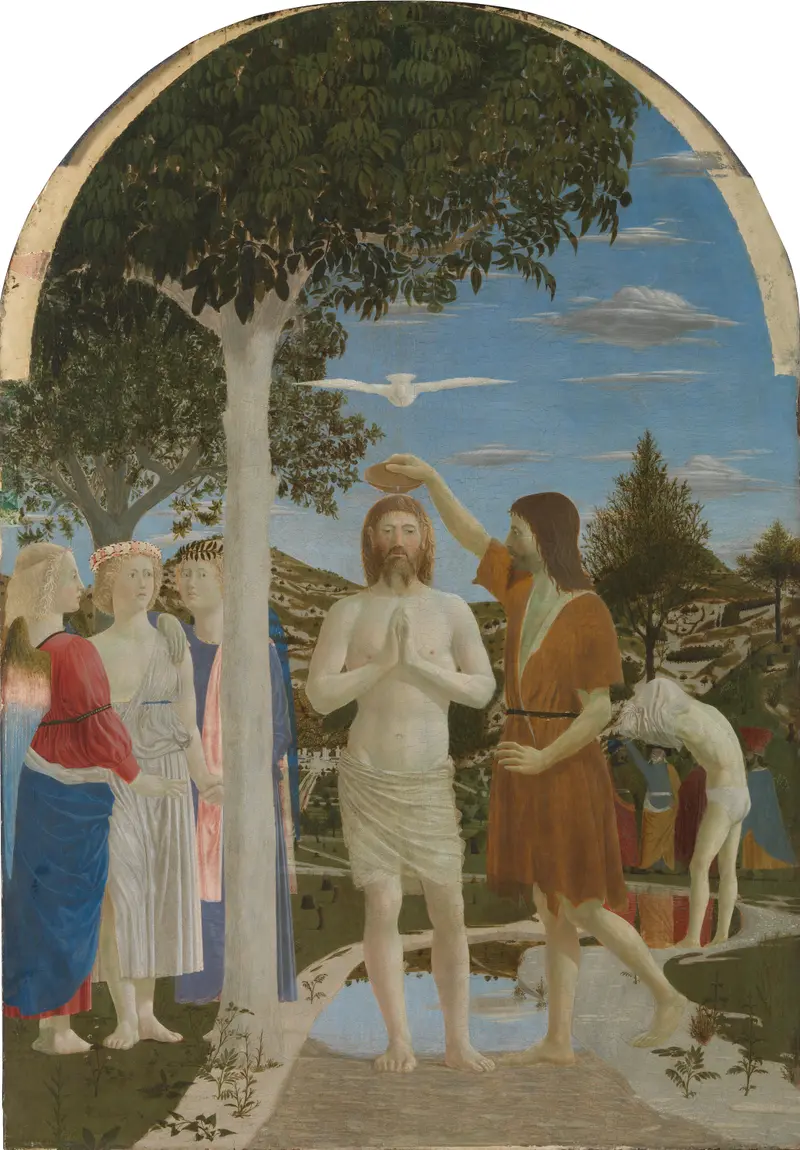
The Baptism of Christ
Piero Della Francesca
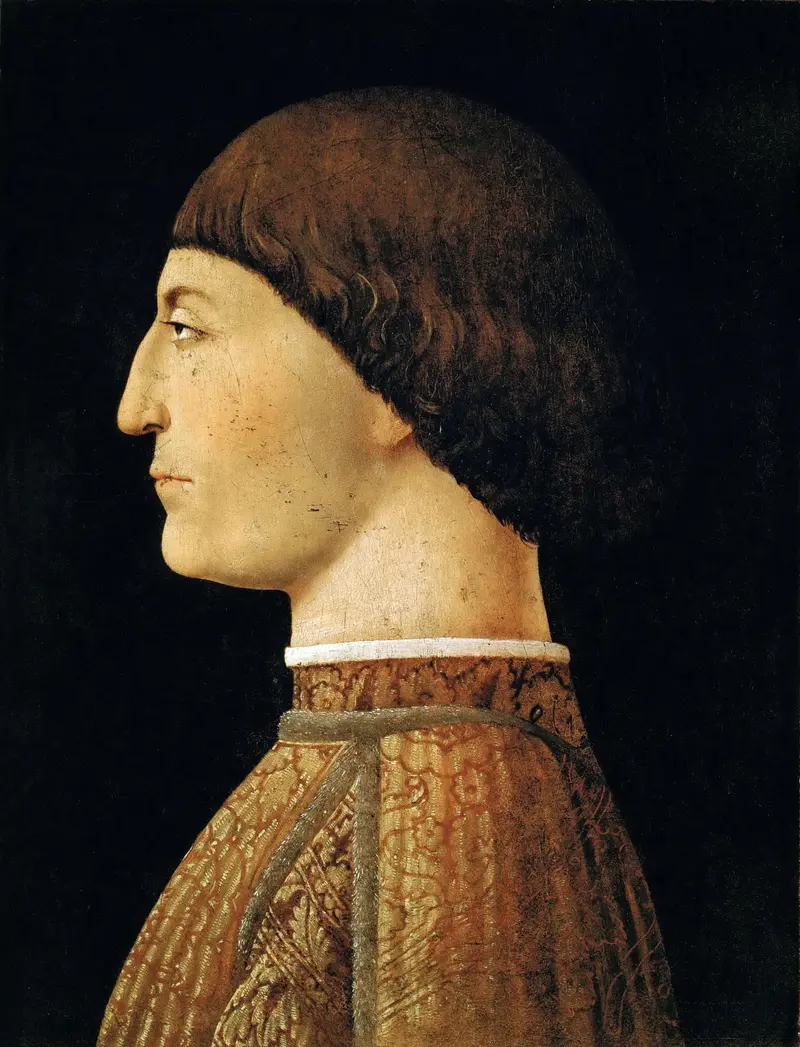
Portrait of Sigismondo Pandolfo Malatesta
Piero Della Francesca





