Theater-Mountain-Construction — History & Facts
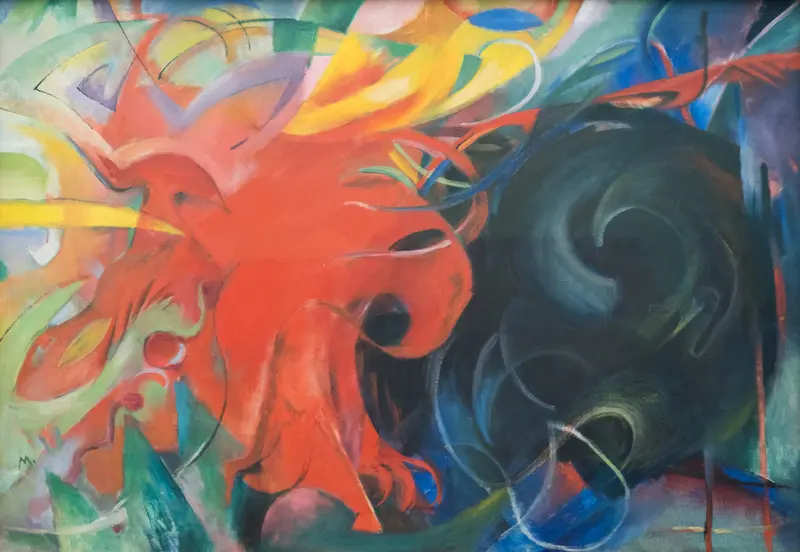
In Theater-Mountain-Construction, Paul Klee uses a vibrant palette of colors, including blues, reds, and yellows. The painting features abstract shapes that suggest a mountainous landscape intertwined with theatrical elements. Geometric forms dominate the composition, creating a sense of depth and movement.
The overall effect is playful and dynamic, inviting viewers to explore its layers. The painting is characterized by Klee's distinctive use of line and color. He employs bold outlines to define the shapes, which are filled with bright hues. The layering of colors creates a sense of texture and complexity.
Viewers can appreciate Klee's technique of blending abstraction with recognizable forms. Paul Klee was a key figure in the development of modern art, known for his unique style that blends abstraction and symbolism. Theater-Mountain-Construction reflects his fascination with the relationship between nature and artifice. An interesting fact about this work is that it showcases Klee's ability to convey emotion through color and form, making it a notable piece in his oeuvre.