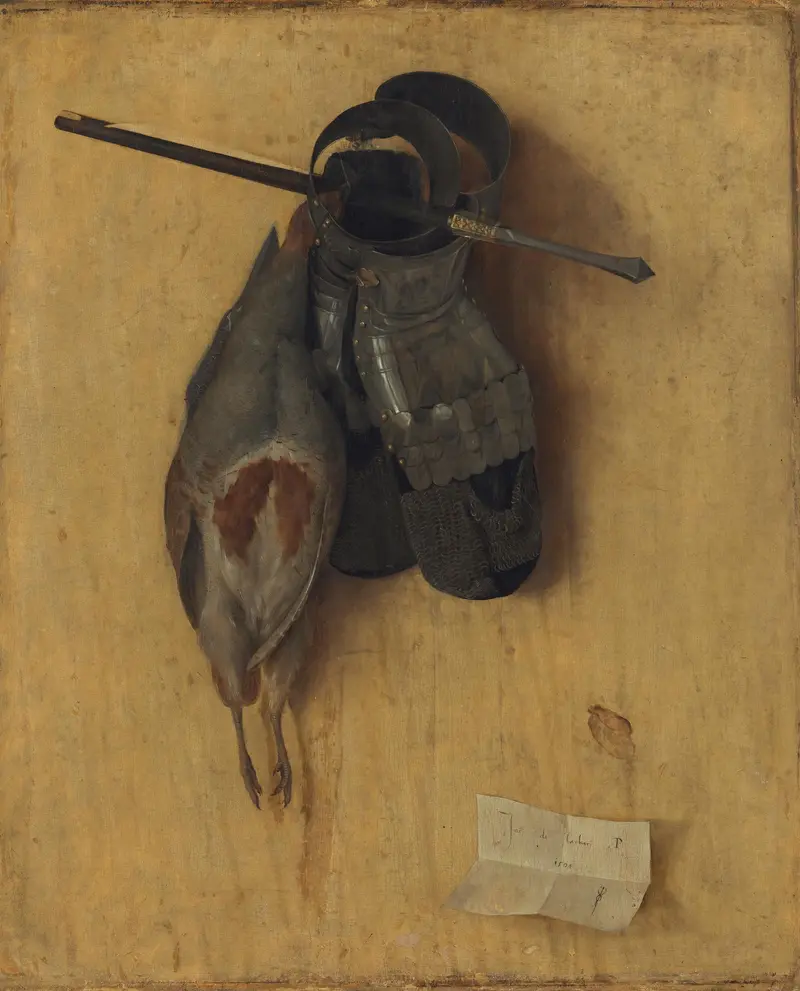
Théodule Nature morte — History & Facts
A shaft of warm, directional light slices across the foreground, picking out the rough grain of a cut bone and the glint of a feather quill, as if the painter has just interrupted a private ritual. The objects—a heavy bone, a black velvet pouch, a scroll tied with rope, a quill, and an open tin of red pigment—are arranged with a deliberate disorder that invites the eye to linger and decipher their purpose. The red powder spilled on the tabletop adds a note of drama, hinting at a recent action or a story unfinished.
The background recedes into a dense, reddish-brown shadow, giving the scene a sense of intimacy and secrecy, as if these items belong to someone whose work is both physical and intellectual. Still lifes like this, painted in the tradition of nineteenth-century French realism, often served as meditations on the material world and the quiet drama of everyday objects. Artists such as Augustin Théodule Ribot found poetry in the humble and the overlooked, setting their scenes with the careful observation of light and texture that defined their era. The genre was popular among collectors who prized both its technical skill and its invitation to reflect on the passage of time and the nature of labor.
This particular Nature morte, held in a private collection, is a reminder that history has kept few traces of some works beyond the objects themselves—leaving us to return, again and again, to the clues left on the painted surface.
More Artworks by Augustin Théodule Ribot

The Scullion
Augustin Théodule Ribot

The Artist's Daughter
Augustin Théodule Ribot
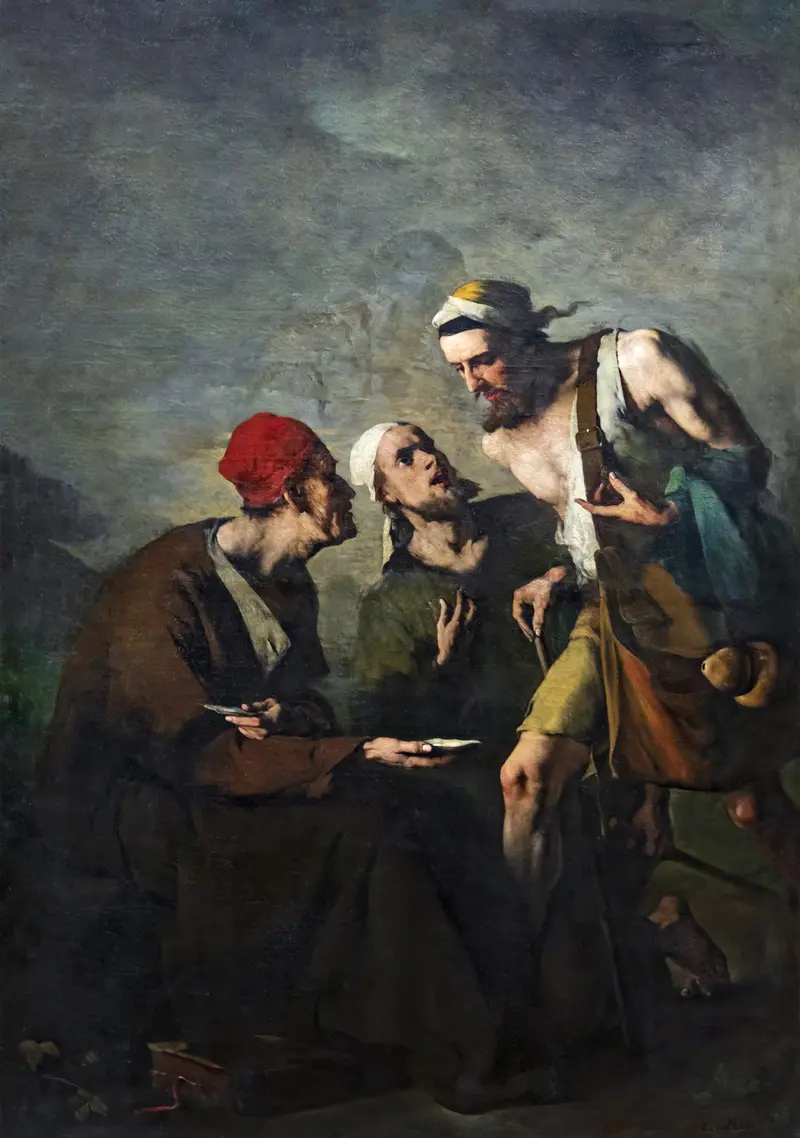
The oyster and the Litigant's
Augustin Théodule Ribot

The philosophers
Augustin Théodule Ribot

Singers
Augustin Théodule Ribot

Oyster and timbale
Augustin Théodule Ribot
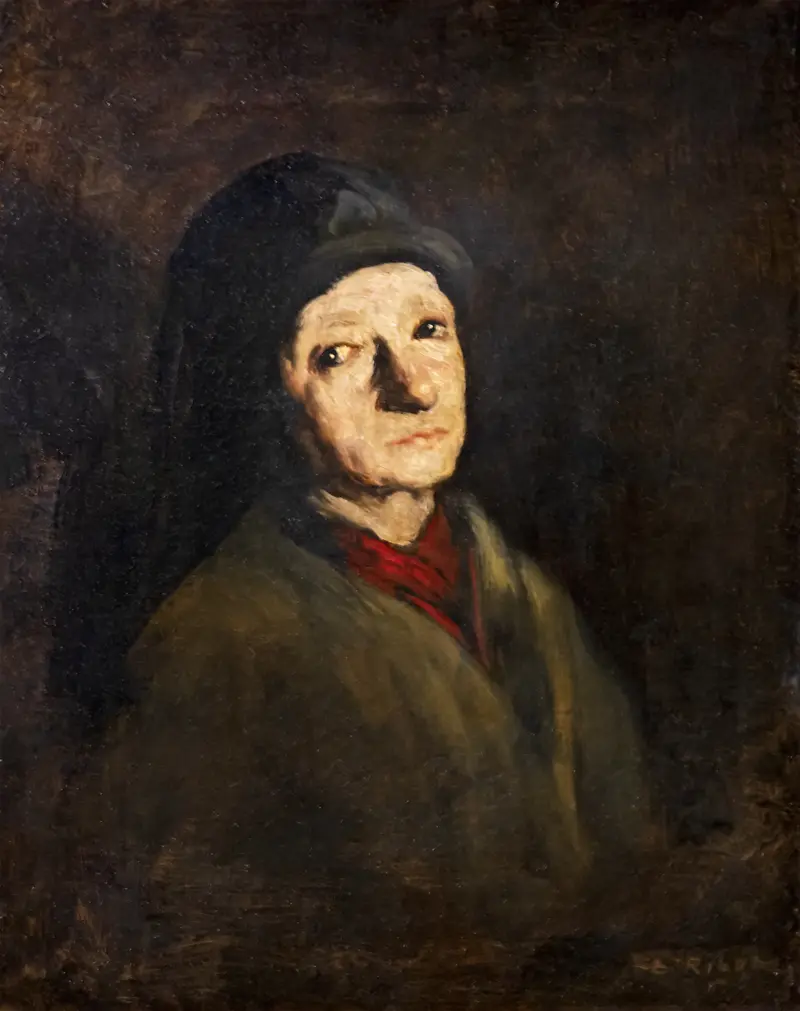
Portrait of the artist's mother
Augustin Théodule Ribot

Three old jews
Augustin Théodule Ribot

' Landscape ', known as ' La Maison de Corot in Ville-d'Avray '
Augustin Théodule Ribot
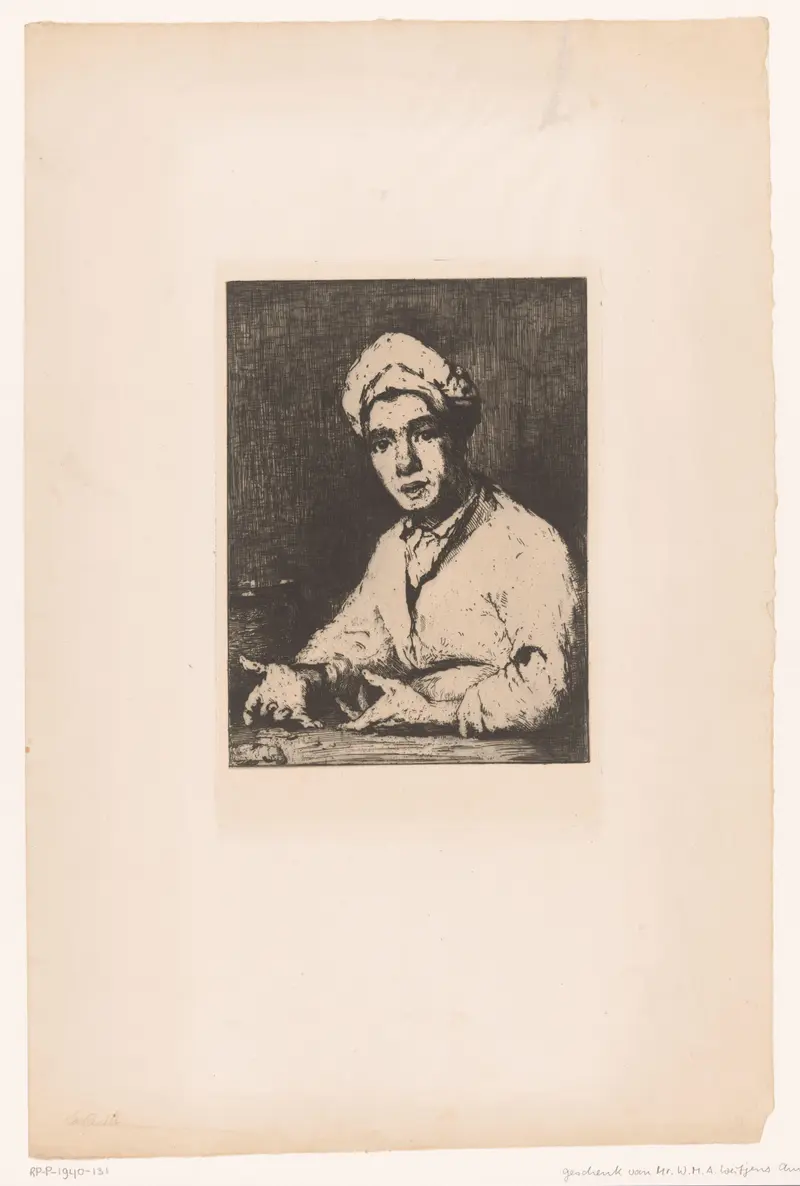
La recette du cuisinier
Augustin Théodule Ribot