
Thistles, butterflies and a lizard — History & Facts
The first thing that catches the eye in Thistles, butterflies and a lizard by Abraham Jansz. Begeyn is the way the wild thistle dominates the scene, its spiny leaves and bristling heads reaching upward through the darkness. The artist draws you in with the sharp geometry of the plant, but then rewards a lingering gaze with a world of small dramas: the lizard poised at the lower right, alert and ready to dart; butterflies suspended in mid-flight, their delicate wings catching the faintest glimmers of light; a bird nestled in the shadow, half-hidden but watching.
Each detail is rendered with a precision that feels almost scientific, yet the whole is anything but clinical—there is tension here, a sense of life balanced on the edge of stillness. The palette is deep and earthy, the darkness behind lending the scene a quiet intensity, as if the thistle and its companions are emerging from the forest floor just as dawn breaks. Works like this belong to the flourishing of still life and natural studies in the Dutch Golden Age, when painters found endless fascination in the overlooked corners of nature. These paintings were often commissioned by collectors eager to display both their taste and their knowledge of the natural world, and they reflect a culture newly attuned to the marvels of botany and zoology.
Abraham Jansz. Begeyn was one of many artists who specialized in such subjects, though history has kept few traces of the circumstances behind this particular painting, now in the National Museum in Warsaw. What survives is the artist’s careful observation and the quiet drama he found in a patch of thistles—an invitation to look closer, and to notice what usually escapes our hurried glance.
More Artworks by Abraham Jansz. Begeyn

Landscape with people and cattle
Abraham Jansz. Begeyn
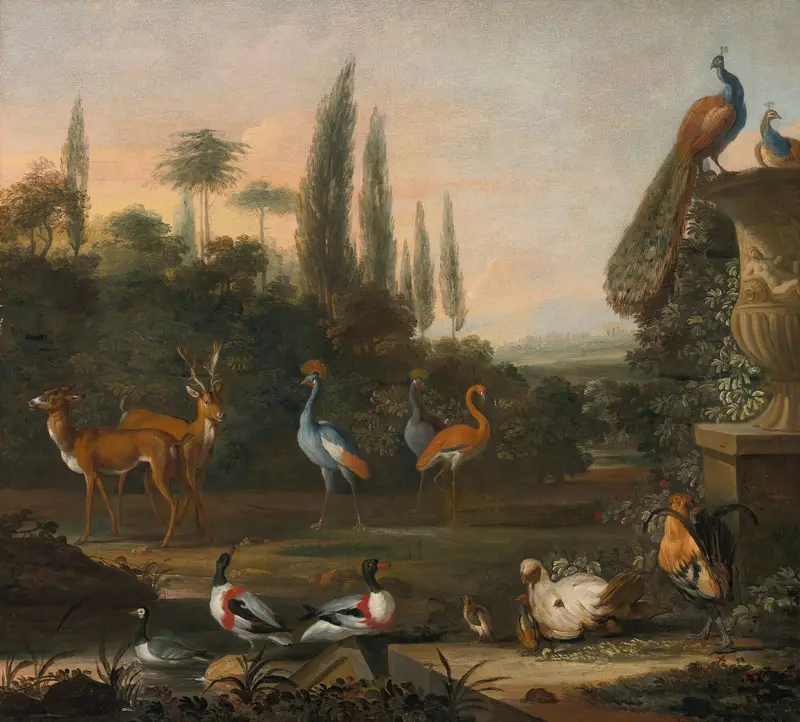
Landscape with deer and exotic birds
Abraham Jansz. Begeyn
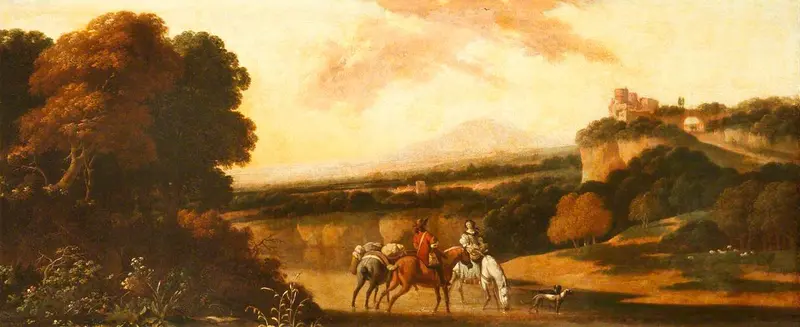
Landscape with Travellers
Abraham Jansz. Begeyn
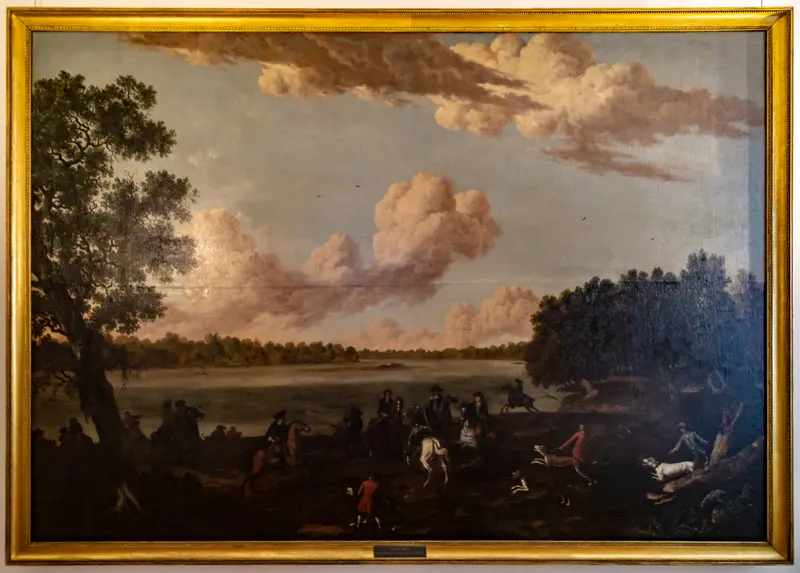
Prince Elector Frederick III of Prussia hunting at the Havel
Abraham Jansz. Begeyn
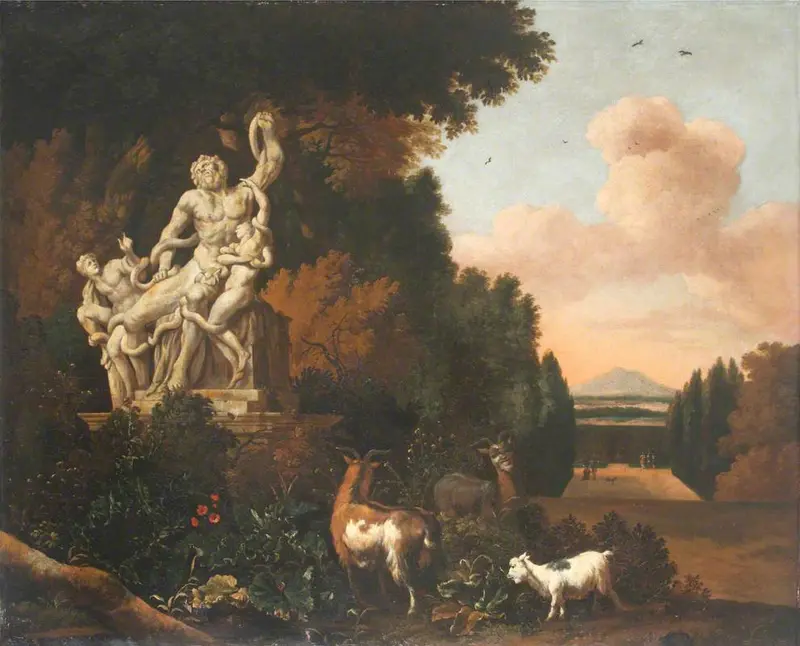
Landscape with Goats and a Statue of Laocoön
Abraham Jansz. Begeyn
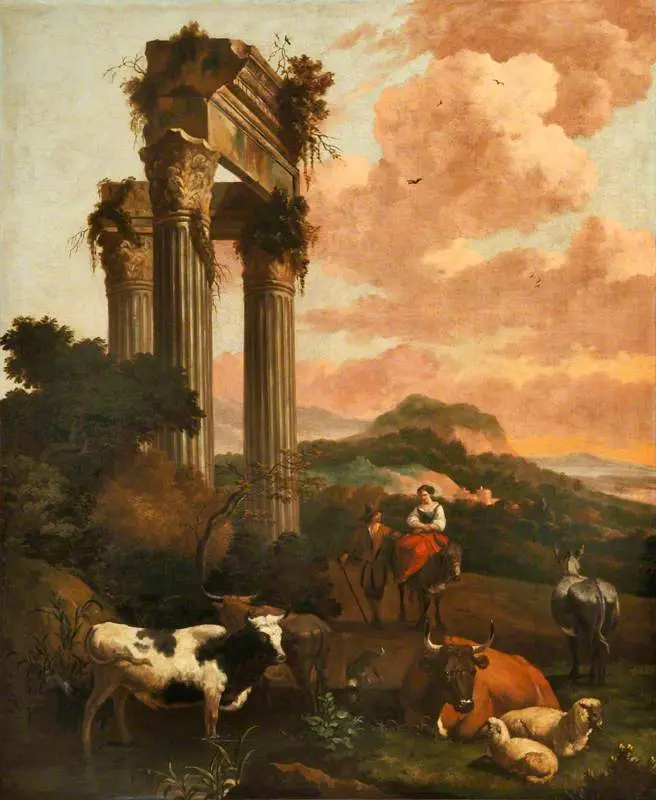
Landscape with Figures, Cattle and Sheep among Classical Ruins
Abraham Jansz. Begeyn
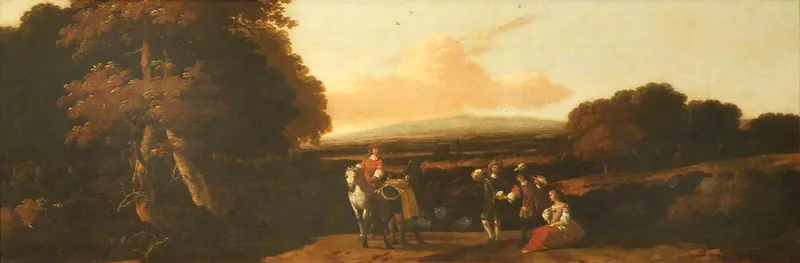
Landscape with Figures on a Road
Abraham Jansz. Begeyn
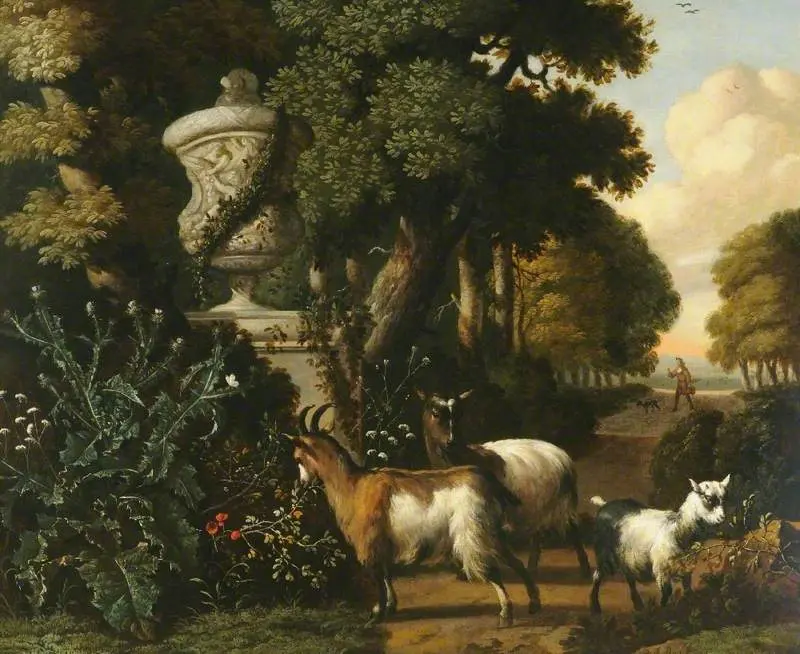
Landscape with Goats
Abraham Jansz. Begeyn
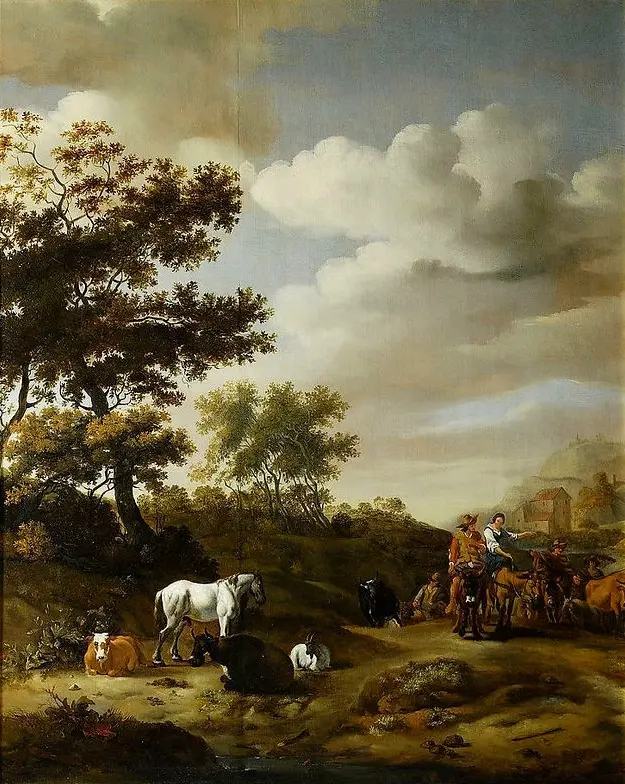
Landscape with travelers and cattle.
Abraham Jansz. Begeyn
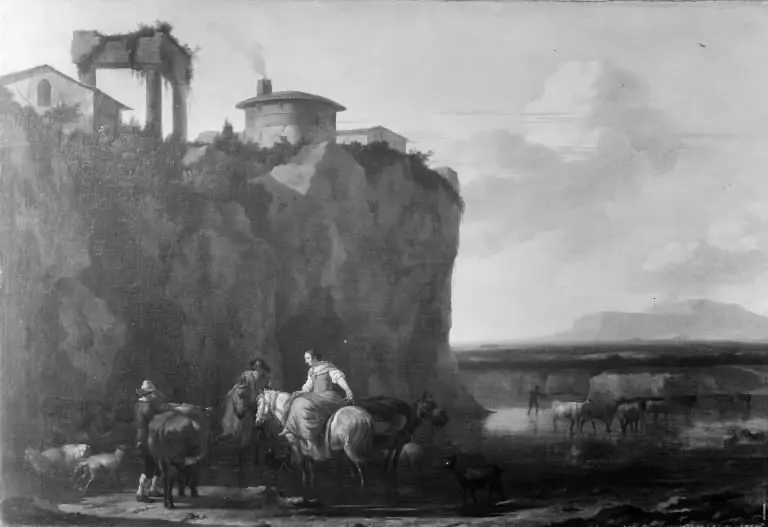
The Ford
Abraham Jansz. Begeyn





