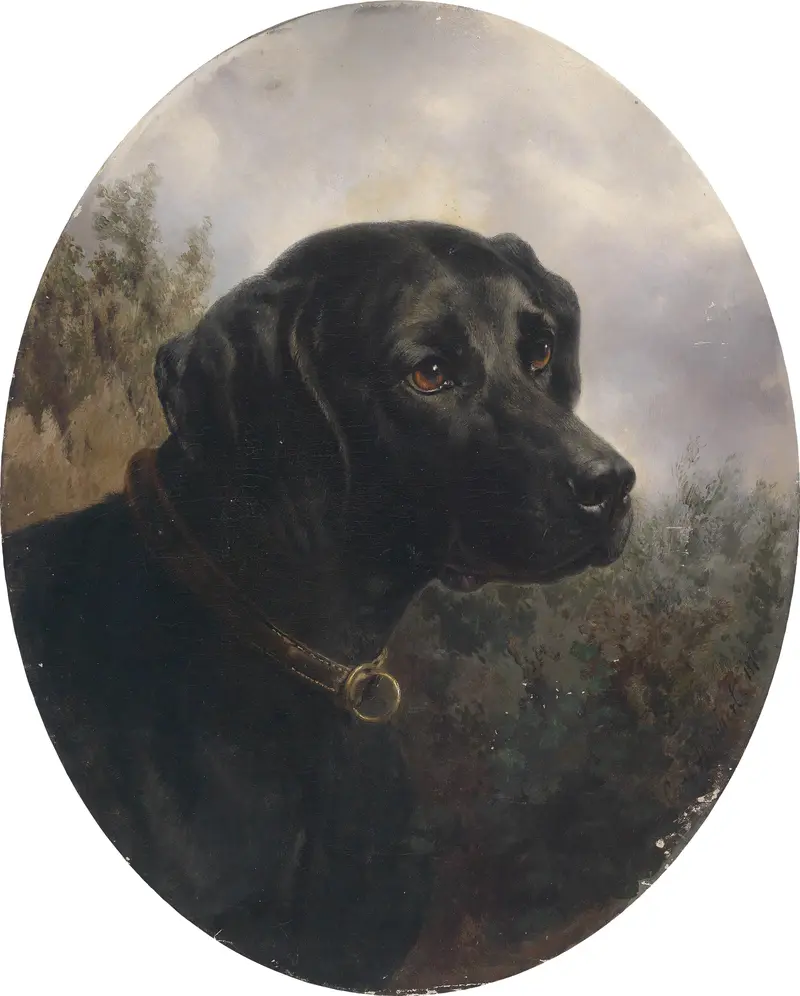
Three watchful dogs — History & Facts
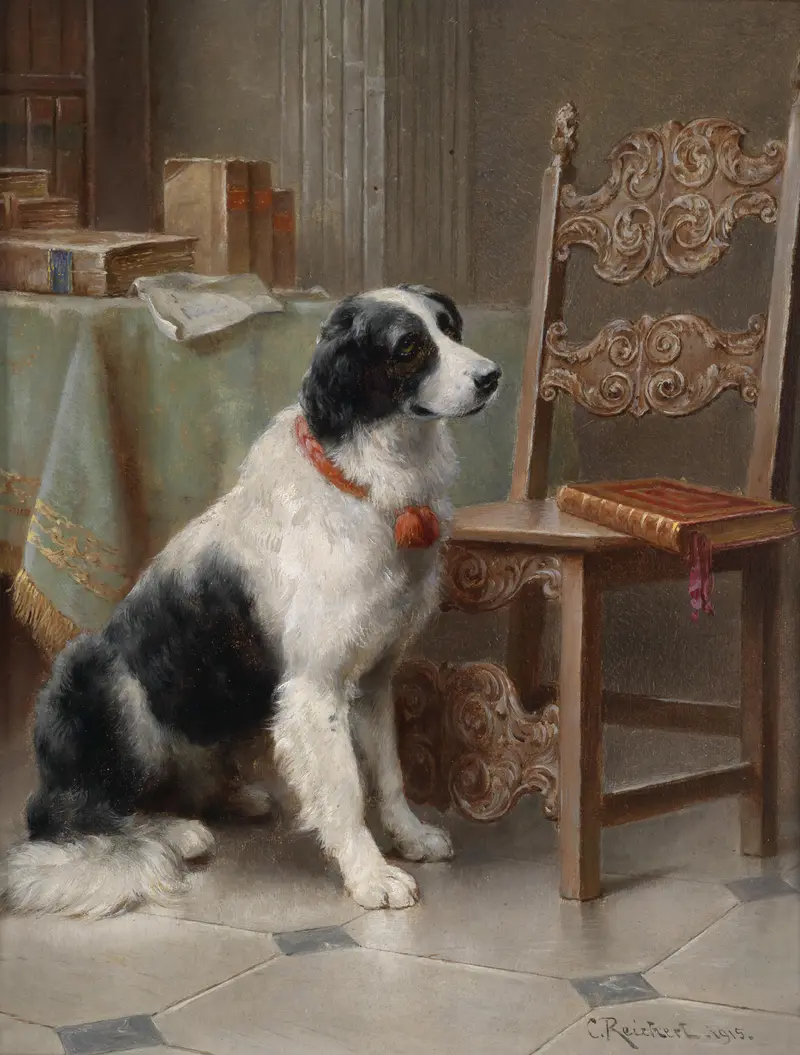
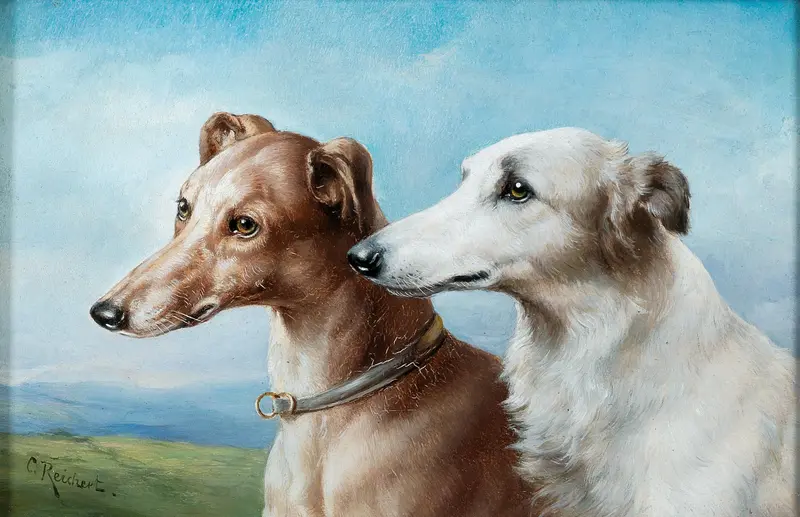
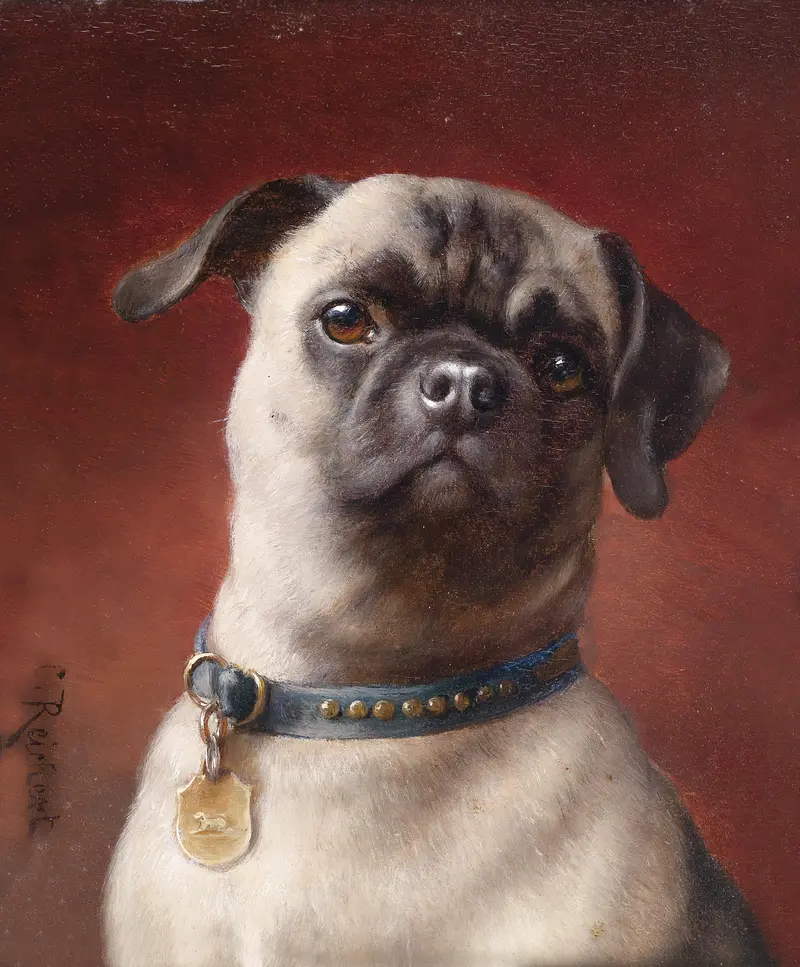
Three pairs of eyes, alert and unwavering, draw the viewer instantly into the quiet tension of Three watchful dogs by Carl Reichert. Each animal stands poised at the edge of a stone step, their bodies angled forward, as if caught in the moment before a call to action. The artist’s hand lingers lovingly over every detail: the taut muscles beneath short fur, the glint of brass tags on their collars, the subtle play of shadow along the wall behind them.
The dogs’ expressions are not merely attentive—they are individualized, each gaze suggesting a distinct personality and role within this small, silent pack. Light falls gently from the left, sharpening the alertness in their eyes and lending the scene a sense of expectation, as if something just out of sight has captured their collective focus. Painted by 1918, this work belongs to a tradition that flourished in the late nineteenth and early twentieth centuries, when animal portraiture was both a mark of affection and a symbol of status among European collectors. Artists like Carl Reichert were celebrated for their ability to capture not only the likeness but the inner life of their subjects—a skill much prized in an era when dogs were both companions and emblems of loyalty.
Works such as this were often commissioned by families or estates, intended to honor beloved animals or to decorate the walls of bourgeois homes. Though little is recorded about the specific journey of this painting, its presence in the Dorotheum collection hints at a world where even the smallest details—like the careful rendering of a dog’s collar—spoke volumes about the lives and values of its owners. The viewer is left to wonder: what, or whom, do these three guardians await?