
Three (Women) Calligraphers (Sanpitsu) at a Calligraphy Reunion (Shokai) — History & Facts
Did the painter know this moment would outlive them? In Three (Women) Calligraphers at a Calligraphy Reunion, the passage of time feels almost palpable, as if the air is thick with unspoken words and shared histories. Look to the center of the composition, where the three women sit with poised elegance, their delicate fingers poised over brushes, ready to inscribe their thoughts onto paper. The interplay of muted ink tones against the soft, pastel hues of their garments draws the eye inward, inviting a closer look at each woman’s unique expression. Notice how the light cascades gently across their faces, illuminating the concentration etched on their brows, while shadows dance playfully in the folds of their robes, hinting at the complexity of their interactions. Yet, beneath the surface lies an emotional tension—a betrayal hinted at within their camaraderie.
The slight distance between them suggests unspoken rivalries, and the way their gazes diverge signifies a deeper narrative of ambition and desire for recognition. The subtle brushstrokes that form the elegant calligraphy convey not just artistry, but also the weight of history and tradition, each stroke a testament to the burdens carried by women artists in a male-dominated milieu. Katsushika Hokusai painted this piece between 1800 and 1810, a period marked by his own burgeoning reputation in the world of ukiyo-e. As he navigated the complexities of his artistic identity in Edo, the era was ripe with changing cultural paradigms that both celebrated and marginalized women’s contributions to art.
This work stands as a testament to the complexities of friendship and rivalry, encapsulating the intricate dance of creativity and ambition—echoing the timeless struggles of those who create.
More Artworks by Katsushika Hokusai
Browse all →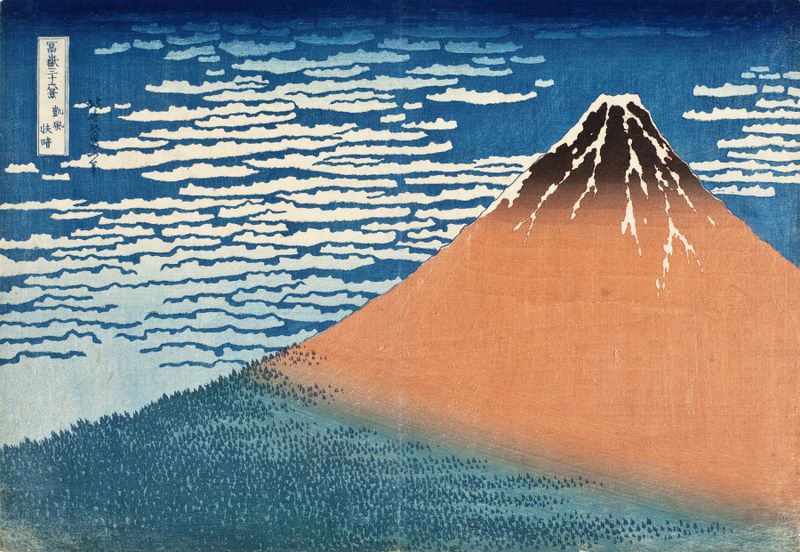
South Wind, Clear Dawn
Katsushika Hokusai

South Wind, Clear Weather
Katsushika Hokusai

Clear Weather with a Southerly Wind
Katsushika Hokusai
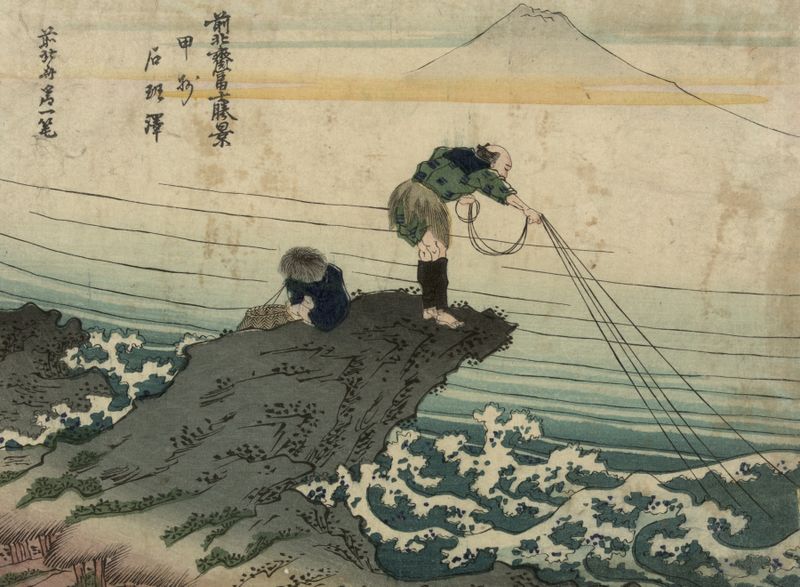
Kōshū kajikazawa
Katsushika Hokusai

Rainstorm beneath the Summit (Sanka Haku-u)
Katsushika Hokusai

Kōshū kajikazawa 2
Katsushika Hokusai
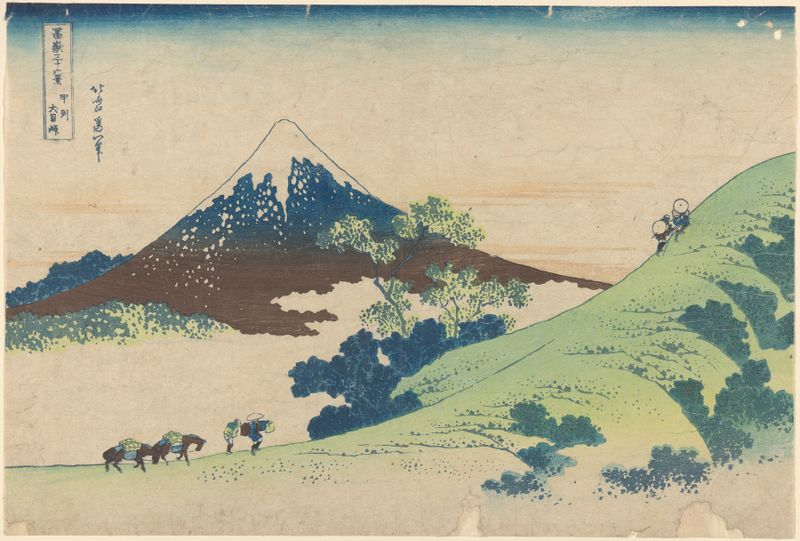
Inume Pass in Kai Province (Kôshû inume-tôge)
Katsushika Hokusai

Yoro Falls in Mino Province (Mino no Yoro no taki), from the series "A Tour of Waterfalls in Various Provinces (Shokoku taki meguri)"
Katsushika Hokusai
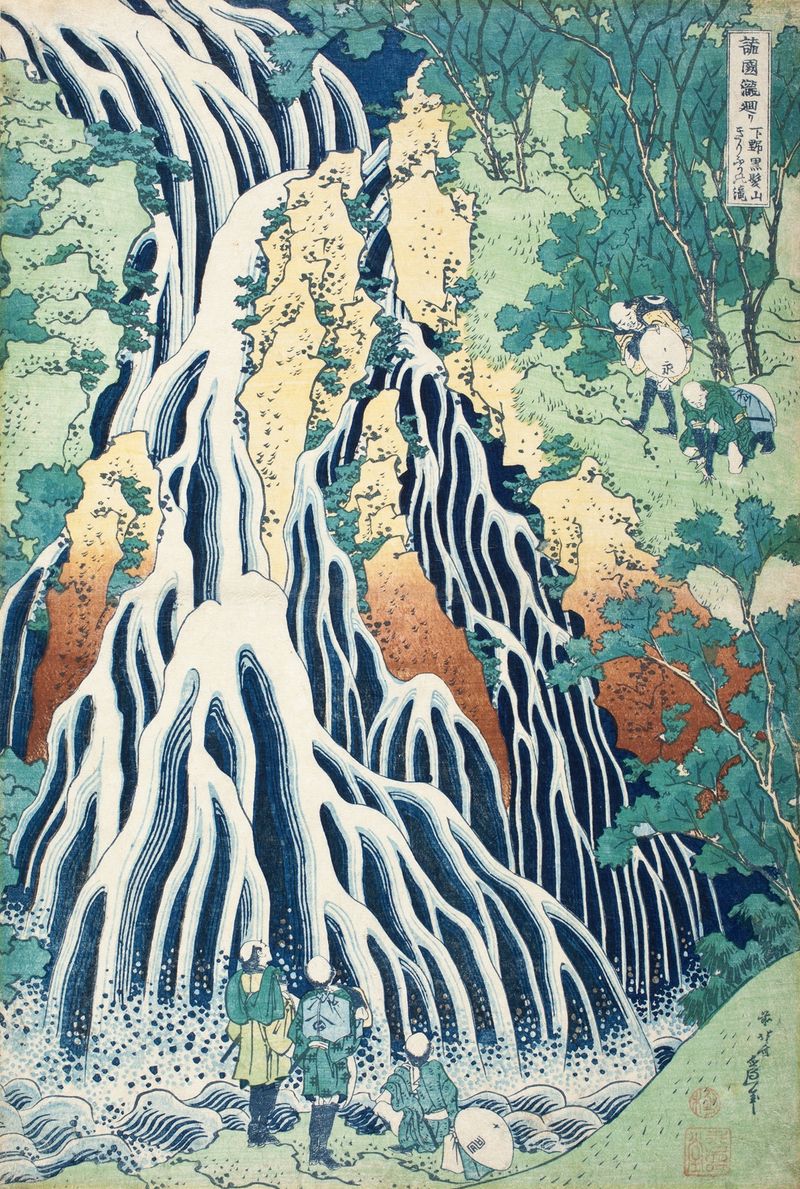
Falls of Kirifuri at Mt. Kurokami, Shimotsuke Province
Katsushika Hokusai
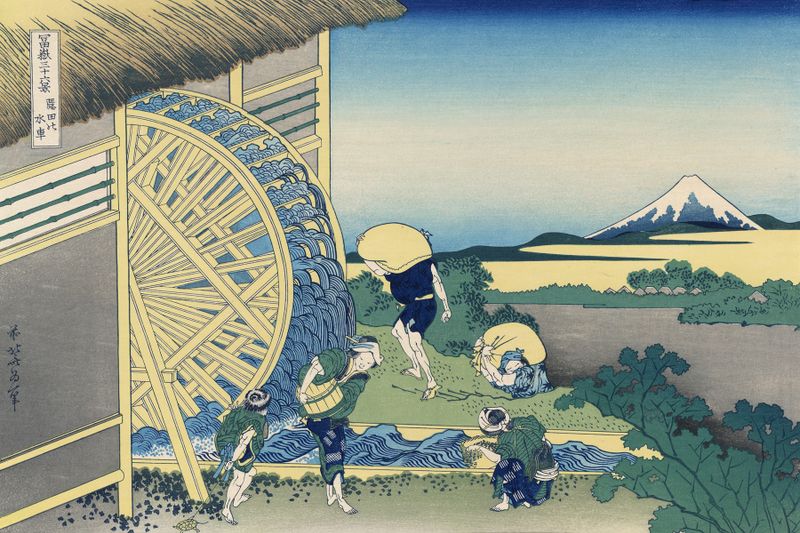
Onden no suisha
Katsushika Hokusai





