
Tobias legt het hart en de lever van de vis op wierook — History & Facts
Where does light end, and longing begin? In the delicate interplay of shadow and brilliance, Tobias legt het hart en de lever van de vis op wierook reveals a dialogue between the earthly and the divine, beckoning us to ponder the nature of transcendence. Look to the center of the canvas, where Tobias, with a gentle grace, presents the heart and liver of the fish upon the altar of fragrant incense. The meticulous detailing draws us in; the shimmering highlights across the fish's iridescent scales contrast against the soft, muted backgrounds. Notice how the warm glow of flickering candlelight dances across the figures, casting an ethereal aura that elevates the humble offering to something sacred.
Each brushstroke is infused with intention, reflecting both the simplicity of the scene and its profound spiritual implications. Beneath the surface lies a depth of meaning that invites contemplation. The act of offering—depicted with such reverence—serves as a metaphor for purity and devotion, harmonizing the sacred with the mundane. The fish itself, a symbol of faith and renewal, suggests a transformative journey.
The backdrop of rich textiles and serene architecture evokes a sense of stability, contrasting with the dynamic human emotions that unfold within the stillness of the spatial arrangement. Created in 1543 during a period marked by the complexities of Reformation and artistic exploration, Pencz was navigating a changing landscape in both personal and public life. As part of the Nuremberg school, he was deeply influenced by the humanist engagement with classical ideals, which permeated his works. This painting stands as a testament to the impact of that era, merging tradition with a fresh exploration of spiritual themes through the lens of everyday ritual.
More Artworks by Georg Pencz
Browse all →
Parabel van de zaaier
Georg Pencz

Parabel van de arbeiders in de wijngaard
Georg Pencz
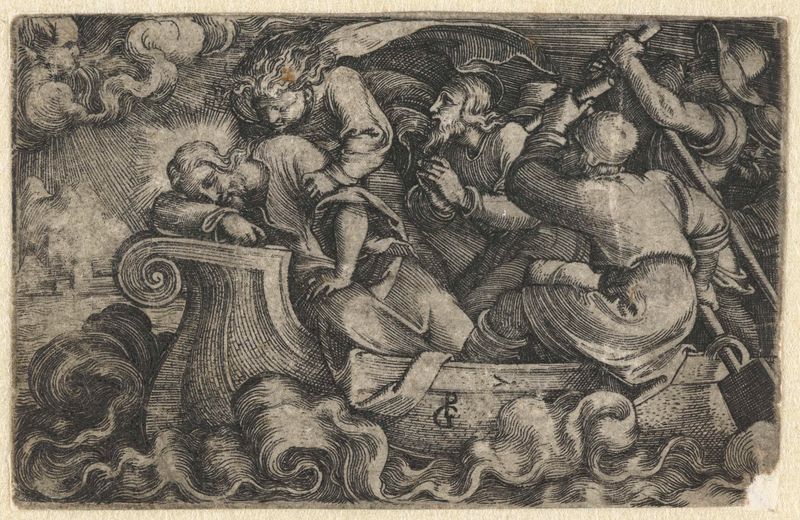
Discipelen wekken slapende Christus tijdens storm op Meer van Galilea
Georg Pencz

Afgunst (Invidia)
Georg Pencz
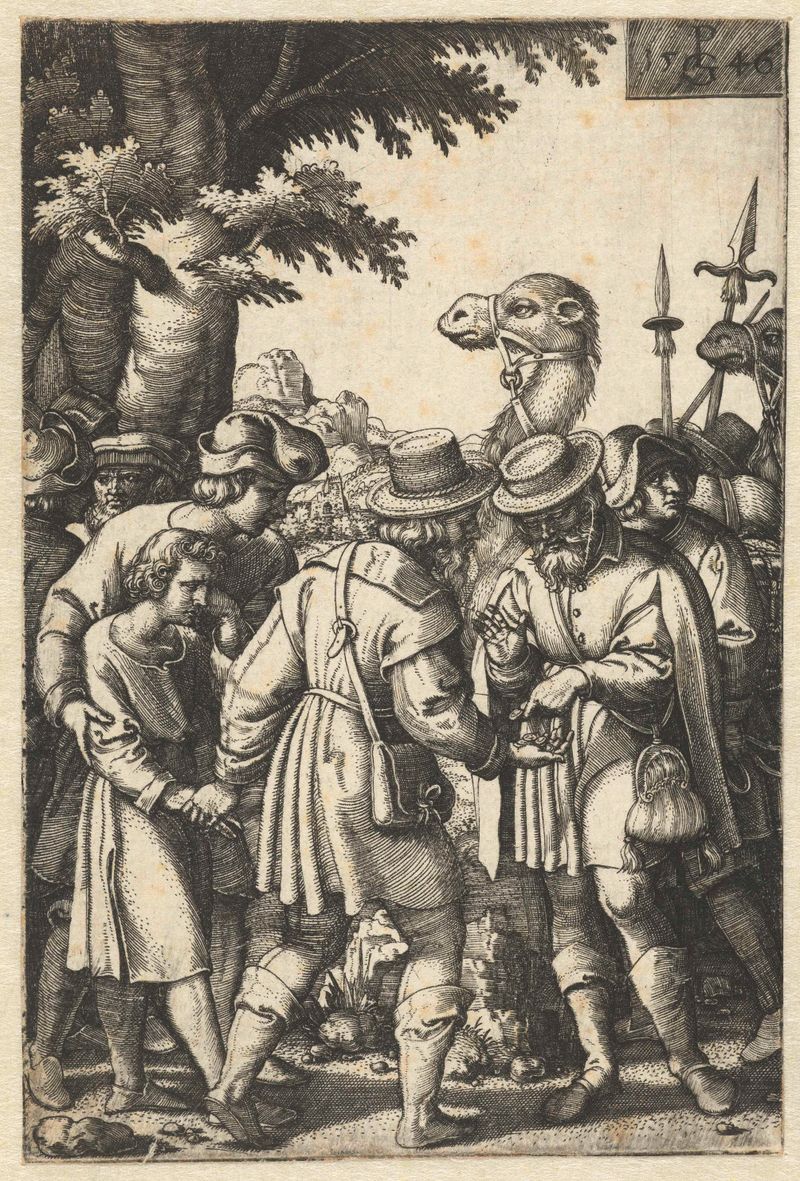
Jozef wordt verkocht aan kooplieden op weg naar Egypte
Georg Pencz

Aanbidding der koningen
Georg Pencz
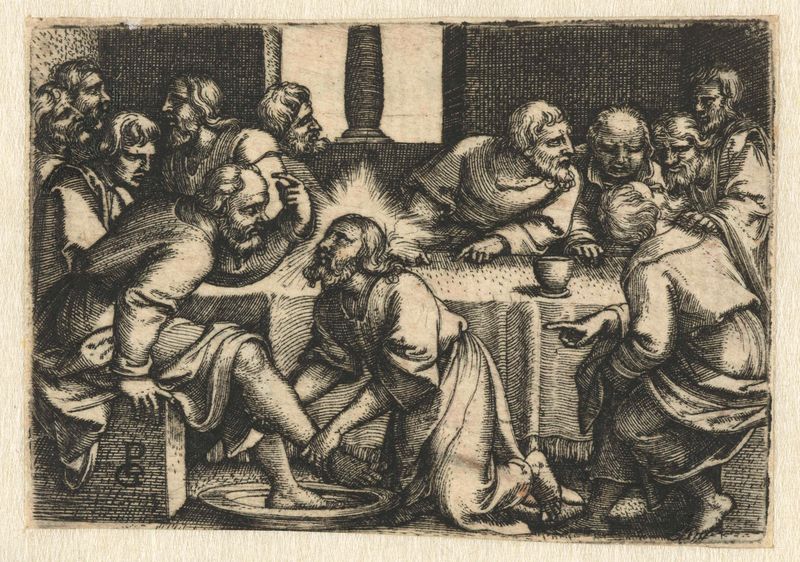
Petrus protesteert als Christus zijn voeten wast
Georg Pencz
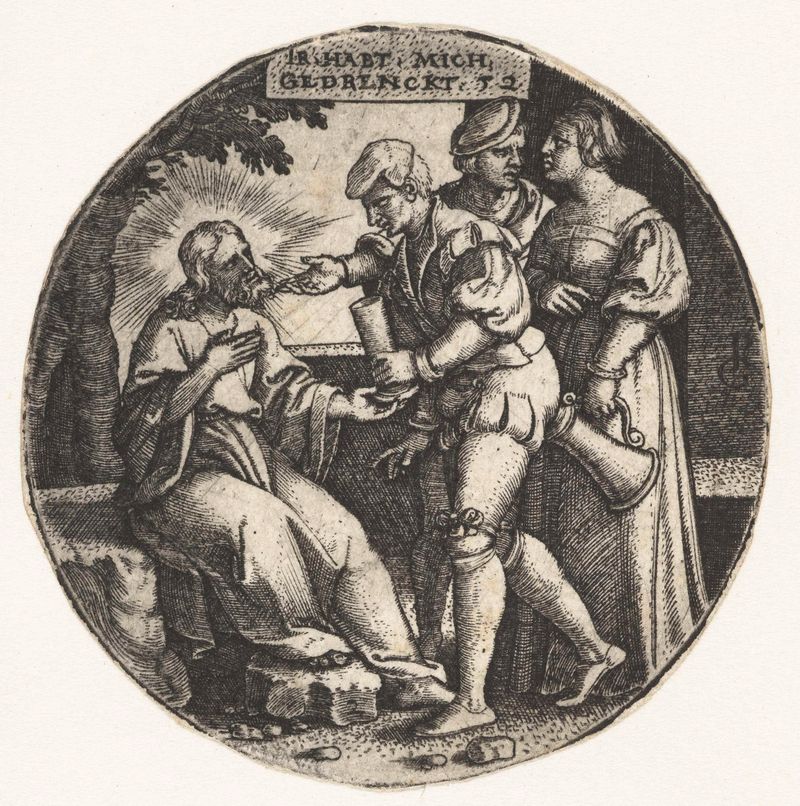
Christus heeft dorst en krijgt drinken aangeboden
Georg Pencz
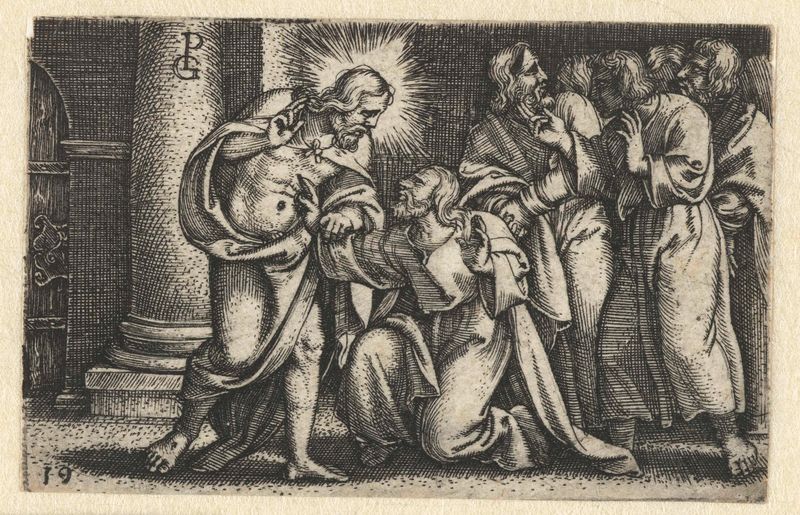
Ongelovige Thomas raakt wonden Christus aan
Georg Pencz

Offer van Abraham van Isaak
Georg Pencz
More Religious Art
Browse all →
The Return of the Prodigal Son
Rembrandt van Rijn

The Garden of Earthly Delights
El Bosco

Count Orgaz’ funeral
El Greco

The Hundred Guilder Print: the central piece with Christ preaching, the plate arched
Rembrandt van Rijn

The Descent from the Cross
Rogier van der Weyden

The return of the prodigal son
Rembrandt van Rijn