
Tobit en Tobias begraven een lichaam — History & Facts
Is this a mirror — or a memory? The weight of loss hangs heavily in the air, inviting the viewer to reflect on the delicate balance between sorrow and duty. Look to the center of the composition where the figures of Tobit and Tobias are bent in a solemn embrace, cradling a lifeless body draped in muted fabrics. Notice how the light caresses their faces, illuminating the anguish that clouds their expressions while casting deep shadows that symbolize the gravity of their task. The earth tones of the surrounding landscape contrast sharply with the almost luminescent pallor of the deceased, amplifying the emotional weight of the moment. The tension between hope and despair resonates throughout the painting.
The act of burial, typically associated with finality, is presented here as an act of love and reverence, hinting at a deeper familial bond. Yet, the distance between the figures, both physically and emotionally, suggests the struggle of acceptance and the realization that life must go on, even amid grief. This intricate interplay of emotion invites viewers to explore their own experiences with loss, questioning how one navigates the fine line between remembrance and moving forward. Georg Pencz created this work in 1543, during a time when the Northern Renaissance was flourishing.
He was based in Nuremberg, a hub for artistic innovation, where humanism began to infuse everyday life with deeper meaning. This period was marked by a shift in focus from religious themes to personal narratives, and Pencz’s detailed rendering of emotion reflects this transformative climate in art.
More Artworks by Georg Pencz
Browse all →
Parabel van de zaaier
Georg Pencz

Parabel van de arbeiders in de wijngaard
Georg Pencz
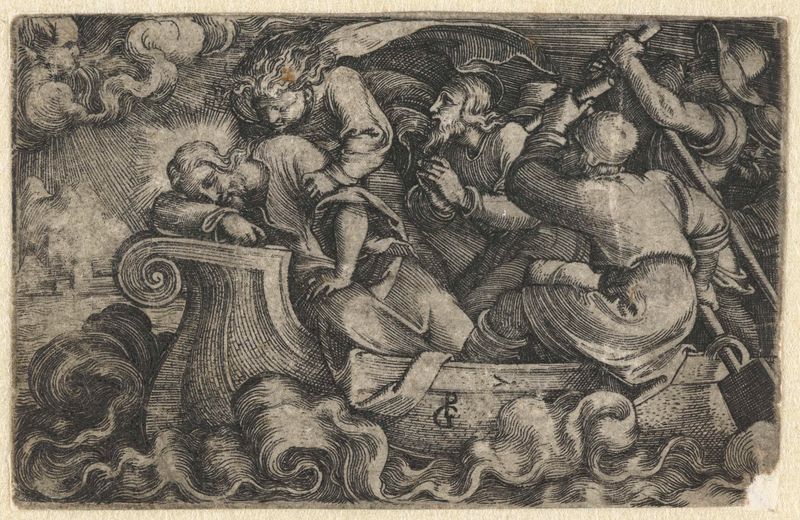
Discipelen wekken slapende Christus tijdens storm op Meer van Galilea
Georg Pencz

Afgunst (Invidia)
Georg Pencz
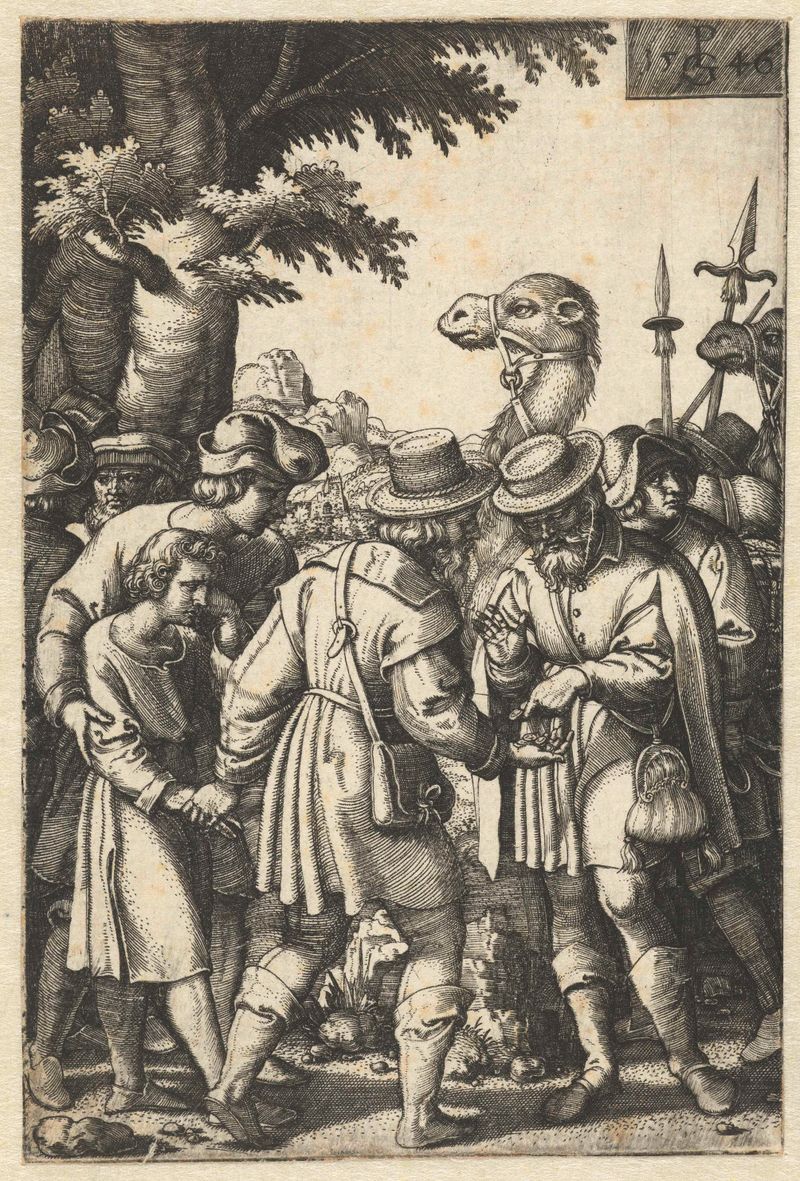
Jozef wordt verkocht aan kooplieden op weg naar Egypte
Georg Pencz

Aanbidding der koningen
Georg Pencz
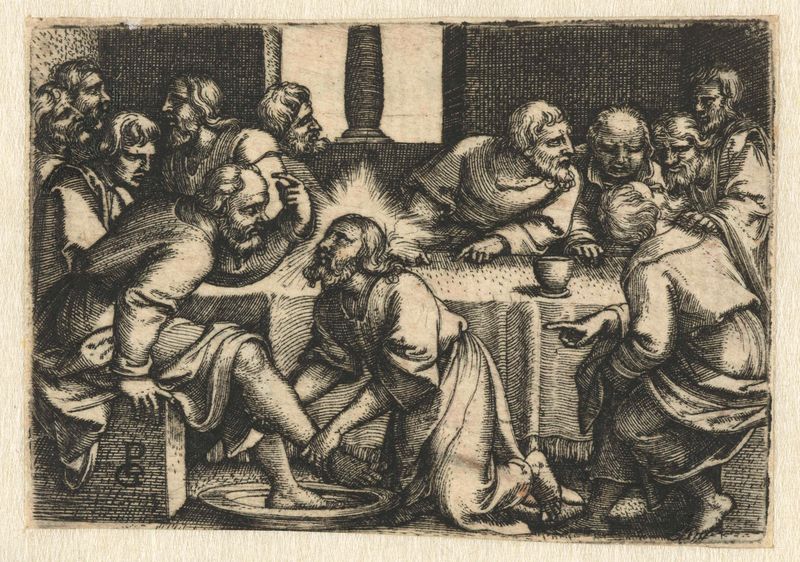
Petrus protesteert als Christus zijn voeten wast
Georg Pencz
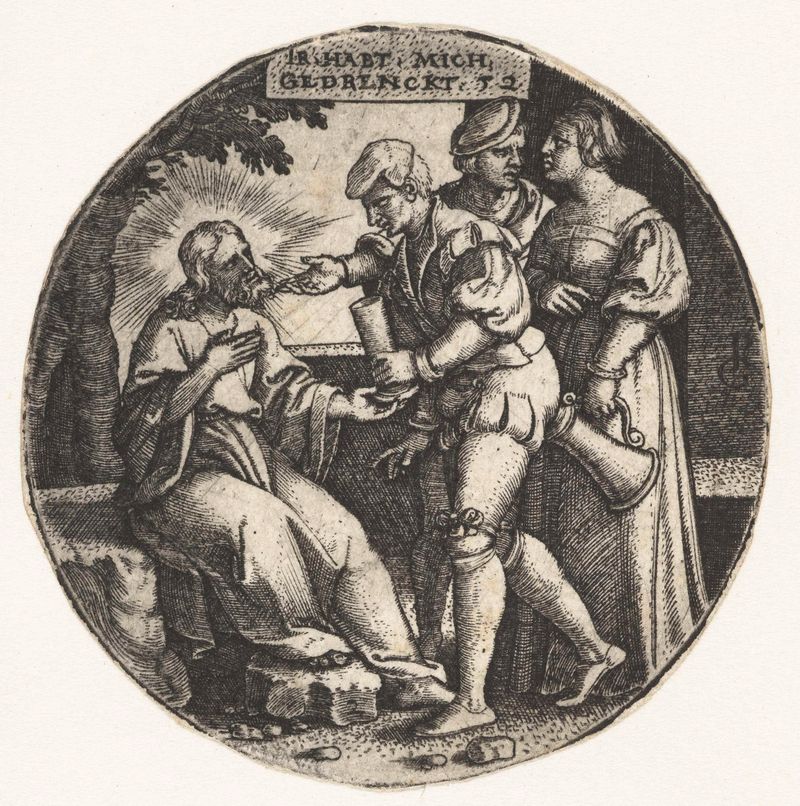
Christus heeft dorst en krijgt drinken aangeboden
Georg Pencz
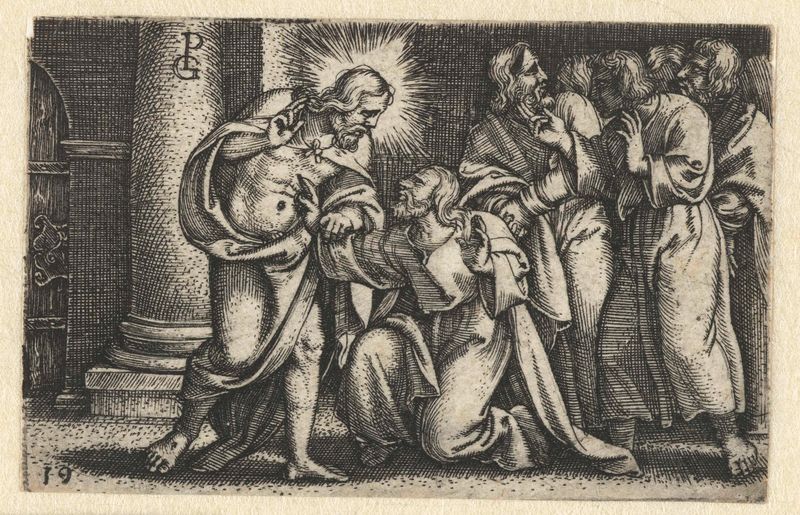
Ongelovige Thomas raakt wonden Christus aan
Georg Pencz

Offer van Abraham van Isaak
Georg Pencz
More Religious Art
Browse all →
The Return of the Prodigal Son
Rembrandt van Rijn

The Garden of Earthly Delights
El Bosco

Count Orgaz’ funeral
El Greco

The Hundred Guilder Print: the central piece with Christ preaching, the plate arched
Rembrandt van Rijn

The Descent from the Cross
Rogier van der Weyden

The return of the prodigal son
Rembrandt van Rijn