
total eclipse study — History & Facts
A hush falls over the scene, as if the sky itself is holding its breath. In total eclipse study, Apollinari Mikhailovich Vasnetsov pares the world down to essentials: two blocky silhouettes, perhaps towers or city walls, stand against a sky that glows with the strange, bruised light of an eclipse. The clouds, rendered in broad, urgent strokes, drift like memories across the fading yellow and green horizon, their forms echoing the uncertainty and awe such a celestial event inspires.
The eye is drawn not to detail, but to the drama of contrast—the heavy darkness below, the uneasy illumination above—inviting the viewer to imagine the world paused in a moment of cosmic transformation. Painted in 1914, this sketch belongs to a moment when Russian artists like Vasnetsov were fascinated by the atmospheric and symbolic power of landscape. Studies such as this were often created quickly, on site or from memory, as artists sought to capture fleeting effects of light and mood rather than precise topography. The work’s rough, expressive handling and ambiguous forms reflect the shifting currents of early twentieth-century Russian art, where tradition and modernity collided.
Preserved today in a Russian collection, this modest panel is a reminder of how even the simplest materials can hold the weight of a vanished sky—one that still asks us to look up, and wonder.
More Artworks by Apollinari Mikhailovich Vasnetsov

Landscape With Lake
Apollinari Mikhailovich Vasnetsov
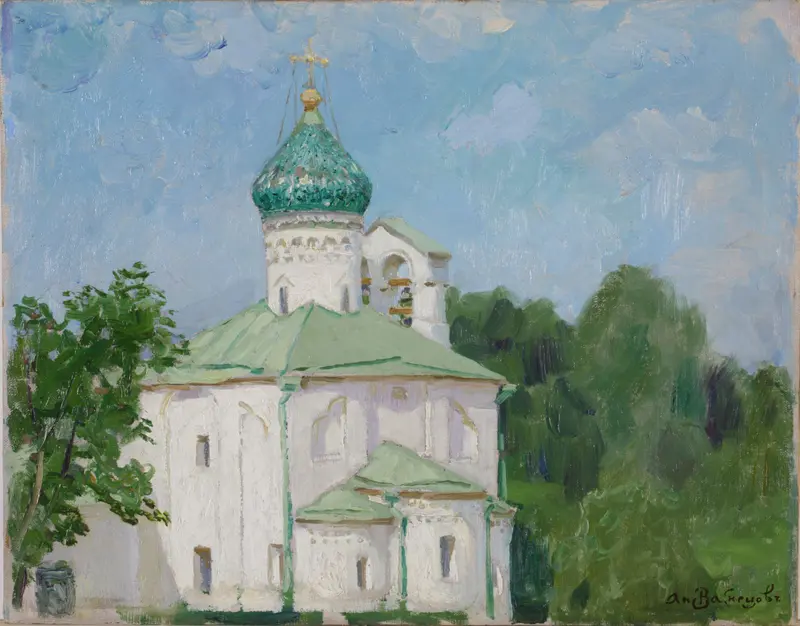
Sergius Luzhki
Apollinari Mikhailovich Vasnetsov
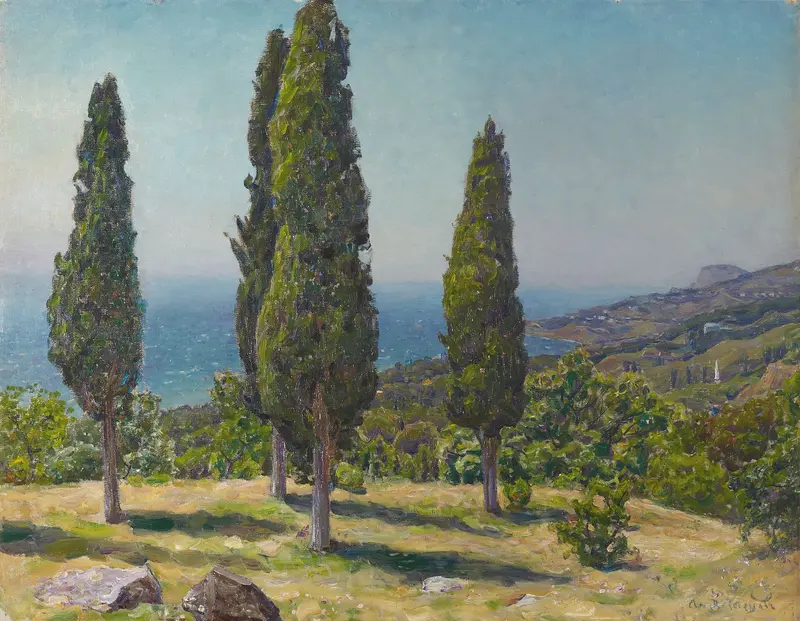
cypresses. Crimea
Apollinari Mikhailovich Vasnetsov
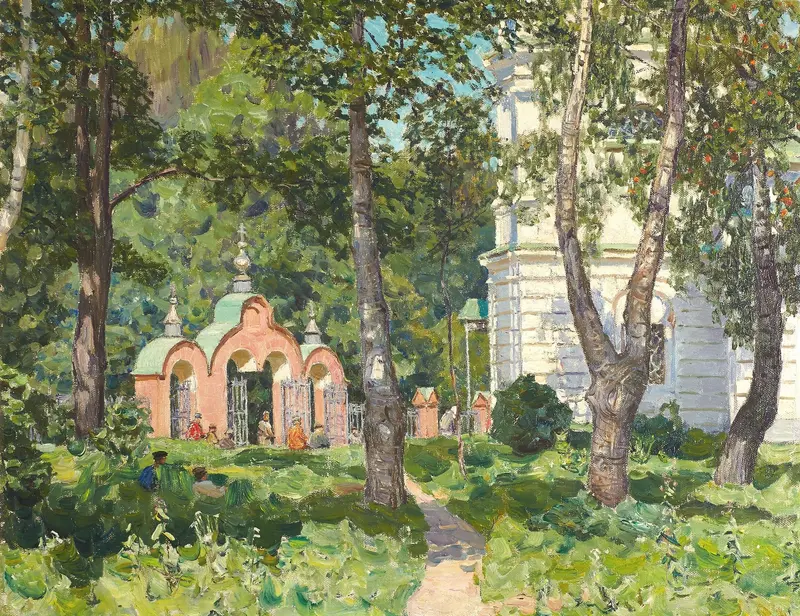
Demyanovo. At the churchyard
Apollinari Mikhailovich Vasnetsov
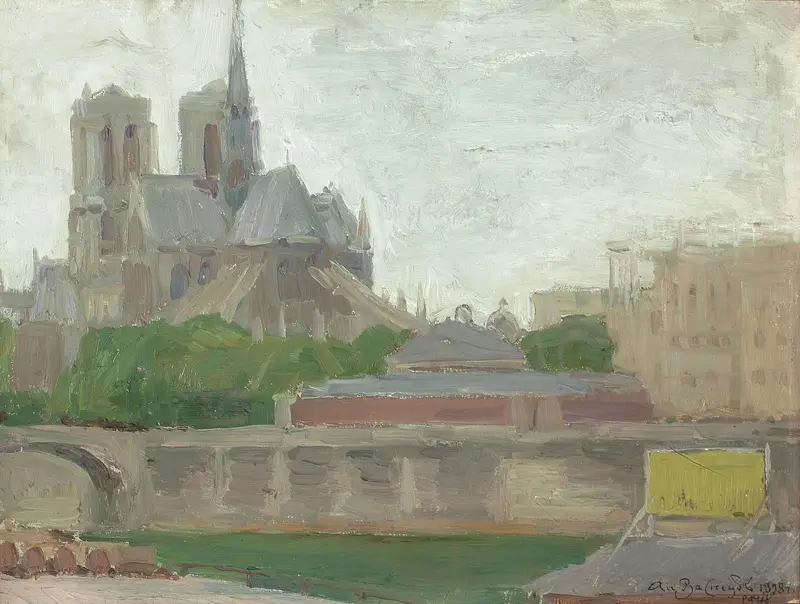
Notre Dame de Paris
Apollinari Mikhailovich Vasnetsov
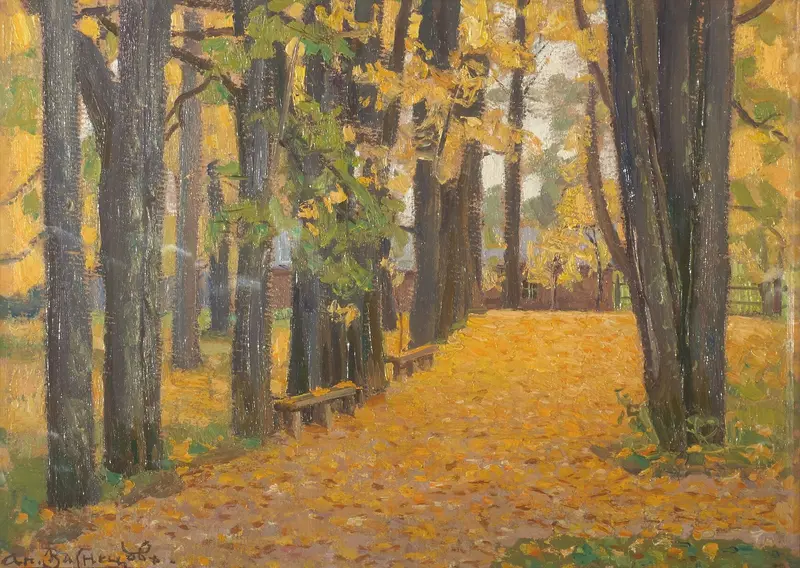
Autumn park
Apollinari Mikhailovich Vasnetsov
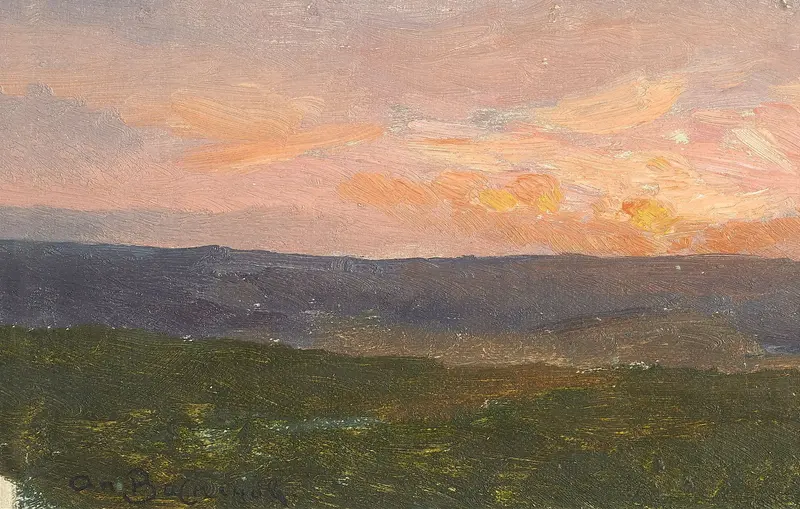
Sunset. Shurma
Apollinari Mikhailovich Vasnetsov

Via delle Tombe Pompeii
Apollinari Mikhailovich Vasnetsov
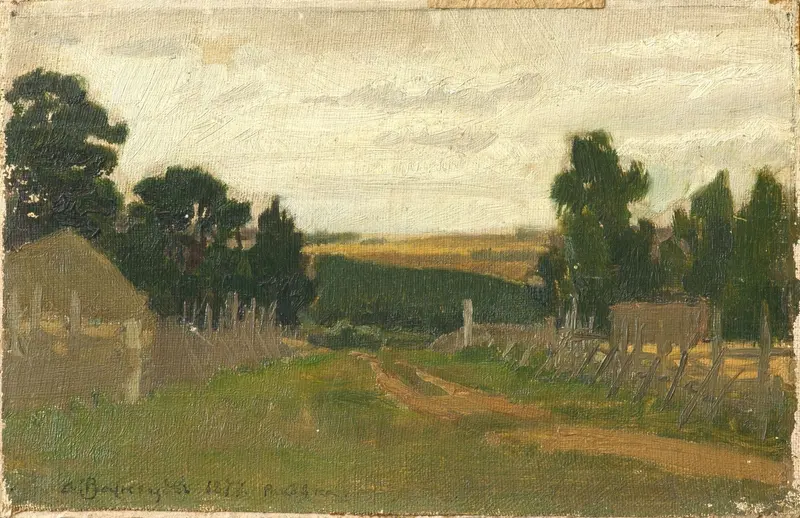
Rakovka
Apollinari Mikhailovich Vasnetsov
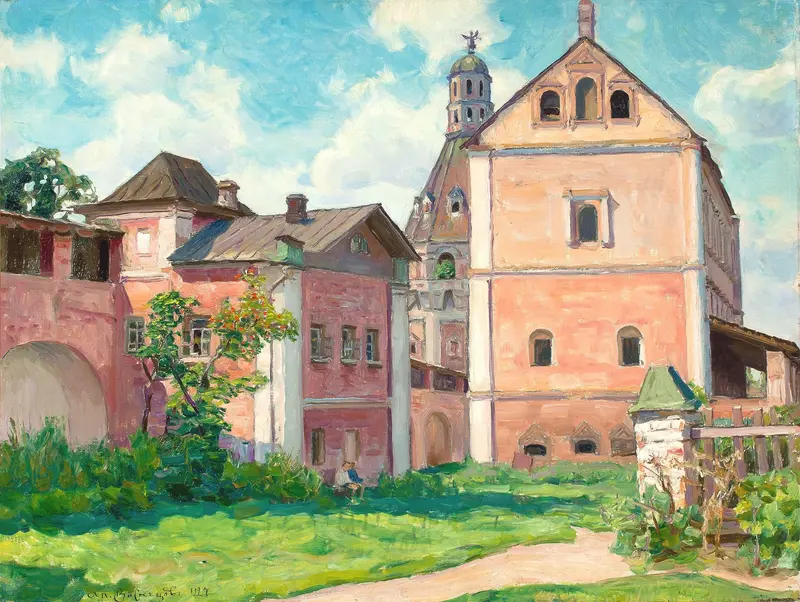
Simonov tower
Apollinari Mikhailovich Vasnetsov
More Landscape Art

The Starry Night
Vincent van Gogh

View of Delft
Johannes Vermeer

Water Lilies
Claude Monet

The Grand Canal, Venice, looking north-west from the Ca' Corner to the Ca' Contarini degli Scrigni, with the campanile of Santa Maria della Carità
Canaletto

Windsor Castle
Canaletto

The Grand Canal looking North-East from the Palazzo Dolfin-Manin to the Rialto Bridge
Canaletto