
Tour de l’ancien moulin d’Amour, 26 av. d’Orléans (actuellement 26 et 28 avenue du Général Leclerc) La sortie d’un mari — History & Facts
Can beauty exist without sorrow? In a world drenched in fleeting moments, the juxtap of joy and pain breathes life into every brushstroke. Begin your exploration at the tranquil foreground, where sunlight dances across the soft curves of the mill's weathered stone. Notice the gentle play of light on the water, capturing reflections that shimmer like whispered secrets. The muted palette enhances a sense of nostalgia; hues of blue and gold blend seamlessly, inviting you to linger in this serene moment, which evokes both peace and longing. Yet, delve deeper, and the façade of tranquility unveils layers of complexity.
The mill, a symbol of industrious progress, stands almost as a witness to life’s cycles—birth, love, and eventual parting. This is a space of transitions; the interplay of light and shadow hints at unseen dramas. The figures, although seemingly at rest, convey an urgency of emotion, their postures suggesting that the comfort of beauty does not mask the heart's burdens. During the years from 1915 to 1945, Fédor Hoffbauer painted amidst a world in turmoil, as wars and revolutions reshaped societies.
Living in Paris, a hub of artistic innovation, he navigated the tumult of these decades while seeking solace in capturing everyday scenes infused with a sense of divinity. This work embodies that quest, merging the ordinary with the eternal—a reminder that beauty often emerges from the very heart of sorrow.
More Artworks by Fédor Hoffbauer
Browse all →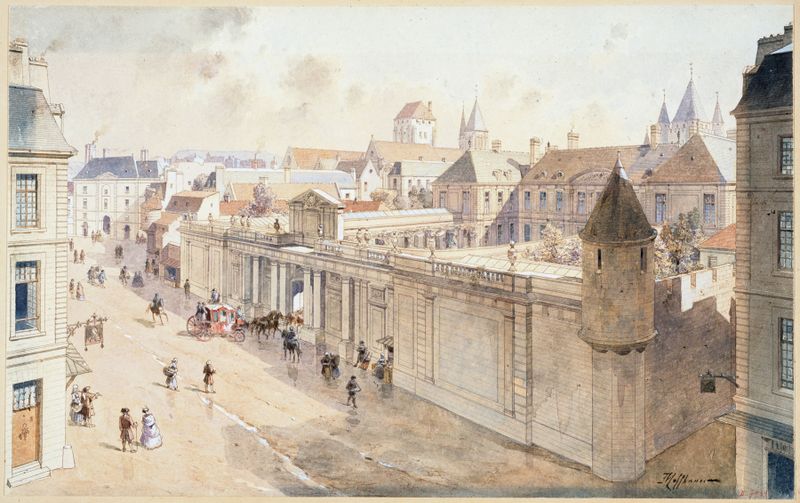
Le palais du Grand Prieur au Temple, en 1770
Fédor Hoffbauer
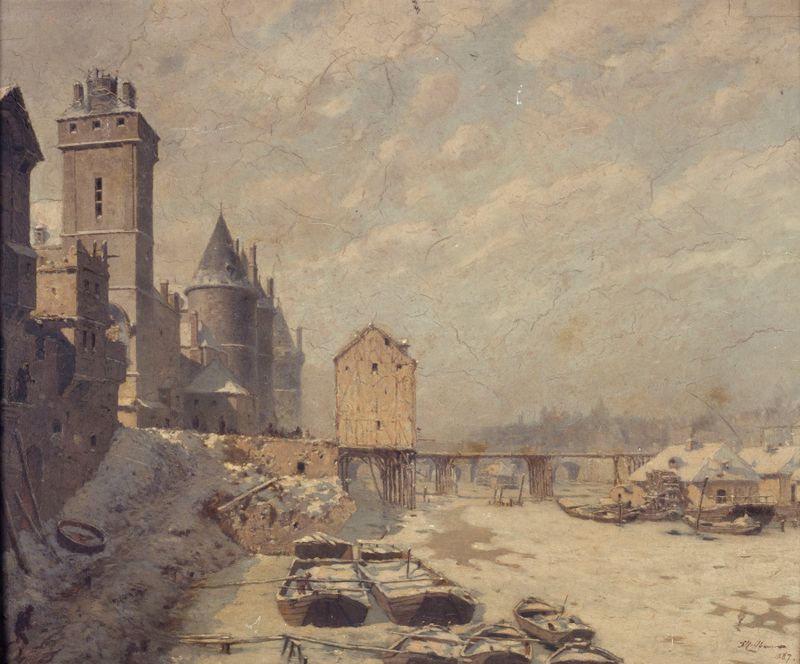
La tour de l’Horloge, la Conciergerie et le pont au Change, en 1621
Fédor Hoffbauer

Banquet des officiers de la marine Russe, dans la salle des fêtes à l’Hôtel de Ville. Fêtes Franco-Russes à Paris
Fédor Hoffbauer

Le Grand Châtelet et le pont de Bois, 1621-1645
Fédor Hoffbauer
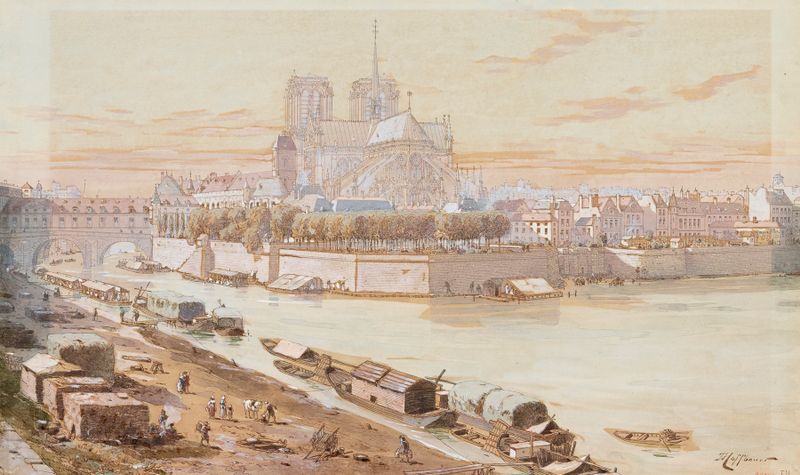
Notre-Dame et l’Evêché en 1750
Fédor Hoffbauer

Vue panoramique de Paris en 1588, depuis les toits du Louvre, avec le Pont-Neuf en construction
Fédor Hoffbauer
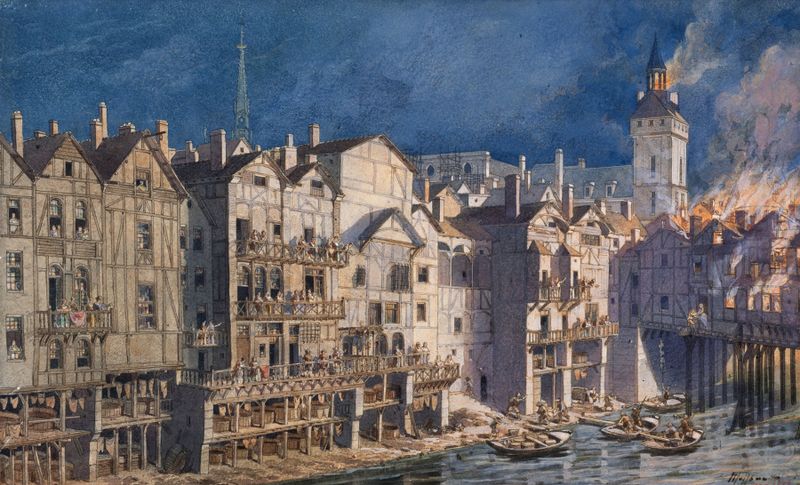
La Cité entre le pont Notre Dame et le pont au Change en 1621
Fédor Hoffbauer

L’Hôtel de Ville et le pont d’Arcole en 1842
Fédor Hoffbauer

Le Cimetière des Innocents en 1750
Fédor Hoffbauer
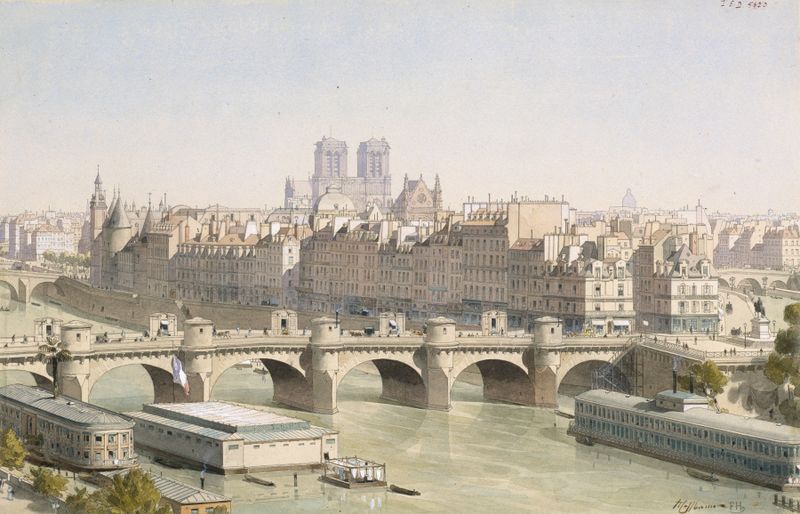
Vue de l’île de la Cité et le pont-Neuf avec ses boutique, vers 1840
Fédor Hoffbauer





