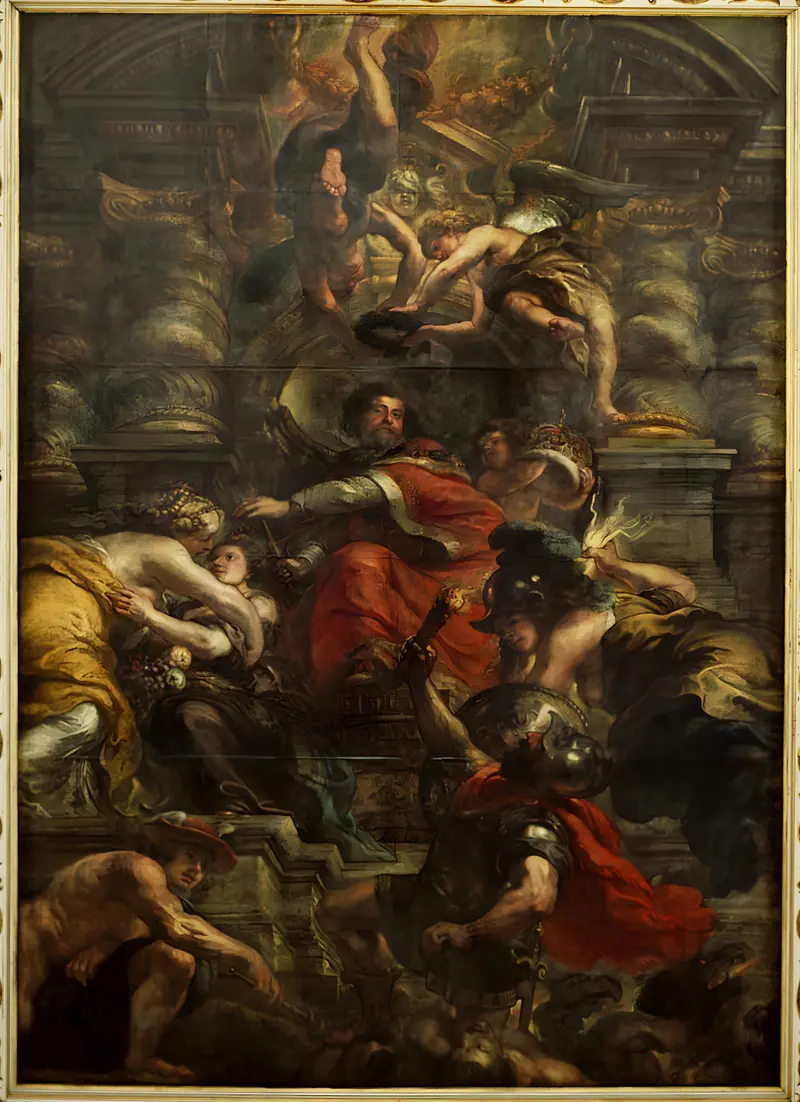
Tragedy — History & Facts
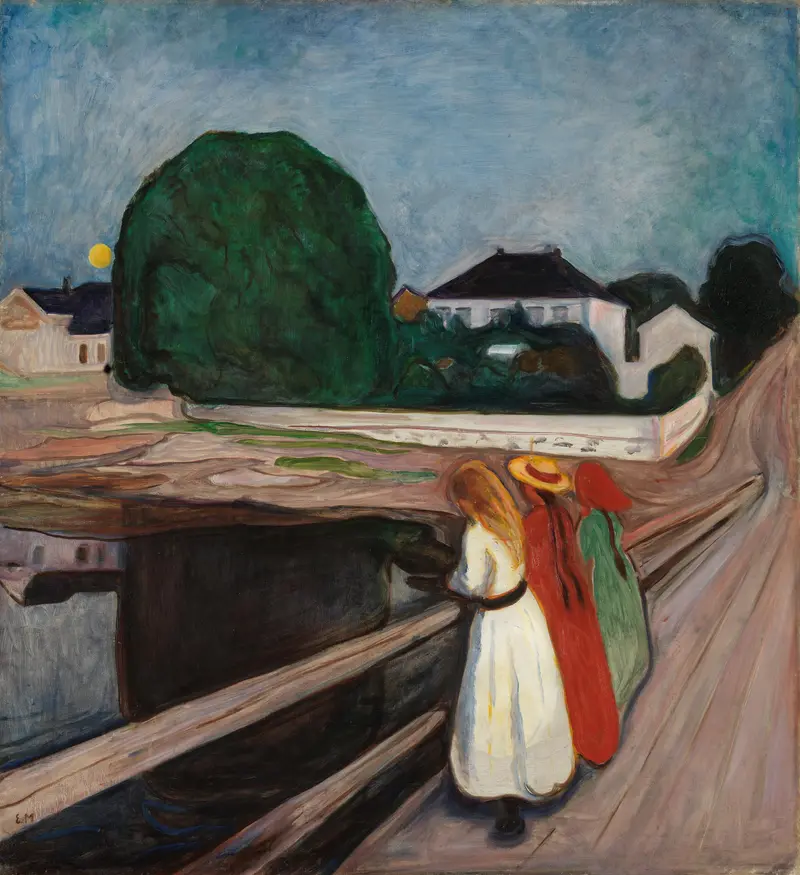
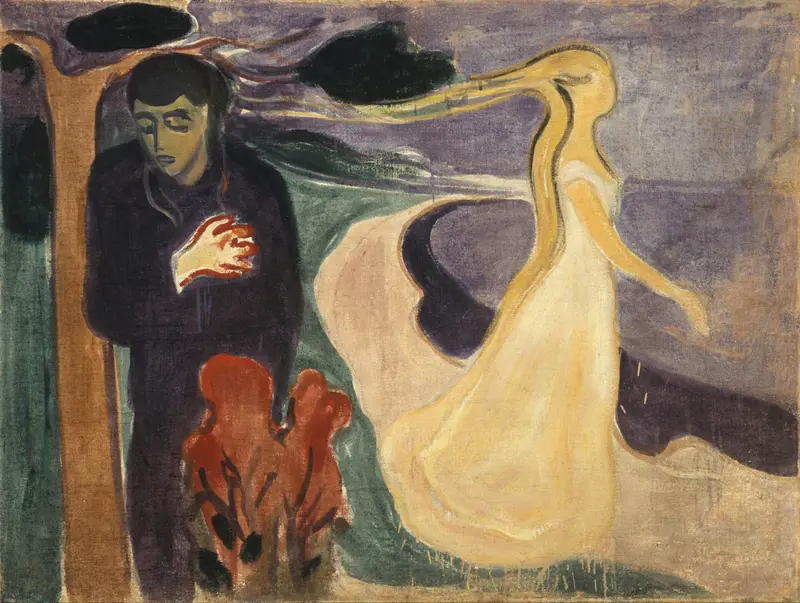
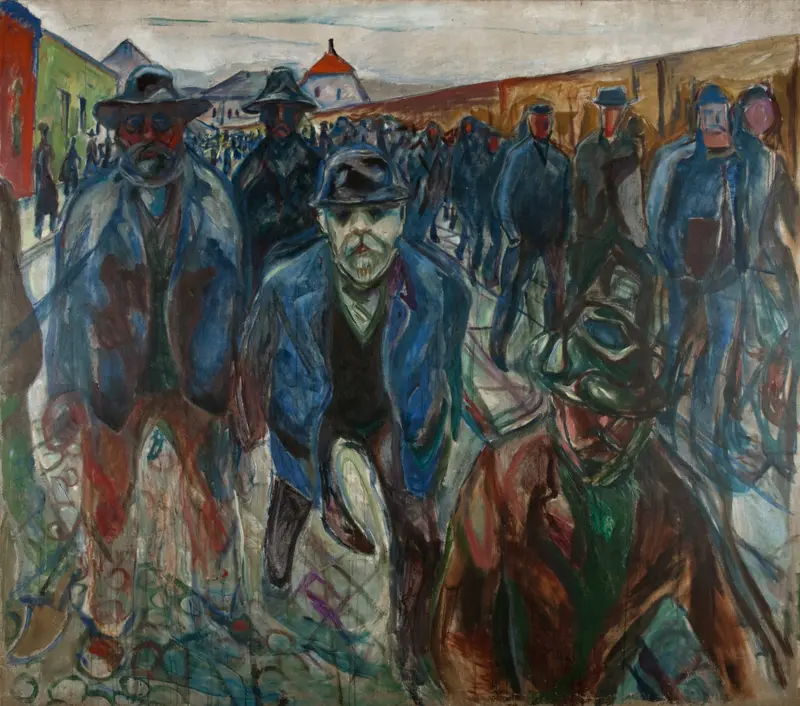
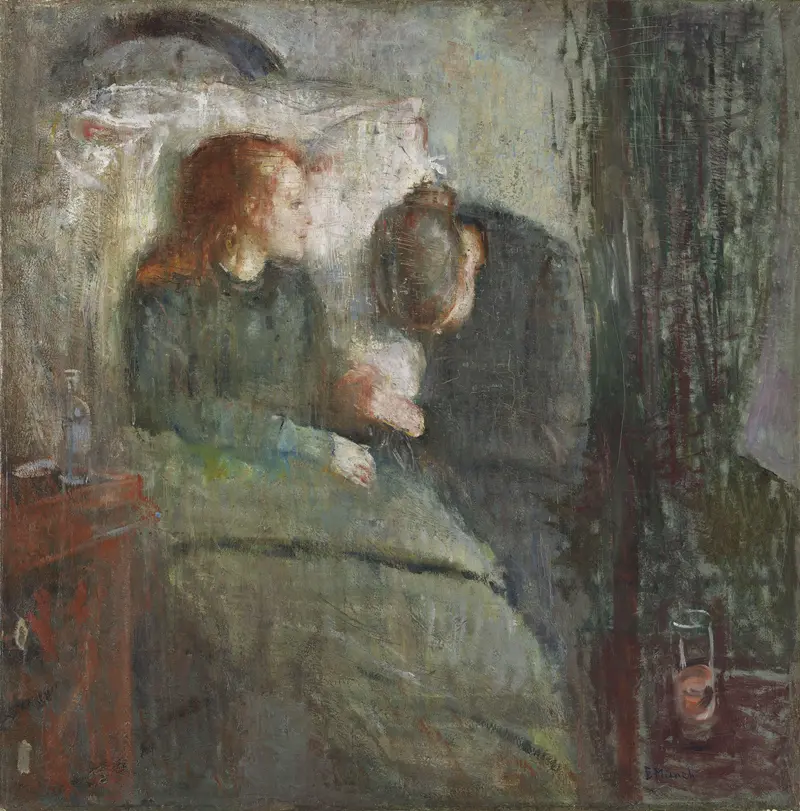
In Tragedy, Edvard Munch depicts a somber scene filled with dark hues of blue and gray. The figures in the painting appear to be in anguish, their expressions conveying deep sorrow. The setting is vague, enhancing the emotional weight of the work.
This ambiguity allows viewers to project their own feelings of despair onto the scene. The painting is executed in oil on canvas, showcasing Munch's characteristic brushwork. The use of color is striking, with a predominance of cool tones that evoke a sense of melancholy. The composition is dynamic, drawing the viewer's eye towards the central figures.
Munch's technique emphasizes the emotional intensity of the subject matter. Edvard Munch was a pivotal figure in the Symbolist movement, and Tragedy reflects his exploration of human emotion. Created in the 1890s, this work is part of a series that delves into themes of love, anxiety, and despair. An interesting fact about this painting is that it embodies Munch's belief in the power of art to express complex psychological states.
This work continues to resonate with audiences today, highlighting the universal nature of suffering.