
Train — History & Facts
This notion reverberates through the layers of emotion captured in the artwork, where the artist transforms an ordinary subject into a profound narrative of longing. Look to the center of the canvas, where the train emerges as a majestic beast, its steam billowing like a ghostly apparition. The vivid strokes of color dance harmoniously, from the deep blues of the shadowed landscape to the vibrant greens that burst forth from the surrounding trees. Notice how the interplay of light and shadow evokes movement, each plume of steam a whisper of the journey ahead, and how the composition draws the viewer’s eye along the tracks, leading us into the depths of the scene. Yet, it is in the details where deeper meaning lies.
The train symbolizes progress and the passage of time, juxtaposed against the tranquil yet restless natural environment. The figures, distant and nearly silent, seem to yearn for connection, their presence hinting at the emotions stirred by the train’s departure. The contrast between the industrial and the organic invites contemplation—what is gained in this relentless pursuit of advancement, and what is lost? During the years 1875 to 1880, the artist found himself at a pivotal moment in American art—a time when Impressionism was gaining momentum.
Bannister was influenced by the changing dynamics of society and the growing acceptance of African American artists. Living in Providence, Rhode Island, he was deeply engaged in the evolving artistic discourse, channeling his personal experiences and aspirations into a work that resonates with a collective sense of longing for progress and belonging.
More Artworks by Edward Mitchell Bannister
Browse all →
Landscape
Edward Mitchell Bannister
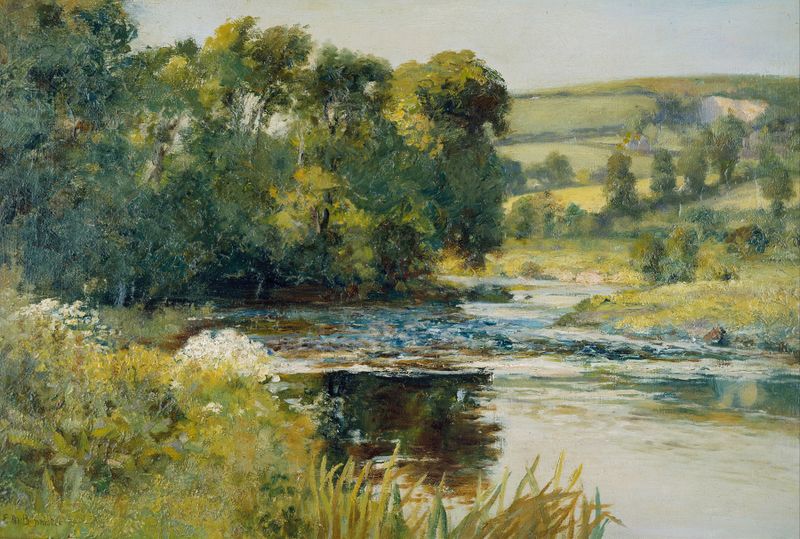
Streamside
Edward Mitchell Bannister

Untitled
Edward Mitchell Bannister

On the Seekonk
Edward Mitchell Bannister

Morning on the Shore
Edward Mitchell Bannister

Summer Twilight
Edward Mitchell Bannister
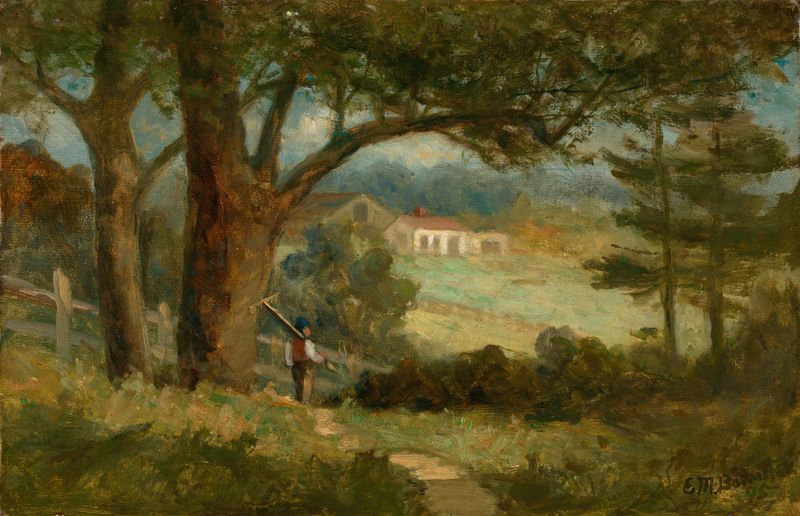
Homeward
Edward Mitchell Bannister
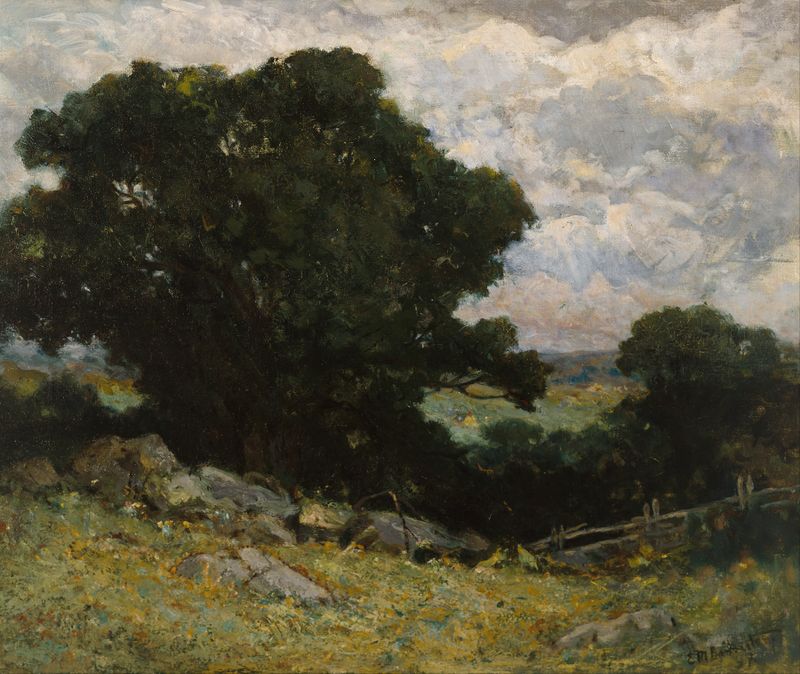
Landscape
Edward Mitchell Bannister
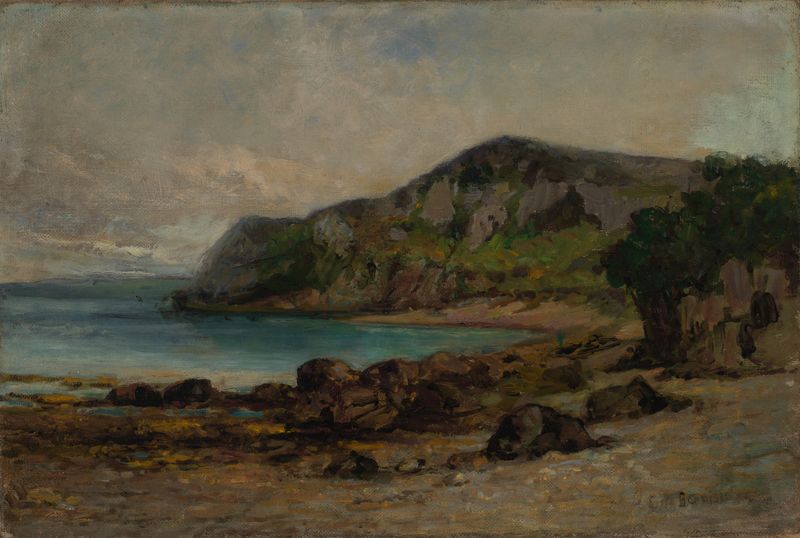
Rocks at Newport
Edward Mitchell Bannister

Sunset
Edward Mitchell Bannister





