Transparent-perspectivisch gefügt (II.) — History & Facts
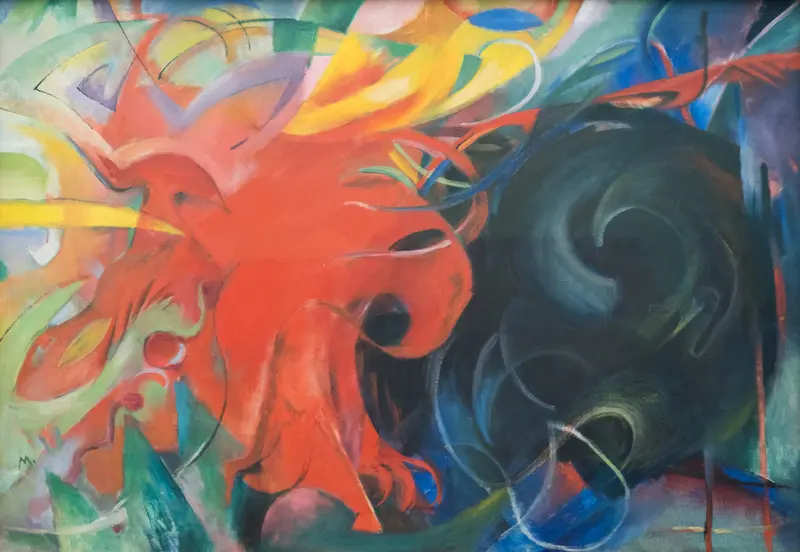
In Transparent-perspectivisch gefügt (II.), vibrant colors blend together to create a dynamic composition. Geometric shapes and lines interact, forming a sense of depth and movement. The palette includes bright yellows, blues, and reds, which contrast sharply with softer tones.
This interplay of color and form invites the viewer to explore the painting's layers. The painting is characterized by its use of abstract forms and a distinctive color palette. Klee employs a technique that emphasizes transparency and perspective, allowing shapes to overlap and create depth. The work reflects Klee's interest in the relationship between color and form, a hallmark of his style.
Viewers can appreciate the meticulous brushwork that contributes to the overall texture of the piece. Paul Klee, a key figure in the development of modern art, often explored themes of abstraction and color theory. Transparent-perspectivisch gefügt (II.) is a prime example of his innovative approach to composition. This work reflects Klee's fascination with the interplay of light and color, which he believed could evoke emotions.
Interestingly, Klee was also a teacher at the Bauhaus, influencing many artists in the 20th century.