
Trees and cottages in hilly landscape — History & Facts
What if beauty was never meant to be finished? In the delicate interplay of nature and architecture, Trees and cottages in hilly landscape invites viewers to ponder the intricate dance between creation and decay. Look to the left at the sturdy trunks, their gnarled branches stretching outward, reaching for the sky. The cottages nestled among them seem to blend seamlessly into the gentle hills, their earthen tones harmonizing with the lush greens and soft browns of the landscape. Notice how the light filters through the foliage, creating a dappled effect that brings warmth and life to the scene, breathing in the essence of tranquility and harmony.
The artist’s meticulous attention to detail shines through in the texture of the tree bark and the subtle shadows cast upon the ground, inviting a deeper examination of both nature and human habitation. Yet, there is an underlying tension in the juxtaposition of the flourishing trees and the modest cottages. The contrast between the organic growth of the landscape and the man-made structures presents a commentary on the transient nature of existence. Each element is in a state of serene equilibrium, yet hints at the inevitability of decay — the trees, ancient and wise, have seen generations come and go, while the cottages, though lovingly crafted, whisper of their eventual collapse.
This delicate balance between life and decay evokes a sense of bittersweet nostalgia. Antonie Waterloo painted this piece in the 17th century, a time when landscapes were gaining prominence in the art world. Living in the Dutch Golden Age, he was influenced by the burgeoning interest in natural beauty and the depiction of rural life. As artists began to explore the relationship between humanity and rugged environments, Waterloo carved his niche, reflecting both the splendor and fragility of the world he cherished.
More Artworks by Antonie Waterloo
Browse all →
Gezicht op het dorp Soest
Antonie Waterloo

Hagar comforted by the Angel
Antonie Waterloo

Waldbach, der über Felsen stürzt, über die eine Holzbrücke führt
Antonie Waterloo
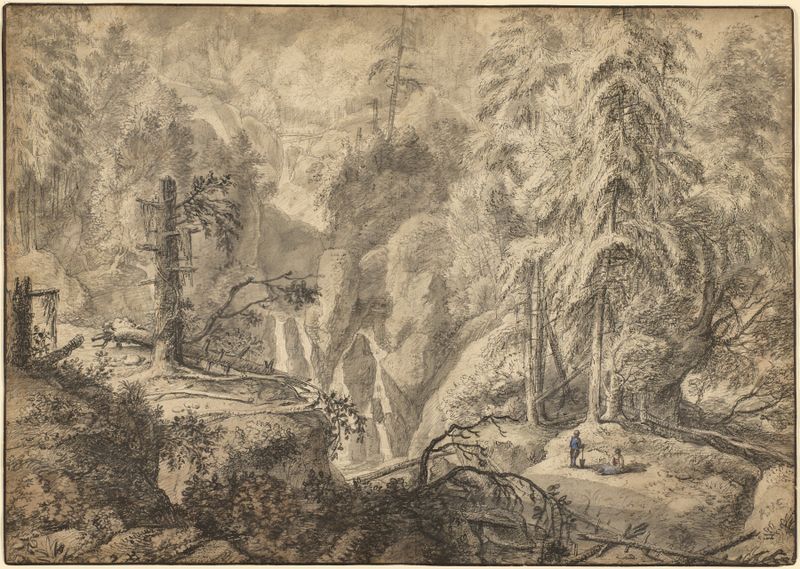
Mountain Landscape, Peasants in a Clearing near a Waterfall
Antonie Waterloo
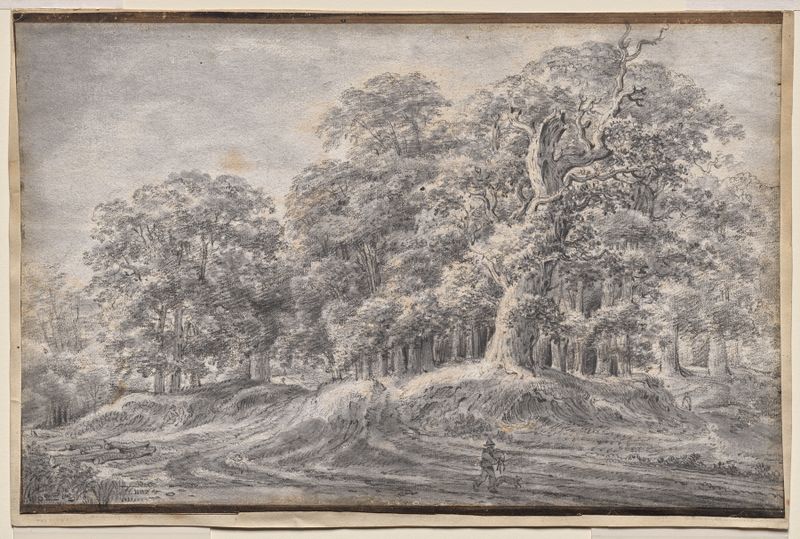
A Track on the Edge of a Wood with a Peasant Carrying Sheep
Antonie Waterloo
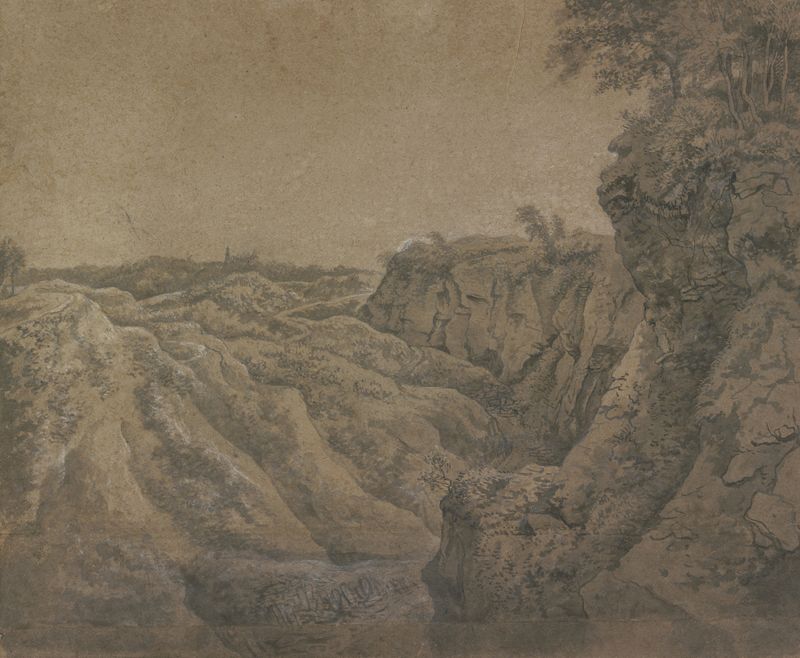
Landscape with a View of Bentheim Castle in the far Distance
Antonie Waterloo
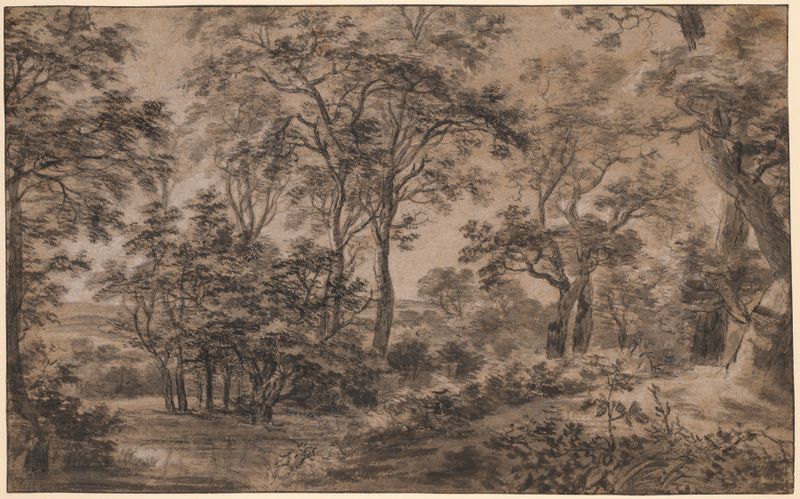
Wooded Landscape
Antonie Waterloo
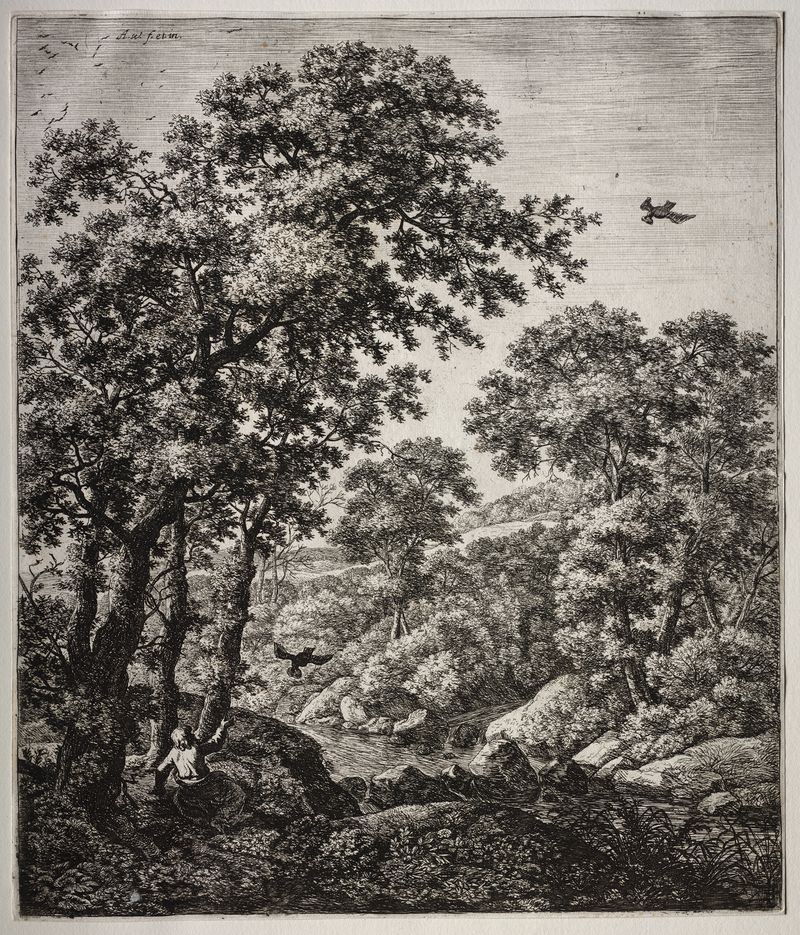
Elijah Fed by the Ravens
Antonie Waterloo
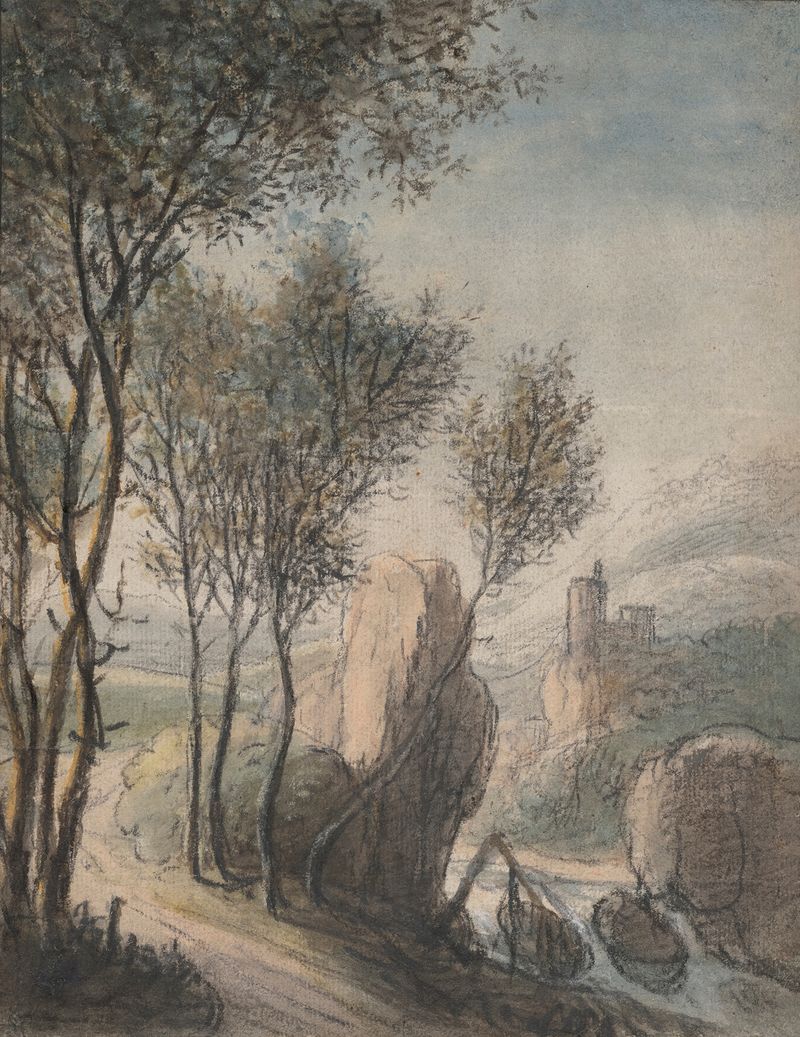
River Landscape with a Castle in the Distance
Antonie Waterloo
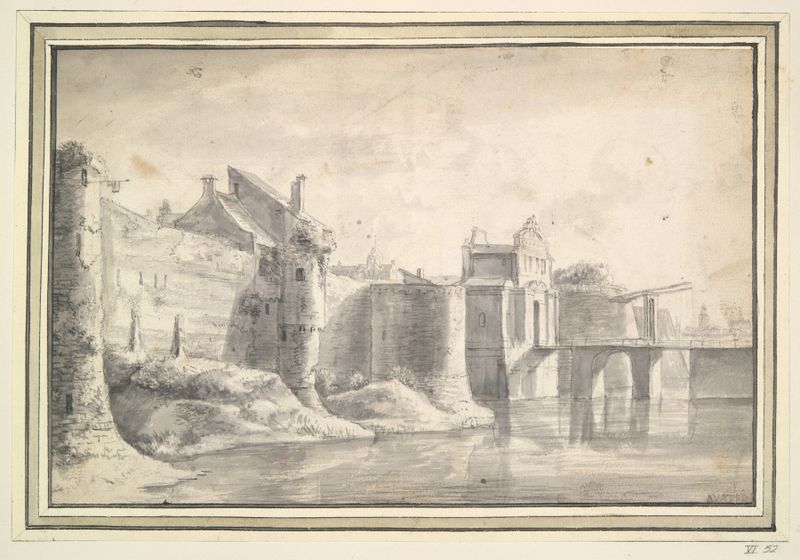
View of the city walls of Utrecht with St. Mary’s Church in the distance
Antonie Waterloo





