
Waldbach, der über Felsen stürzt, über die eine Holzbrücke führt — History & Facts
What if beauty was never meant to be finished? In the embrace of nature, the harmony between the wild and the crafted invites a deeper longing for connection. Look to the foreground, where the tumultuous cascade of water tumbles over jagged rocks, each droplet a tiny gem catching the light. Notice how the delicate wooden bridge arcs gracefully above the rushing stream, its rustic texture contrasting with the smooth flow of water beneath. The artist’s careful brushwork captures the shimmering play of sunlight filtering through the trees, painting dappled shadows that dance in rhythm with the water’s movement. Upon closer inspection, one can see the intricacies of life’s dual nature—the chaos of the waterfall juxtaposed against the steadiness of the bridge.
This tension mirrors our own journey, a balance between the turbulent and the tranquil. The verdant foliage tightly frames the scene, acting as a reminder of the world’s raw beauty, while the bridge symbolizes human endeavor—a fleeting attempt to connect with nature rather than dominate it. Created during a time when Romanticism was flourishing, the artist shaped Waldbach, der über Felsen stürzt, über die eine Holzbrücke führt in the early 19th century, likely in the picturesque landscapes of Germany. It was an era marked by a growing fascination with nature’s beauty, reflecting both a longing for connection with the natural world and a desire to transcend the confines of industrialization.
Waterloo's work emerges not just as a representation of a moment in time, but as an exploration of emotional depths that call out for reflection.
More Artworks by Antonie Waterloo
Browse all →
Gezicht op het dorp Soest
Antonie Waterloo

Hagar comforted by the Angel
Antonie Waterloo
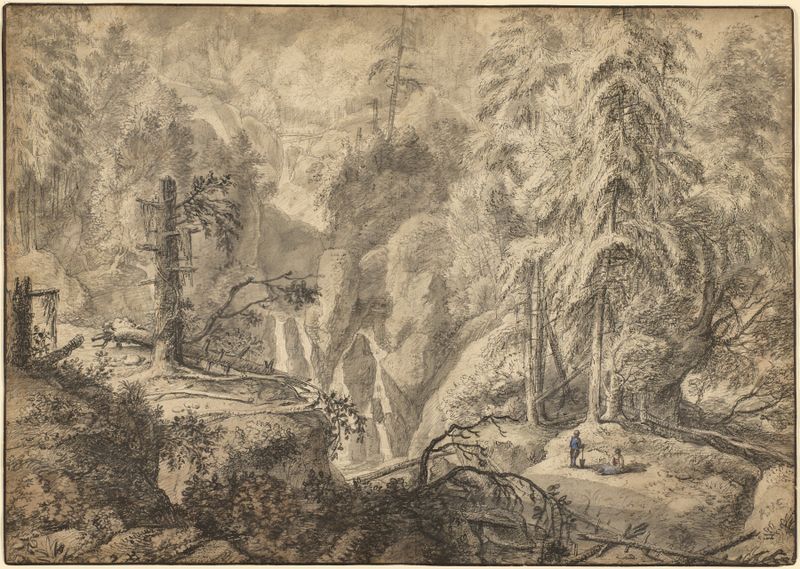
Mountain Landscape, Peasants in a Clearing near a Waterfall
Antonie Waterloo
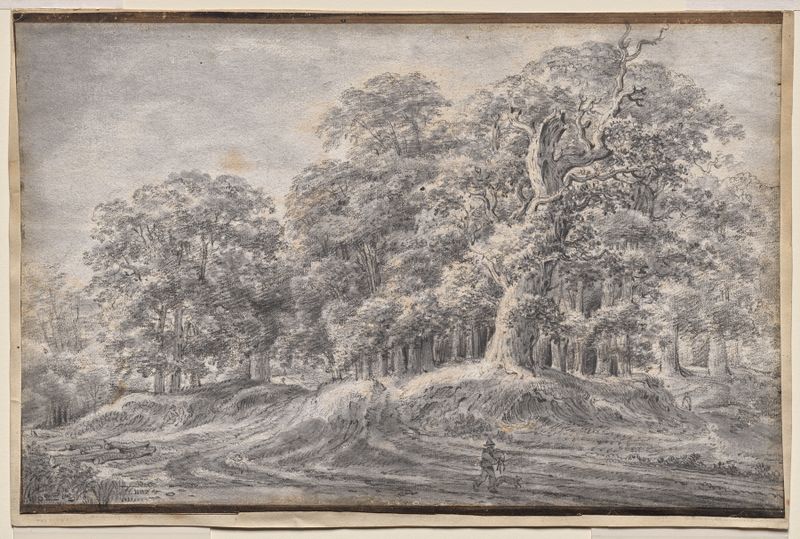
A Track on the Edge of a Wood with a Peasant Carrying Sheep
Antonie Waterloo
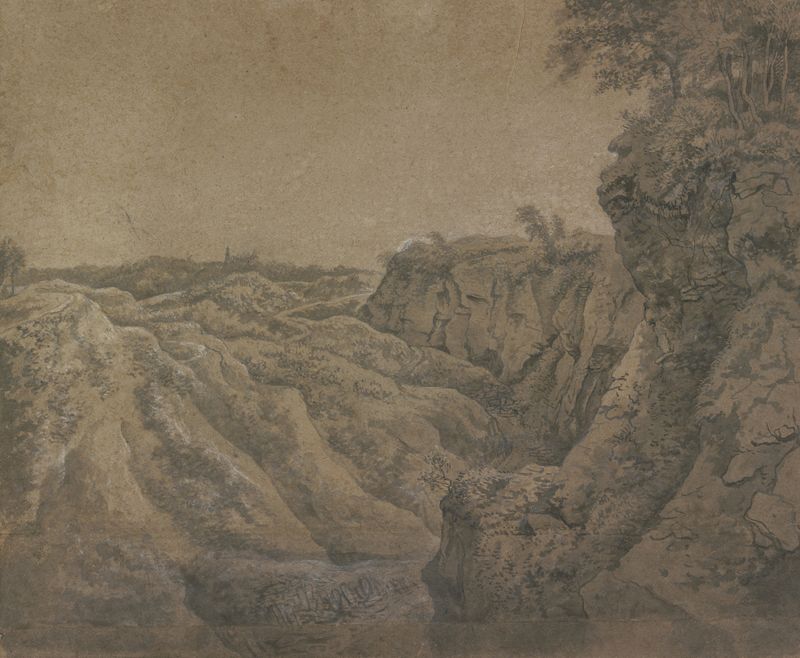
Landscape with a View of Bentheim Castle in the far Distance
Antonie Waterloo
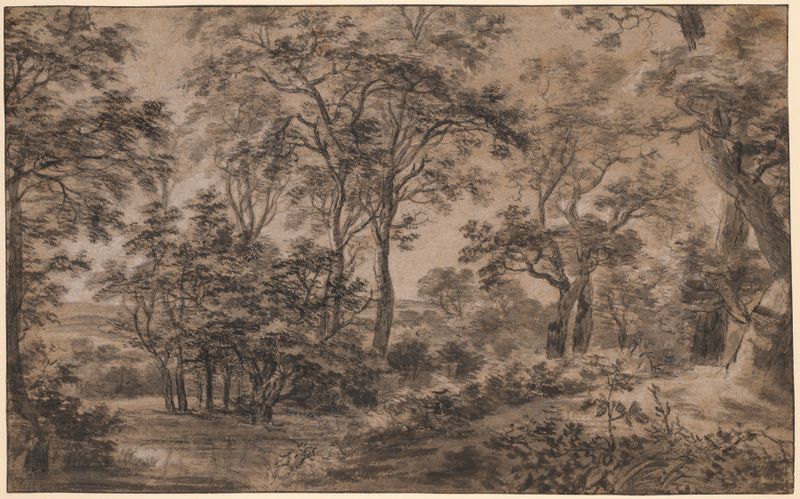
Wooded Landscape
Antonie Waterloo
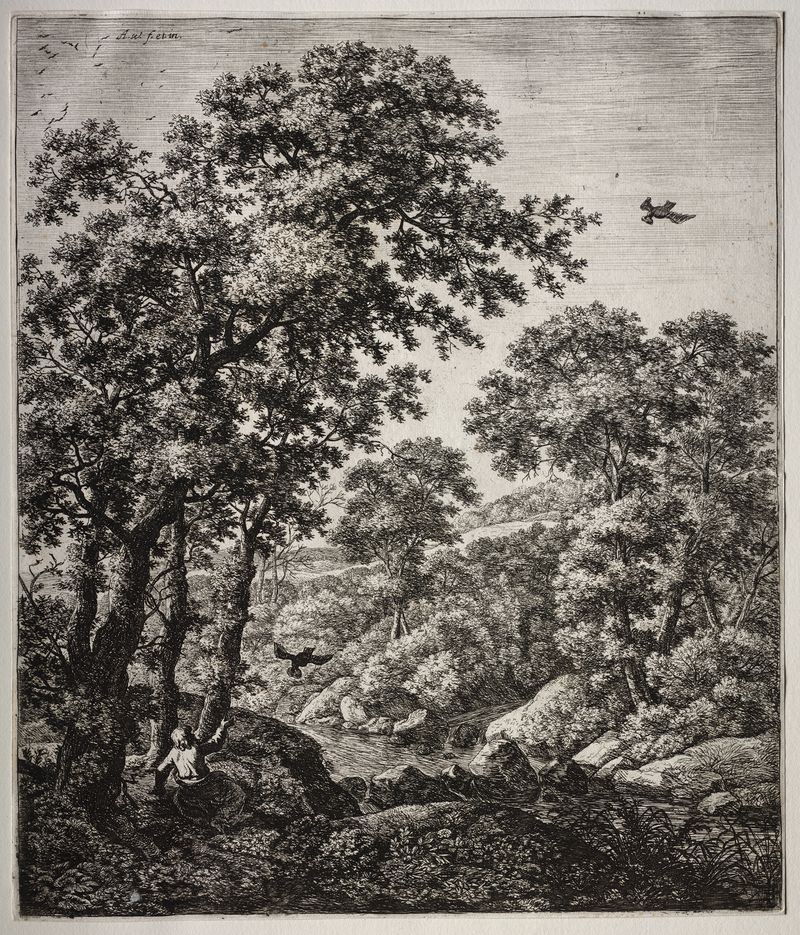
Elijah Fed by the Ravens
Antonie Waterloo
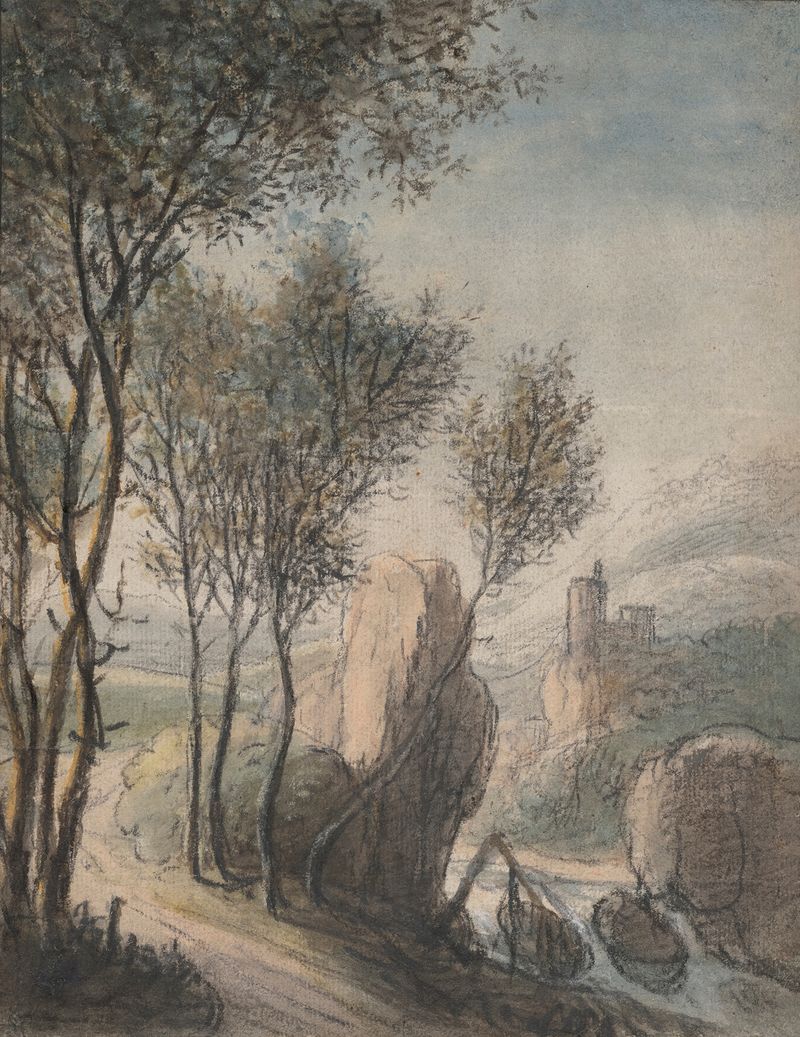
River Landscape with a Castle in the Distance
Antonie Waterloo

Trees and cottages in hilly landscape
Antonie Waterloo
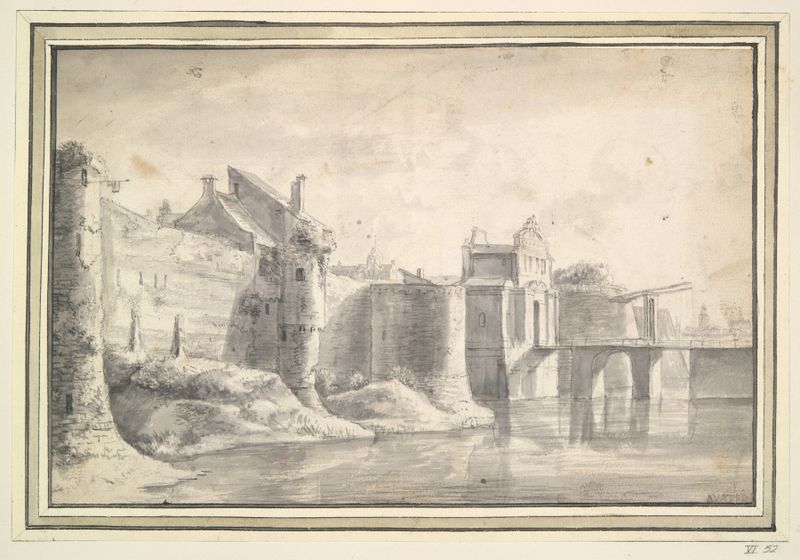
View of the city walls of Utrecht with St. Mary’s Church in the distance
Antonie Waterloo





