
Trees at the Forest Edge — History & Facts
In the quietness of a forest’s border, there lies a revelation waiting to be discovered. The stillness envelops us, a reminder of the secrets that nature holds just beyond our reach. Look to the left of the painting, where a cluster of trees stands sentinel, their gnarled branches twisting upward toward a soft, diffused light. Notice how the brushstrokes capture the texture of the bark, a marriage of browns and greens that speak to the earthiness of the scene.
The artist’s use of light creates a gentle interplay between shadow and illumination, drawing the viewer's eye deeper into the lush foliage while leaving some areas tantalizingly obscured. Within the composition, a sense of duality emerges: the vibrant life of the forest contrasted with the tranquil solitude it offers. The deep greens signify growth and vitality, while the spaces between the trees evoke a sense of longing, as if whispering the stories of those who might wander through. Each brushstroke adds layers of meaning, suggesting both a sanctuary and a threshold between the familiar and the unknown. Hans Thoma painted this work in 1870 while living in Germany, a period marked by a burgeoning fascination with nature in the realm of art.
Thoma was recognized for his ability to infuse landscapes with emotional depth, reflecting the Romantic spirit of the time. As artists sought to reconnect with the natural world, this painting stands as a testament to that pursuit, capturing the essence of tranquility found at the forest's edge.
More Artworks by Hans Thoma
Browse all →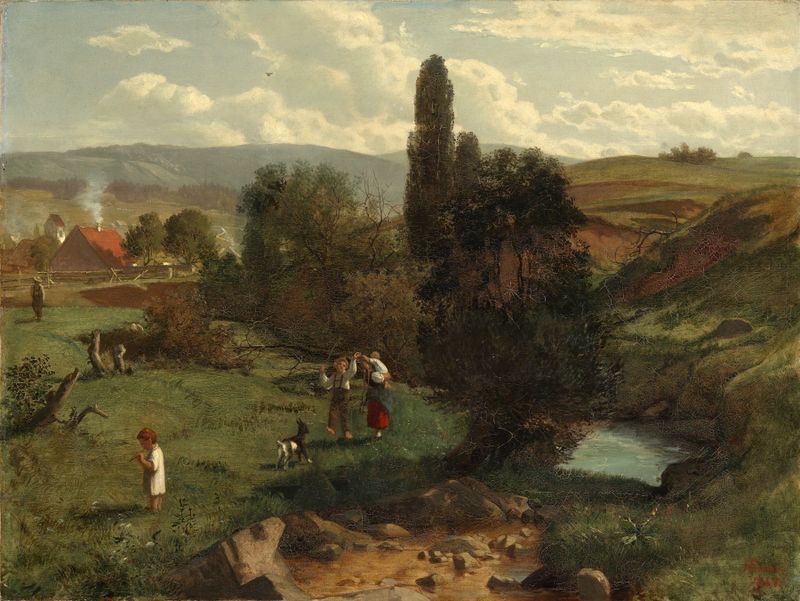
Schwarzwaldlandschaft
Hans Thoma
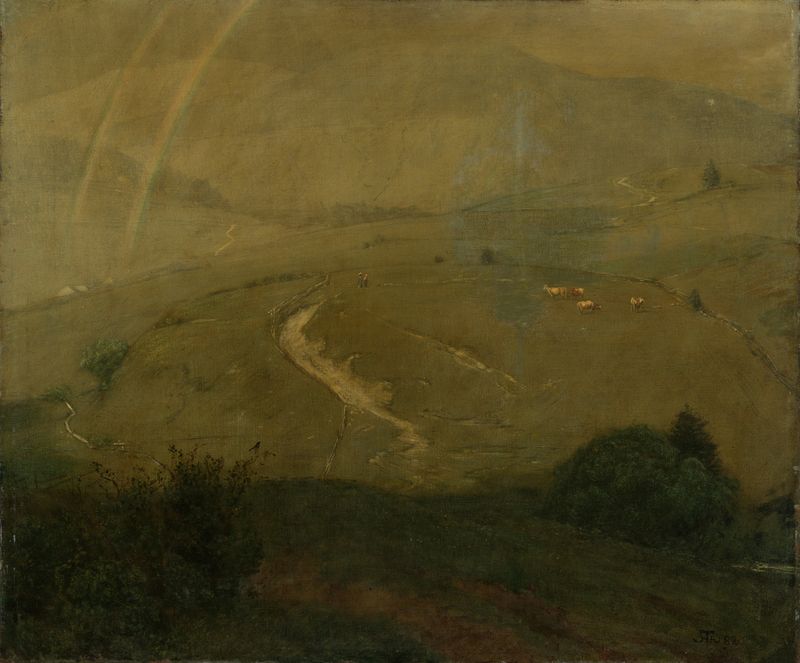
Regen im Schwarzwald
Hans Thoma
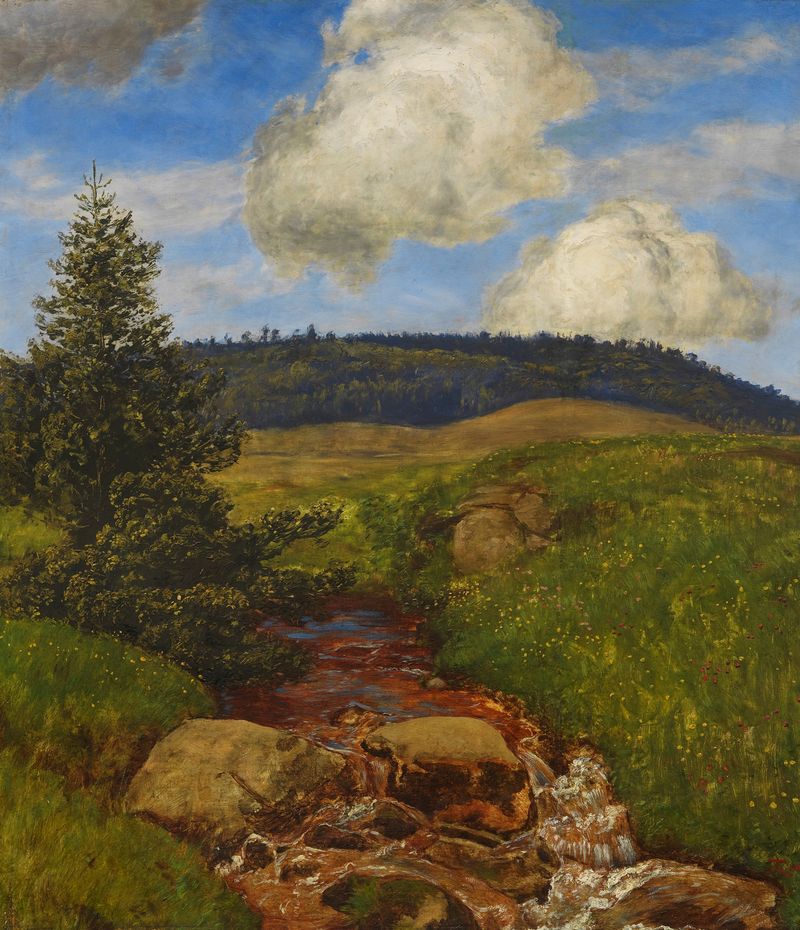
Schwarzwaldbach
Hans Thoma
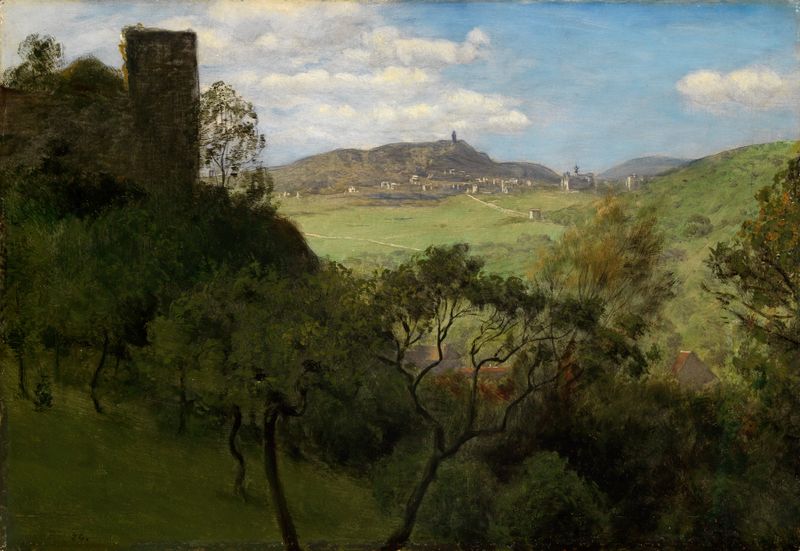
Blick auf Falkenstein im Taunus
Hans Thoma
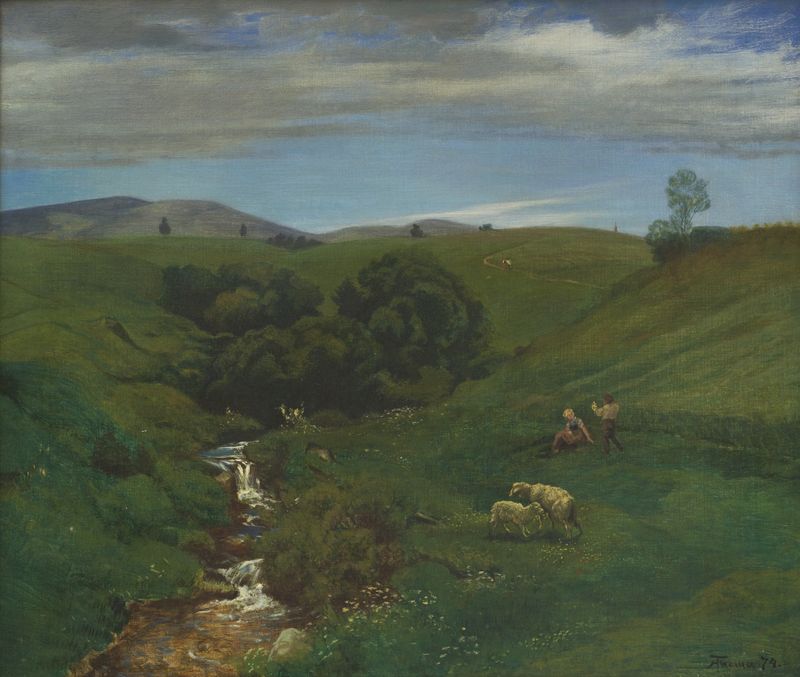
Black Forest Meadow near Bernau
Hans Thoma
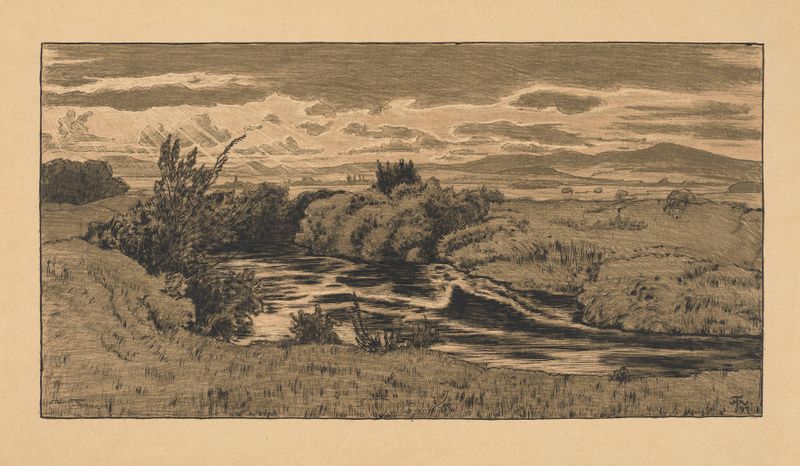
Evening by the Nidda River
Hans Thoma
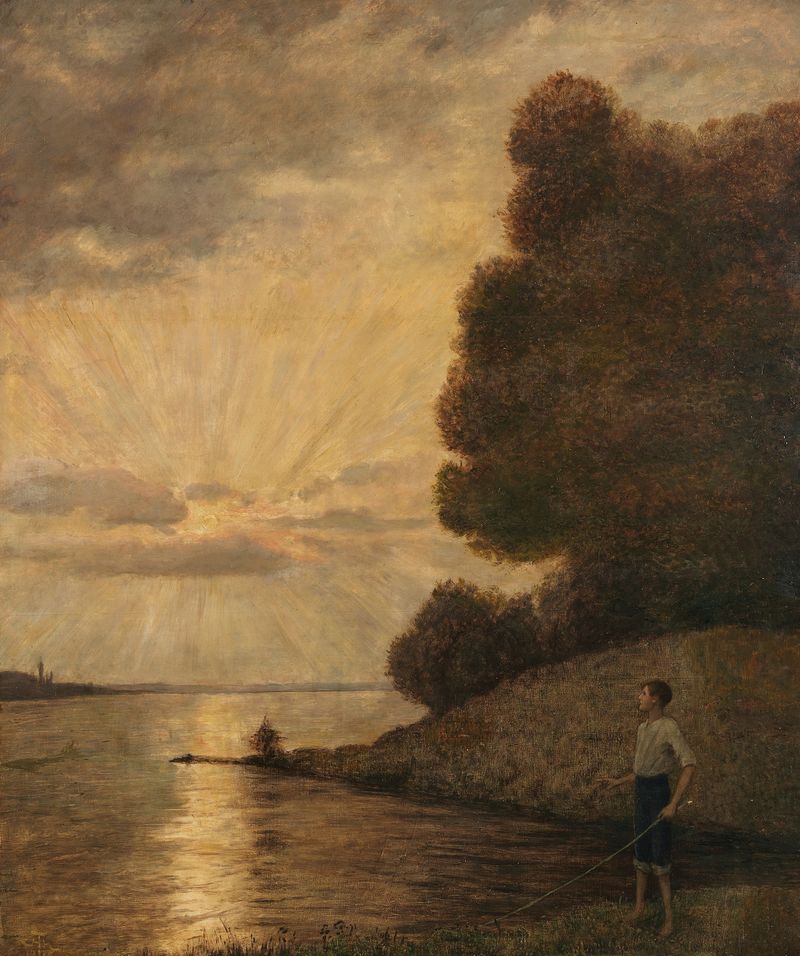
Sonnenuntergang am Oberrhein
Hans Thoma
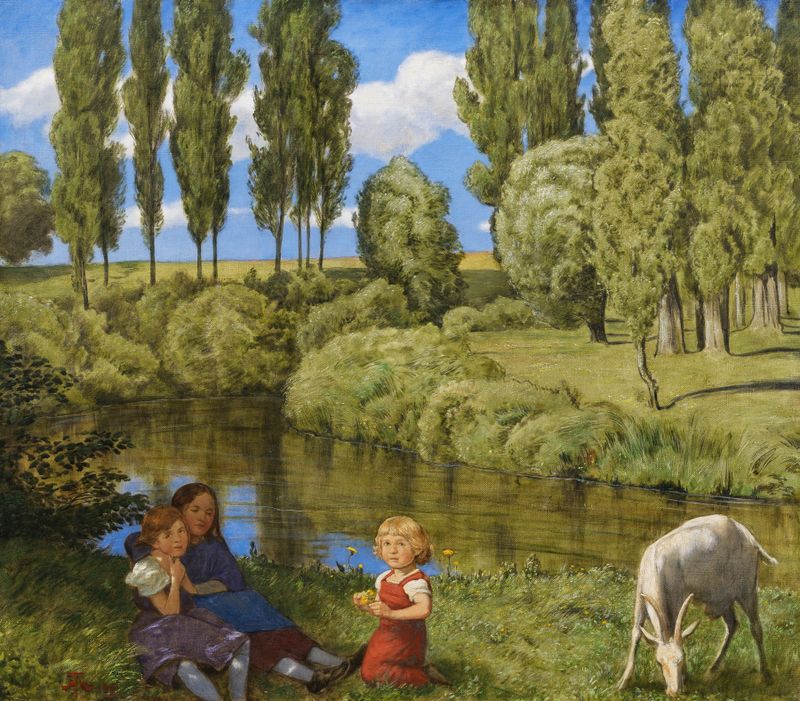
Am Stillen Bach
Hans Thoma
Der Abendstern
Hans Thoma
Das Rheintal bei Säckingen
Hans Thoma





