
Trees in the Bois de Boulogne, Paris — History & Facts
A shaft of light slices through the dense woodland, catching the battered trunk of a tree and the ragged remains of another—nature’s drama, staged in silence. The eye is drawn first to this confrontation: living bark and splintered wood, side by side, each telling its own story of survival and decay. The clearing is small, intimate, almost secretive, as if the viewer has stumbled upon a private moment in the Bois de Boulogne.
The palette is earthy and deep, the greens and browns layered to suggest both lushness and shadow, while the careful rendering of bark and undergrowth rewards close inspection. This is not a romanticized forest, but one attentive to detail, where every patch of moss and broken branch has its place. Painted around 1812, Trees in the Bois de Boulogne, Paris belongs to an era when landscape painting was gaining ground as an independent genre in France. Artists like Achille Etna Michallon were among the first to leave the studio for the outdoors, seeking truth in the direct observation of nature.
Such works were often studies—exercises in capturing light, texture, and atmosphere, sometimes destined for the walls of collectors, sometimes for the artist’s own education. The Bois de Boulogne itself, on the edge of Paris, was a favored haunt for painters in search of wildness close to the city. History has kept few traces of this particular canvas’s journey, but its presence today in a major collection invites us to linger, tracing the quiet drama of trees across centuries.
More Artworks by Achille Etna Michallon

Forest interior
Achille Etna Michallon
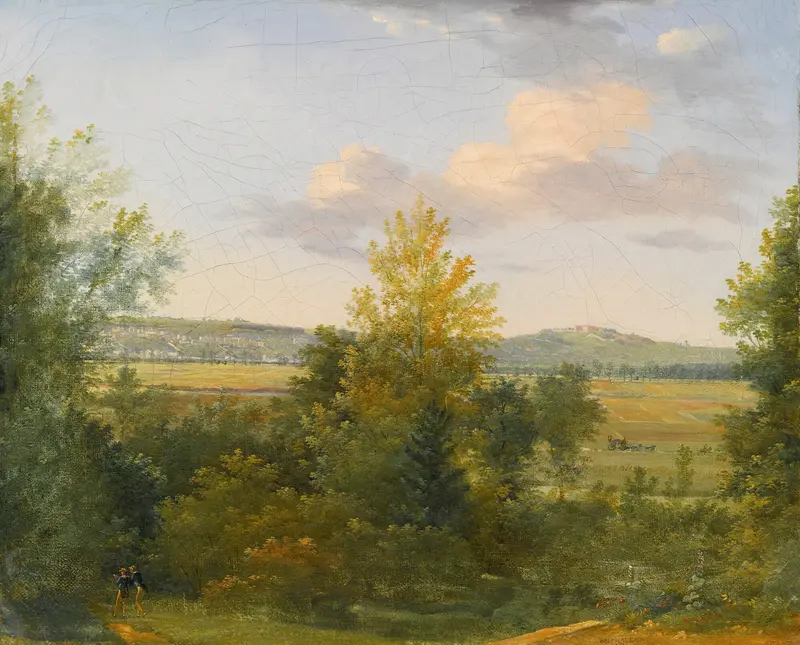
Pastoral landscape with two travellers
Achille Etna Michallon

Die Mündung der Rance bei Saint-Servan (Bretagne)
Achille Etna Michallon

View of a Waterfall through a Ravine
Achille Etna Michallon
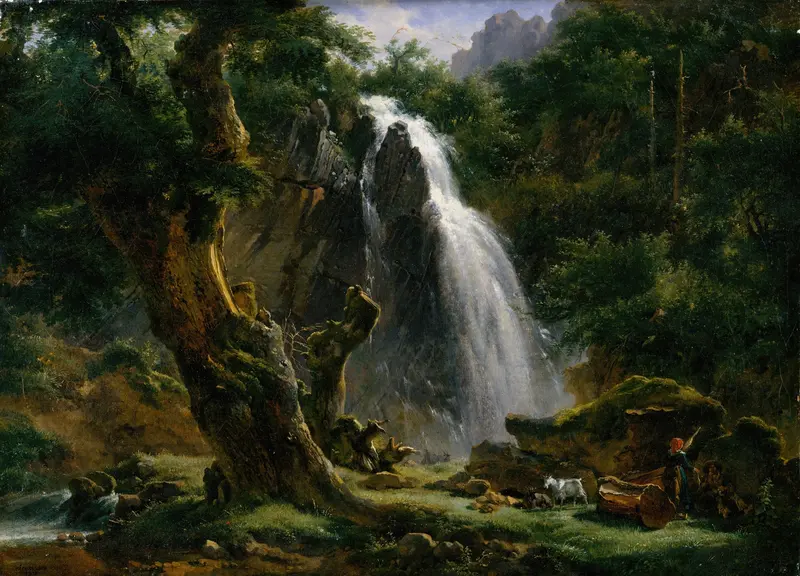
Waterfall at Mont-Dore
Achille Etna Michallon
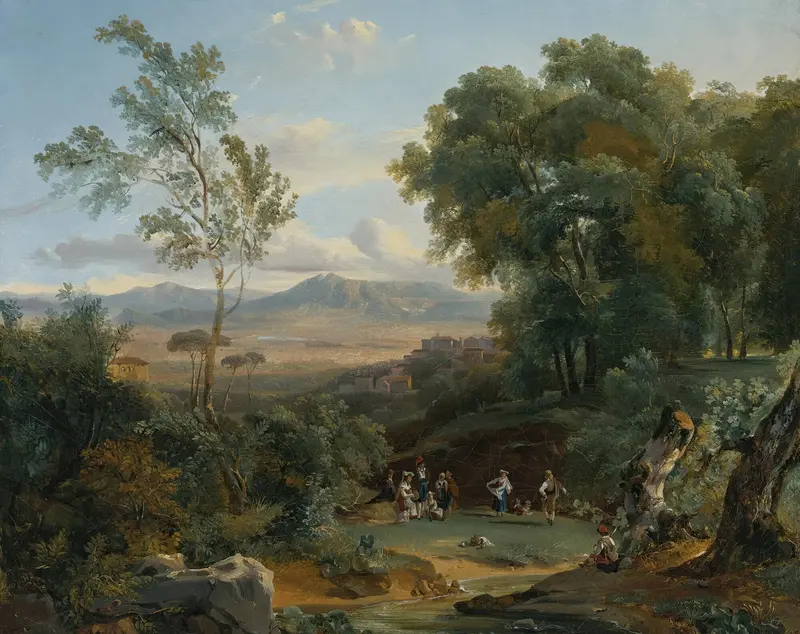
Landscape With A View Of Frascati
Achille Etna Michallon
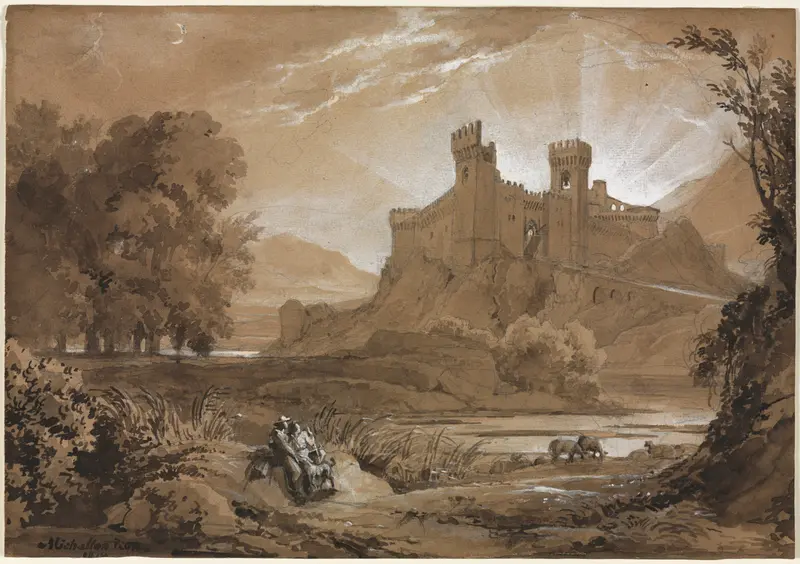
Landscape with Castle and Shepherds
Achille Etna Michallon
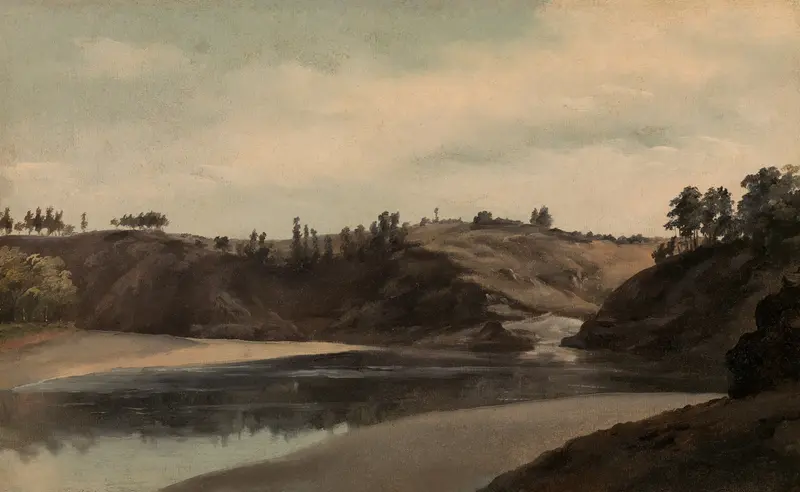
River landscape in Brittany
Achille Etna Michallon
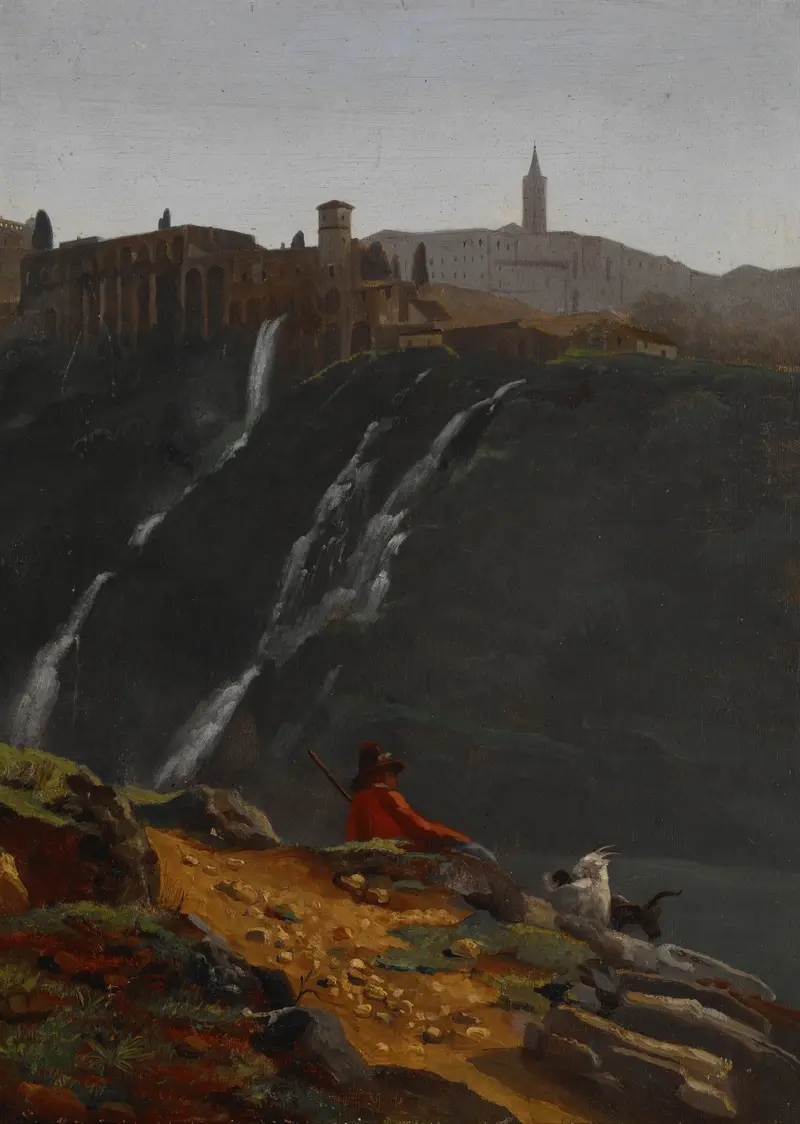
Goatherd Opposite the Falls of Tivoli
Achille Etna Michallon
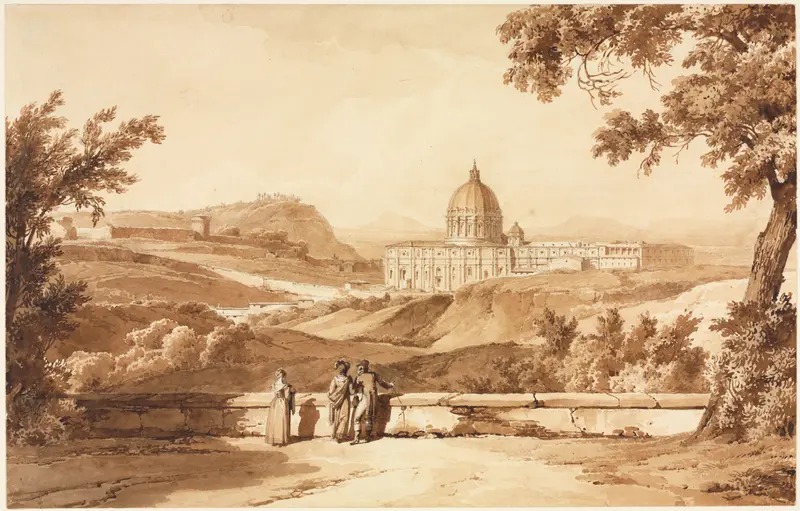
View of St. Peters, Rome
Achille Etna Michallon
More Landscape Art

The Starry Night
Vincent van Gogh

View of Delft
Johannes Vermeer

Water Lilies
Claude Monet

The Grand Canal, Venice, looking north-west from the Ca' Corner to the Ca' Contarini degli Scrigni, with the campanile of Santa Maria della Carità
Canaletto

Windsor Castle
Canaletto

The Grand Canal looking North-East from the Palazzo Dolfin-Manin to the Rialto Bridge
Canaletto