
Treppe des Schlosses Schönbrunn im Winter — History & Facts
What if beauty was never meant to be finished? In Oskar Laske's Treppe des Schlosses Schönbrunn im Winter, we stand at the threshold of a grand staircase, poised between the elegance of history and the inevitable decay of time. Focus on the intricate railings that curve gracefully, their details softened by a dusting of snow. Notice how the muted palette—shades of grays and whites—evokes a somber yet serene winter atmosphere. The light filters through a veil of clouds, illuminating patches of the staircase, creating a stark contrast between the bright highlights and the shadows that cling to the edges, whispering secrets of forgotten splendor. Beneath the surface of this architectural beauty lies a poignant narrative of transience.
The snow, though beautiful, signifies both a pristine layer of tranquility and a deceptive mask over decay. Look closer at the chipped stone steps, where the wear reveals the passage of countless feet, each leaving behind traces of their journey. This juxtaposition of elegance and decline invites a reflection on the passage of time, urging one to consider what remains when the façade of beauty fades. Laske painted this work in 1946, shortly after World War II, reflecting a time of rebuilding and introspection in Europe.
Berlin, where he was based, was a place marked by destruction, yet artists like him sought to capture remnants of beauty amidst chaos. His depiction of Schönbrunn's staircase embodies both a literal and metaphorical ascent, a longing for restoration in a world grappling with its scars.
More Artworks by Oskar Laske
Browse all →
Faschingsumzug am Stock im Eisen Platz
Oskar Laske

Schönbrunn (Winter)
Oskar Laske
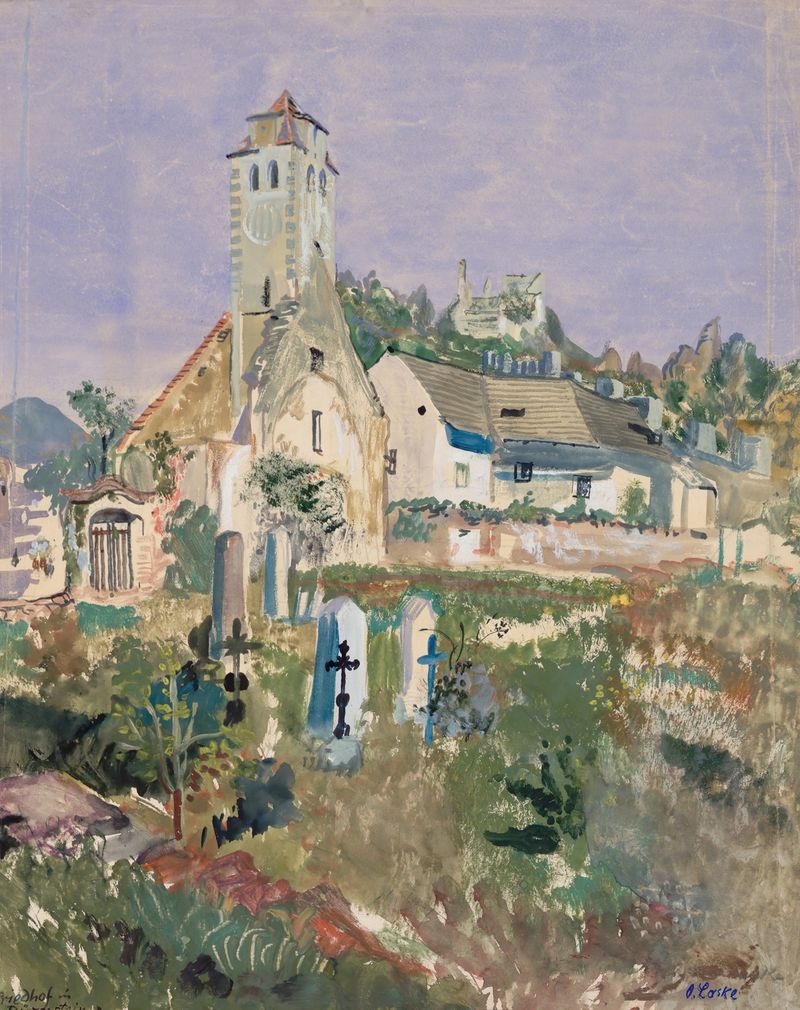
Friedhof in Dürnstein
Oskar Laske

Pratermotiv an der alten Donau
Oskar Laske

Frühjahrsnebel in Niederösterreich
Oskar Laske

Begräbnis des Wiener Bürgermeisters Dr. Karl Lueger
Oskar Laske

Maria Theresien-Denkmal mit Blick gegen das Burgtor
Oskar Laske
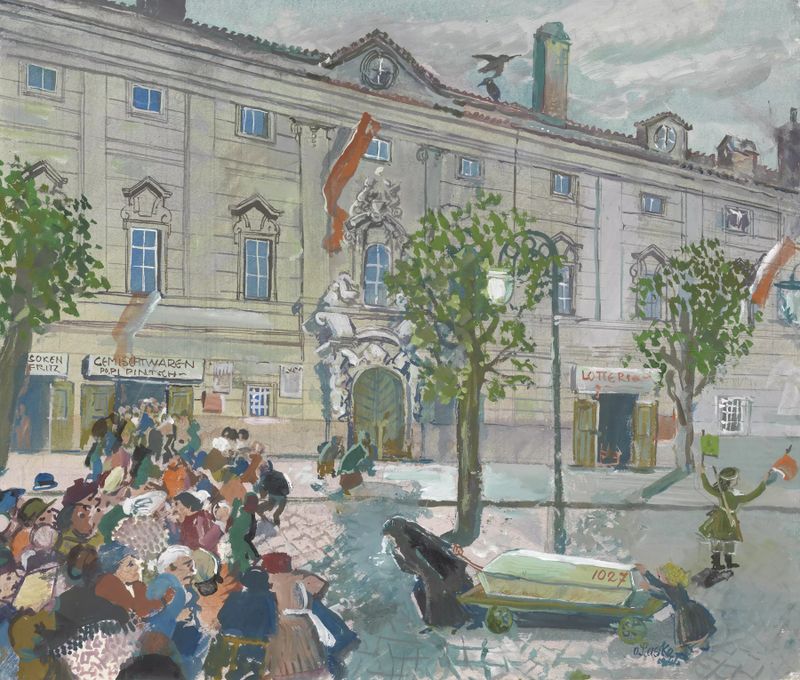
Wiener Straßenbild vom Mai 1945
Oskar Laske

Winterlandschaft in Pressbaum
Oskar Laske

Ansicht von Positano
Oskar Laske
More Architecture Art
Browse all →
The statue of Liberty
Frédéric Auguste Bartholdi

View of Houses in Delft, Known as ‘The Little Street’
Johannes Vermeer

View of Houses in Delft, Known as ‘The Little Street’
Johannes Vermeer

The Cathedral in Rouen. The portal, Grey Weather
Claude Monet

The yellow house
Vincent van Gogh

The Church in Auvers-sur-Oise, View from the Chevet
Vincent van Gogh