Tripelmarionette — History & Facts
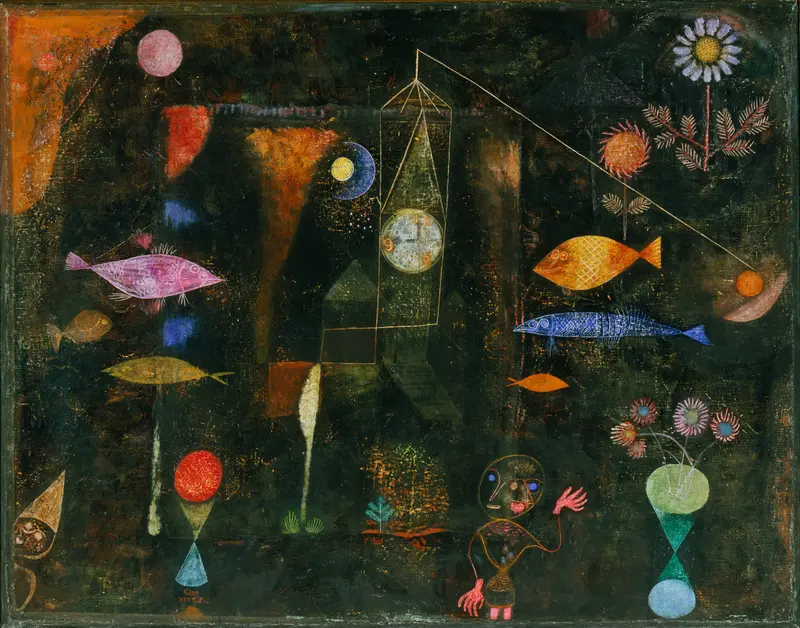
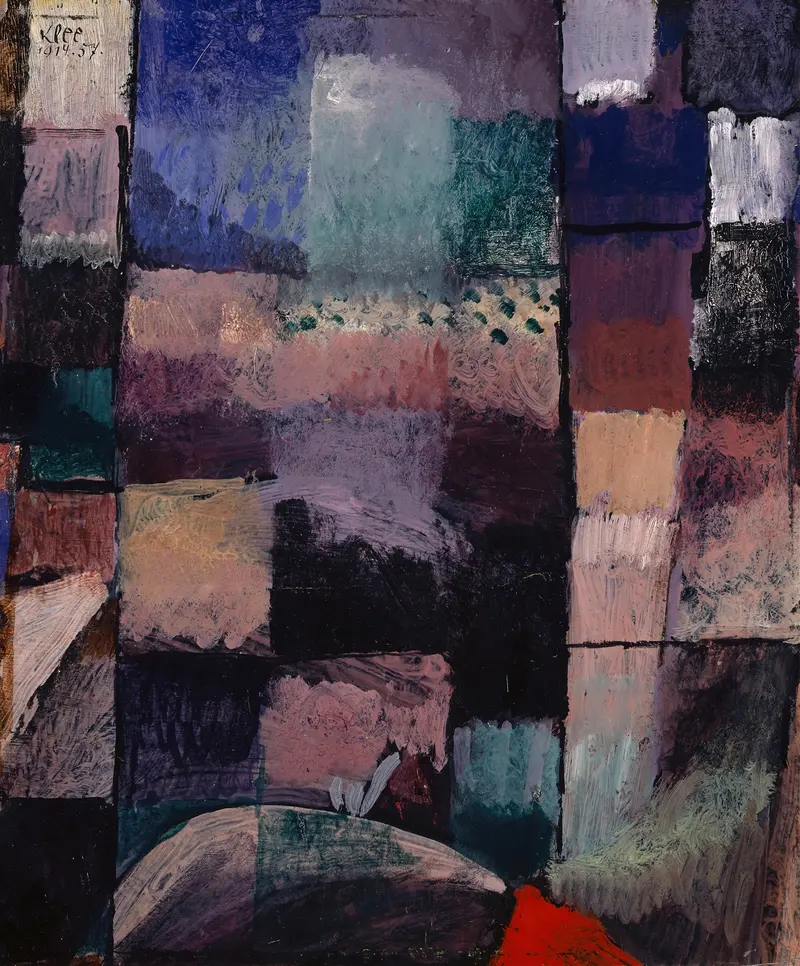
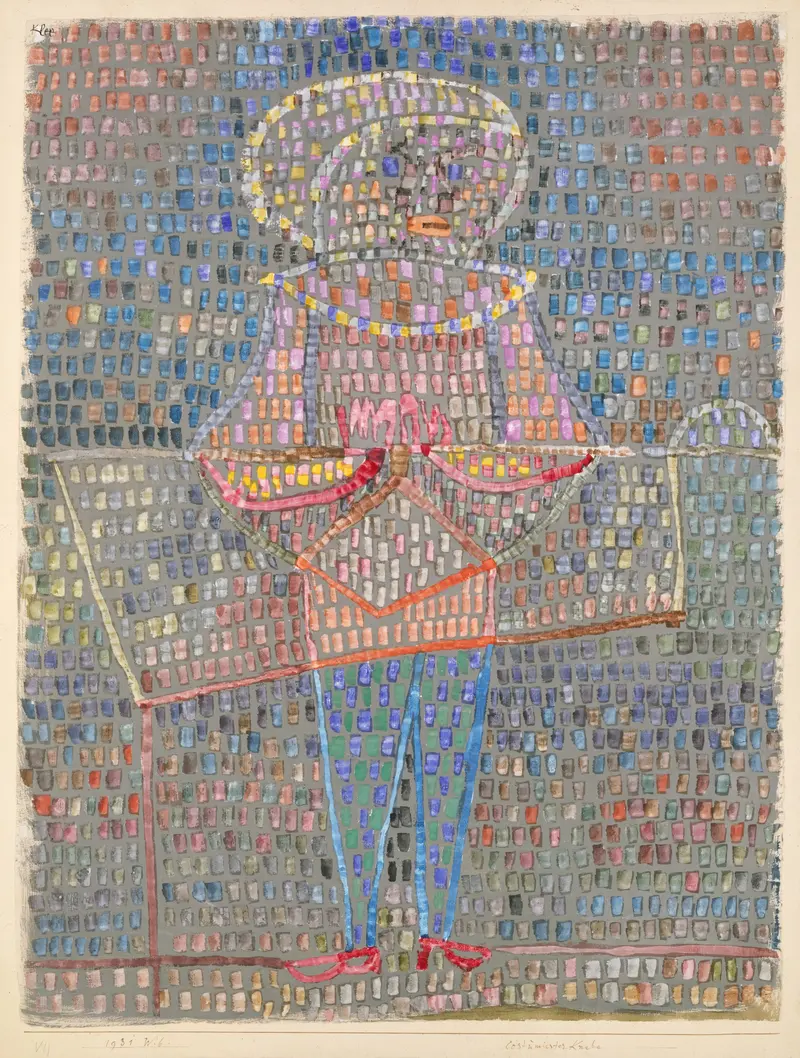
In Tripelmarionette, vibrant colors dominate the canvas, with abstract forms that suggest movement and playfulness. The figures appear to be marionettes, suspended in a whimsical dance. Klee uses a palette of reds, blues, and yellows, creating a sense of energy.
The background is a blend of soft hues that enhance the foreground's dynamism. The painting is characterized by Klee's signature use of geometric shapes and lines. The forms are simplified yet expressive, typical of his style during the 1920s. Viewers can observe the layering of colors, which adds depth and texture to the work.
Klee often employed oil on canvas, allowing for rich color application. Paul Klee was a key figure in the development of modern art, blending elements of abstraction and expressionism. Tripelmarionette reflects his fascination with puppetry and the interplay of form and color. Interestingly, Klee often drew inspiration from music, which is evident in the rhythmic quality of this piece.
His works continue to influence artists today, showcasing the enduring appeal of his unique vision.