Trois Péniches Amarées Aux Abords D’une Ville Industrielle — History & Facts
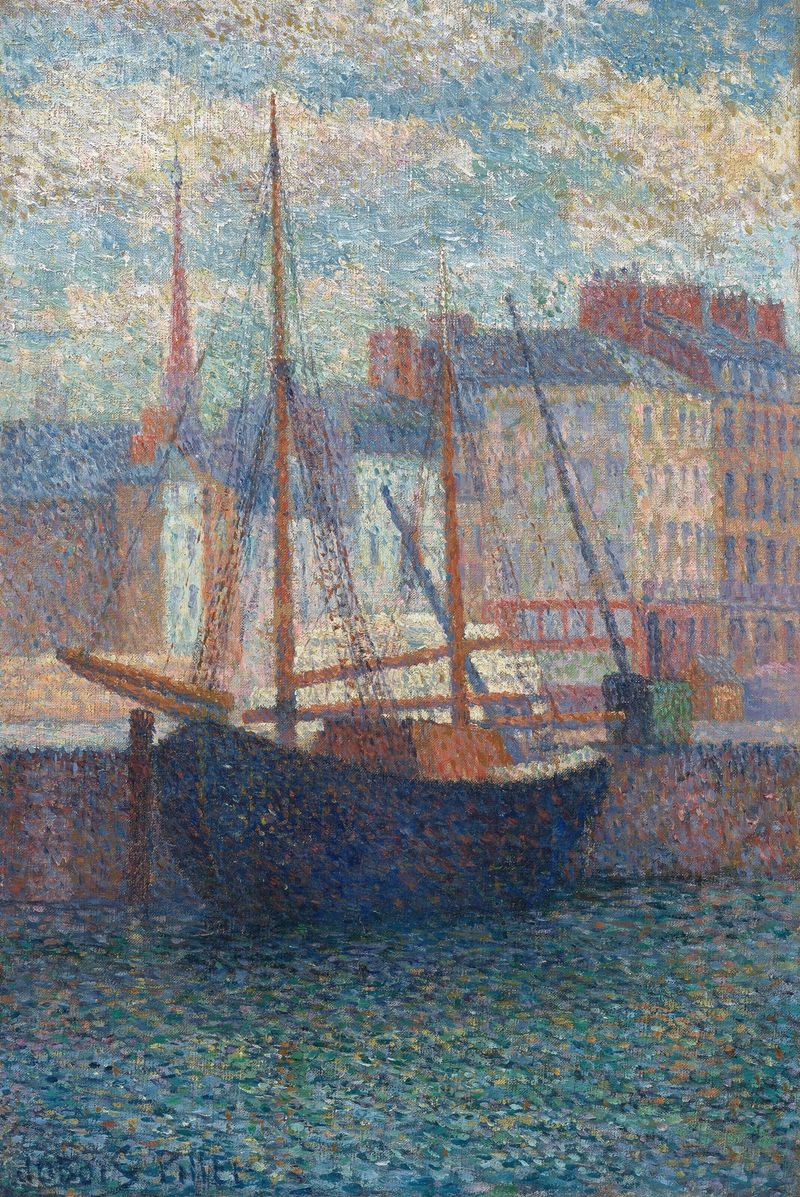
The stillness of the industrial landscape invites introspection, suggesting that within the quiet hum of machinery, a deeper illusion of life unfolds. Focus first on the serene waterway that cuts through the composition, where three moored barges gently bob against the current, their reflections shimmering with a touch of the ethereal. Notice how the muted colors of the scene blend seamlessly — the somber blues and grays of the water reflecting the starkness of the industrial structures looming in the background. The artist employs a delicate interplay of light and shadow, enhancing the sense of depth and inviting the viewer to linger longer in this transient moment. Beneath the surface of this tranquil tableau lies a tension between nature and industry.
The barges, symbols of human endeavor, appear at rest, yet they are anchored in a world that thrives on constant motion and change. The distant smokestacks emit gentle plumes, suggesting a connection to the bustling activities beyond the frame — a juxtaposition of stillness and productivity. Here, the illusion of peace belies an underlying complexity, evoking reflections on the passage of time and the impact of industrialization on the landscape. Created in 1886, this work emerged during a pivotal moment for Dubois-Pillet, who was aligning himself with the burgeoning Impressionist movement in France.
Living in the vibrant artistic hub of Paris, he was influenced by the changing urban environment and the emergence of modernity. During this period, artists were increasingly exploring themes of industry and its interaction with nature, which resonated deeply in his oeuvre, marking a shift towards capturing fleeting moments infused with emotional resonance.