
Turkse man met tulband — History & Facts
When did color learn to lie? In Turkse man met tulband, the hues speak of more than just attire; they whisper secrets of identity and revelation beneath the surface. Look to the left at the figure clad in rich, deep tones of blue and gold, his turban a vibrant splash against the muted backdrop. Notice the intricate folds of fabric gracefully draping over his shoulder, crafted with meticulous brushstrokes that invite you to feel the texture. Tiepolo’s masterful use of chiaroscuro enhances the play of light, casting a warm glow on the man's face, revealing expressions of both serenity and introspection, as if caught in a moment of deep thought. Delve deeper into the details, where the contrasting colors highlight the tension between cultural identity and individuality.
The man's gaze, steady yet distant, encapsulates a world of unspoken narratives—perhaps a longing for connection, or a reflection on his journey. The lavishness of his attire juxtaposes with the plainness of his surroundings, suggesting a complex interplay between wealth and existential solitude, drawing the viewer into a contemplation of societal roles. Painted in 1774, this work emerged during a time when Tiepolo was deeply engaged in the vibrant cultural exchanges of Venice, influenced by the artistic revolutions stirring across Europe. The artist, renowned for his frescoes, was exploring the boundaries of portraiture, seeking to capture not just likeness, but the essence of character within shifting societal contexts.
This piece reveals his evolution and response to the world around him, combining elements of portraiture and genre painting in a way that resonates with both immediacy and timelessness.
More Artworks by Giovanni Domenico Tiepolo
Browse all →
Engel met scapulier
Giovanni Domenico Tiepolo
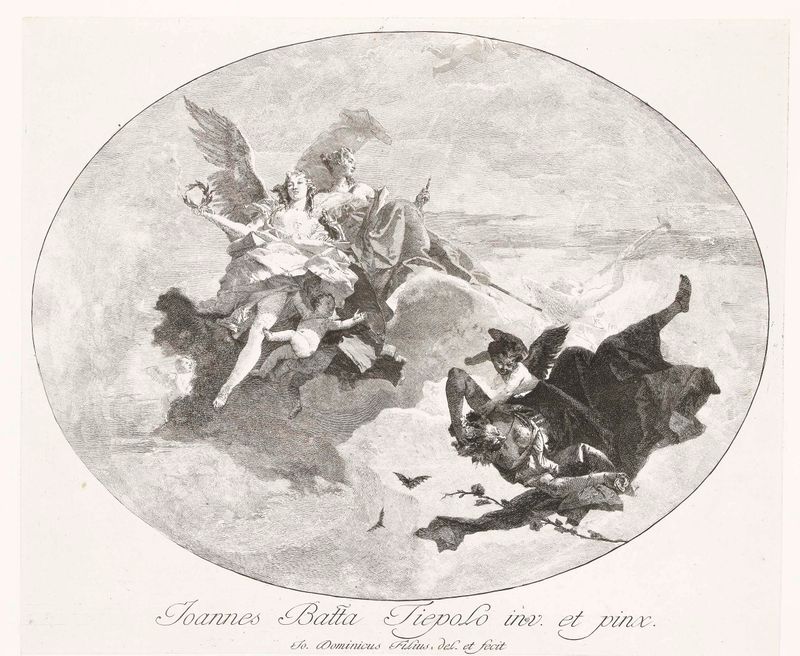
Deugd en Faam verjagen Gierigheid
Giovanni Domenico Tiepolo
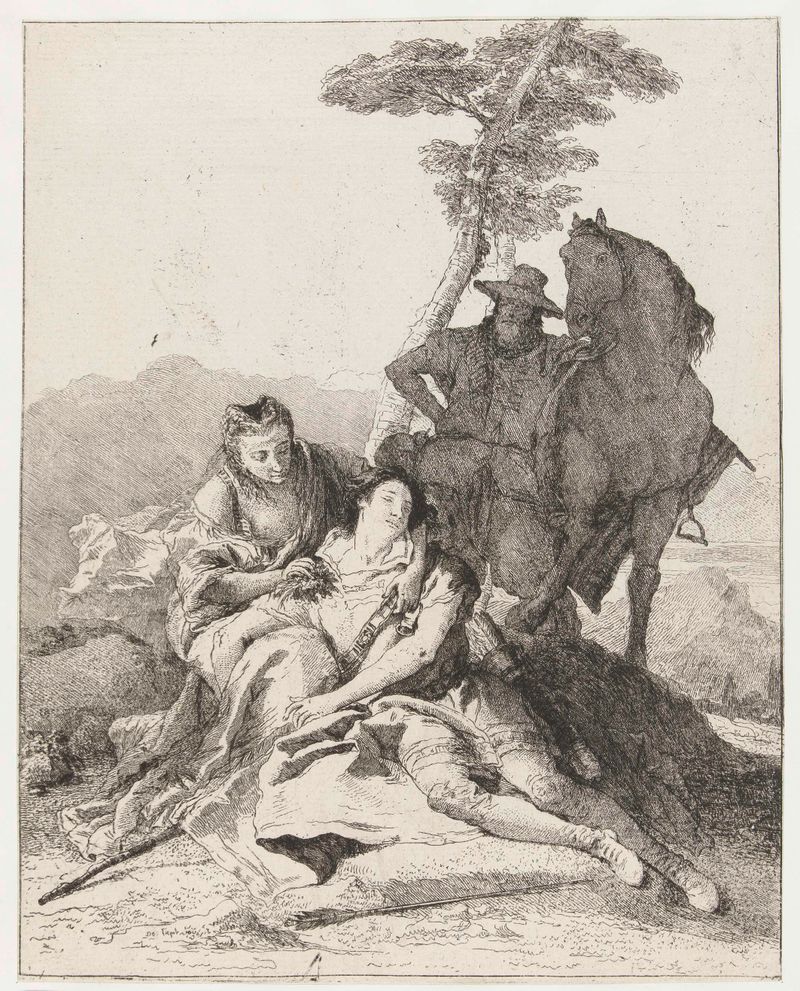
Angelica geneest de wond van Medoro
Giovanni Domenico Tiepolo
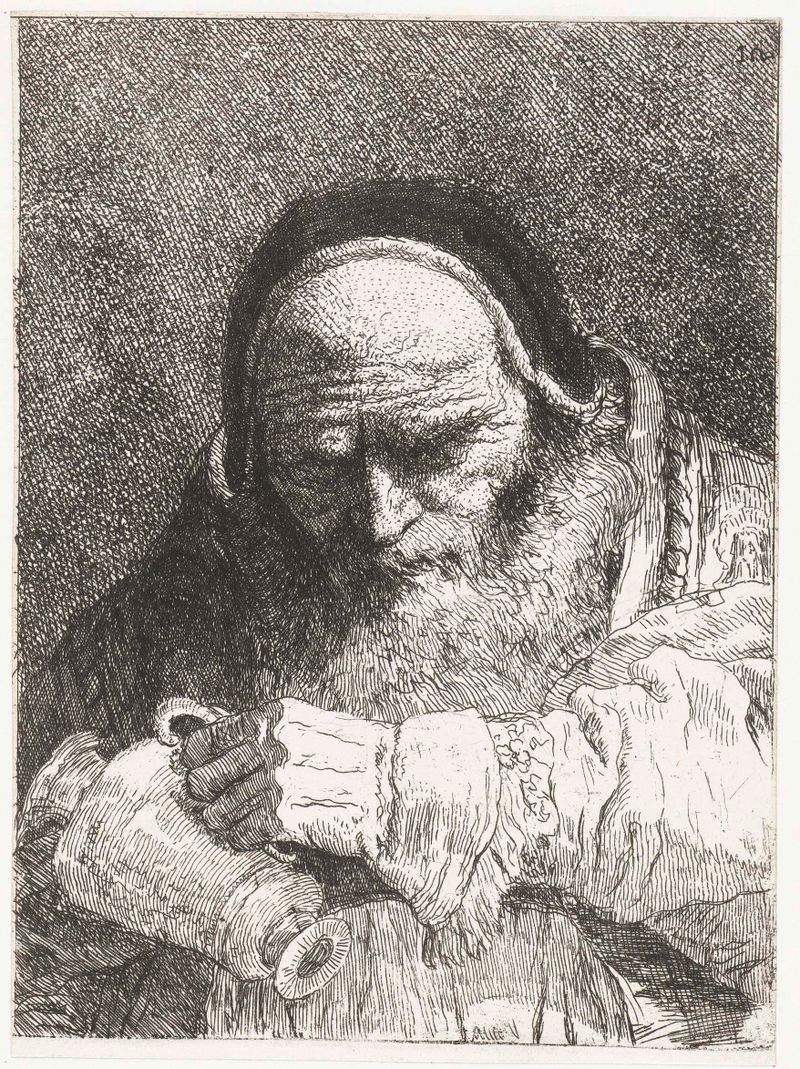
Paus met schenkkan
Giovanni Domenico Tiepolo

Heilige familie vertrekt door een stadspoort
Giovanni Domenico Tiepolo
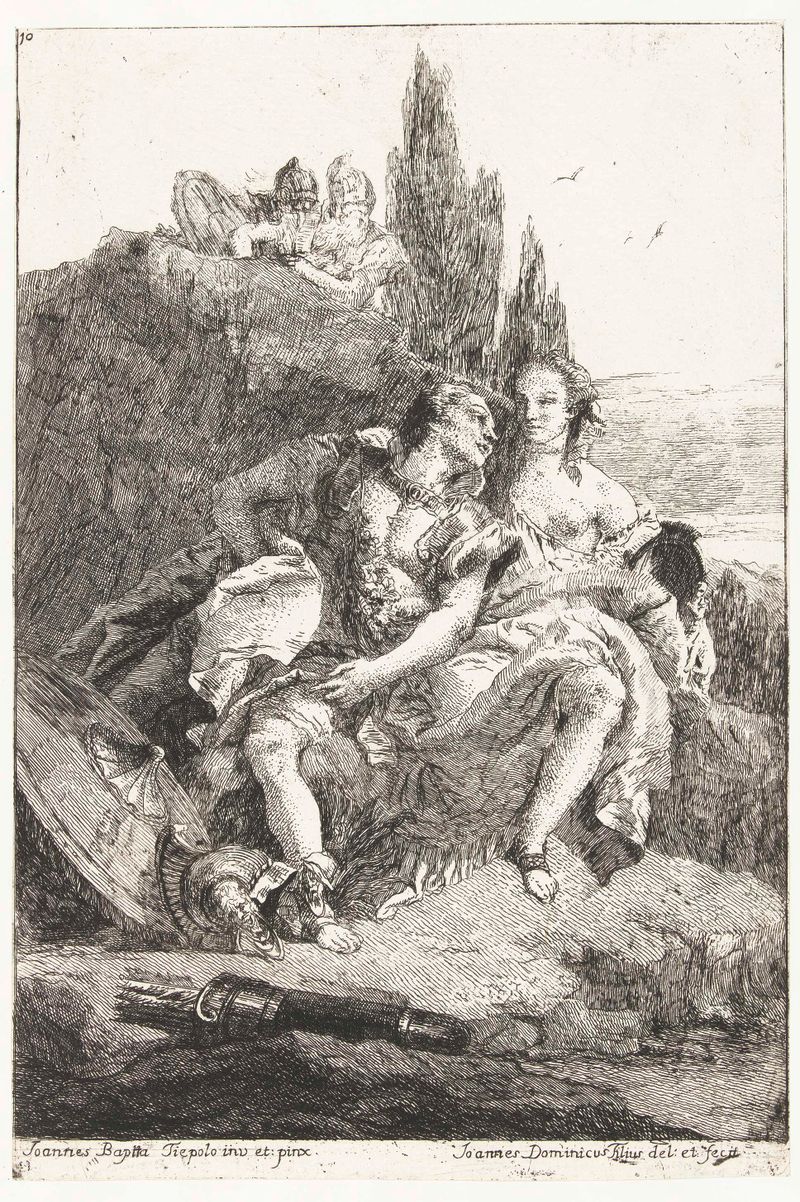
Rinaldo en Armida als liefdespaar aangetroffen bij een meer door twee ridders
Giovanni Domenico Tiepolo
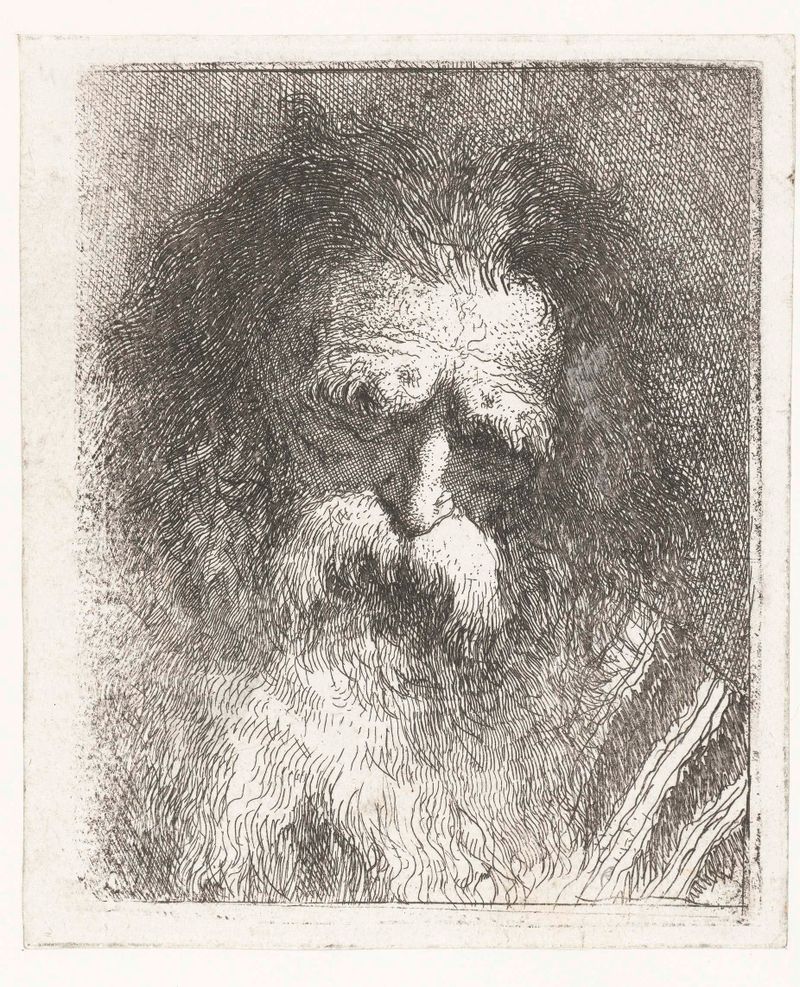
Oude man met borstelige wenkbrauwen en baard
Giovanni Domenico Tiepolo

Man met zwaard
Giovanni Domenico Tiepolo

Man met lange haren en zonder hoofddeksel
Giovanni Domenico Tiepolo

Man met ontblote schouder
Giovanni Domenico Tiepolo
More Portrait Art
Browse all →
Las meninas
Diego Velázquez

Self-portrait with a Bandaged Ear and Pipe
Unidentified artist

Girl with a Pearl Earring
Johannes Vermeer

The Sampling Officials of the Amsterdam Drapers’ Guild, Known as ‘The Syndics’
Rembrandt van Rijn

The Hundred Guilder Print: the man seen on the back in the lower left corner
Rembrandt van Rijn

Portrait of Dr Gachet
Vincent van Gogh