Tussenzetsel van zwarte tule met gekleurde applicatiekant op karton — History & Facts
In a realm where truths are often masked, artistry serves as a mirror, reflecting the depths of human experience and emotion. One may wonder: what truths lie beneath the delicate layers of fabric and color? Look closely at the intricate interplay of black tulle and vibrant appliqué lace within the composition. The dark tulle serves as a shadowy backdrop, grounding the lively hues of the lace that dance across the surface.
Notice how the soft folds and gentle draping of the fabric evoke both fragility and strength, suggesting a hidden narrative beneath its surface. The meticulous arrangement of colors invites the eye to roam, discovering the nuances of texture and depth that Schnitzler masterfully orchestrates. Within this artwork lies a palpable contrast between the somber and the celebratory. The black tulle can be seen as a metaphor for the struggles that often cloak one’s existence, while the colorful appliqué provides a glimpse of hope—an expression of resilience, creativity, and joy against adversity.
This duality offers a commentary on the human condition, inviting viewers to ponder their own complexities and the beauty that can emerge from darkness. Gustav Schnitzler created this piece around 1925, a time when he was immersed in the vibrant art scene of post-World War I Europe. He was exploring textile arts at a time when abstraction and expressionism were gaining momentum. This period in his life was marked by a quest for identity and meaning in a rapidly changing world, reflecting the broader cultural shifts that were shaping modern art.
More Artworks by Gustav Schnitzler
Browse all →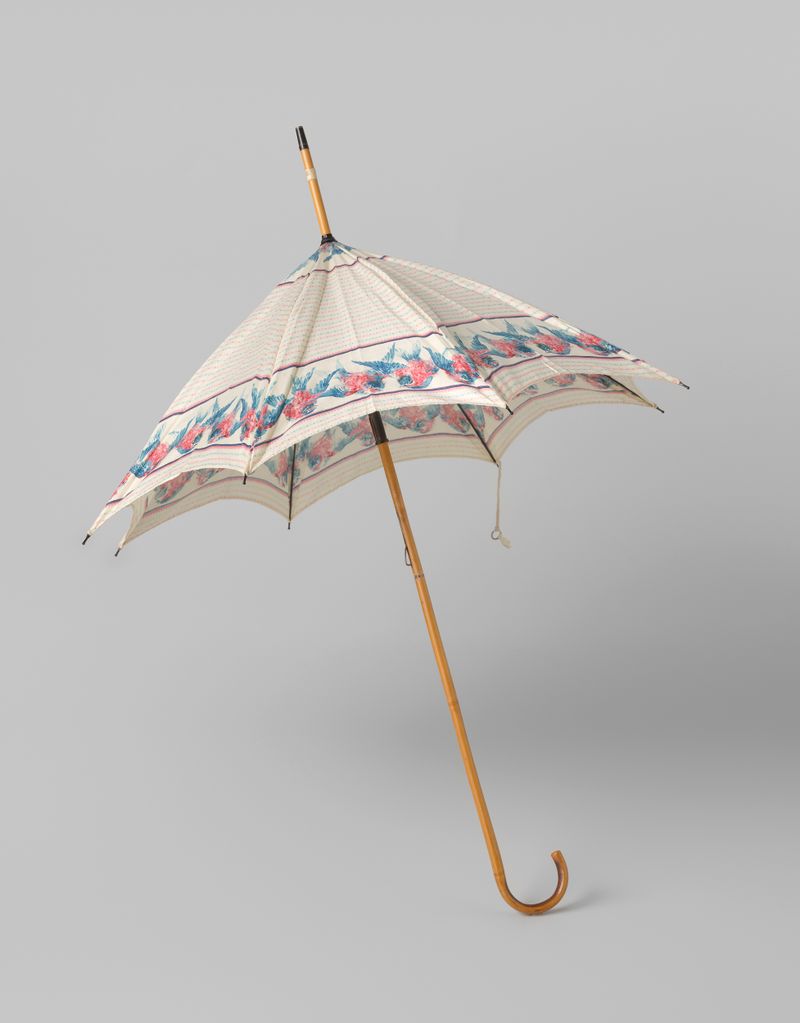
Parasol met dek witte katoen bedrukt met roze en blauwe vogeltjes, op een bamboe stok met gebogen handvat
Gustav Schnitzler
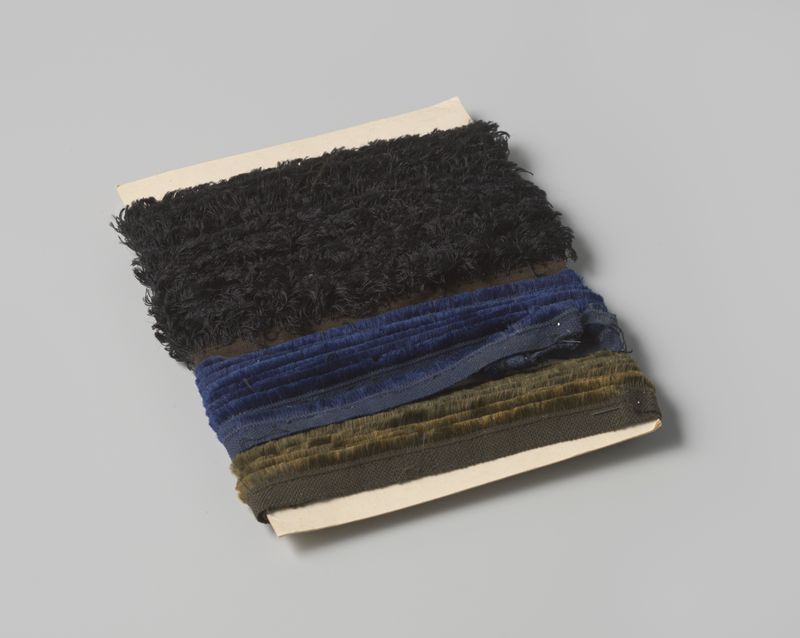
Strook zwarte franje aan bezemband, op karton
Gustav Schnitzler
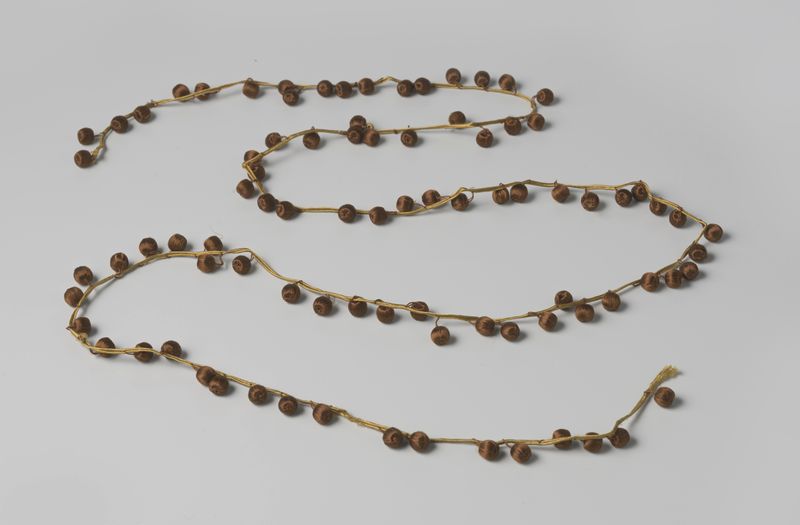
Galon, goudkleurig, waaraan pompons van bruin (zijde)draad hangen
Gustav Schnitzler
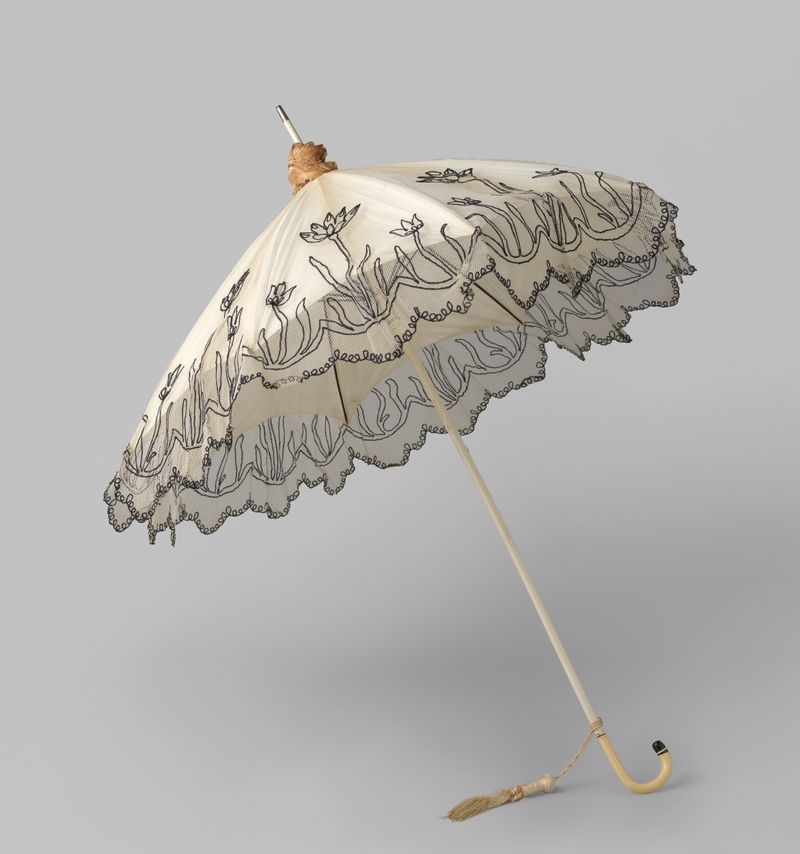
Parasol met dek van witte tule waarop zwart borduurwerk van telkens drie bloemen, op een witgeverfde houten stok, waaraan een gebogen ivoorkleurig handvat
Gustav Schnitzler

Parasol met dek van witte katoen, waartussen een strook van witte kant, op een lichte, houten stok met een ronde haak
Gustav Schnitzler

Strook franje, getand, wit en écru, gewikkeld rond een met gouden randen afgezet plankje
Gustav Schnitzler
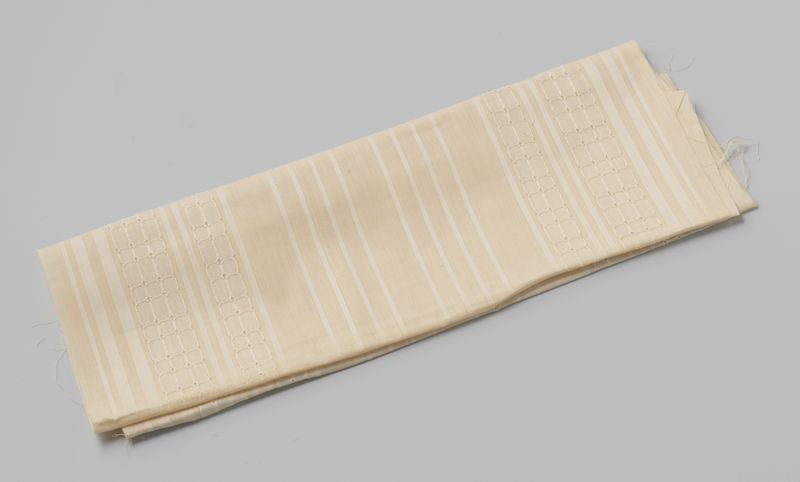
Coupon wit parasolkatoen met beige strepen aan weerszijden
Gustav Schnitzler
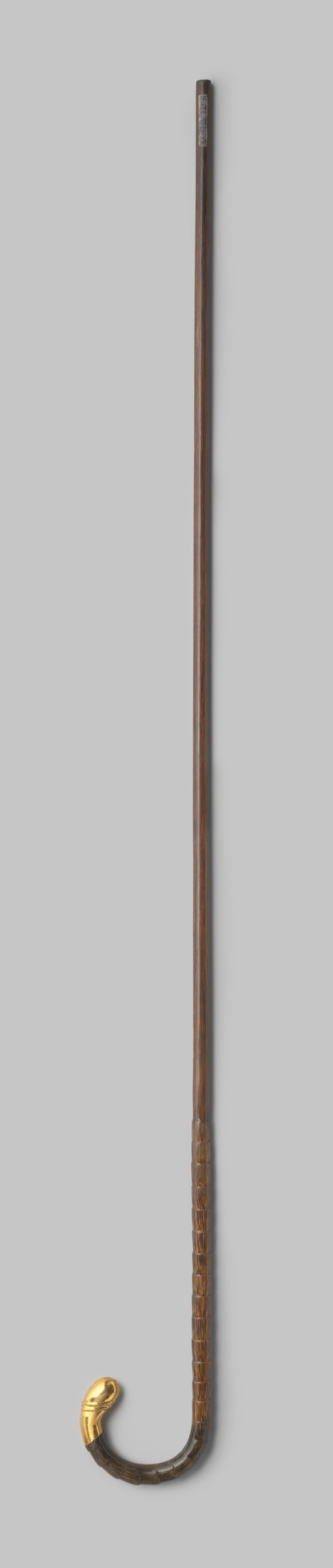
Onderstok van een parapluie of parasol van kokospalm met ronde haak en goudkleurig (verguld?) metalen uiteinde
Gustav Schnitzler

Parasol met dek van effen witte katoen met een smal meerkleurig draad langs de rand geregen, op lichte houten stok, met gebogen, ivoorkleurig handvat
Gustav Schnitzler
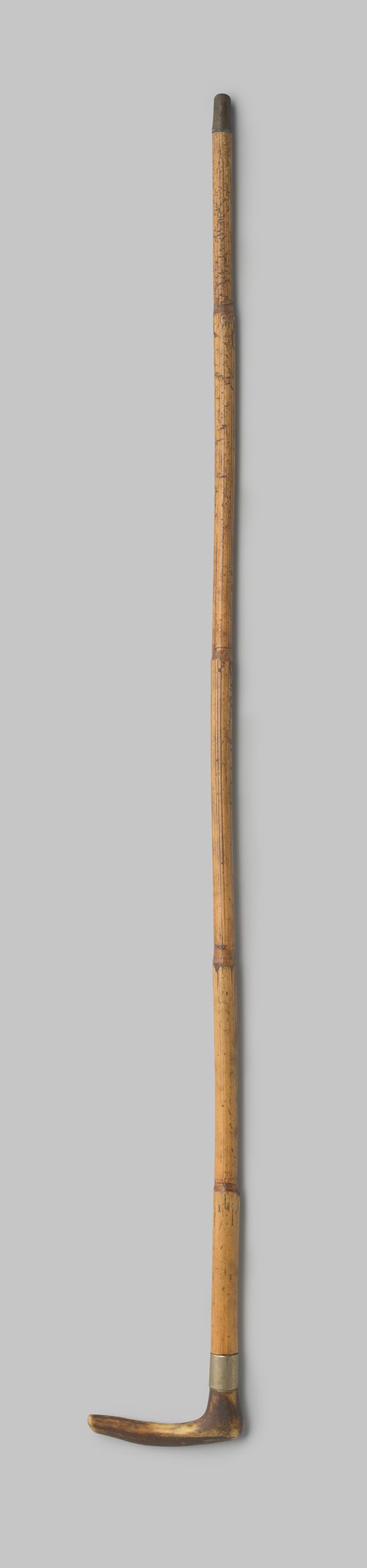
Onderstok van parasol of parapluie van bamboe met rechte haak van hertshoorn, met ring en punt van koper
Gustav Schnitzler