Twee liggende buffels onder een juk gespannen — History & Facts
Could beauty survive in a century of chaos? Claude Lorrain invites us to explore this question in Twee liggende buffels onder een juk gespannen, a serene moment captured in a pastoral landscape that seems untouched by the turmoil of its time. Look to the left at the two majestic buffalos, resting under the careful embrace of a wooden yoke. Their heavy bodies ground the scene, embodying a sense of tranquility amidst a vibrant backdrop. Notice how the golden light of the setting sun bathes the earth, illuminating the rich greens and browns of the landscape.
The delicate brushwork creates a soft atmosphere, while the sweeping curves of the hills draw the viewer’s gaze toward the horizon, where the sky dances in hues of orange and purple. Yet, beneath this idyllic surface lies a tension between the animals' stillness and the world around them. The juxtaposition of the buffalos' weight and the ethereal quality of the light evokes a fleeting moment in time—a reminder of nature's beauty amidst the chaos of human existence. There is an unspoken bond between the elements of nature, suggesting the hope that creation can endure, even flourish, when enveloped in uncertainty. During the 1630s, while painting this work in Italy, Lorrain was at the forefront of the burgeoning Baroque movement.
The period was marked by significant political and social upheaval across Europe, yet his art became a sanctuary of sorts, reflecting a desire for harmony and beauty. In a world often riddled with conflict, Lorrain's landscapes offered both refuge and inspiration, celebrating the power of creation in the face of adversity.
More Artworks by Claude Lorrain
Browse all →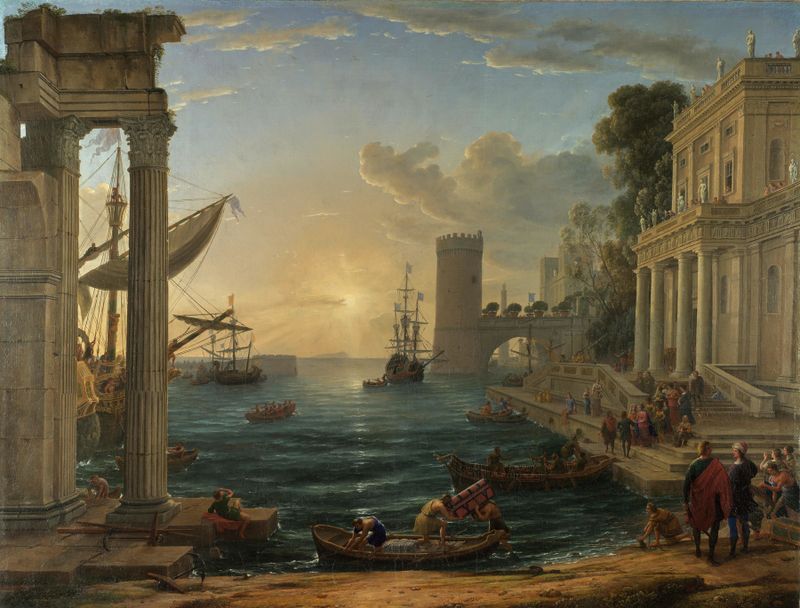
The Embarkation of the Queen of Sheba
Claude Lorrain
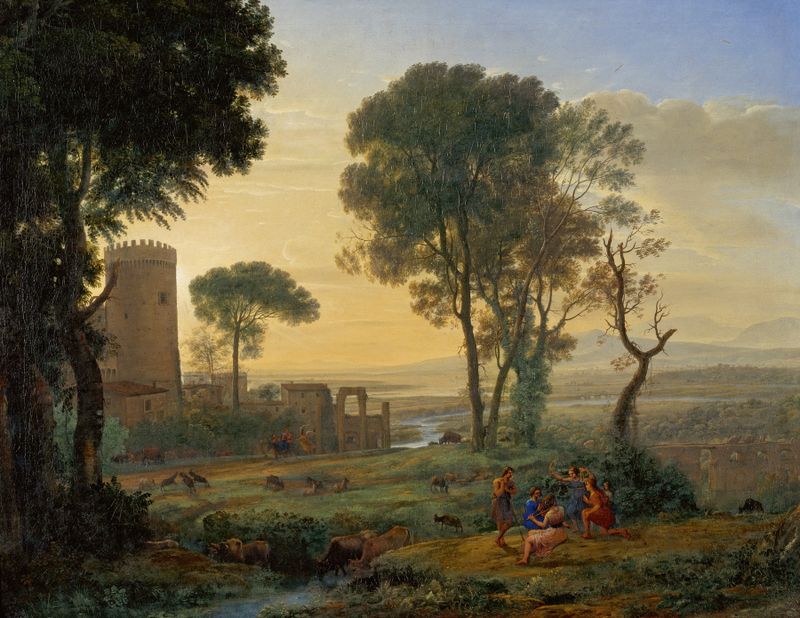
Landscape with the Flight into Egypt
Claude Lorrain
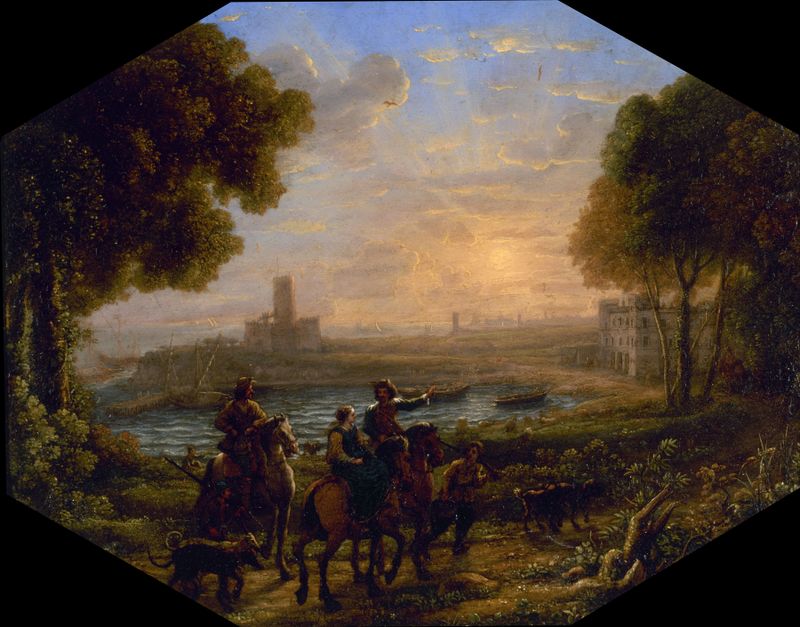
Paysage avec le port de Santa Marinella
Claude Lorrain
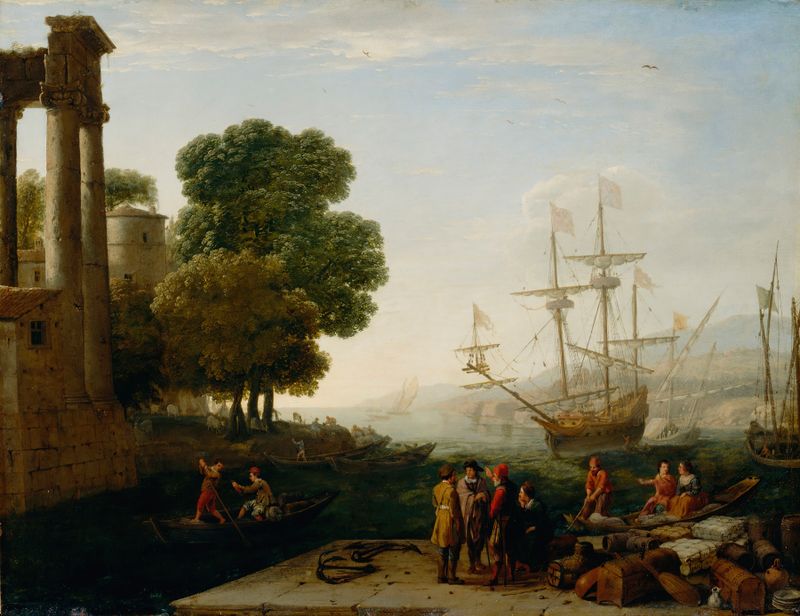
A Seaport at Sunset
Claude Lorrain
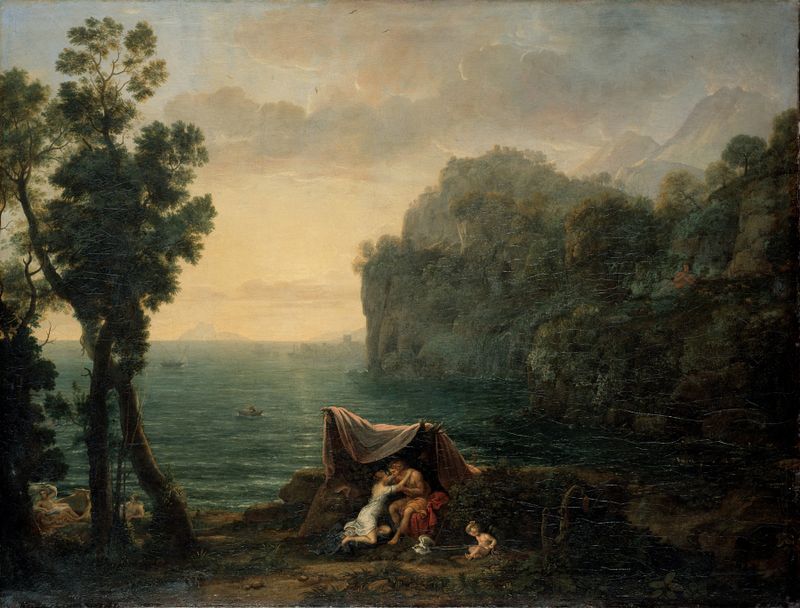
Landscape with Acis and Galatea
Claude Lorrain
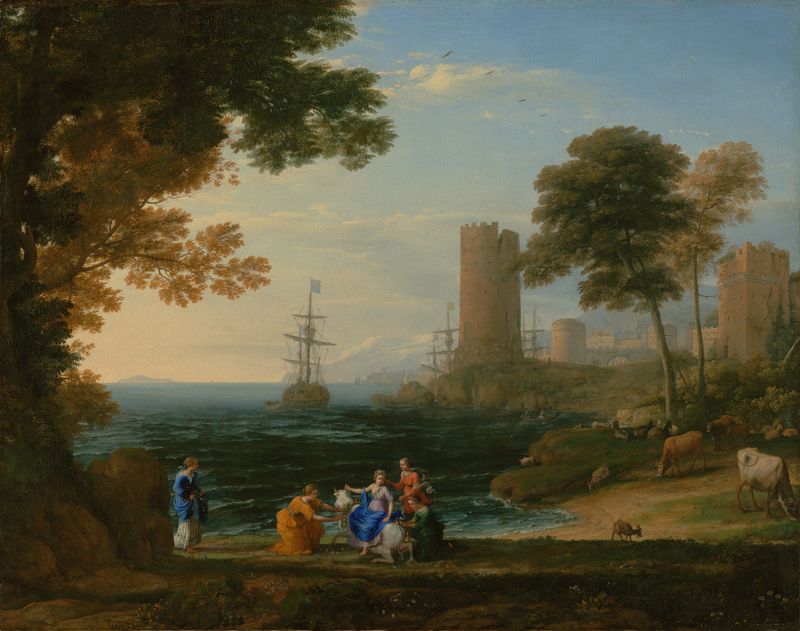
Coast View with the Abduction of Europa
Claude Lorrain
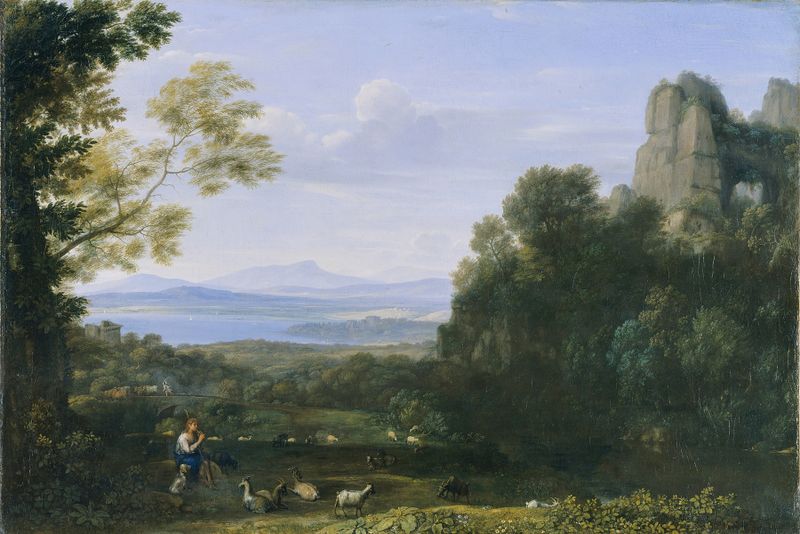
Landscape with Apollo and Mercury
Claude Lorrain
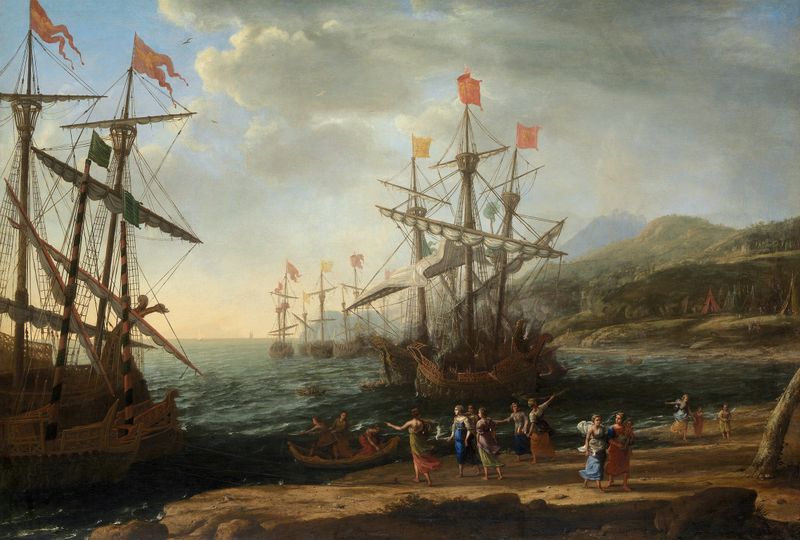
The Trojan Women Setting Fire to Their Fleet
Claude Lorrain
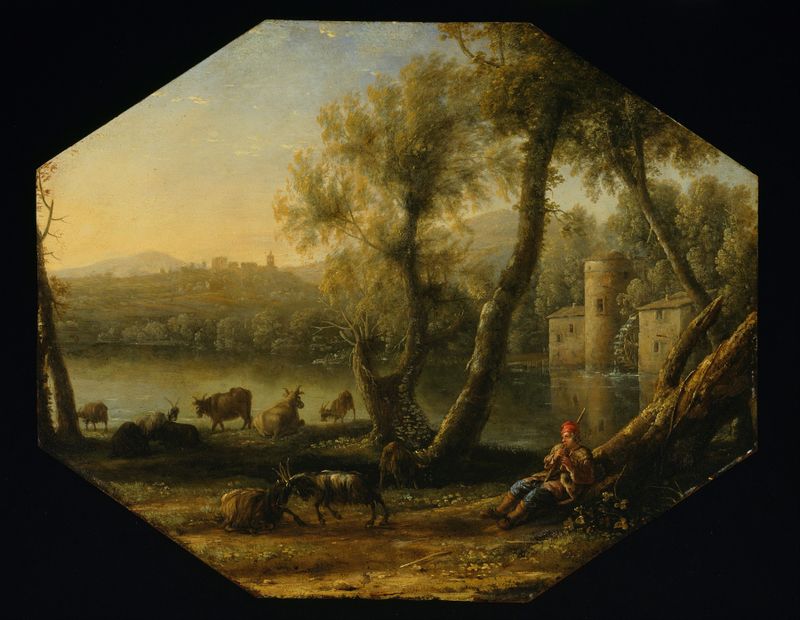
Pastoral landscape
Claude Lorrain
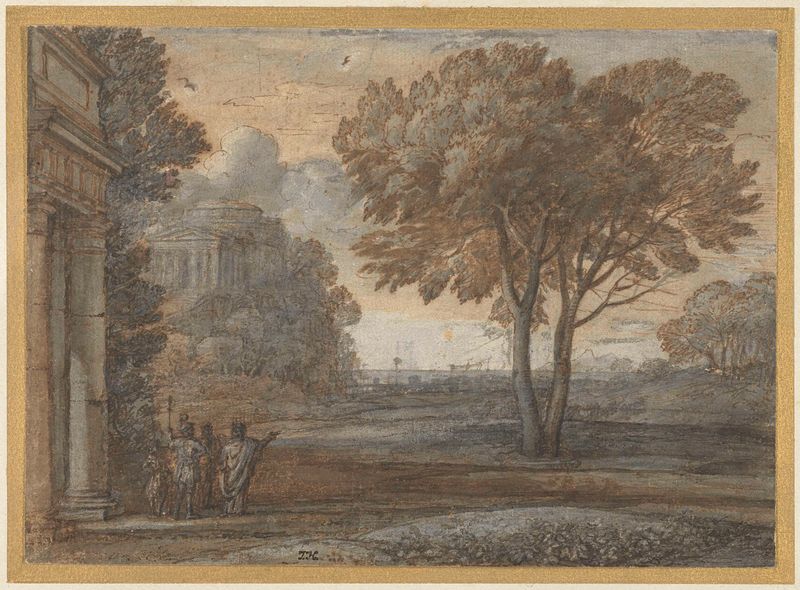
Aeneas op Delos
Claude Lorrain