
Un bastion, effet de neige — History & Facts
Can beauty exist without sorrow? In the delicate interplay of light and shadow, a transformation unfolds, revealing the intricate layers of meaning in this piece. Focus on the foreground, where the majestic bastion rises, its stonework adorned with a soft layer of snow. The cool, muted palette of whites and grays contrasts beautifully with the stark, solid architecture. Notice the way the snowflakes shimmer, casting an ephemeral glow that transforms the rigid fortress into a dreamlike spectacle.
Guérard employs deft brushstrokes to capture the serene beauty of winter, inviting viewers to linger on the fleeting moment of stillness. Hidden within this tranquil scene is a tension between strength and vulnerability. The bastion, a symbol of defense, stands resolute against the soft touch of nature, hinting at the fragility of human creations when faced with the relentless passage of time. The snow, while beautiful, also suggests a gradual erosion; it blankets the structure, obscuring its sharp lines and reminding us of nature’s quiet power to reclaim.
This duality speaks to the complexity of transformation—how beauty can emerge from desolation. Henri-Charles Guérard created this artwork in 1888, during a period marked by the rise of Impressionism in France. Living in Paris, he was deeply influenced by the changing landscape of art, which was shifting towards capturing ephemeral moments. His focus on light and atmosphere reflects this artistic evolution and personal exploration, allowing him to convey both the beauty of the present and the inevitable changes that come with time.
More Artworks by Henri-Charles Guérard
Browse all →
Paris, la rue Cortot, Montmartre
Henri-Charles Guérard
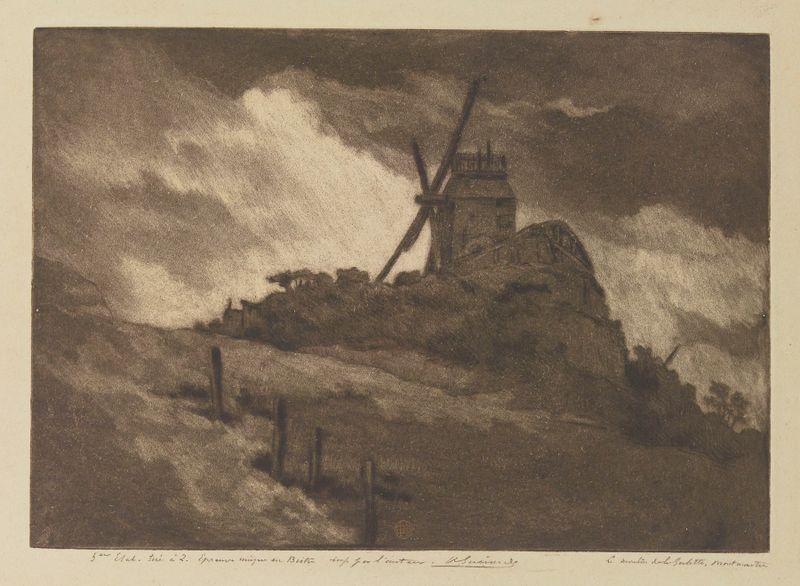
Le moulin de la Galette, Montmartre
Henri-Charles Guérard
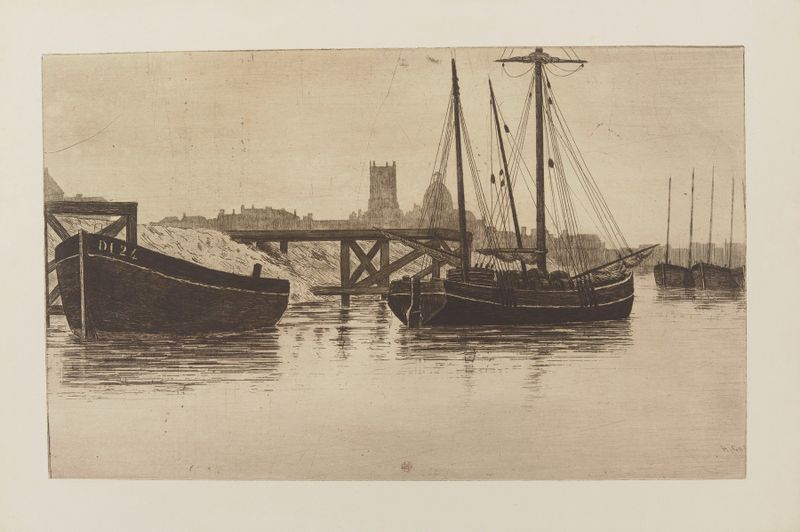
Débarquement de créosote, Retenue, Dieppe
Henri-Charles Guérard
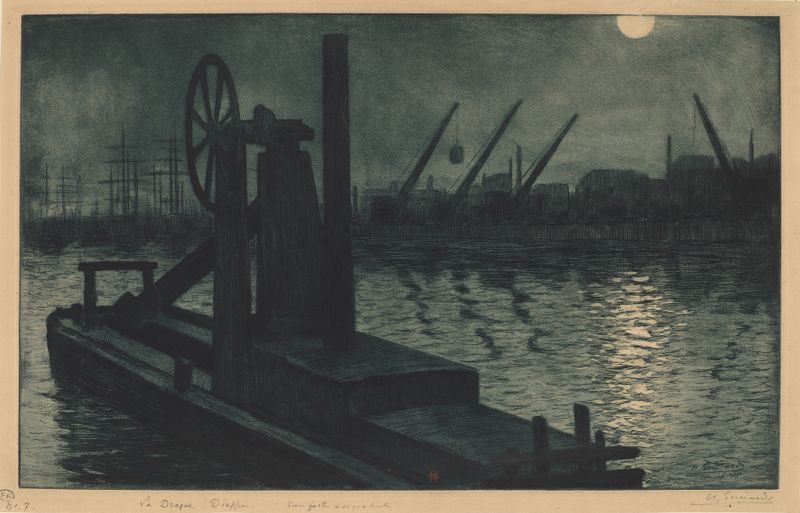
La Drague Dieppe (A Dredger in Dieppe Harbor by Moonlight)
Henri-Charles Guérard
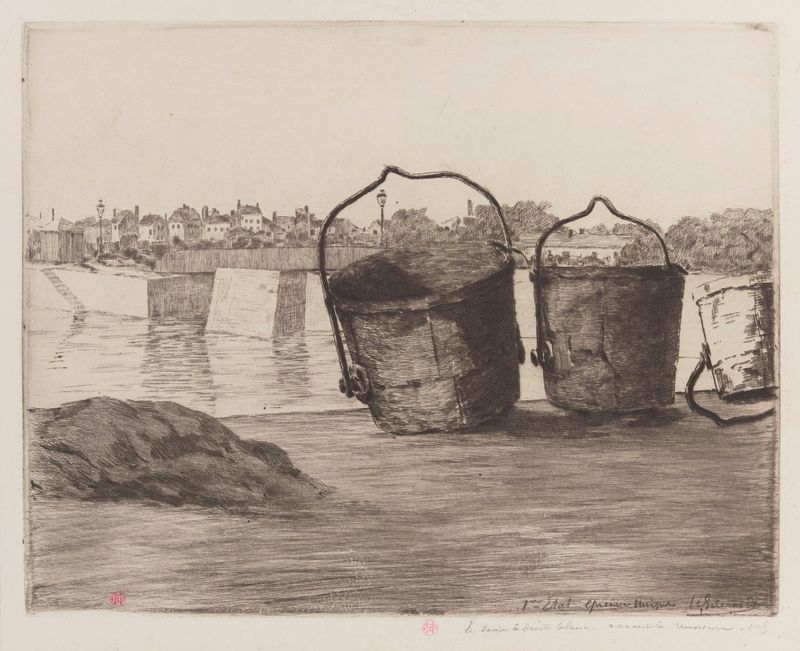
Quai au charbon, Honfleur
Henri-Charles Guérard
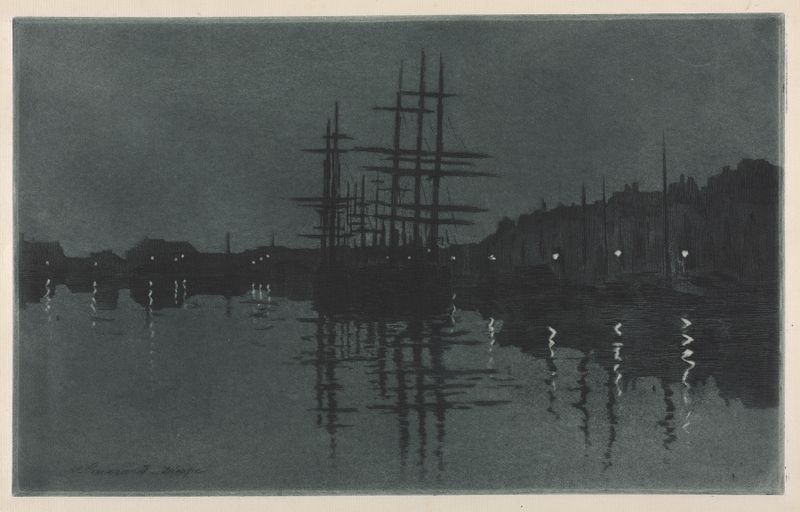
Effect of Moon at Dieppe
Henri-Charles Guérard

Escalier de la cale au Pollet, Dieppe
Henri-Charles Guérard

Venise (l’entrée du Grand canal, près de la Piazetta)
Henri-Charles Guérard

Le pêcheur au carrelet
Henri-Charles Guérard

Patineurs sur le lac d’Annecy
Henri-Charles Guérard
More Architecture Art
Browse all →
The statue of Liberty
Frédéric Auguste Bartholdi

View of Houses in Delft, Known as ‘The Little Street’
Johannes Vermeer

View of Houses in Delft, Known as ‘The Little Street’
Johannes Vermeer

The Cathedral in Rouen. The portal, Grey Weather
Claude Monet

The yellow house
Vincent van Gogh

The Church in Auvers-sur-Oise, View from the Chevet
Vincent van Gogh