
Un soir, bords de Rhône à Rix — History & Facts
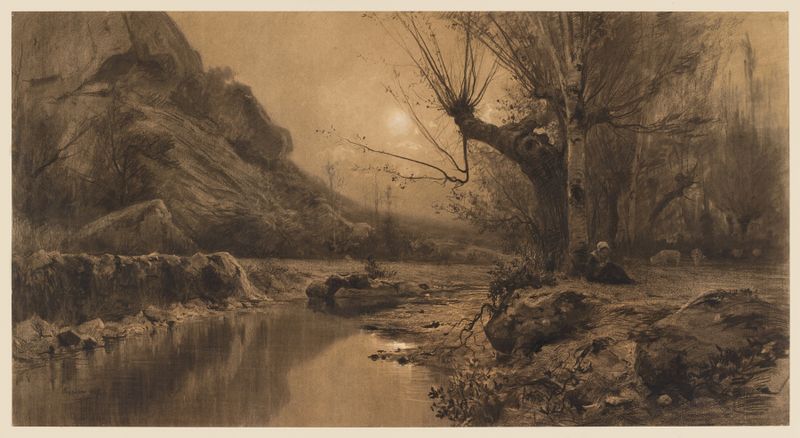
Who listens when art speaks of silence? In Un soir, bords de Rhône à Rix, the quietude of twilight becomes a language of its own, whispering the nuances of color and emotion. Look to the left at the gentle caress of the Rhône River, where the water glimmers with shades of deep indigo and soft mauve. The horizon bathed in a golden hue draws the eye, accentuating the silhouettes of trees that frame the scene. This careful composition creates a harmonious balance, where the earthy tones of the landscape meld seamlessly with the ethereal sky, inviting contemplation of the passage of time and the day's end. Within this tranquil tableau, contrasts arise that pulse beneath the surface.
The warm glow of the sunset juxtaposes the cool, reflective water, evoking a sense of longing and transience. The brushwork captures the merging of day into night, hinting at the cycle of life itself—fleeting moments captured in paint that elevate the mundane to the sublime. Each stroke speaks to an emotional resonance, suggesting stories of introspection along the riverbanks, where light and shadow dance in tandem. In 1869, Adolphe Appian painted this scene during a period of significant exploration in landscape painting.
Living in France, he was influenced by the shifts in artistic thought that emphasized naturalism. As he captured the essence of the Rhône at dusk, he was not only expressing his own connection to nature but also contributing to a broader dialogue within the art world that sought to find beauty and meaning in simplicity and stillness.
More Artworks by Adolphe Appian
Browse all →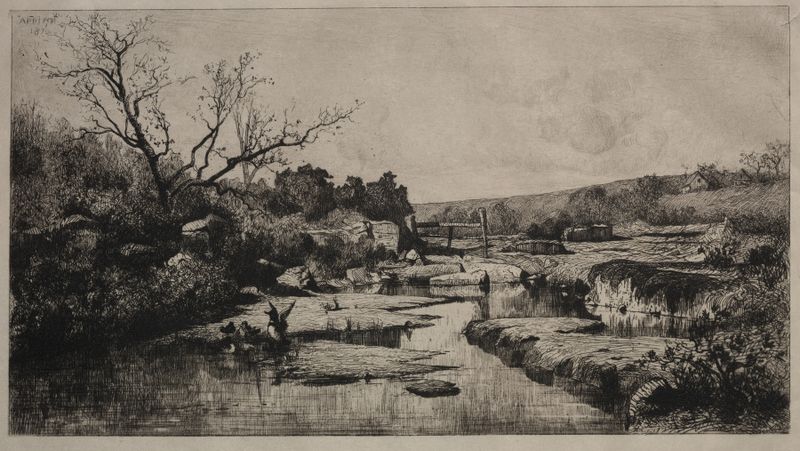
Source of the Albarine
Adolphe Appian
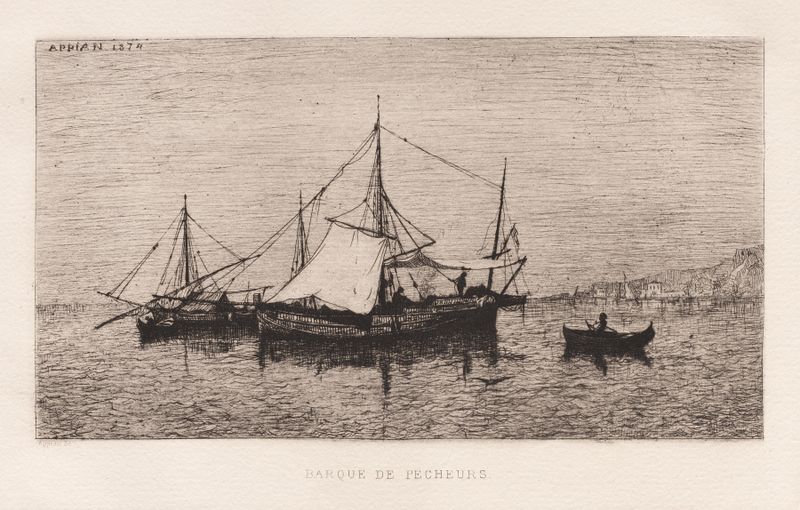
Barque de Pecheurs
Adolphe Appian
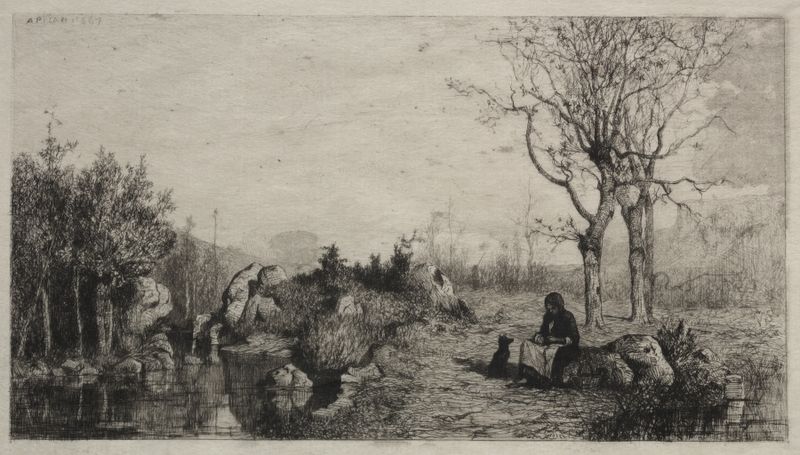
Shore of a Stream at Rossillon
Adolphe Appian

A Pond
Adolphe Appian

At Valromay (Ain)
Adolphe Appian

Woman Seated at the Edge of a Pond
Adolphe Appian
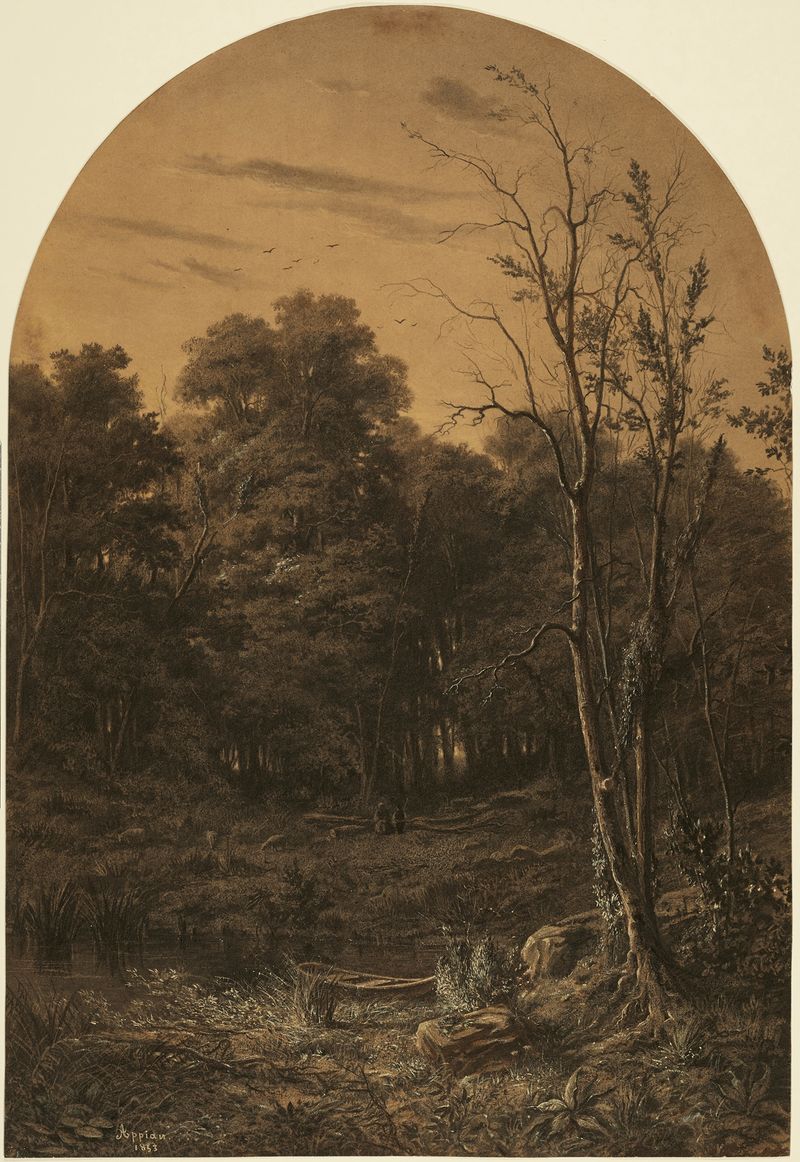
Forest Landscape near a Pond
Adolphe Appian
In the Valromey Valley, near the Rhône River
Adolphe Appian
Bord de mer
Adolphe Appian

Pond at the Edge of the Wood
Adolphe Appian





