
Unloading the catch in Freshwater Bay — History & Facts
The weight of loss lingers long after the last fish has been caught, the net left empty, and the shore abandoned. In the stillness of Freshwater Bay, the remnants of a bustling day fade into the twilight, leaving an ache intertwined with the beauty of nature. Look to the center of the canvas, where fishermen, hunched and weary, unload their modest catch. Notice how the light falls upon the shimmering scales of the fish, glistening like fleeting memories against the muted browns and deep blues of the sea.
The delicate brushwork captures the textures of the nets and the weathered skin of the men, whose expressions reveal an unspoken camaraderie amidst the toil. This careful attention to detail draws the eye, inviting reflection on the lives entwined with this labor. Yet, beneath the surface, there is a palpable tension in the scene. The heavy clouds above threaten to overshadow the moment, hinting at a storm both literal and metaphorical.
The fishermen, while engaged in their work, seem distant from the vibrant colors of their catch, a striking contrast that speaks to the relentless cycle of life and loss. Each movement carries the weight of deeper narratives—dreams deferred, the fragility of nature's bounty, and the haunting inevitability of change. In 1857, John Wilson Carmichael painted this scene amid the changing tides of the British art world, where realism emerged as a predominant force. Based in England, he was influenced by the Romantic movement yet sought to capture the everyday lives of ordinary people with authenticity.
At this time, the fishing industry was facing challenges, reflecting broader societal shifts, as Carmichael encapsulated a moment steeped in both beauty and the melancholy of loss that comes with the passage of time.
More Artworks by John Wilson Carmichael
Browse all →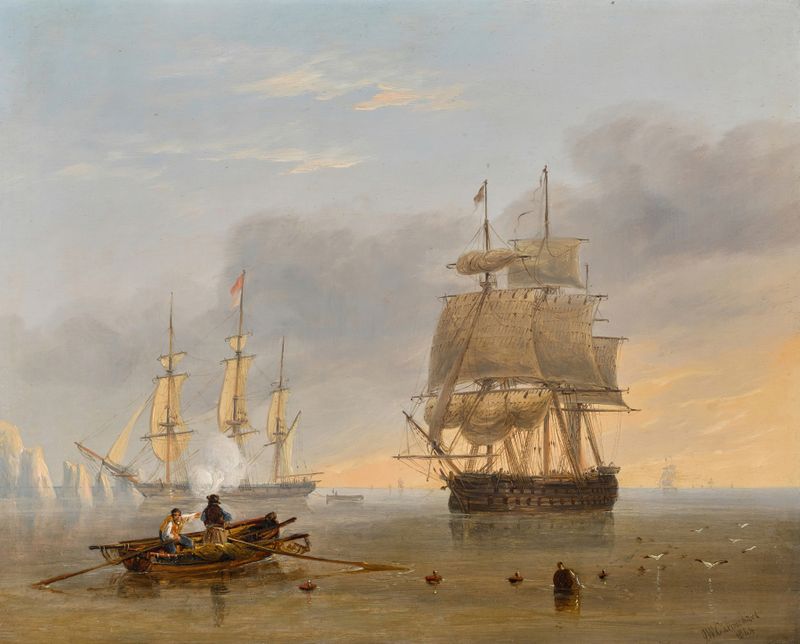
A British Man of War off the Needles, Isle of Wight
John Wilson Carmichael
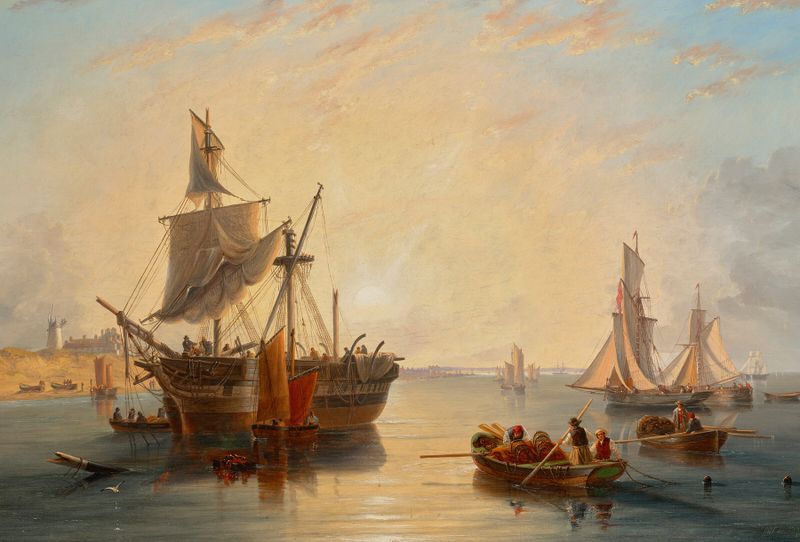
A wreck off Tantallon Castle
John Wilson Carmichael
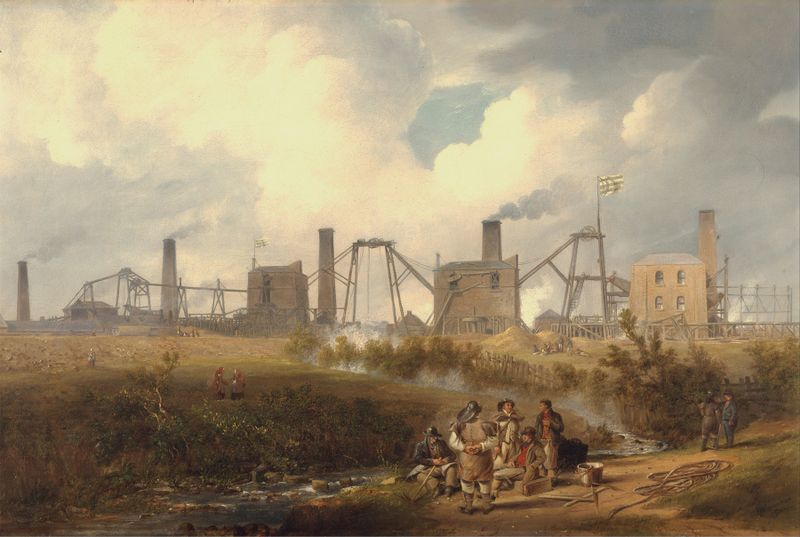
A View of Murton Colliery near Seaham, County Durham
John Wilson Carmichael
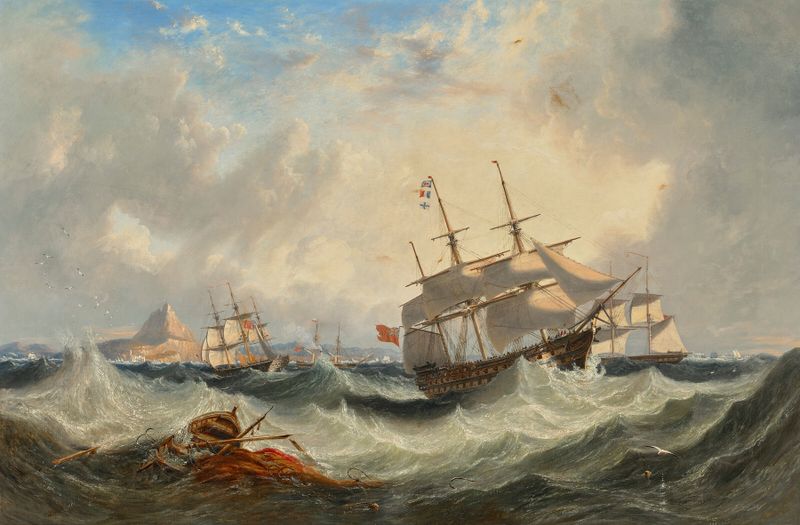
A ’74’ calling for a pilot off Gibraltar with shipping beyond
John Wilson Carmichael
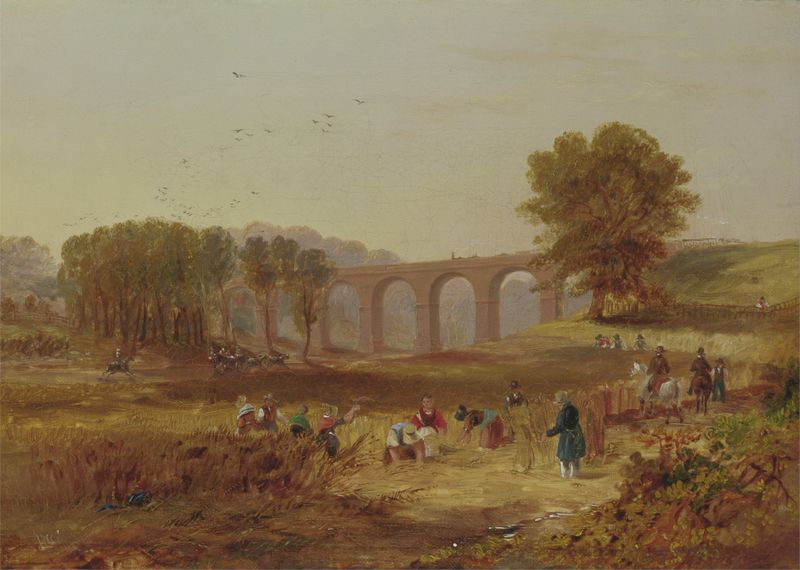
Corby Viaduct, the Newcastle and Carlisle Railway
John Wilson Carmichael
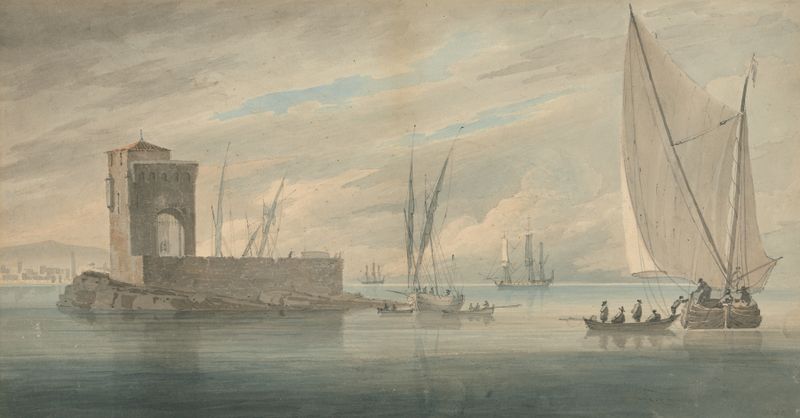
Italian Coast Scene with Island Shipping
John Wilson Carmichael
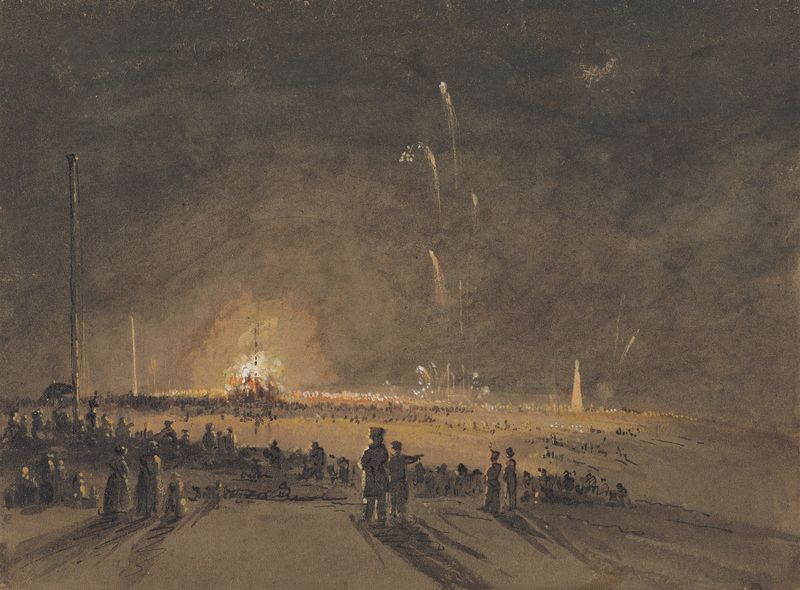
A Fireworks Display
John Wilson Carmichael
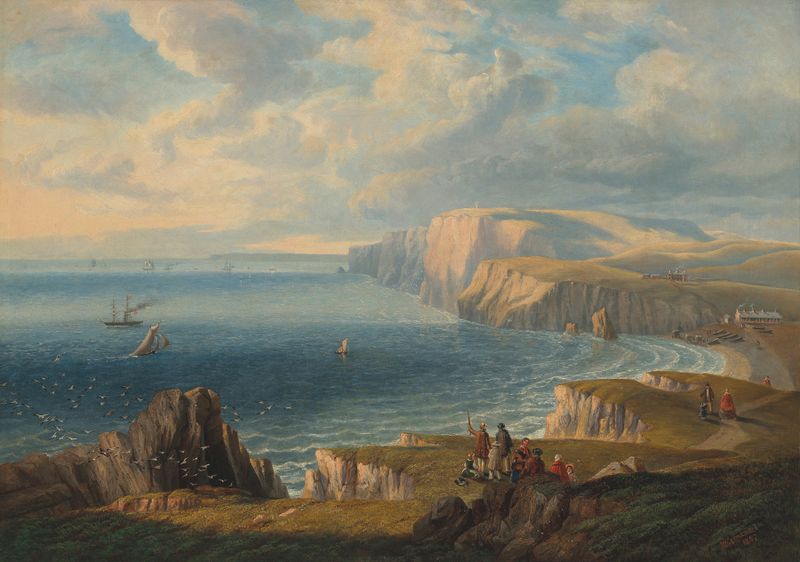
Walkers on the cliffs above Freshwater Bay, viewed from the East
John Wilson Carmichael
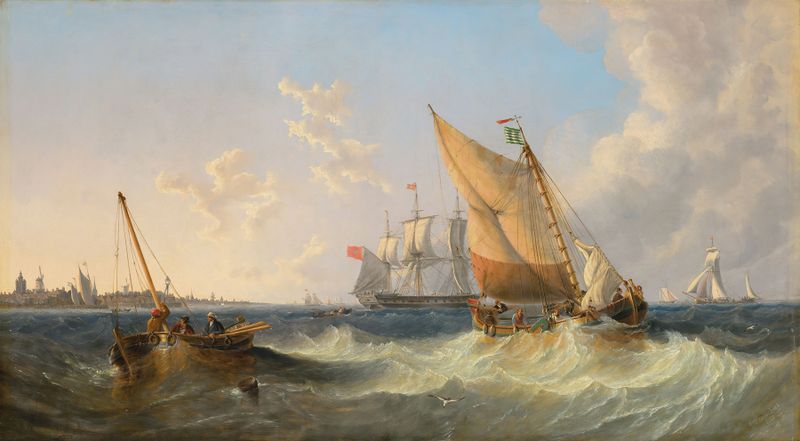
A blustery day on the Brill, near Rotterdam
John Wilson Carmichael
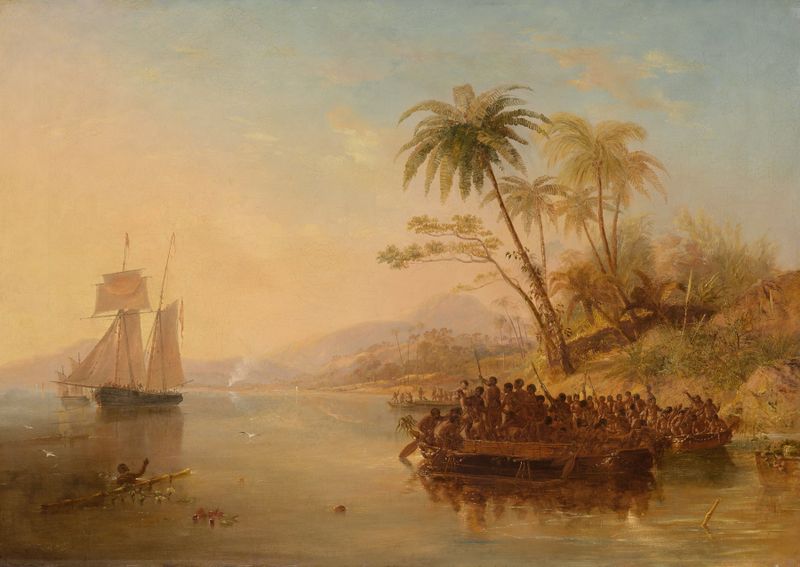
The rescue of William D’Oyly
John Wilson Carmichael





