
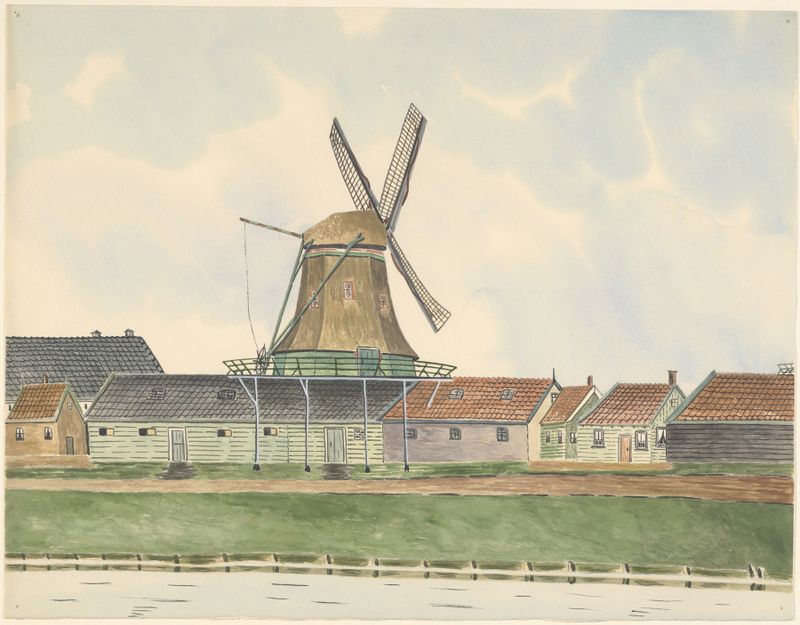
Verfmolen De Rob, aan de oostzijde van de Westerveersloot, hoek Diksloot, verbrand 1888 — History & Facts
In Verfmolen De Rob, aan de oostzijde van de Westerveersloot, hoek Diksloot, verbrand 1888, this notion reverberates through the burnt remnants of a once-vibrant windmill. The charred wood and ashes whisper stories of despair, inviting viewers to confront the fragility of beauty and the haunting shadows of loss. Look closely at the center of the canvas, where the skeletal structure of the windmill stands against a muted sky. Notice how the artist plays with texture, capturing the rough surfaces of the charred beams contrasted against the smoother strokes of the water below.
The palette, dominated by dark browns and grays, is punctuated by the faint glimmers of sunlight struggling to pierce through the smoke, creating an atmosphere tinged with both melancholy and hope. In this work, fear is palpable — not just of decay, but also of memory and the passage of time. The decaying windmill represents not only a physical structure lost to flames but also the emotional landscape of those who witnessed its destruction. The water, calm yet reflective, mirrors a sense of longing and nostalgia, as if the past is forever trapped in its depths.
Each brushstroke reveals a tension between the beauty of the scene and the horror of its reality, urging the viewer to contemplate what legacy remains after devastation. Johannes Nicolaas Eijman created this piece during a period when the Netherlands was grappling with industrial changes and the impacts of modernization. Painted in the late 19th century, it captures a moment of transition, echoing the transformation of landscapes and lives as traditional ways of being succumbed to progress and its inevitable losses. The charred windmill serves as a reminder of both the beauty of craftsmanship and the relentless grip of change in a world moving forward.
More Artworks by Johannes Nicolaas Eijman
Browse all →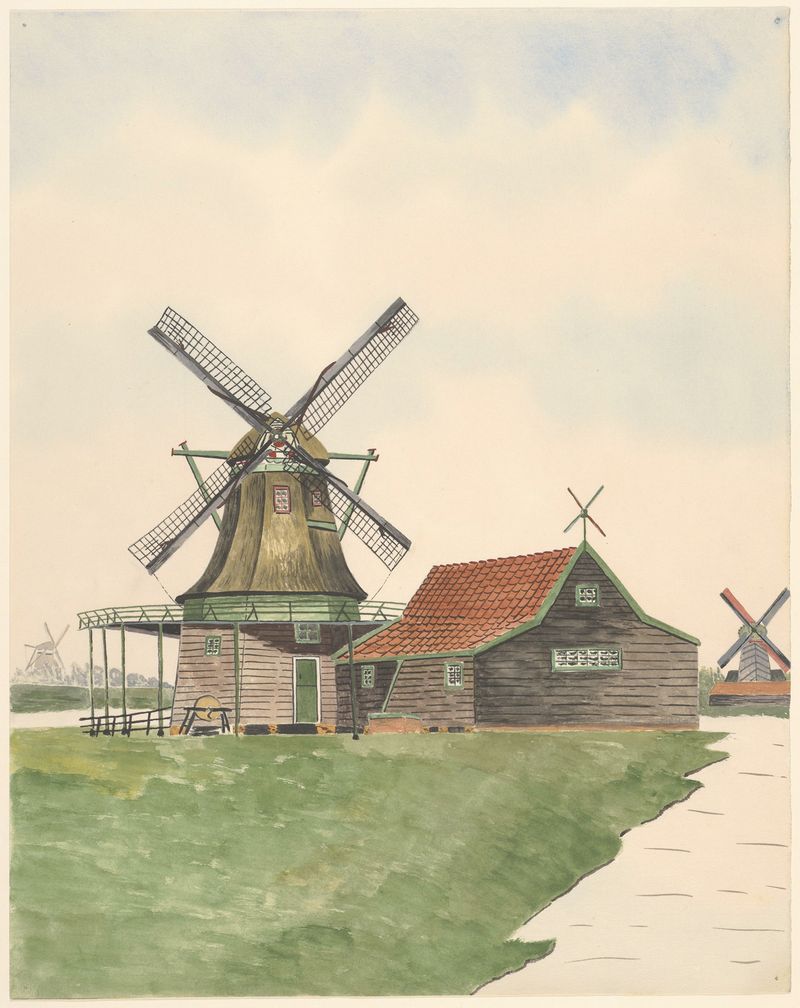
molens; oliemolen De Olievos, aan de Papenpadsloot, gesloopt 1878
Johannes Nicolaas Eijman
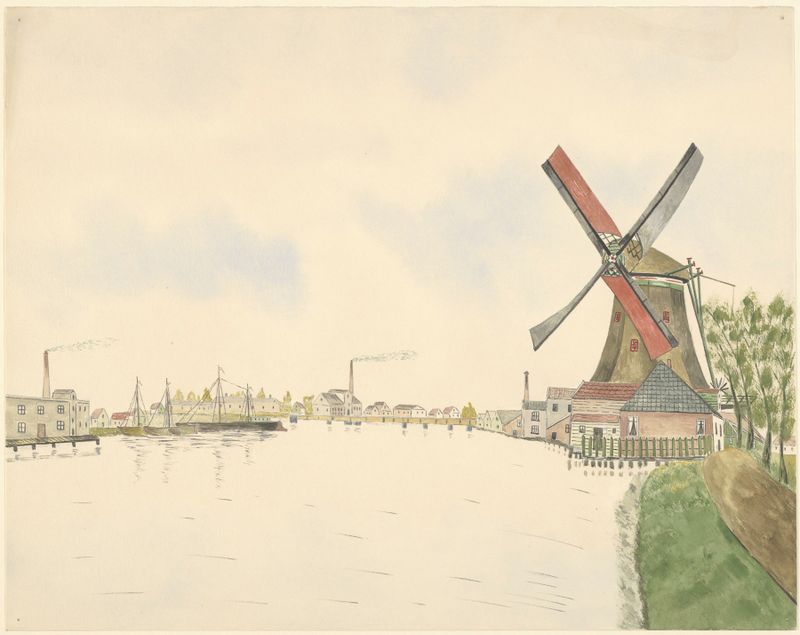
molens; meelmolen De Koker
Johannes Nicolaas Eijman

Papiermolen de Eendracht aan de westzijde van het Zaandammerpad, Wormer
Johannes Nicolaas Eijman
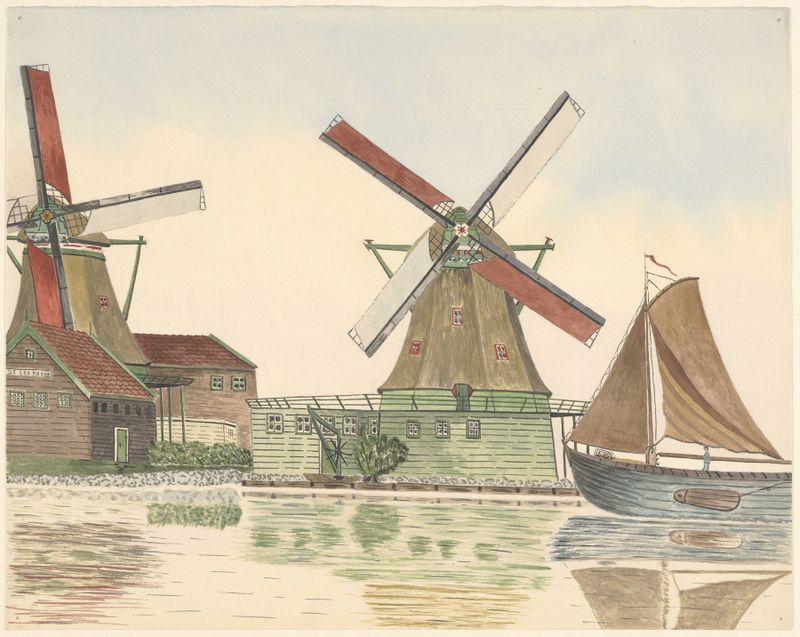
molens; oliemolen De Oude-Zwan, aan de Kalverpoel
Johannes Nicolaas Eijman
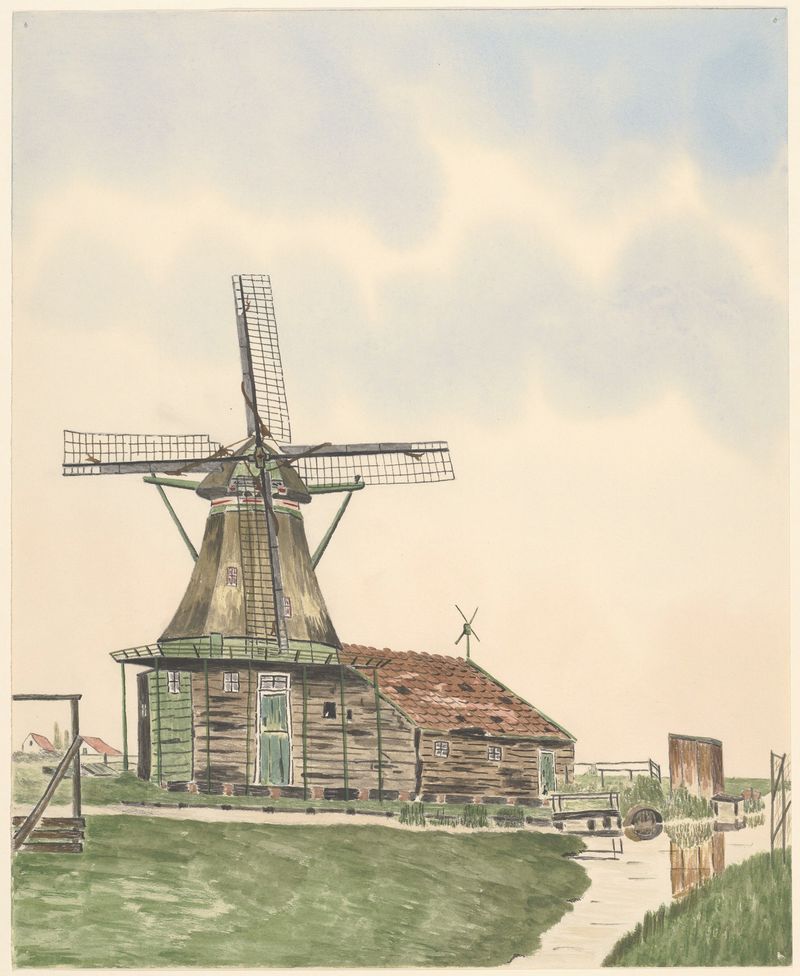
molens; oliemolen Het Oude-Honingvat, Oostzijderveld
Johannes Nicolaas Eijman
molen; oliemolen Het Witte-Paard aan het Zaandijkerwegje, 1893 gesloopt
Johannes Nicolaas Eijman

Op de voorgrond rechts doppenmolen De Prolpot aan de Hemmes, op de achtergrond links twee andere molens
Johannes Nicolaas Eijman
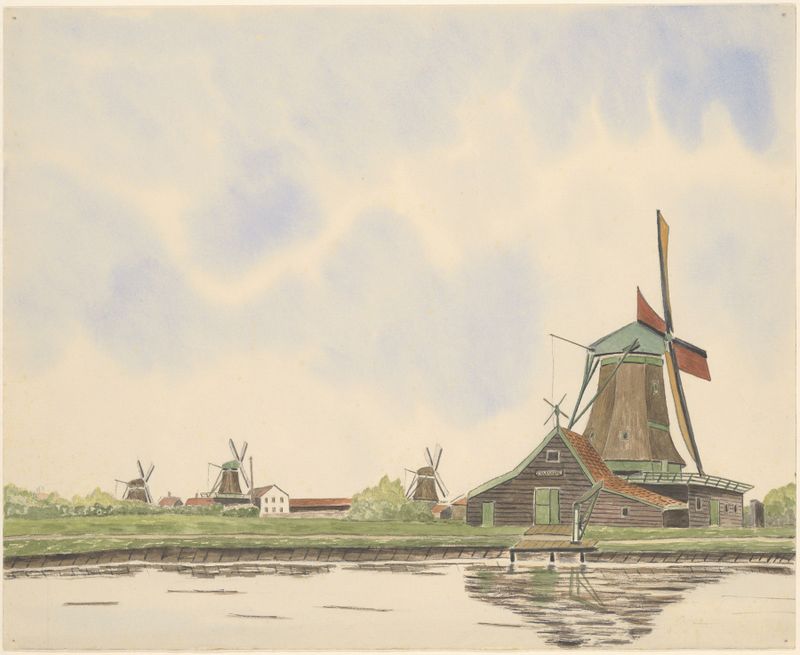
Oliemolen De Kerkuil aan de Zaan, met drie molens op de achtergrond. De Kerkuil stond binnendijks, tegenover de Wormerveerderkerk; afgebroken ca. 1892
Johannes Nicolaas Eijman
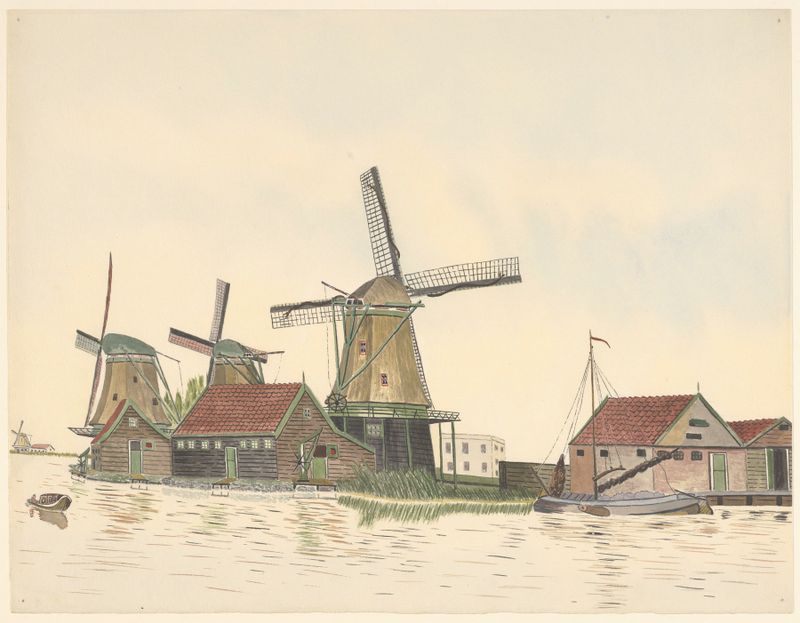
molens; De Ooievaar; De Windhond; De Gans, Kalverringdijk
Johannes Nicolaas Eijman
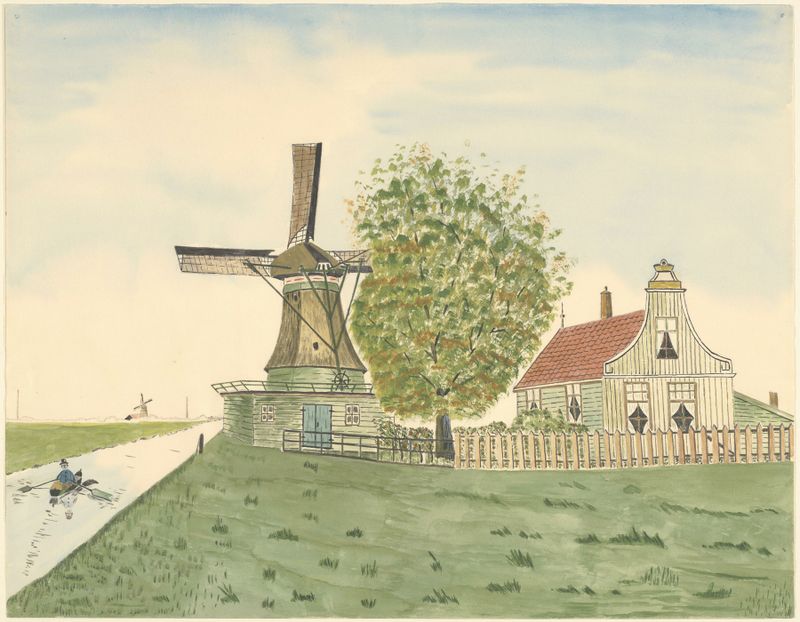
molens; houtzaagmolen De Haan
Johannes Nicolaas Eijman





