
Verger fleuri — History & Facts
Who listens when art speaks of silence? In Verger fleuri, a landscape blooms, yet beneath its vibrant surface lies an unsettling tension that whispers of fear. Look to the left at the row of blossoming fruit trees, their delicate petals almost trembling in the soft light. The warm hues of pink and gold contrast sharply with the deep green foliage that frames the scene, leading the eye to a horizon where the sky deepens into a foreboding blue. Notice how the brushstrokes invite movement, with swirls that evoke a gentle breeze, yet the stillness of the moment suggests a pause, as if nature itself holds its breath. Delve deeper into the interplay of color and light, where the exuberance of the blossoms belies an undercurrent of unease.
The vivid blossoms, while beautiful, hint at fragility, suggesting that such beauty may be fleeting or threatened. The looming shadows at the edges of the canvas further amplify this tension, compelling viewers to ponder the precarity of life's vibrancy in the face of an uncertain future. Gustave Cariot painted Verger fleuri in 1904, during a period of significant artistic exploration and change. Working in France, he was influenced by the Impressionist movement while carving out his unique style that balanced realism with emotional depth.
At the time, the art world was shifting towards more abstract forms, yet Cariot chose to embrace the evocative power of nature, capturing both its beauty and its inherent fears.
More Artworks by Gustave Cariot
Browse all →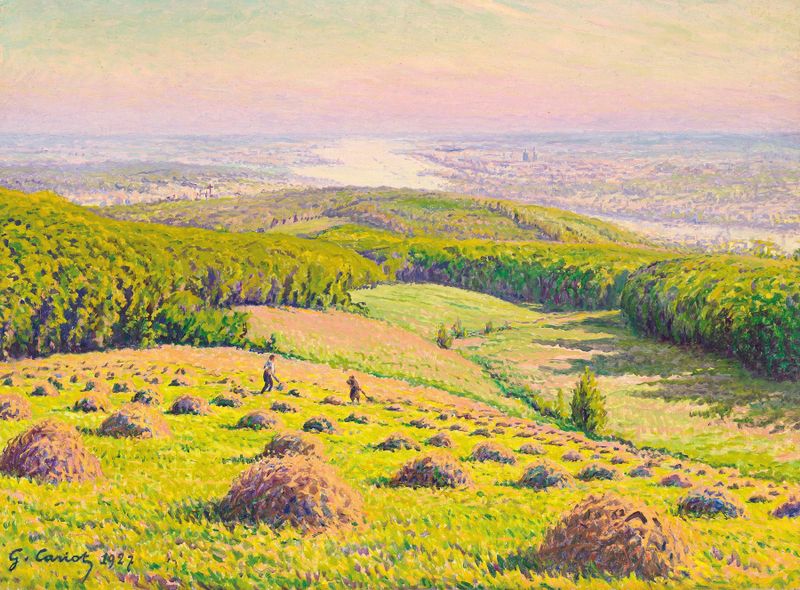
La vallée
Gustave Cariot

Le Jardin
Gustave Cariot

Les meules
Gustave Cariot
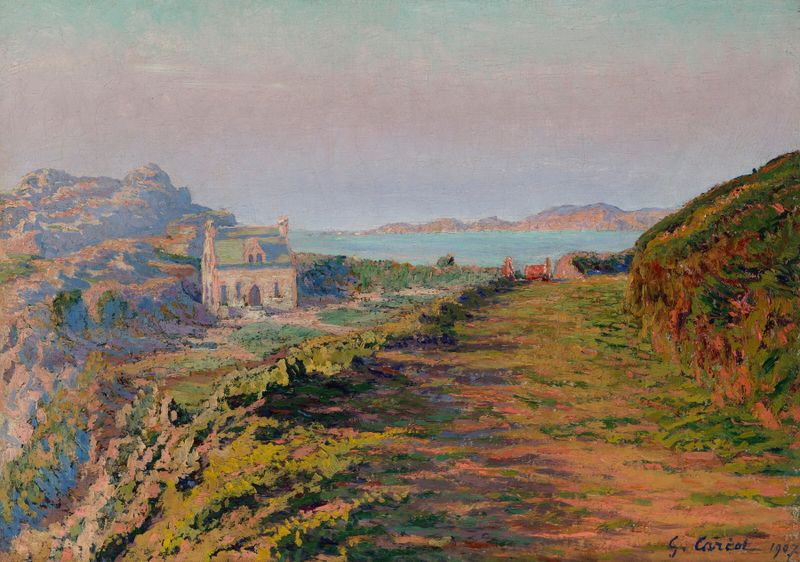
Maison Pen ar C’hastel à la pointe du Château, Perros-Guirrec
Gustave Cariot
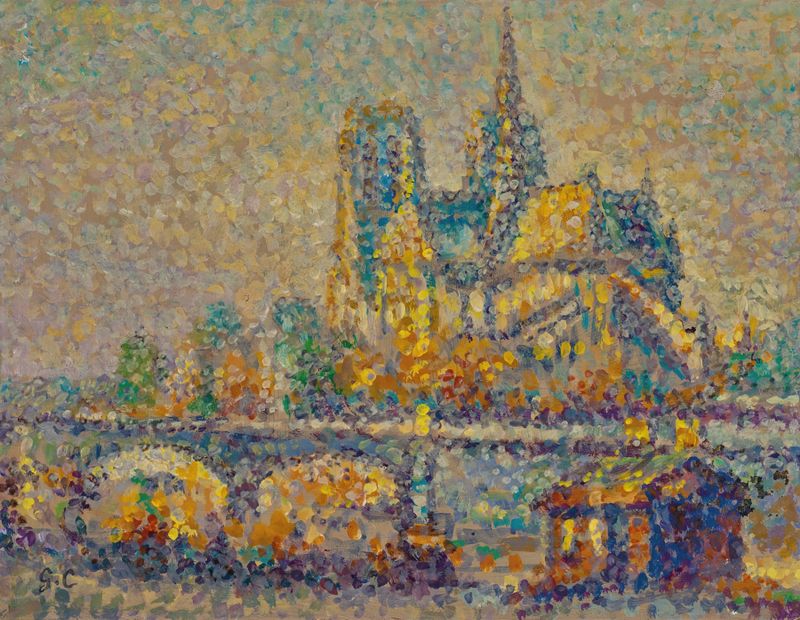
Notre-Dame de Paris
Gustave Cariot
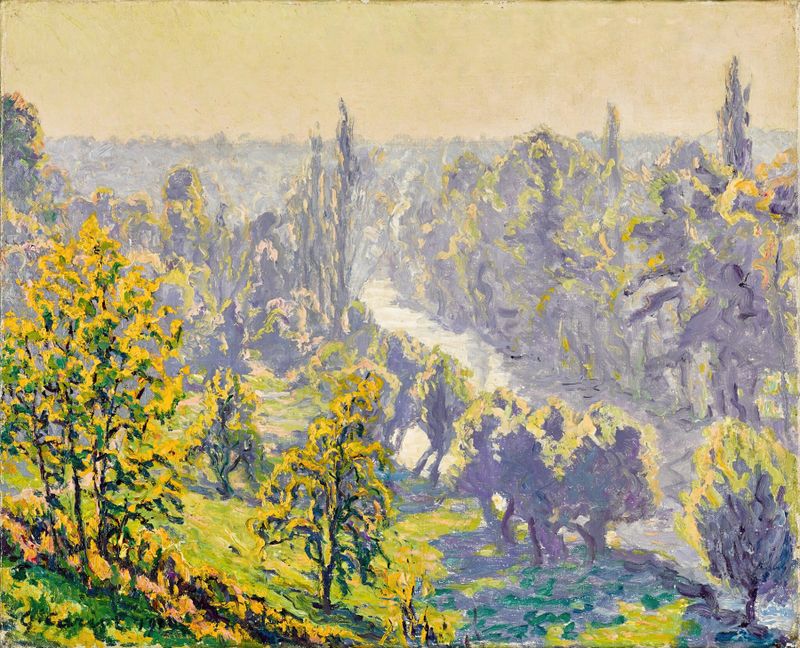
Périgny, automne, matinée sur l’Yerres
Gustave Cariot
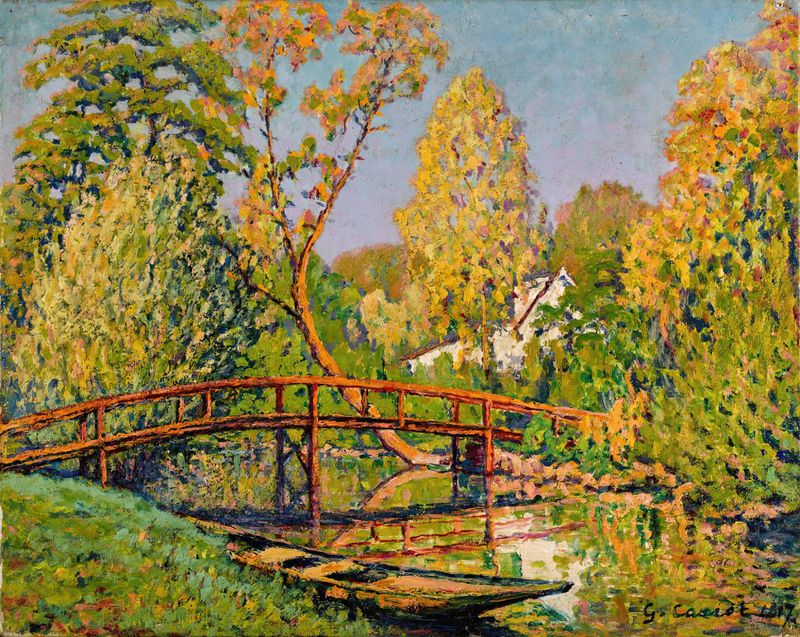
Périgny, pont sur l’Yerres
Gustave Cariot
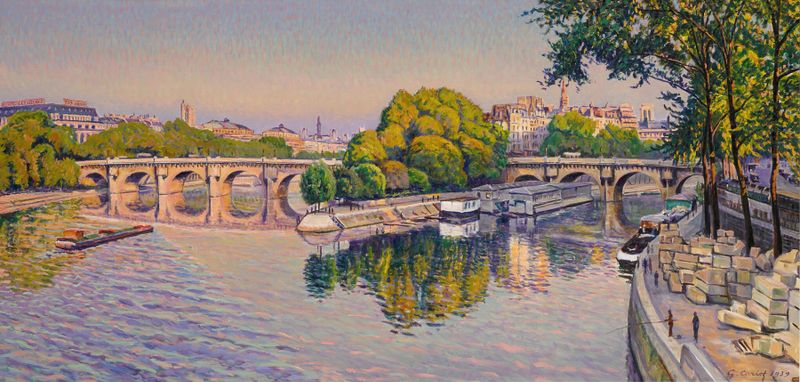
Le Pont-Neuf, eté, 20 heures
Gustave Cariot

Moulin de Périgny
Gustave Cariot

Le chemin à Mandres
Gustave Cariot





