Viehtränke im Wald, links ein Jäger — History & Analysis
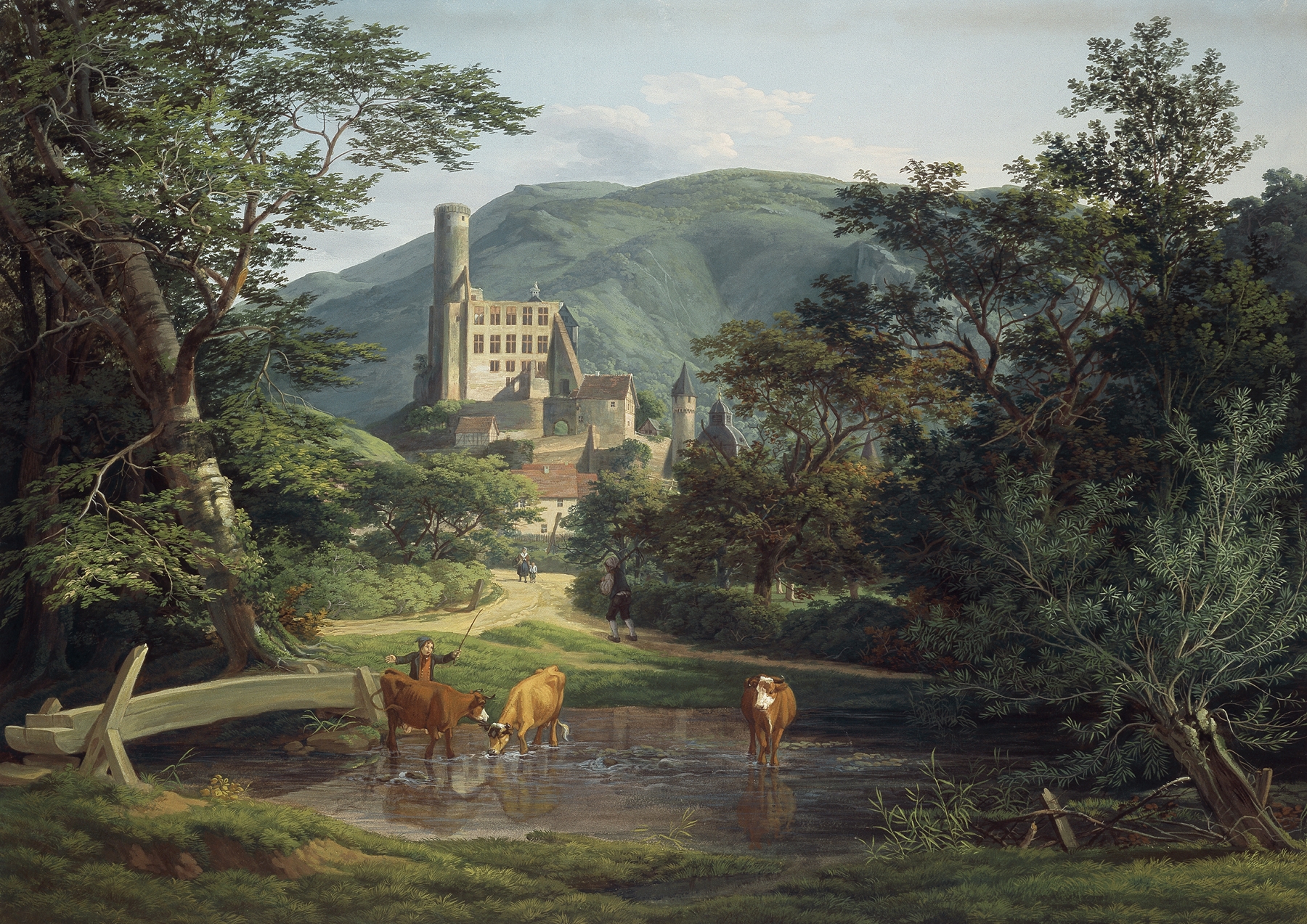
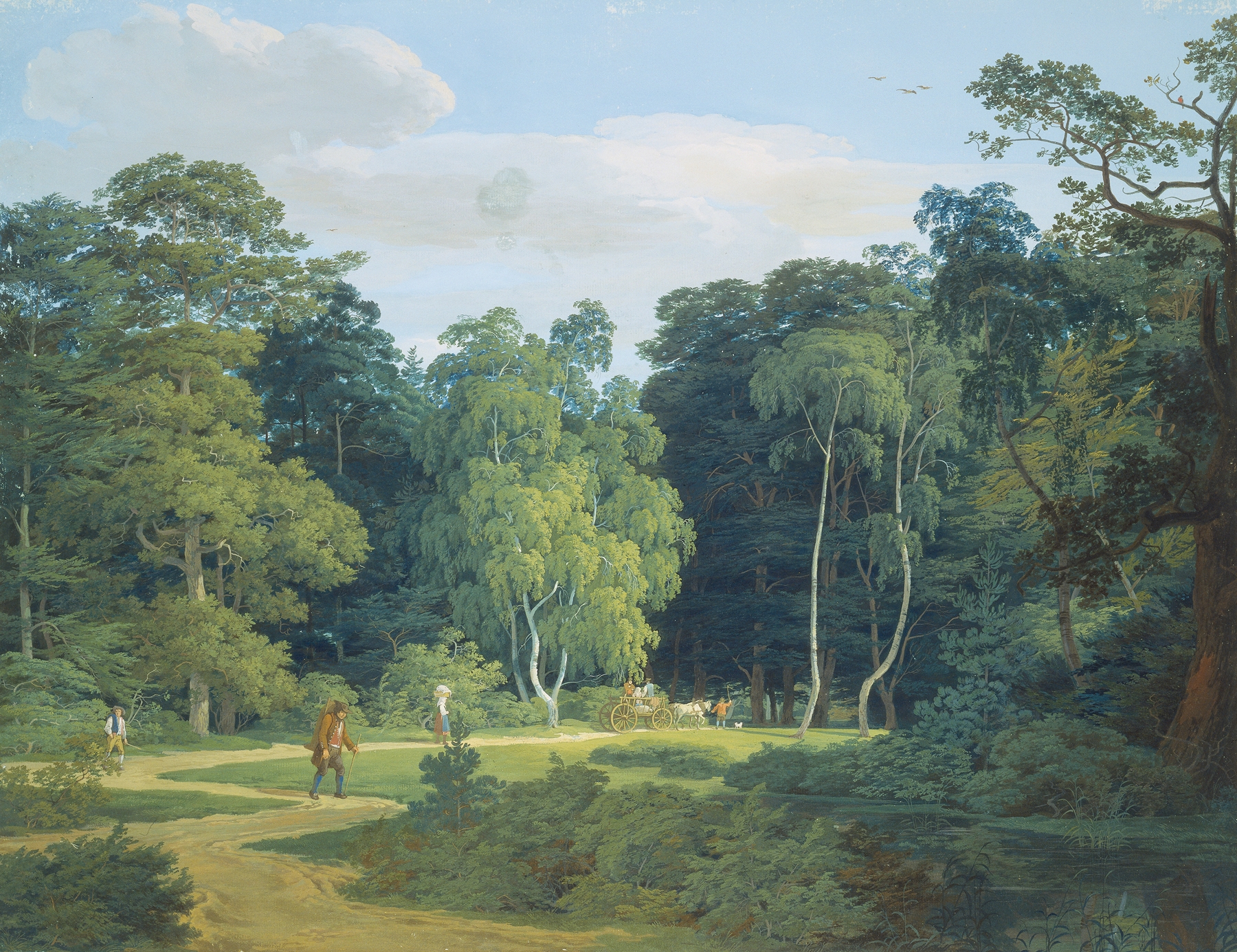
Can paint confess what words never could? In the tranquil embrace of a forest clearing, a world beyond dreams emerges, whispering secrets to those who dare to listen. Look to the left where the figure of a hunter stands, poised and alert, his presence a striking contrast against the lush, verdant backdrop. Notice the intricate brushwork that brings the leaves to life, their greens shimmering under a soft, dappled light.
The gentle flow of water captures the attention next, reflecting the surrounding foliage, grounding the scene in a sense of serenity that feels almost otherworldly. The composition balances the quiet strength of the hunter with the ethereal beauty of nature, evoking a moment suspended in time. The interplay of light and shadow reveals deeper meanings; the hunter, a protector of nature, suggests humanity's complex relationship with the wild. His stillness against the vibrant life surrounding him invites contemplation about dominance and harmony.
The gentle ripples of the water further symbolize the fluidity of life and the dreams that intertwine our existence with nature, making the viewer ponder where boundaries lie between man and environment. Anton Radl painted this work in 1805 while in Germany, during a promising period for Romantic landscapes, where the natural world was celebrated as a source of inspiration. As artists explored the emotional resonance of nature, Radl's tranquil scene reflects a calm before the storms of change in society, capturing a moment that speaks to the heart's longing for connection and peace amidst the wilderness.