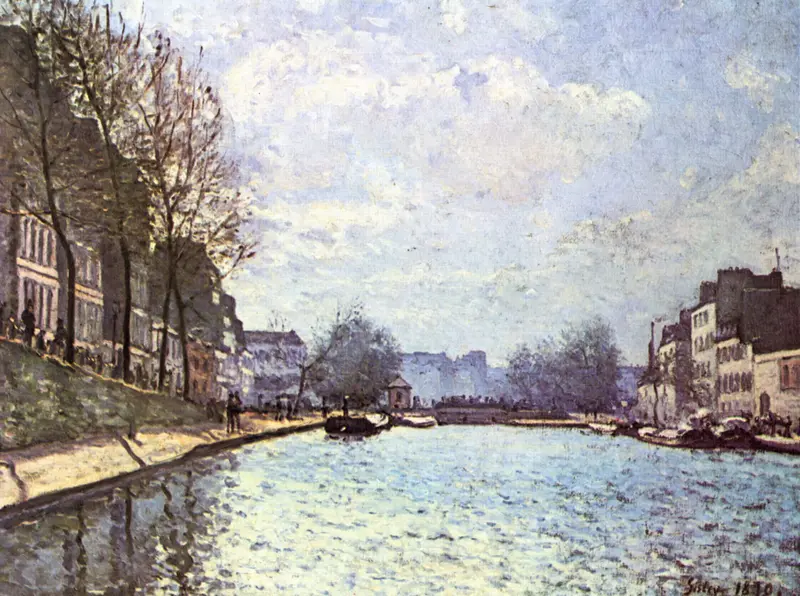
Vieux Paris Vieilles maisons 16 & 18 rue du Cloître Notre Dame — History & Facts
In the heart of an ever-changing city, where memories intertwine with decay, the past whispers through the weathered walls of old homes. How does one capture the fleeting essence of a place so steeped in history? Focus on the intricate details of the parched facades, where faded colors seem to tell stories of a bygone era. Notice how the artist employs a muted palette, allowing the ochres and greys to breathe life into the crumbling structures.
Look closely at the windows, their cracked glass reflecting the remnants of a vibrant life long extinguished. Each brushstroke draws the eye deeper, revealing the gentle curves and sharp angles of architecture that has withstood time, but not without bearing the scars of neglect. As you explore this canvas, consider the tension between beauty and decay. The soft light illuminates the imperfections, casting shadows that echo the passage of time.
A solitary flowerpot on a ledge speaks to a lingering presence, a memory of care amidst the desolation. This juxtaposition invites contemplation: what stories lie hidden behind those walls? What laughter, love, and loss have echoed in those corridors? F. Séguin created this piece in 1896, a time when the bustling modernity of Paris was encroaching upon its historical roots.
Living in an era where artists began to embrace Impressionism, he sought to capture the essence of his beloved city before it vanished under the weight of progress. In a world rapidly changing, this work stands as a poignant reminder of what is often forgotten in the rush toward the future.
More Artworks by F. Séguin

Rue Brantôme. (anciennement rue des Petits Champs donnant rue Saint Martin et rue Beaubourg)
F. Séguin
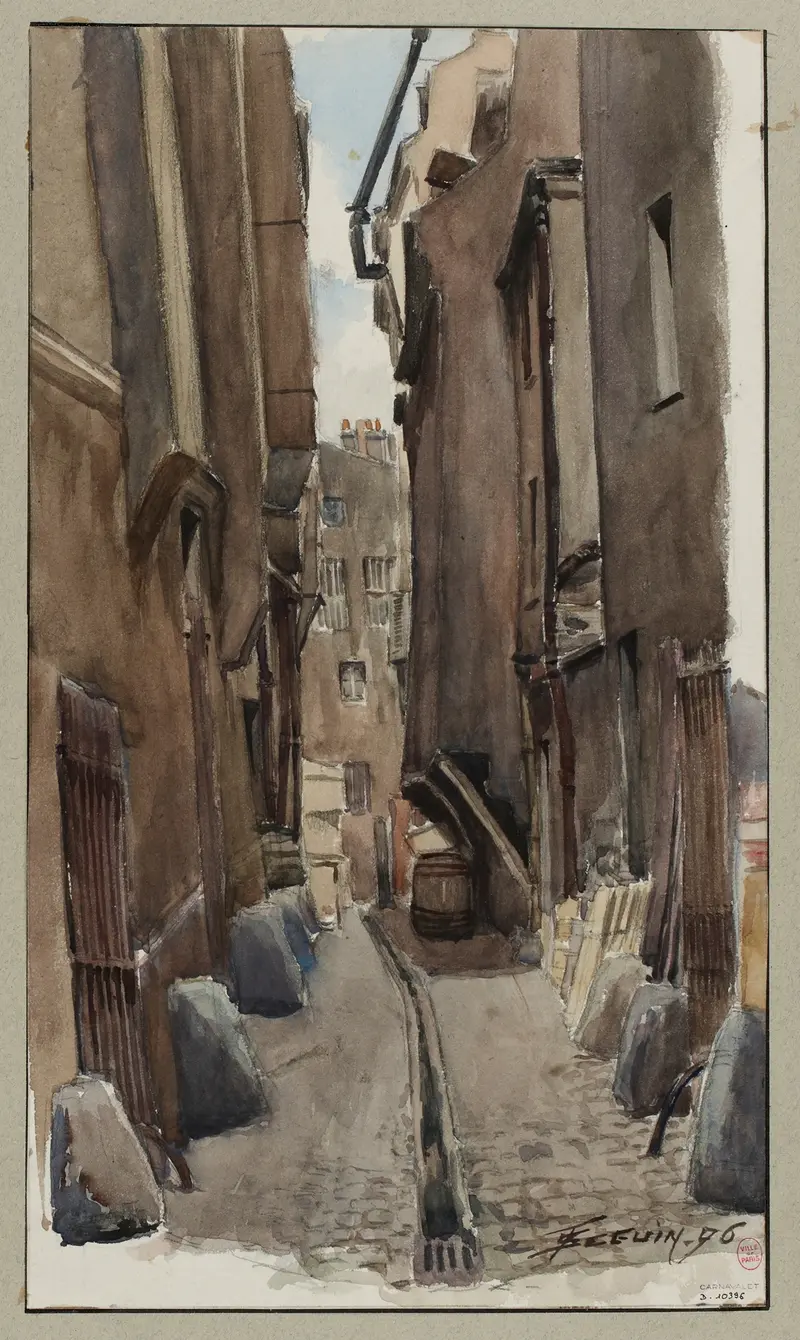
Le Cul de sac du Bœuf, (rue Saint Merri)
F. Séguin
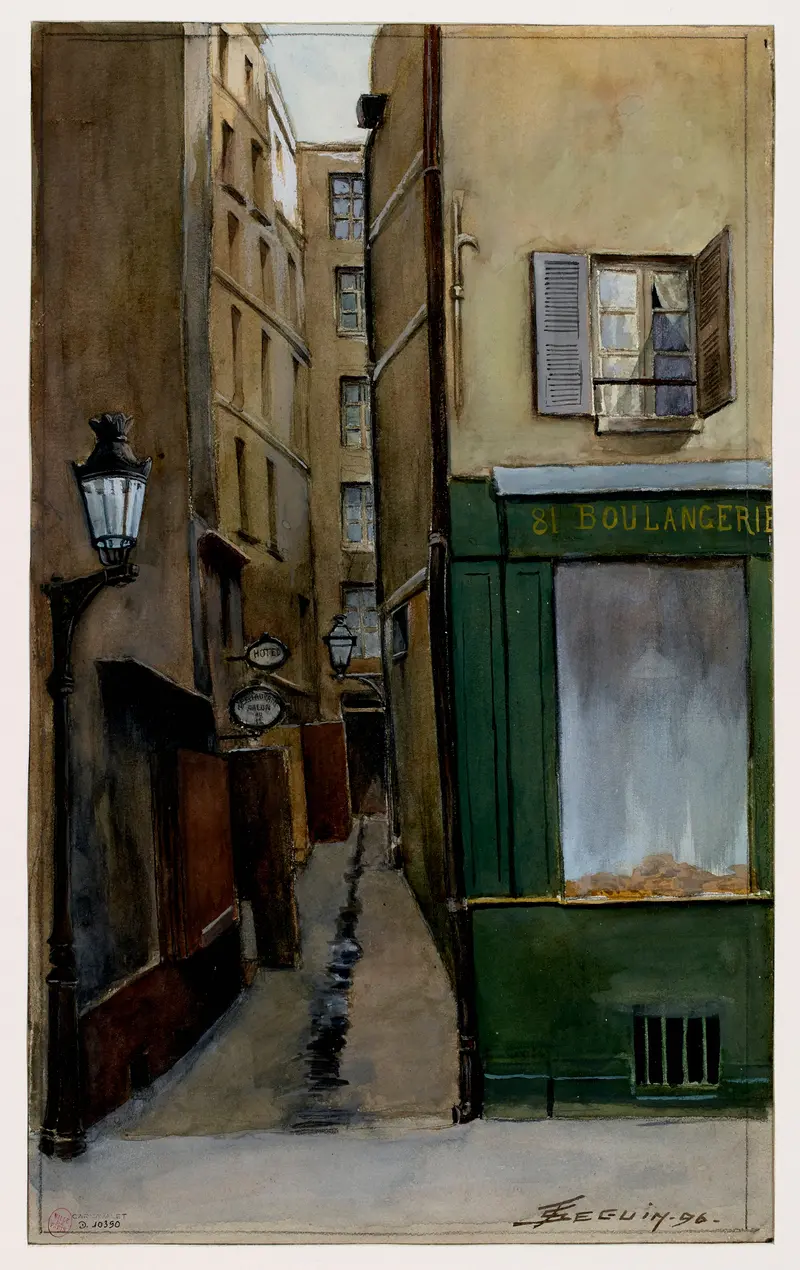
Cul de sac du Fiacre, 81 rue Saint Martin
F. Séguin
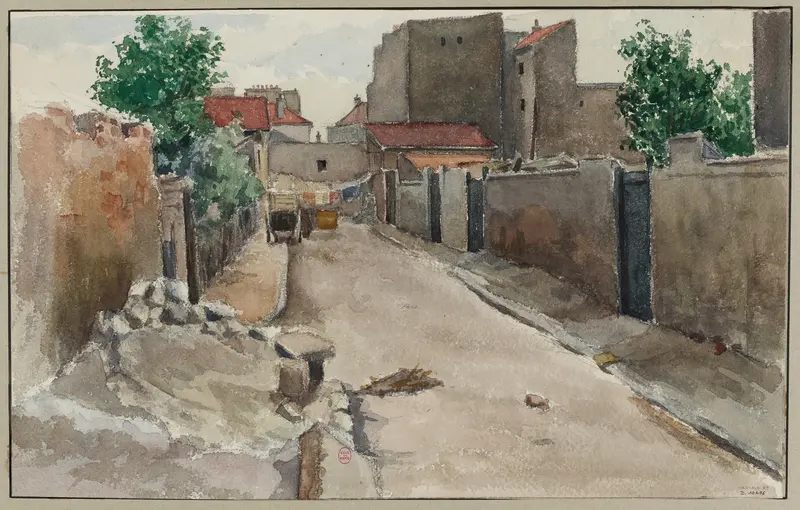
La rue de Chambéry, prise de la rue de Nice la Frontière
F. Séguin
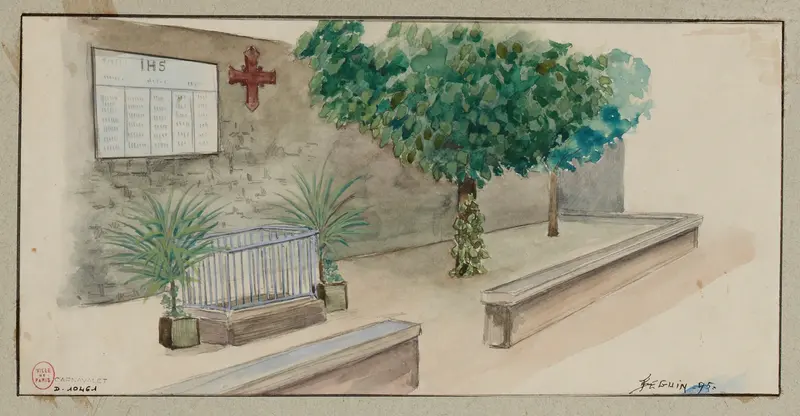
Villa des Otages mur où furent fusillés les 52 derniers otages de la Commune, rue Haxo
F. Séguin
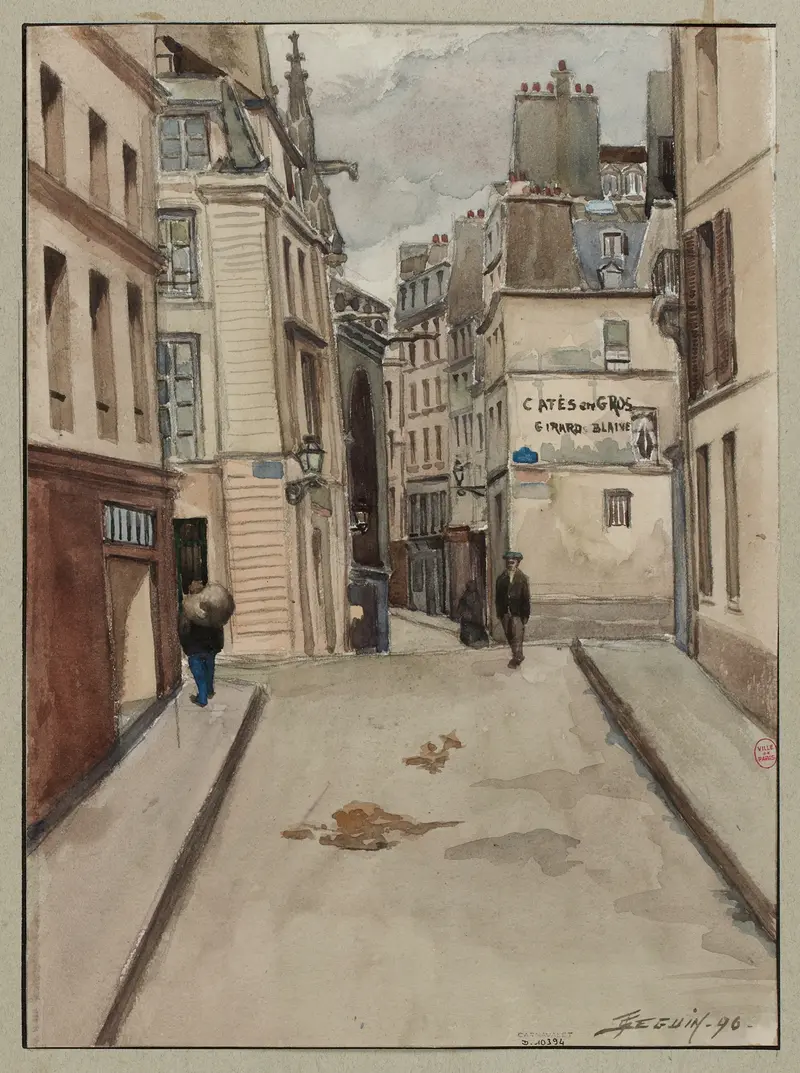
Rue du Cloître Saint Mérry, de la rue du Renard à la rue Saint Martin
F. Séguin
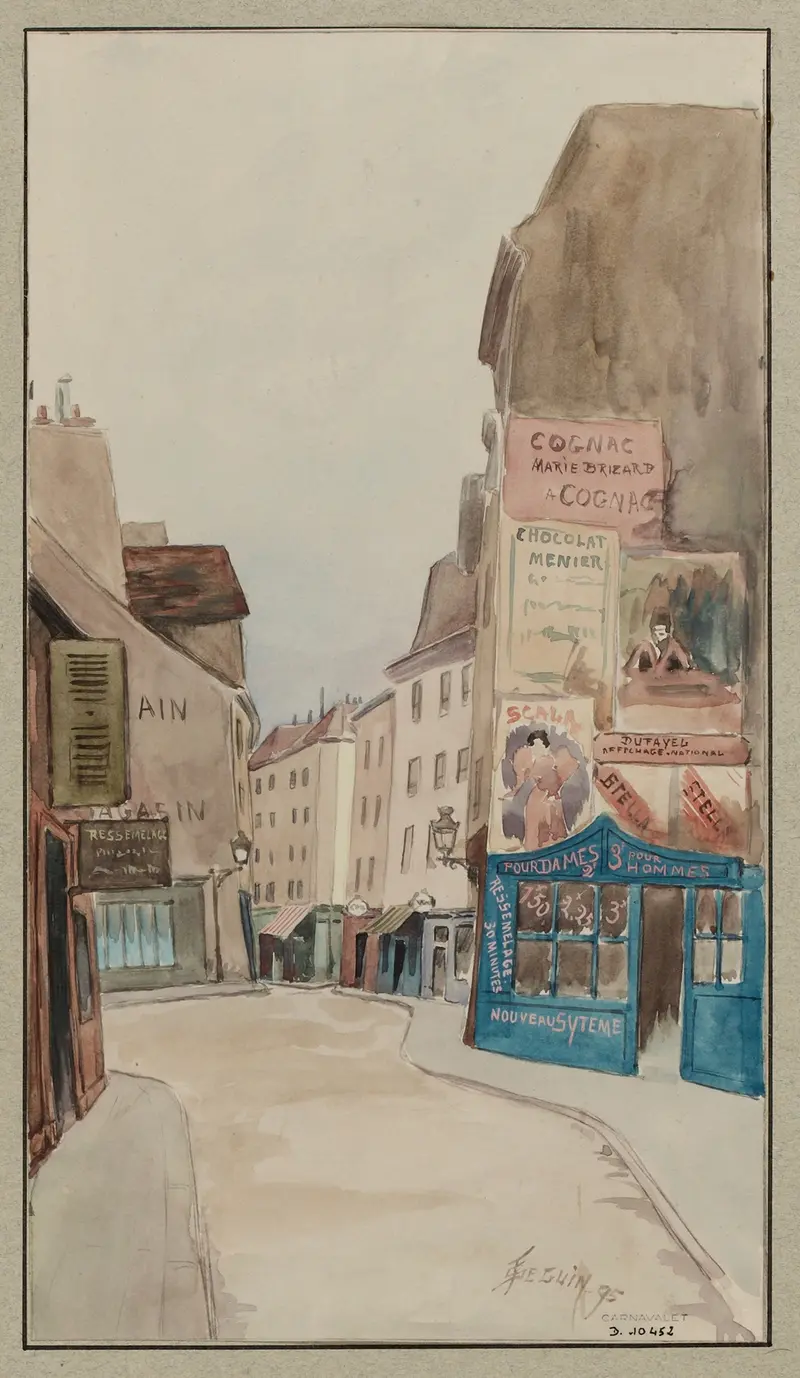
Rue Descartes
F. Séguin
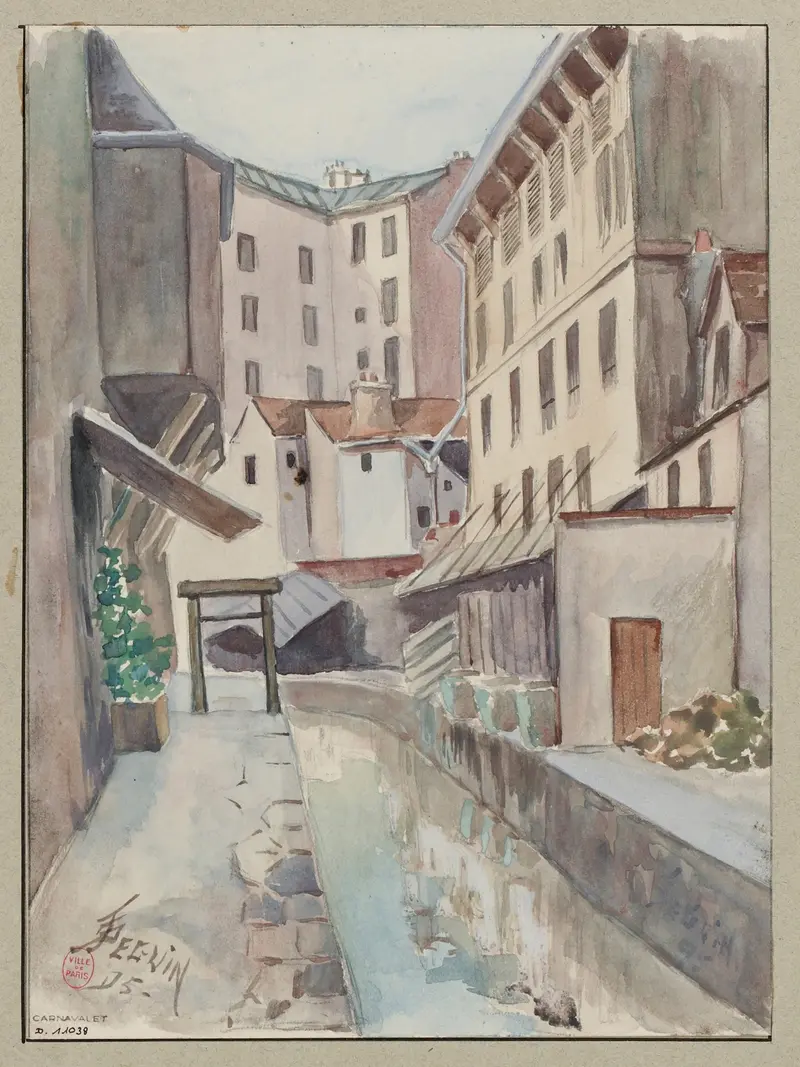
Le bord de la Bièvre à l’avenue des Gobelins
F. Séguin
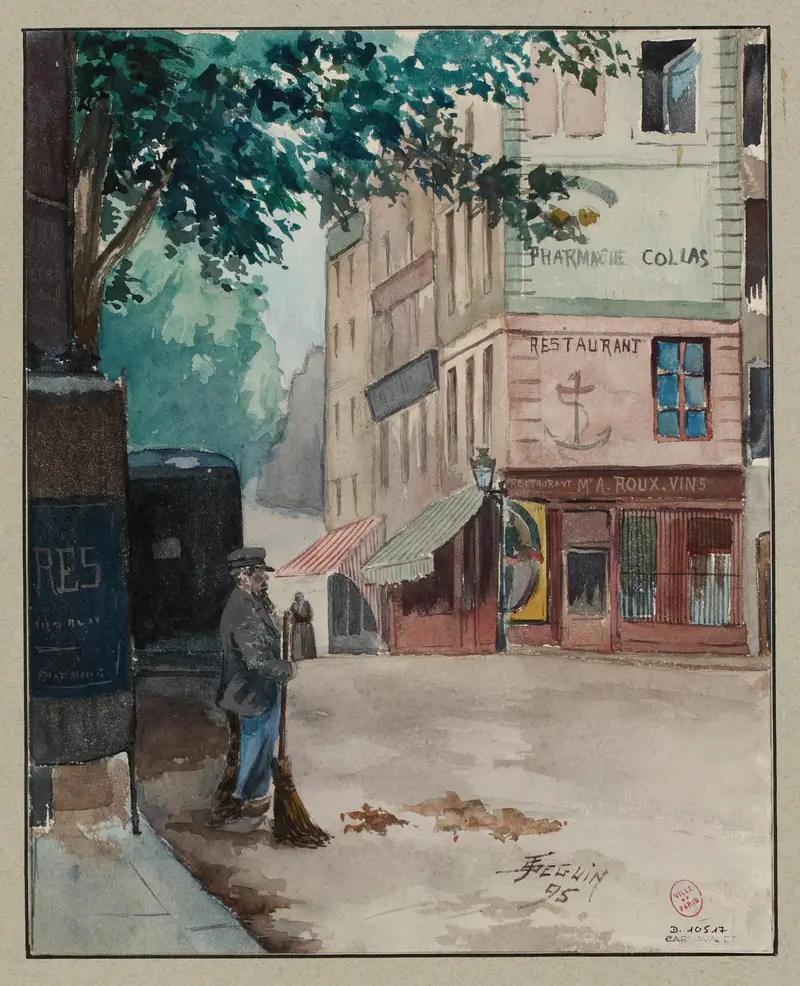
Quai Conti et la rue Guénégaud
F. Séguin
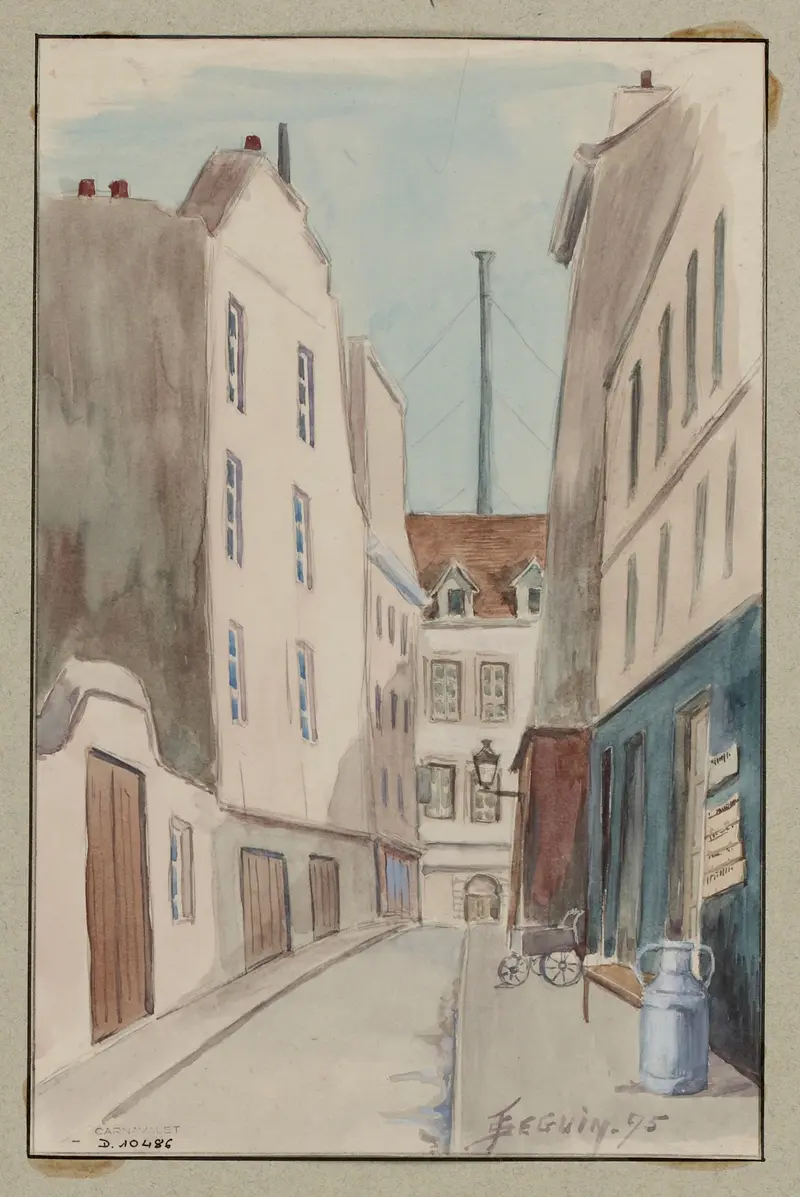
Rue de l’Epée de Bois
F. Séguin