View at Malta — History & Facts
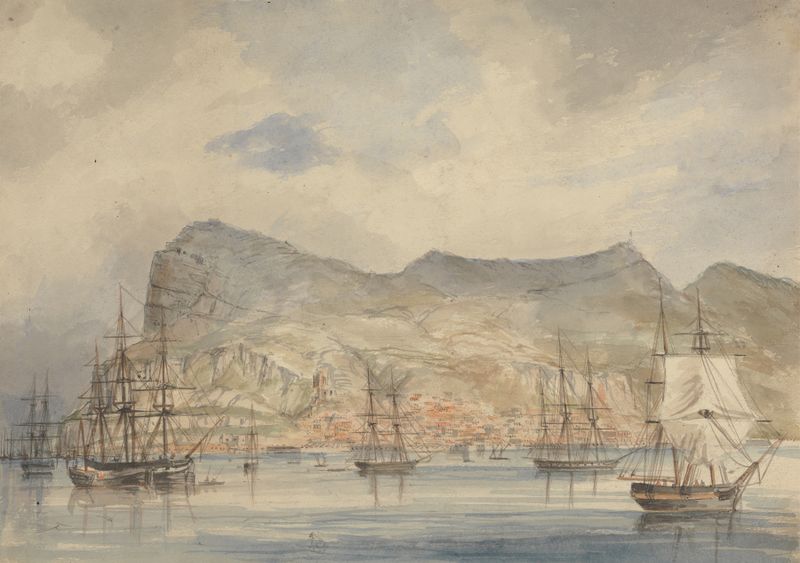
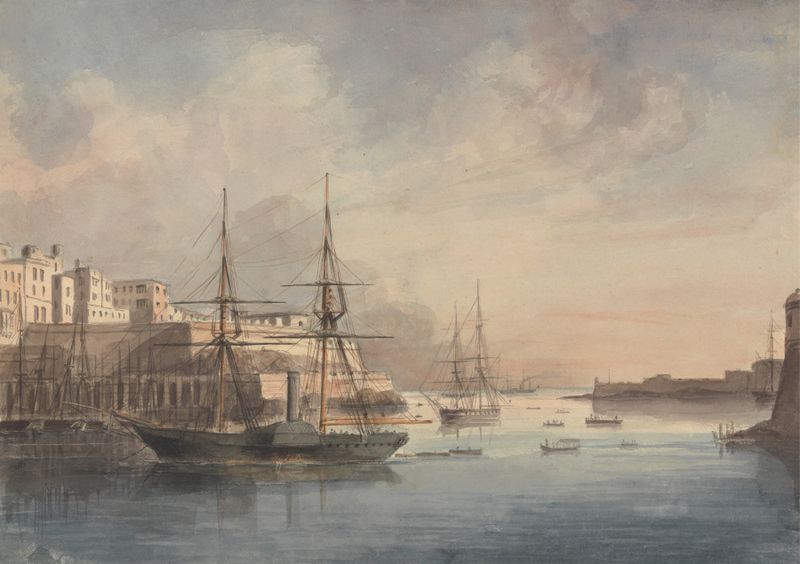
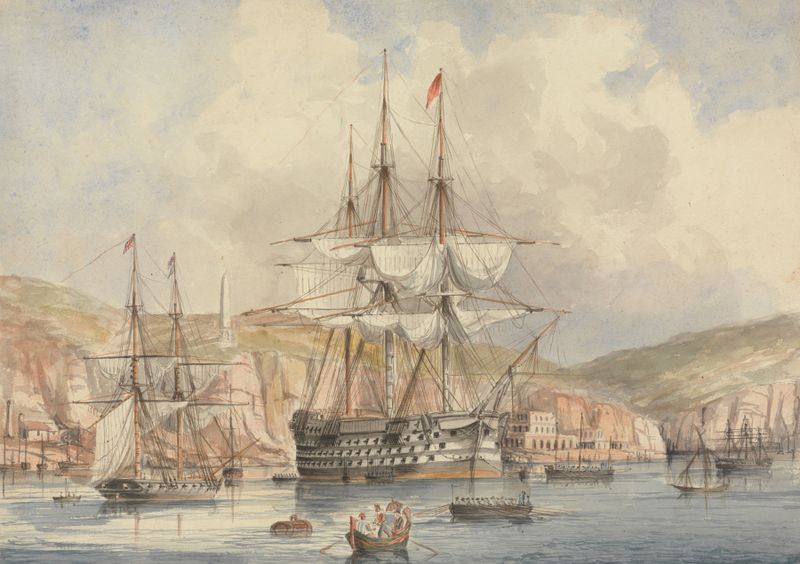
When did color learn to lie? In a moment suspended between reality and dream, serenity washes over the landscape, inviting contemplation and peace. Focus on the shimmering surface of the water, where hues of blue and green meld seamlessly beneath a golden sun. Notice how the gentle brushstrokes coax life into the clouds, their soft whites mingling with the warmth of the sky. The composition draws the eye into a tranquil bay framed by majestic hills, beckoning viewers to explore the quiet depths of this Mediterranean scene. Beneath the surface vibrancy lies an emotional tension—a juxtaposition of nature’s enduring beauty against the ephemeral nature of life.
The horizon, serene yet distant, suggests an infinite journey, while the grounded trees remind us of stability and permanence. Each element in the canvas speaks to a moment caught between the tranquility of existence and the inevitable passage of time. Charles Dyce created this work in 1849 while living in Scotland, a period marked by his exploration of the Mediterranean coast. This painting reflects a pivotal moment in the artist's career, where he sought inspiration from travels abroad, blending his Scottish roots with the allure of warmer landscapes.
Dyce's encounter with this idyllic view represents both a personal exploration and a broader shift in artistic expression during the mid-19th century, as artists began to embrace light and color with newfound fervor.