View of Gibraltar — History & Facts
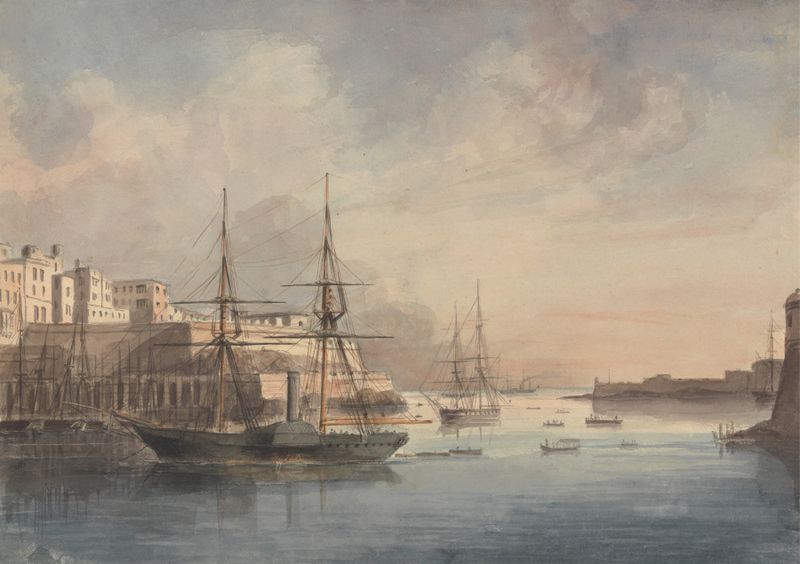
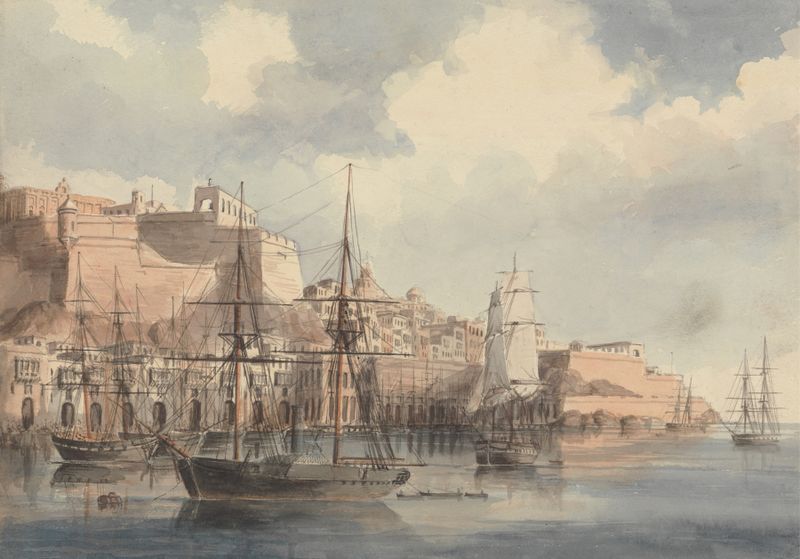
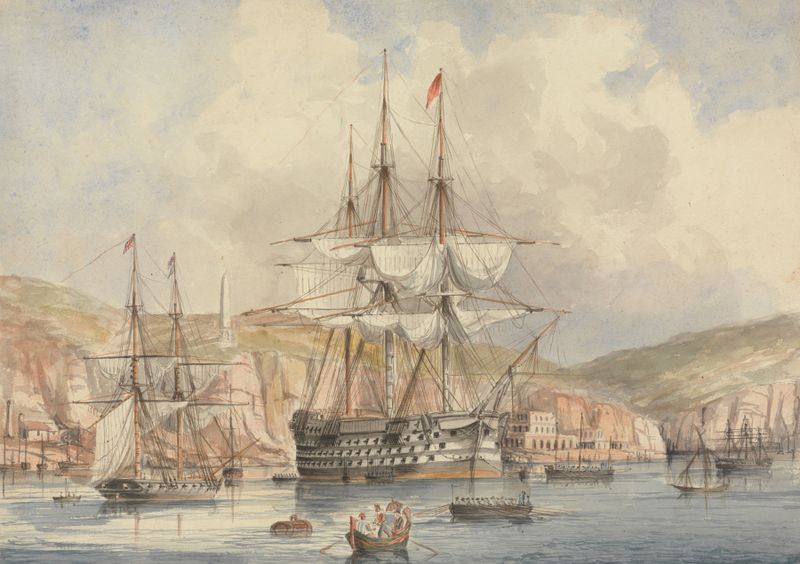
When did color learn to lie? In a world where shades whisper truths and fabrications, View of Gibraltar beckons us to question the very essence of perception and reality. The canvas vibrates with an intricate interplay of light and shadow, revealing the fragility of our interpretations. Look to the horizon, where the imposing Rock of Gibraltar rises majestically against a backdrop of an azure sky. The deft brushstrokes depict the sun's rays catching the edges of the fortress, illuminating every crevice and contour.
Notice how the soft blues and greens of the foreground invite your gaze toward the distant cliffs, creating a sense of depth that feels almost tangible. Dyce’s choice of palette is deliberate, merging elements of realism with a subtle dreaminess, drawing the viewer into a moment suspended in time. Within the painting lie contrasts that evoke deeper emotions: the stark strength of the rock juxtaposed with the delicacy of the surrounding seascape. The gentle waves lapping at the shore seem to carry whispers of history, hinting at the myriad stories held within the cliffs.
There’s a fragility to the scene, where nature's grandeur feels both eternal and ephemeral, reminding us of the inevitable passage of time—and the impermanence of all things. In 1849, Charles Dyce created this piece while living in Edinburgh, amidst a burgeoning appreciation for landscape painting. The mid-19th century marked a shift in artistic focus, with artists grappling with the Romantic ideals that sought to capture nature’s awe. Dyce’s work reflects not just the beauty of the physical world, but also the emotional resonance of its fleeting moments, encapsulating an era on the brink of transformation in the realm of art.