
View from the Quai d’Orsay — History & Facts
This thought encapsulates the fragility woven into the tapestry of life, as reflected in the art around us. Look closely at the foreground, where the soft waves of the Seine ripple gently, their delicate movement mirroring the fleeting nature of existence. Notice how the golden hues of the setting sun spill over the water, creating a shimmering path that beckons the viewer’s gaze. The buildings along the riverbank, etched in muted tones, stand in stark contrast to the ephemeral brilliance above, almost as if they are holding their breath in reverence to the transient beauty of the scene. As you delve deeper, consider the emotional tension between the serene landscape and the looming presence of the Parisian architecture.
Each stroke captures both the vibrancy of life and the underlying melancholy that permeates the air, suggesting a world of beauty that is tragically temporary. The juxtaposition of light and shadow plays an essential role, evoking a sense of longing and nostalgia, hinting at stories of fleeting moments and forgotten dreams. In 1854, Jongkind found himself at a pivotal moment in his career while living in Paris, a city bursting with artistic innovation and change. This period marked a significant transition in his style, which would later influence the Impressionists.
As he painted this work, he was navigating both his personal struggles and a rapidly evolving art world, striving to capture the essence of beauty that is perpetually intertwined with fragility.
More Artworks by Johan Barthold Jongkind
Browse all →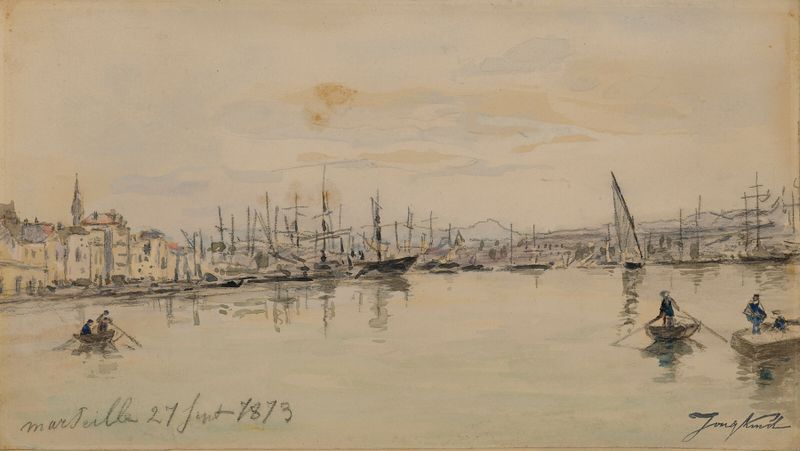
Le Port de Marseille
Johan Barthold Jongkind

Canal Saint-Martin
Johan Barthold Jongkind

Countryside near Brezins, between Grenoble and Vienne
Johan Barthold Jongkind

Notre-Dame vue du quai de la Tournelle
Johan Barthold Jongkind

Environs de Grenoble
Johan Barthold Jongkind

Clair de lune à Overschie (environs de Rotterdam)
Johan Barthold Jongkind

Port de Honfleur
Johan Barthold Jongkind
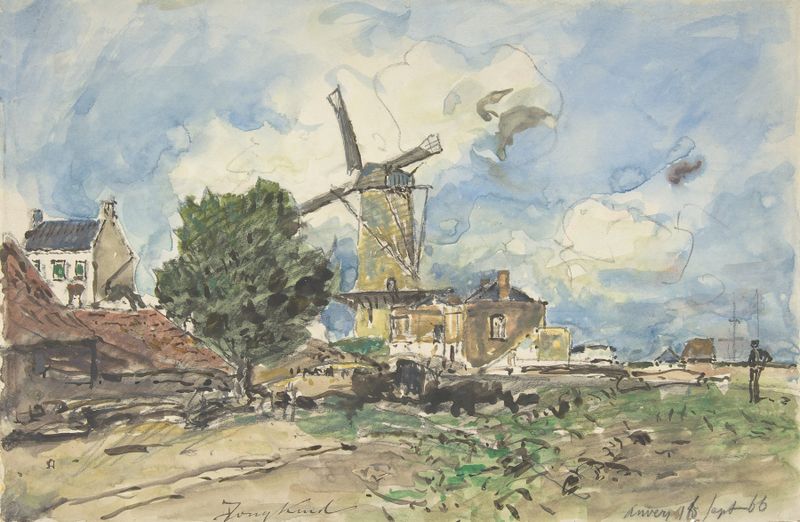
Wind Mill at Antwerp
Johan Barthold Jongkind

Le Havre
Johan Barthold Jongkind

The Church of Overschie
Johan Barthold Jongkind





